The Total Cost to Create an On-Demand Delivery App

The gold rush engagement of the excessively hyped and overly used On-demand delivery services interlocked with the transportation giant Uber at the helm has fuelled a new workforce of freelancers by far, while at the same course of time, morphed as an outstandingly unstoppable pollination for all-round the corner services, every next person is seeking out.

Uber for what? Fastfood, Takeaway, haircuts, parking, handymen, cleaners, massage, couriers, supply teachers, barmen, postage—Whoa! Just think of a service, the Uber is here! If not, somebody down the line is already putting gears on it.

It also means you’ve got the replacement for that ‘X’ (we always mean ‘Uber for ‘X’) and it is pre-written, there is near-to-no chances for it to subscribe failure. Certainly, its On demand + Uber… Figures are never hard to come by!

Be it, earning from on-demand or investing for on-demand… Well, at this moment the investment we’re discussing is “the cost it takes to develop an on-demand delivery app like Uber”!

And for that you’ve to tune your mind to understand what it takes to design and develop the most successful apps of On-demand. Here are the breakdowns of the costs and time investments.

uber_for_x

How much does it cost to build ‘Uber for X’ at CODIANT?

There’s an enormous looming cost of development —one that’s complex to measure, but not that hard to predict. Speak with us telling your requirement and we’ll be there for you.

REQUEST A QUOTE

We adjust it until you find a fit..

Still Wondering for that perfect idea for On Demand Delivery? Check out these verticals. And truthfully, you will not be disappointed.

Codiant’s Takeaways to scale your On-demand Startup-

  • Start Small i.e. ensure that your demand and supply targets are kept to a minimum.
  • Tap into an existing network.
  • Promote your app before launch through social media, offline advertisement, or referrals.

Key features for an on-demand delivery app

The most important features for an on-demand delivery app are:

1. Making orders

Providing a smooth convenience of booking an order after quick access to goods and services.

2. Dispatch Management

Dispatch management is the quintessence of any on-demand delivery solution. This module provides operational teams with an interface for scheduling driver pickups and deliveries. With complete, end-to-end visibility of the delivery business as a whole.

3. Real -Time Tracking

Showing your customers where their package has reached validates the preeminence of your service. Moreover, when the customers can access real-time location of the driver it adds gold stars to your service sufficiency.

4. Payment Delivery

Payment through credit card or mobile wallets is yet another important feature of an on-demand delivery app, which takes around 4 days to put into effect.

5. Ratings And Reviews

Customers can express their opinion about the services they received and then rate them bad, good, average, excellent as per their experience. Most on-demand delivery apps incorporate this functionality. On an average, it takes around 6 days to implement it.

If your app focuses on food delivery or grocery shopping, then additional features should be added:

  • Product search
  • Shopping lists
  • Wish lists
  • Real-time messaging or calls

And you’re done.

Getting build an MVP is also a great idea that saves your cost and time and helps you in launching your product in the market at its earliest.

How to Calculate the Cost to Develop an App like Uber? Deep Estimation

The growing demand for Uber-like clone applications is accelerating at the speed just like your car at a highway. Just a bit of modification in the existing Uber business model and a new Taxi app is ready to rule the market. When all the heads turn towards Uber-like taxi booking app development the only question that itches in the head is “How much will it cost to make an app like Uber?” Here is the list of features that influences the cost to develop an app like Uber. Let’s take a sneak peek.

The Basic Features of Taxi App

While talking Taxi App, make a note an Uber will always have 2 separate applications and one admin panel each having different functionality. 1. Passenger App2. Driver App3. Admin/dispatcher Panel

Passenger App Modules

As the name depicts the passenger app is for users who book the taxi. Check out the basic features of passenger app essentially needed.

  • Register/Login : Easy onboarding through email, social media logins, accounts etc.
  • Book a Ride : An interface to set the pickup location, call a taxi, select the type of cab.
  • Contact Driver : Coordinate a pickup by calling or messaging the driver.
  • Track Driver’s Location : Check the driver’s real time location through GPS tracking.
  • Price Calculator : Check the estimated cost of a ride from point A to point B.
  • Payment Option : In-app card payment through credit/debit card. If not this, passenger can pay directly to driver by cash.
  • Cancel Booking : Customers can cancel trips anytime in case of any plan changes.
  • Push Notifications : Keep your users updated on order status, estimated time of taxi arrival, car model, drivers name etc.
  • Trip History/ Ratings and Reviews : Check booking history, messages, ratings & reviews etc.

Driver App Modules

  • Easy Registration : Drivers can request a signup and add the necessary details.
  • Real Time Requests : Drivers get notified for new ride requests with all the pickup details.
  • Accept/Reject : Drivers can accept or reject ride in limited time frame.
  • Trip Information : Drivers get the pickup and drop information about their customers.
  • Navigation : Built-in navigation with Google Maps to provide the best route and ETA information.
  • Contact Passenger : Drivers can make calls to passenger to clarify pick up location.
  • Start/End Trip : Drivers can start and end the trip to generate the automated bill.
  • Track Earnings : View entire job history and daily earnings.

After building these two applications, the Admin/dispatcher panel is required who will manage the operations and performance, manage drivers and customers.

An Admin Can:

  • Manage customers.
  • Manage vehicles.
  • Manage dispatchers.
  • Track trip.
  • Create new booking requests.
  • Start/end trip.
  • Contact passenger.
  • Track earnings.
  • Rate customers.
  • Provide help & support to passenger and driver.

The Cost Components Depends upon these major portions of work that is involved into an app like Uber.

The Backend Work Include Following Nuggets of Tasks:

1. UI/UX Design

UI, UX designs for taxi app must be handcrafted keeping in mind the holy grail of the domain. It demands more simplicity, intuitiveness and clarity. Design Timeline : The Design timing of taxi app massively depends upon your choice of to-do list for us that will include the list of functionalities, features and other interactive elements. Check out our design style.

2. Users Registration/ Login Page

For Users : Traditionally, users are required to create a profile on the taxi app before booking their ride. But in order to increase the user base in your early stages “no profile bookings” can serve as a great giveaway. Email registrations are again conventional but social media integrations are more effortless and time savior. For Drivers : For driver app the registration process can be much demanding and complicated requesting for a photo, car license, plate number, driver’s license copy etc. User Profile Add Ons : You may opt for integrating a rating and reviews system for better app security and increased customer satisfaction. This feature will allow your customers to rate and review about your services like driver’s behavior and hospitality which further can be of great help to you in deciding whether to charge a fine or gift a bonus. Development Timeline : Typically user registration and profile creation requires 120-140 hours of time. (Not to mention, time decreases as the manpower increases) It’s all depended on the project deadline.

3. Geo-location Services and Routing

While Uber is hailed as a location-based startup from day one, routing and GPS technology from the bandwagon comes as a holy need. GPS technology helps you identify your customers’ current position, help your users fetch the neighborhood taxis and build the best route for the driver. Technology Stack

  • To identify a device’s location:

The Uber app for iOS uses the Core Location framework to locate a user’s device. While Geolocation for the Android version of the Uber app was implemented using Google’s Location APIs.

  • To provide driving directions:

To display point-to-point directions on a map within the app, developers of the Uber app for iOS used MapKit. Android routes and directions are made possible by the Google Maps Android API.

  • Integrating with mapping software:

Initially Uber was paying Google for accessing their solutions (Google Maps for both Android and iOS versions of their app). But later on the taxi giant buyed mapping technology companies to solve their logistics issues. In you early stages, you can simply ace up the game with Google maps integration with your taxi app. Development Timeline : It takes approximately 120-140 hours to build location and routing functionality.

4. Push Notification and SMS

Uber uses push notifications and SMS for informing passengers about on-ride updates like driver details, ride details and other discounts on ride fare etc. and uses messaging for bridging the communication between the driver and the passenger. Technology Stack For Push Notifications, the Google Firebase Framework or Apple Push Notifications service must be used. While Uber uses twilio for sending messages, you can also ask your developer to pick Nexmo or Plivo for powering text messages. Development Timeline

  • Push notifications – 36 hours.
  • SMS integration – 20 hours.

5.Payment Integration

Uber uses a cashless system. And its main early selling point was using an in-app payment which eliminates any human-to-human cash transfers from the equation and hence resisting the drivers to overcharge customers. Next comes is Dynamic pricing where depending on the traffic situation and car availabilities Uber takes out the pricing quote like discounts or add-on fare during peak hours. While the prize quote comes out as base fare, cost per mile, cost per minute etc. Technology Stack To offer in-app payments you can choose to offer following payment gateway integration:

  1. Braintree
  2. Paypal
  3. Stripe
  4. Apple Pay and Google Wallet

Development Timeline : It takes around 100-120 hours for integrating the right gateway.

How Much Does It Cost To Build UBER?

When you go for developing an app like Uber, you would need to pay for following services:

According to our estimation and developing similar kind of taxi apps with customized features for different clients, the costs heavily depends upon the hourly rates the taxi app development company is charging which vary greatly from $20/hr-$50/hr. A total of cost for a simple taxi app may land to $25,000-$40,000 and can go as high as $100,000-$150,000.

How Much Does Codiant Costs for Taxi App Development?

Contact us


How Uber Works? Insights into Business and Revenue Model

Uber services are like a fad in the world of technology. One of the most common things we have noticed is that people are scrambling to spot the left-out Uber services, which is still to be tapped in the marketplace.

Uber’s strengths are not just in the terms of providing cheap rides but the on-demand transportation service has captured the market in building a large and powerful logistics business.

Uber’s business model which is the highest-valued private technology company so far operates in about 270 cities and more than 60 countries worldwide, and as of this June, Uber completed 5 billion total trips.

What Draws The Strengths of This Billionaire Company?

1. Revenue Generation

The soaring need of on-demand rides has triggered a rising need of this big fish in the market. What draws the strength of this the global ridesharing leader? Let’s distill the facts:

2. Brand Equity

Uber is currently valued at over $68 Billion and is slated to progress even more downright. Due to the high valuation of brand, Uber is incessantly attracting investors.

3. Low Fixed Investments

Uber does not require high fixed investment due to its aggregation policy which becomes the main reason behind its rapid expansion.

4. Dynamic Pricing strategy

Uber works on dynamic pricing strategy that is in peak hours, midnight and bad weather the company raises its prize. This becomes extremely beneficial for the company and drivers to earn a good amount of money.

5. Emphasis on Customer Satisfaction

Uber places itself a notch higher to provide better customer satisfaction and enhanced user experience.

6. Growth Rate

uber growth chart

Source: Business insider

Other than this, Uber wins in:

  • Verified drivers and Cars
  • An unlimited fleet of vehicle
  • No full-time drivers, as it does not hire the drivers
  • A very little competition. But the major competitor is Lyft
  • Lower prices compared to traditional taxi operators

Uber’s Interesting Facts

  • Uber service is available in 83 countries and over 674 cities worldwide (Source: Uber)
  • Uber fulfills 40 million rides monthly and has over 77% of US ride-hailing market (Source: Wiki)
  • Total number of rides by 2016 – 2 billion (Source: Forbes)
  • Uber gross revenue 2016 – $20 billion (Source: BusinessInsider)
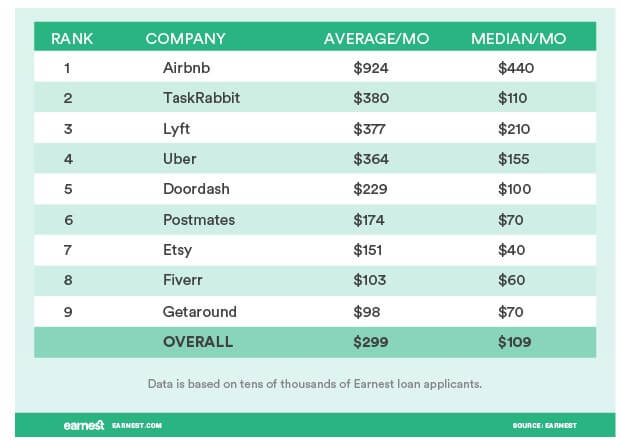
  • Uber driver’s average income – $364 / month (Source: Ernest.com)
  • Venture capital raised – $11.5 billion (Source: Crunchbase)
  • Uber net revenue 2016 – $6.5 billion (Source: BusinessInsider)
  • Uber valuation in 2017 – $69 billion (Source: Bloomberg)
  • In the US, Uber has over 160,000 active drivers, receiving $656.8m of payments during Q4 2014 (Source: Benenson Strategy Group)
  • The top two reasons for drivers to choose Uber are higher income (91%) and work-day flexibility (87%) (Source: Bureau of Labor Statistics)
  • It’s largest competitor Lyft generates a fraction of net revenue ($700 million) compared to Uber ($6.5 billion) (Source: FutureAdvisor)
  • However, Uber has given Lyft a boost – generating greater engagement on the app (Source: Forbes)

Uber’s Business Model Canvas

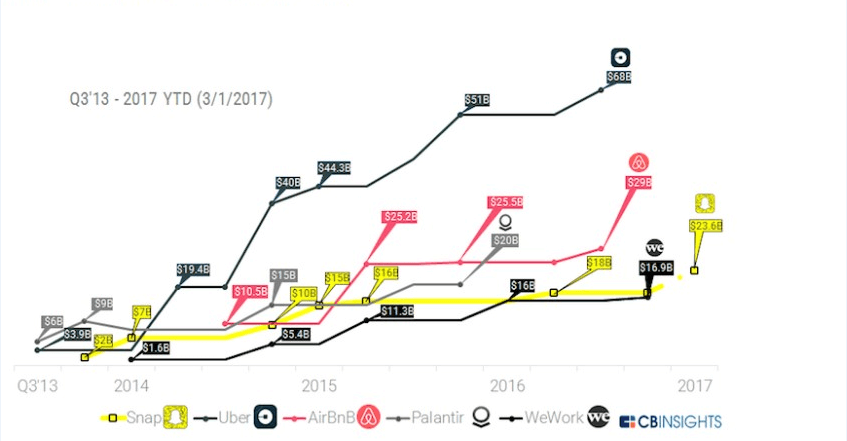
Uber’s Valuation

Source: CBInsights

In 2013 Uber valuation was $3.9 billion now it jumps to $68 billion in 2017.

Uber’s Weaknesses

1. Privacy Concerns

The CEO less company still continues to serve up fresh embarrassments of privacy policy. The so-called ‘God view’ real-time interface allows Uber employees to spy on users’ rides.

2. Low Barriers to Entry

Apps like Uber prevailing in corners of the world are the direct outcome of low barriers to entry by the ride-hailing company Uber. Eventually, the company has started facing competition from multiple fronts.

3. Drivers Earns less

Despite Uber being the biggest startup company on the planet, it does not serve much to its key workers viz. Uber Drivers.

This chart compiled by Earnest.com compares the average income of Uber workers from Airbnb, TaskRabbit, Etsy, Lyft and several other companies.

Source: Earnest.com

Takeaways

  • Start with small ownership model.
  • Choose any industry and jot down the most common problem it has. Find a solution and come to us with your business idea and disrupt the existing business model through our technological infrastructure.
  • Think like a brainchild and take baby steps. Don’t rush to include everything in the first go.

Contact us for:

Think Big. Disrupt Your City/Country With UBER Like App

Get in Touch

Tap What’s Next! The 10 Most Trending Mobile App Ideas Of 2018

Remember the saying, “The value of an idea is in the using of it”. Because every idea is driven from the pain points of a user, and a user is the customer, obsessed with Mobile Apps. It comes as no surprise, you as a startup/business/brand have to tap the “Customer Obsession”!

To make the world simple and fast, to satiate the over demanding customers, and to finally disrupt the technology space here are the skyrocketing mobile app ideas of 2018 that will make a game-changing technology debut and will definitely soar your bank accounts.

On-demand App Ideas 2018

“ The on demand hypergrowth is upon us. In the next 5 to 20 years most of people will be able to get anything within a 5 to 60 minute window.” | Gary Vaynerchuk

So what’s your business? Does your business serve with mobile app?

If you are looking to create something in any vertical you can debut it as an “Uber for X”. This trend of instant gratification economy is accelerating.

From food delivery to a spontaneous getaway by a taxi, from a relaxing massage to on-demand beauty, from laundry to car wash service, baby care to pet care and more, today’s technology has got you covered.

Here are all existing Uber Apps for your reference:

uber-for-x

Augmented Reality App Ideas 2018

According to Global industry Analysts, the global market for Mobile Augmented Reality (MAR) Apps is projected to reach US$3.9 billion by 2020. The Research and Market report forecasts the global mobile AR and VR apps market to grow at a CAGR of 74.4% during the period 2016-2020.

Augmented reality (AR) is growing rapidly and becoming more mature and robust, which combines virtual information with the real environment in the real-time performance.

AR gives vendors many opportunities to innovate and enhance real world experiences. There are a plethora of verticals where AR proves to be miraculous.

Augmented Reality App ideas for Different Verticals:

Augmented_Reality

  • AR for Interior Design – Pottery Barn, Chairish
  • AR for Automobile Industry- Audi A3 HK, Audi Kurzinfo
  • AR for Restaurant- Yeppar, Foodpix, Kabaq
  • Augmented Reality – Education
  • AR for Sports Apps- AR sports Basketball
  • AR for Healthy Food Checker
  • AR for Tourism- Wikitude, Waalkz, Layar
  • AR for moving and freight industry
  • AR Based E-commerce, Retail Mobile app

Virtual Reality Apps 2018

Virtual Reality is not only poised to change the entertainment industry but industries like Education, Healthcare, Air and Space, Marketing, Journalism, Travel, Real Estate, Automotive, Retail , and skilled trades are also transformed dramatically with AR and VR. Click here for more details.

Internet of Things App Ideas for 2018

The Internet of Things market is expected to grow from USD 170.57 Billion in 2017 to USD 561.04 Billion by 2022, at a Compound Annual Growth Rate (CAGR) of 26.9%. The world of IoT is endless so is the possibilities.

Here are few profitable IOT app ideas for startups:

  1. Automatic Smart Parking and smart roads
  2. Connected Portable ECG Device and other telemedicine apps
  3. Water Quality Monitoring
  4. Smart Trash Bins and irrigation system
  5. Cloud-ready temperature sensor with the Arduino Uno
  6. Wireless Sensor System using IoT -Internet of Things
  7. Secured Smart Healthcare Monitoring System Based on IOT
  8. Smart Security Solutions based on Internet of Things (IoT)
  9. IoT Home Security Model and IoT Vehicle Simulation System
  10. Multi Room Music Player using IoT

Healthcare and Telemedicine Apps

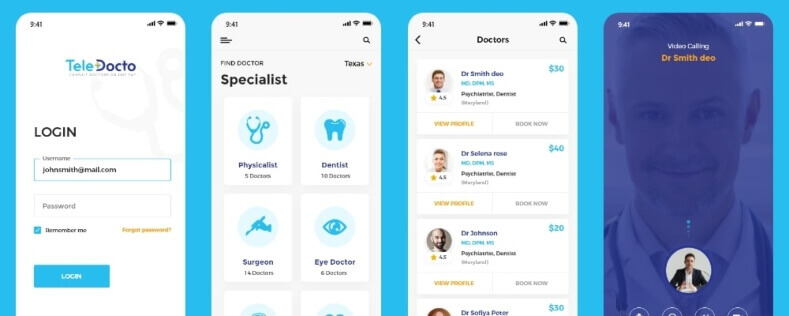
teledocto

The Telemedicine and Telehealth apps have become the lifeblood of healthcare industry. They are playing crucial role in strengthening healthcare services by overcoming many of the barriers to healthcare like geographical, technological and cost related. As per the latest research, telemedicine will attract 7M patient users by 2018 whereas telehealth is expected to grow in the U.S. at a compound annual growth rate of 27.5% reaching $9.35 billion by 2021.

Here are some of the top telemedicine apps in the world where Careclix (A telemedicine app developed by Codiant) ranks no.1 in the list of 17 best telemedicine apps by healthline.

Chatbot Apps or Business Bots

Unsurprisingly, Chatbot app development is heralded for providing better and quick customer services across diverse verticals like:

  • Ecommerce industry
  • Banking and Insurance
  • Healthcare industry
  • Travel and tourism
  • Call centers
  • Finance industry

The 2018 year will be a foray into how the chatbots landscape is set to dramatically change within the next 3 to 5 years. These overwhelming stats will demonstrate how the economy is soliciting the new online experience.

“Chatbots are expected to increase cost-savings in billions of dollars a year in ecommerce, banking and healthcare.

Efficient, correct chatbot interaction is expected to increase from just 20% in 2017 to 93% in 2022.

Businesses are increasing their interactivity with other businesses within a chatbot experience to provide the ultimate experience.”

Artificial Intelligence Apps

“AI Technologies Will Be in Almost Every New Software Product by 2020” | Gartner

Gartner predicts that by 2020, AI will be a top five investment priority for more than 30 percent of CIOs. Indeed AI is the driving force.

Here are few of the best existing apps of AI:

  • Elsa- Your professional coach for improving English accent.
  • Robin- An AI app that allows you to write text through voice, get local information, jokes and GPS navigation while you are on road.
  • Google Allo- A personal assistant app that does your work without moving a finger.

In Trends:

future-of-AI

Sources: //Statista

Blockchain Apps

No doubt, after chanting bitcoin and cryptocurrency so far in 2017, the term Blockchain is no new. It has made huge splashes in the tech community. The technology that underpins digital currencies spells out five big ideas for blockchain apps 2018 to come in roll. Let’s check them out.

  • Distributed Cloud Storage
  • Digital Identities like Passport, E-Residency, Birth certificates, Wedding certificates etc.
  • Smart Contracts
  • Digital Voting
  • Decentralized notary

Hope that gives an idea!

Consult our experts for a clearer vision and Blockchain App Development.

Instant Messaging Apps

instant-messaging-app-codiant

Instant messaging apps that offer all the features of popular IM apps like Whatsapp, Skype, Viber and Messenger. Take inspiration from existing messaging apps and think of creating a medley of all those, Because Social Networking and Messaging is the New Black.

Graphical Restaurant Reservation System

An online reservation system for restaurants that would allow you to see a graphical layout of the establishment. You would see what tables are available at what times and you’d be able to book a desired table at your favorite time. And this is all possible with a mobile app without needing to call the restaurant. Isn’t it a great idea?

Mobile is not the Future. It’s Now! The chase of apps and a simplified life is never ending. The world will never run out of ideas but it is equally important to use those ideas. So stop sitting on them and get them wheels. Drop us a line now.

Related reading : 100 Mobile App Ideas You Should Invest In Today