Reimagining the Transportation Industry for the Next Normal : Taxi App Market Post COVID-19

The COVID-19 pandemic has radically changed the way companies operate in almost every sector, where the transport industry is the biggest victim affected by the pandemic. From taxi drivers to airlines, the overall demand has tumbled by 11% in March 2020.

It is clear, the coronavirus has affected the bottom lines and demanded an urgent need for transport companies to reconfigure their operations and navigate to the next normal with full resilience.

Though the report says post-COVID-19, the global ride-sharing market size is projected to grow at a Y-O-Y growth of 55.6% from 2020 to 2021, to reach USD 117.34 billion by 2021 from USD 75.39 billion in 2020 yet the projection for 2021 is estimated to be down by 2% as compared to pre-COVID-19 estimation.
covid-19-impact-on-ride-sharing-market
Source: Markets and Markets

The transport and automation companies have to rethink the growth drivers to disrupt the taxi-hailing and ride-sharing market.

Here, we attempt to cover the restructuring of the taxi app industry with the significant changes that will matter to companies to build and scale innovative methods and catalyze the reinvention of company during as well as post pandemic.

To better understand the concept, let’s start by analyzing how other leading automobile and taxi app companies have responded to the transportation challenges posed by Covid-19.

Leaps Taken By Key Taxi App Market Players in The Face of Crisis

Didi Chuxing

  • Built disinfection stations by installing a plastic shield between the front and rare seats of the car in China to isolate passengers from the driver.
  • Invested about USD 14.3 million in this safety measure that involves installing protective plastic sheets.

Uber

  • Announced a series of new safety features and key policies across their product offerings like photo-based verification of drivers every time they log in. The new camera feature in the Uber taxi app for Driver does not allow the photo to be clicked unless the camera detects the mask.
  • The other remarkable feature enables the rider or the driver to cancel the ride if either of them is not wearing the mask.
  • Uber has suspended its ride-pooling app UberPool to extend physical distancing.
  • Drivers will have to sanitize their cars after each ride and Uber will provide them free health and safety supplies.
  • Developed a new ‘Work Hub’ app to help drivers find substitute jobs.

Grab

  • Temporarily suspended GrabShare and GrabBike to encourage safe, social-distancing practices.
  • The touchless online payment option in the taxi app solution is helping customers to go cashless with GrabPay.
  • Introduced a ride cover policy with ‘Chubb’ to include coverage for Covid-19.
  • Subsidized masks for drivers on GrabBenefits.
  • Financial Assistance to affected drivers while their account is on hold.

Lyft

These were the steps taken by leading taxi-hailing companies to address COVID-19.

  • Distributed cleaning supplies like hand sanitizer and face masks to drivers for free.
  • Activated more than 500 partners through LyftUp to expand transportation access and avail free rides to those in urgent need.
  • Disinfects high contact surfaces at depots periodically.

Ola

  • Made mask compulsory and sanitization before and after ride for customers boarding the cab.
  • Limited only two passengers per ride.
  • Encouraged to make cashless payments to avoid contacts.
  • Gave 500 vehicles to the government for Doctors’ commutation and COVID-19 related activities.

taxi-cta

Reinvent Through Smart Mobility Trends in Transportation

  • End To End Digitalization Through Taxi App Development SolutionThe lineup of touchless features in a taxi app solution ranging from photo-based (with mask) profile verification of drivers to contactless payments and SOS buttons to inform if they have come in interaction with COVID rider or driver, etc. are helping in improving the responsiveness and speed to market.
  • Mobility As A Service (MaaS)Mobility As A Service (MaaS) and Transportation Systems Management and Operations (TSMO) may leverage the benefits and functionally integrate the features provided by smart connected communities that facilitates extensive real-time data sharing and P2P communications, and contextual decision making through innovative technologies.
  • Increased Usage of Artificial Intelligence (AI) and Deep Learning in Transportation AppsThe impact of Covid-19 has triggered a rise in AI applications for addressing the changing customer needs and preferences on the face of safety and hygiene. Here are the areas where AI will be used to battle pandemic effects.
    1. Corporate decision making, planning, and management
    2. Prediction and traffic/incidents detection models
    3. Connected and autonomous vehicles
    4. Temperature sensors for regulating the use of public transport
    5. Optimization of operational efficiency during social distancing

Each of these areas will help in mitigating increased exposure to risk for minimizing human contact, optimizing operational efficiency during physical distancing by predicting the demand and supply of service. It can also be used to check the human temperatures before they step in to the use of public transport.
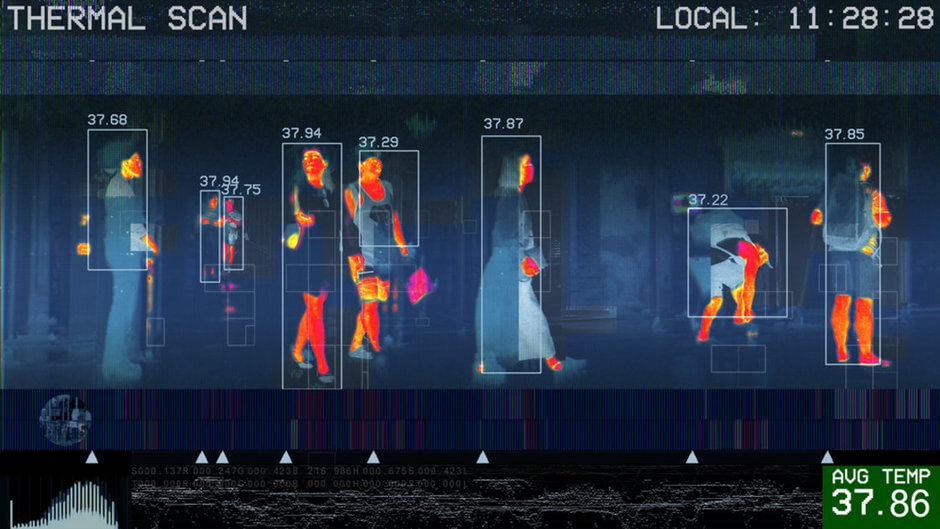
thermal-scan
Source: Govtech

Before you go…

Is your transport company’s crisis-response efforts getting deployed in full motion? OR Are you dealing with acute slowdown and pullback in operations and battling to cope-up with the crisis with the help of mobility solutions? Codiant can help you in resolving issues at every business touchpoint with full scale, pace and depth of action needed with its advanced taxi app development solution forged with innovative technologies and future-proof features.

How Much Does It Cost To Develop an Online Dating App?

Long gone are the times when dating a person was a taboo. With increasing reliance and dependability on smartphones, apps and other technological advancements, people have shifted their lifestyle and the way of thinking.

The Online dating app is a cult of the same lifestyle shift, helping millennials to mid-age persons to newly single find suitable match for having a short-term romance or a long-term relationship.

online-dating-app-codiant

In fact, online dating app development companies have kept it high-key by providing a pool of choice when it comes to navigating a dating app.

As we all know, the dating app space was hugely dominated by the behemoth ‘Tinder’, which instilled the habit of swinging right (or left) to find the partner. But let’s agree romance is a bit more complicated and it’s not one-size-fits-all. So, basically Tinder is a bit old school and our filters quite specific.

Well, at Codiant we love to construct witty, unique and exclusive dating apps that pluck avant-garde features and spices up a mundane concept to a fresh demanding app product.

In this blog post, we will discuss how the definition of a basic dating app can be revived with forward-looking and innovative features. At the end of the post, we will also help you to get a rough ballpark figure or the estimated cost to develop a dating app.

Related reading : Types of Dating App Business Models

Key Features of an On-demand Dating App Development

1. User App

    • Easy Onboarding : Daters can register in the app through email/ phone no/social login and password.
    • Profile Verification : This is the most crucial feature of the app. Reliability is a primary key in dating apps. Fake profiles or spammers can disrepute your app. Users should be able to access the app only after their account verification is done via contact number or email ID.
    • Upload Picture : Users should be able to upload their profile picture by picking one the gallery or from a live camera. You can also restrict users to upload the display picture only from the camera to regulate authenticity.
    • Profile Management : Users should be able to manage their profiles by adding fields like bio, hobbies, interests, photos, occupation, location, etc.
    • Settings : Users should be able to perform actions like change passwords, contact information and deactivate or delete profiles. Settings fields can be customized as per your requirements.
    • Profile Discovery : Users should be able to search for potential daters or say matches:
      1. By browsing the list of available matches nearby them (through Geofencing), location-specific or based on compatibility.
      2. From the search bar by name, profile ID, tags or keywords, etc.
    • Profile Details : Once the user likes a profile he/she should be able to click a user and check:
      1. User’s Profile Picture
      2. Location
      3. Send Message Request
      4. Send Interest
      5. Like The Picture
    • Set Privacy and Visibility : The user should be given controls to keep their profile public or private when they are dating a person.
    • Likes and Visitors : If your dating app allows the user to like other user’s profiles then the user should be able to get notifications of persons’ details who have liked the profile. And same if in case the person has visited the user’s profile he/she should be alerted with visitors’ details. However, this feature is optional and depends upon your personal reasoning.
    • Refer, Share and Earn : To increase the app user base, keeping this feature is only profitable for you. Allow app users to invite friends, refer your app or share through channels like WhatsApp, Instagram, Facebook, SMS and mail, and in return, you can give them in-app points to be used to access member profiles.
    • Send Invitation : The most happening feature of the app that calls for user’s attention. Nevertheless, this feature can be used in following ways out:
      1. Users can send requests for message : Once the receiver accepts the message invitation they can do in-app chat without having to swap phone numbers.
      2. Users can send people invite of friendship or for dating : You can keep it interesting by offering users two options i.e. be a friend before dating or directly send a request for dating.
      3. Send invite for parties or events : Many dating apps provide this feature where daters can hang out for parties, or for events like sports, tours, etc. to take friendships to another level.
    • Accept/Decline Invitation : The user can accept or decline the invitation or interest sent for message/friendship/date/event.
    • In-app Chat : Users can send offline messages or chat in real-time with emojis’ and rich media. They should also be able to send their current location. (Customizable)
    • Mark Favorites : Users should be able to mark favorite profiles that be saved as their potential interests.
    • Mark Spam/Report User : If a user finds other user’s profile as inappropriate, violating terms of use or abusive, he/she can mark it as spam and report it to the admin. The admin in turn can take necessary actions.
    • In-App Subscription : Users can purchase premium features on a monthly or yearly basis to increase the number of people they can access to view profiles.
    • Make Payment : Multiple payment gateways allow users to make seamless payments through cards, net banking, or mWallet integration in the app.

    2. Admin Panel

    • Dashboard : Admin should be able to see the total number of users, the total earnings, and total number of active daters, etc.
    • Profile Verification : Admin can check the user’s profile and authenticate the profile by verification process via email, phone and social identity.
    • Manage Subscriptions : Admin can manage customer’s in-app subscription plans.
    • Manage Membership Packages : Admin can manage membership requests (extend/terminate).
    • Revenue Tracking : Admin can track total revenue and earnings.
    • Multi-language Support and Translations : Users can keep the app multi-lingual to extend its geographical reach.
    • Push Notifications : Admin can send pop-up messages, notifications and alerts to the users if they find matches, or receive messages.

    dating-app-competitors

    Technology Stack Required To Develop A Dating App

    Mobile SDK : Android and iOS

    Frontend iOS Development : Swift, React Native

    Frontend Android development : Android studio (Java), React Native

    Database : PostgreSQL, MongoDB, Redis

    Cloud Storage : Amazon S3

    Web Server : Nginx

    Real time Analytics : Hadoop, Spark, BigData, Cisco, IBM

    General Utilities : Twilio, Elastic Search, Google Maps, Google Analytics

    Payment Gateway : Stripe, PayPal

    Streaming Video : WebRTC

    Related reading : How We Created A Social Online Dating App

    How Much Does It Cost To Develop An On-Demand Dating App?

    The total cost to develop a dating app depends upon the following factors:

    • No. of Platform (Android and iOS)
    • Front And Back-End Development
    • UI/UX Development
    • Website Connectivity
    • Third-Party APIs Integration
    • App Development Company’s Location
    • App Complexity and No. Of Hours Spent

    Moreover, the app development cost depends upon the advanced features you integrate into the dating app.

    The Ballpark Figure

    A basic version of the dating app costs you around $18000-$20000 (depends upon the features), a complex app with advanced functionalities and features can go up based on the functionalities you opt to integrate.