How to Build an On-demand Delivery App? An Ultimate Guide

The unprecedented shift in consumer behavior, triggered by the influence of the COVID-19 pandemic demands everything with the highest quality, safety, and immediacy. Thus, making the on-demand delivery economy the focal point of almost every industry.

Today, every customer wants a product or service at its highest standards with “full speed, convenience, and hygiene assurance” which inherently becomes the only reason that drives companies to leverage the power of technology and connectivity.

>In doing so, not only the consumers are benefited by the ability to contract the complexities of COVID-19 but all the world’s retailers, consumer goods suppliers, pharma companies and others are able to load their economic tractor with wealth of profits.

Take Amazon’s Jeff Bezos the billionaire grew the balance sheet by $60 billion in mere two months of coronavirus crisis.At the same time, thousands of other on-demand delivery companies have also seen huge positive shifts in the bottom line.

This episodic financial results and the dire need of going digital to have streamlined and automated operations have encouraged a mob of SMBs and SMEs for on-demand courier delivery app development.This post belongs to same set of companies looking to build an on-demand delivery app but then again falling short of some insider tips, knowledge and clarity.Here’s the frame of what all points we will take you through:

  • What Defines an On-demand Delivery App?
  • The Business Model to Know How It All Works
  • Features of On-demand Delivery App Development
  • Top Industries Disrupted By On-Demand Economy
  • Getting Closer to Postmates – an Ideal Example to Fuel The Idea
  • Popular On-demand Delivery Apps and Their USPs
  • How to Kickstart On-demand Delivery App Development?
  • How Codiant Can Help You Stand Out!

Understanding On-demand Delivery Apps

Okay, enough saying on-demand delivery apps. WHAT IT IS? What makes Postmates, Doordash, TaskRabbit, Grofers quite famous on-demand delivery apps? How do they work?

On-demand-delivery-apps

Well if defined in a layman language, on-demand delivery apps are the app platforms that enable any business, enterprise, or startup to gather the demands of customers on the app and fulfill them by providing door-to-door delivery or service on an instant basis.

In short, an on-demand delivery app allows customers to order goods and services online.

There are multiple kind of door-to-door services we are leveraging today via on-demand service apps, a few of them being; on-demand medicines, grocery, food, beauty and body-care, on-demand service boys, and many more that are helping consumers meet day-to-day demand on the comfort of their home/office.

The Business Model’ to Know How It All Works

On-demand delivery apps work for specific user groups namely service providers and customers but to streamline the on-demand gig economy and successfully deliver the end product or service, on-demand developers build applications for all the user roles involved in the delivery process.

Before we understand what all users are involved in providing the service, let’s understand the types of on-demand apps.

1. Business to Consumer (B2C) Apps

B2C apps are also known as Aggregator app or Enterprise to person (E2P) apps. This category is responsible to provide products/services directly from the service provider to a single consumer.

Some of the popular examples falling under this category are:

StarbucksMcDonald’s, or McDelivery.

2. Consumer to Consumer App (C2C) Apps

Also known as Person to Person (P2P) app, C2C apps facilitate users to buy, exchange products or services from each other.

Some of the popular examples falling under this category are:

ZomatoMunchery and Frichti

3. Business to Business App (B2B) Apps

B2B or Enterprise to Enterprise (E2E) apps are focused on connecting businesses from businesses. They act as a facilitator for deliveries between businesses. They have two subdivisions namely vertical (providing services for single business) and horizontal (providing services for multiple businesses)

Apps like Cargomatic, Uber for truckers, CaterNation, Emerge and Eventio are a good example for illustrating this category.

As per the business model you’ve chosen for building an on-demand delivery app, the app stakeholders get defined. In other words, the on-demand app development company will work on developing the apps for every single user role separately.

If your app falls under the B2B category then the developers will build two apps for both businesses respectively. Similarly, if it is B2C, one app will be built for business and the other for consumers, and in the case of C2C both the apps would be focused on consumers.

Like for example, Uber Eats operates on a 3 tiered transactional strategy that involves B2B, B2P (Business to Partner), as well as B2C.

  • UberEats partnership with restaurant partners where both the business gets benefitted by each other (B2B)
  • UberEats partners with delivery persons or independent drivers and earn revenue via them (B2P).
  • The third is the customers who order the food directly from businesses (B2C).

Features Included In On-demand Delivery App Development

Based on the different app categories discussed above, the on-demand delivery apps have the following user roles or stakeholders:

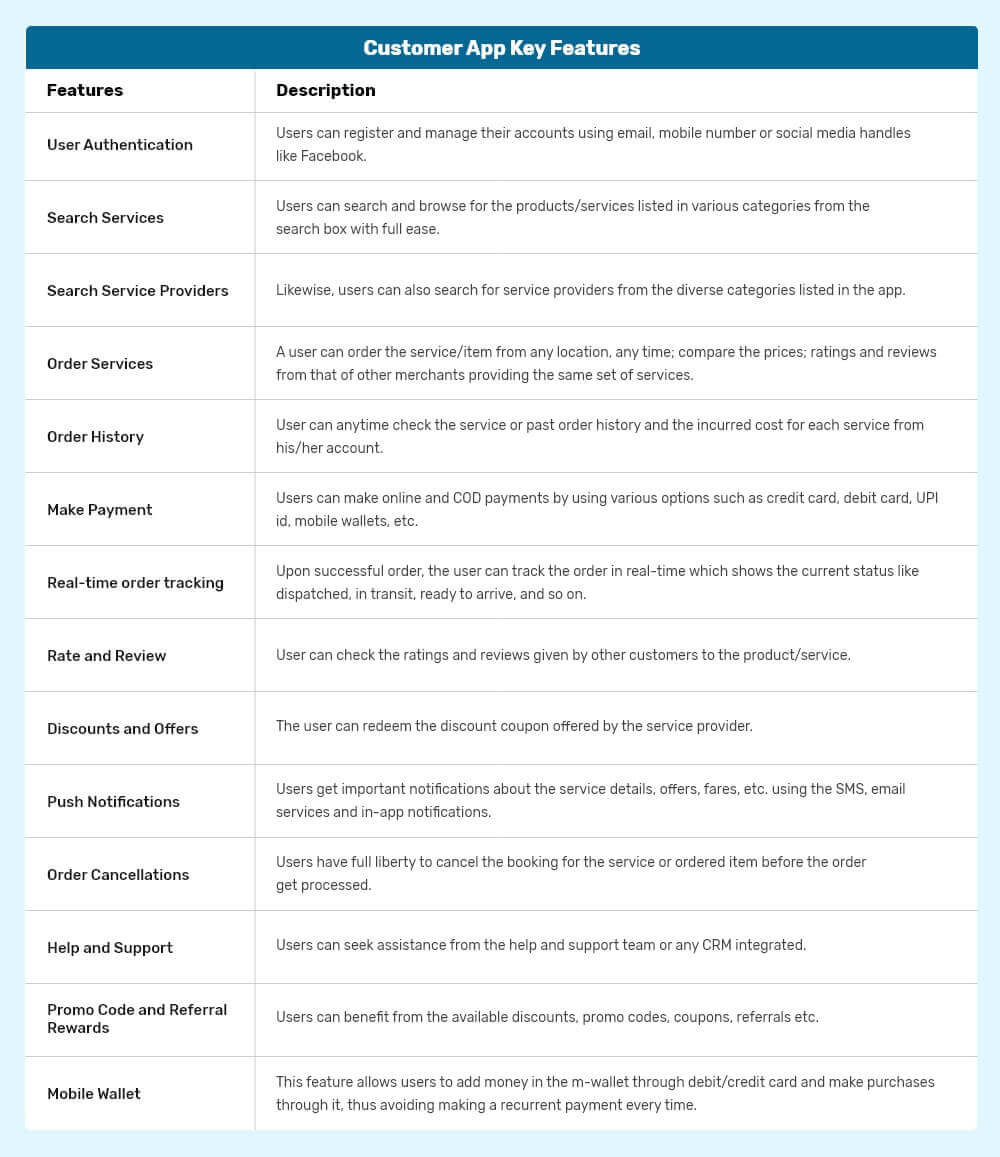
  1. Customer App
  2. Service Provider App
  3. Driver App
  4. Admin Panel (Web-based)

Let’s cover their features in detail for all these user roles.
Top Industries Disrupted By On-demand Economy

1. Courier Delivery

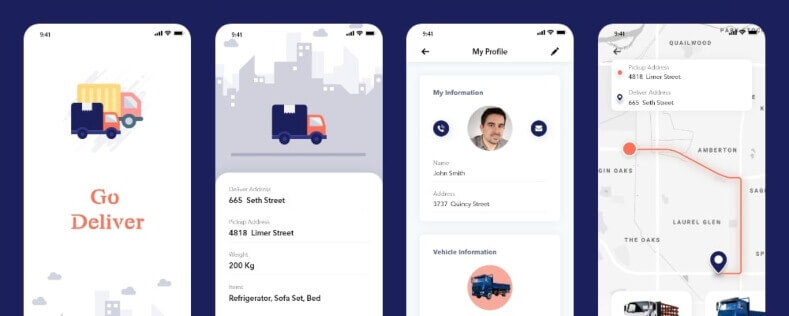
On-demand package delivery or courier service application lets the user deliver or pick up anything from anywhere to any place. This kind of apps helps startups and businesses to deliver orders or pickup from restaurants, retail shops, grocers, and more. Examples of such kind of popular apps are:

  • Order anything from anywhere (Postmates)
  • Deliver anything within the city using your own team (Pickrr)
  • Deliver food from nearby restaurants (UberEats/Foodpanda)
  • 60 minutes express delivery service (Bigbasket)

2. Online Food Ordering

This app platform allows restaurant owners to take online food orders and deliver food at their customer’s doorsteps. The online food ordering app solution supports some of the major features like real-time order tracking, online payments, order management, menu management, adding discounts, promos or referrals etc. Some of the successful apps scoring high in the on-demand food industry include:

  • Search top local restaurants and order food online (UberEats)
  • Order from local restaurants and takeaways online (JustEat)
  • Find the best restaurants, cafés and bars (Zomato)

3. Home Services
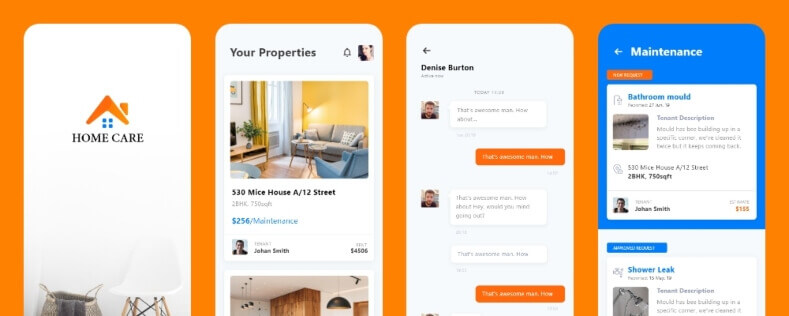
Home services app allows the users to hire safe and trusted local professionals for getting household chores or personal things done that a user needs in a day-to-day life e.g. furniture assembly, TV mounting, help moving, home cleaning and repairs, business and taxes related help, appliance repair and more.

  • A temporary staffing app to connect users with the trusted local handyman. (TaskRabbit)
  • A platform to search & hire trusted local professionals to take care of all day-to-day needs (Urbanclap)

4. Grocery Delivery
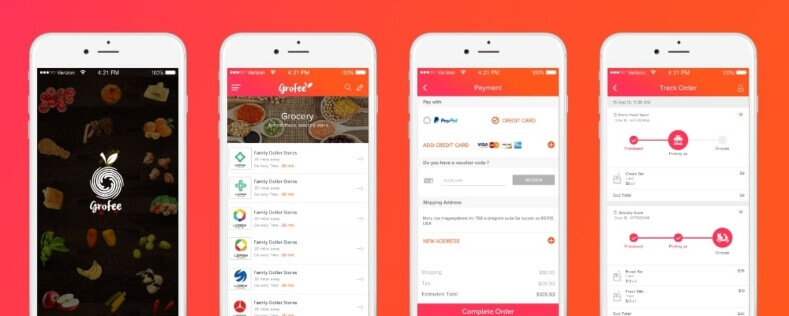
Online grocery shopping apps were already catching the pace fervently amongst the consumers. Then we met an unfortunate pandemic that forced the compulsion of using the grocery app for home delivery services and left it as no more an option.

Online grocery, food and other household chores delivery at customers’ doorsteps has become the need of the hour. For grocery store owners, supermarket chain owners or simply a store aggregator looking to improvise their ROI or expand business; an on-demand grocery app is a right medium.

Few example-setters in this industry are:

  • An app that delivers groceries from local stores to doors on the same day. (Instacart)
  • An app that stores users’ grocery lists and tracks what you don’t have in the pantry. (Mealboard)
  • An app that shows the best available deals at local supermarkets. (GroceryPal)

5. Beauty & Salon

Getting pampered in less time, in busy schedules, in the comfort of the home in this tightrope walk of the life comes as the boon that every next person wishes for.
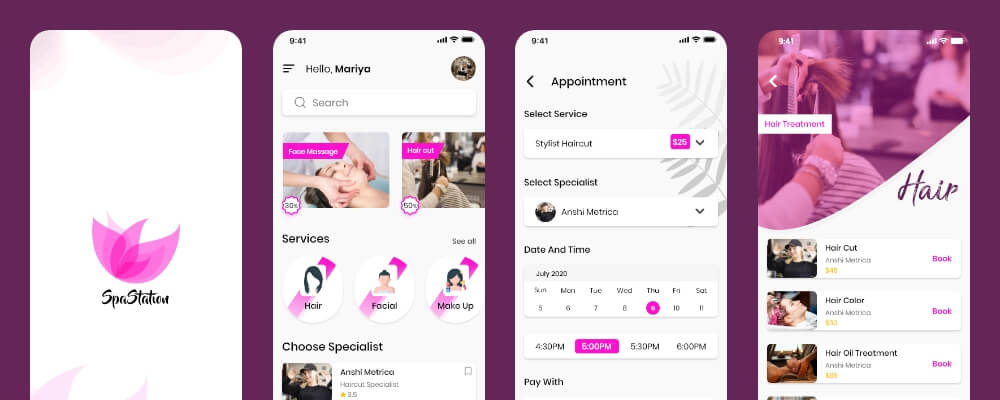
For such instant gratification, on-demand beauty and salon apps come as a rescue for people of all ages looking to be groomed at home. On-demand beauty apps have enabled users to make online salon booking appointments and hire an in-home stylist in just a few taps. Some successful models in the beauty industry include:

  • Hire stylists : Hire your own stylists to serve you at your place.
  • Salon booking appointments : To book salons online.
  • Marketplace model : To list stylists with ratings and reviews.

6. Health and Fitness

The healthcare industry is a global trillion-dollar industry comprising telemedicine, fitness, and other clinical continuum applications.

Today in the wake of COVID-19 and with the technology advancements, we’ve seen a major revolution in the way healthcare and fitness services are delivered.

Day-to-day requirements like online appointment booking, appointment scheduling, remote visits with patients, wearable technology integration, hiring personal fitness trainers etc. have become the lifeblood of healthcare and fitness service providers.

Some of the successful healthcare apps and fitness app solutions running with the on-demand model are:

  • Doctor visits the patient at his location (DoctorOnDemand)
  • A Telemedicine app solution (Amwell, TeleDocto)
  • On-Demand Medicines Delivery (MedPlus)
  • Marketplace model – An aggregation of doctors, clinics, hospitals etc. (Practo)
  • Personal trainer fitness app- (JEFIT)
  • Calorie Counter & Diet Tracker (MyFitnessPal)

Supercharge your healthcare capabilities, reduce operational cost, and advance the quality of care with our ready-to-deploy telemedicine solution.

Visit Teledocto

7. Transportation and Logistics

We are all aware of the phenomenal disruption bought by the on-demand taxi industry. Technology-driven platforms have made it possible for people to start their own online taxi booking business, logistics business & car-pooling platforms, which led them to rent their car on an hourly basis and earn more.

Here are few verticals in an on-demand ground transportation business that are running successfully:

  • Cabs on-demand (Uber)
  • Ridesharing Platforms or Car Pool (Lyft)
  • Transport vehicles on-demand like trucks, vans etc. (Cargomatic, Uber Freight)
  • Rental platform for cars (ZoomCar)
  • Platform to hire chauffeurs for personal cars (DriveU)
  • On-demand valet parking (Luxe)

[18:38] Nihit Thakkar

Planning To Create A Market-Winning On-demand Delivery App Fortified With Customer-Centric Functionalities and User-Friendly Experience?

GET A FREE QUOTE

How to Create An On-demand Pick-up and Delivery Service App like Postmates?

Whenever we talk about on-demand delivery, Postmates comes in the top of the mind.

Being the earliest startup to harness the power of the mobile app and the nascent on-demand ‘gig economy’ to serve city dwellers with courier services in just a tap of a button, Postmates is hailed as an influencer app in on-demand delivery economy.

Postmates is a San Francisco, U.S based logistics and delivery app facilitating order delivery or pickup services from local restaurants, grocers, and more in the U.S cities.

Postmates Biggest Rivals are DoorDash, GrubHub and UberEats

The on-demand package delivery app has three stakeholders:

  • Customer App
  • Vendor or Service Provider App
  • Delivery Boy App

Want to know how they function? Or say, what all features they have?

Get the details here with the business model of Postmates

Technologies Used For On-demand Delivery App Development

1. Front-end Development

Native iOS App Platform : (Objective C, Swift)

IDE : Xcode 11, AppCode

Platform SDK : iOS SDK, Cocoa Touch

Native Android App Platform : Android SDK (Java), Kotlin

IDE : Latest Android Studio

Platform SDK : Latest Android SDK

Web Platform : HTML5, CSS3, JavaScript, TypeScript

JavaScript Frameworks : Angular JS, React JS, Vue.JS, Express.JS, etc.

2. Back-end Development

  • Programming Languages : Ruby, Elixir, Python, PHP, Java, etc.
  • Web Frameworks : Ruby On Rails (recommended), Phoenix
  • Database Servers : PostgreSQL, MySQL
  • Web Servers : NGINX, Apache
  • Cloud Server Platforms : Amazon Web Services (AWS, EC2, S3, etc.)
Top Market Players Making It Big Through On-demand Apps

Key Strategies and Value Proposition

Venture Capitals, well-established companies with backings of investors are pouring money into on-demand apps. For new startups and early-stage entrepreneurs the market has become highly competitive and full of risks.

Without any unique selling point and sustainable feature, it is hard to survive and thrive in the market.

The current market players successfully running and ruling the on-demand economy are breaking the clutter with their unique value proposition that makes them stand out from their rivals.

So, before you plan to create an on-demand delivery app it is extremely crucial to ponder- What your competitors are offering? What is their unique selling point?

To help you out, our team of marketing strategists have researched on top industry market players or on-demand delivery apps with their USPs.

Hope you find it insightful.

How to Kickstart On-demand Delivery App Development?

  1. Market analysis
  2. Choose your business model and a right marketplace
  3. Find an experienced mobile app development company
  4. Chart out required app functionality
  5. Launch and test the service

1. Market Analysis

Before shifting gear towards app development looking into the market both in volume and value is equally important. Whatever industry you’re planning to build an app conduct market research for analyzing its customer segments (both demographically and segmentation wise), buying patterns, the competition, barriers to entry, regulation, and market value.

2. Choose Your Business Model And A Right Marketplace

As a next step, find the right business model to nurture your idea into a credible business. Validate your business idea genuinely solves customer’s problems and customers are willing to pay money for same. If it doesn’t relieve the pain, the business model doesn’t work.

You can also plan to execute a local rollout by getting build a MVP and test costs, quality and pricing in a local area. Collect customer references and feedbacks.

After working on the business model it’s time to underline the pricing and app monetization strategies. The main things to consider while choosing it are:

  • How much do you need to earn?
  • How does your pricing match with your competitors?

For your idea here we’ve compiled a list of on-demand economy companies with their monetization strategies. Let’s see how they charge their customers/partners and fulfill their financial targets.

Other App Monetization Strategies

  1. In-app home page advertising
  2. Delivery charges
  3. Peak hours
  4. Commission percentage
  5. Extra fee for rush delivery
  6. Subscription plans
  7. Service fees (% from the orders and the delivery charges)

3. Find An Experienced Mobile App Development Company

After thorough market research and solid idea seeding a high-quality product is essential as that will result in your efforts and unique value proposition in the market.

In order to develop one, you have to hire a reliable mobile app development company.

Note that partnering with an illegitimate company may lead to serious consequences such as loss of confidentiality, hidden costs, loss of control and other factors that may tarnish your trust, service quality and plans.

So, what needs to be taken into consideration while hiring a mobile app development company?

Company Expertise

The easiest way to check if the company can turn your dream concept into reality is to get acquainted with their portfolio, professional experience and evaluate how well they have done similar projects.

Apart from this the other metrics that analyze company’s standards and compliances are:

  • Its flexibility to adapt to unique business needs.
  • Ratings, feedback, and reviews given by other clients as testimonials on their previous work delivered.
  • Take a glance at case studies of similar on-demand apps developed by the company.

App Development Cost

To estimate the rough cost of development you need to know the functional requirements of your app, cost per hour charged by the development company (varies country wise) and several other factors including:

  • App Discovery (on-demand)
  • Project Analysis and Scope Statement
  • UI/UX Development
  • App Platform (Native, Cross-platform, Hybrid, Web apps)
  • Technologies Used
  • App Deployment
  • App Maintenance
  • App Security

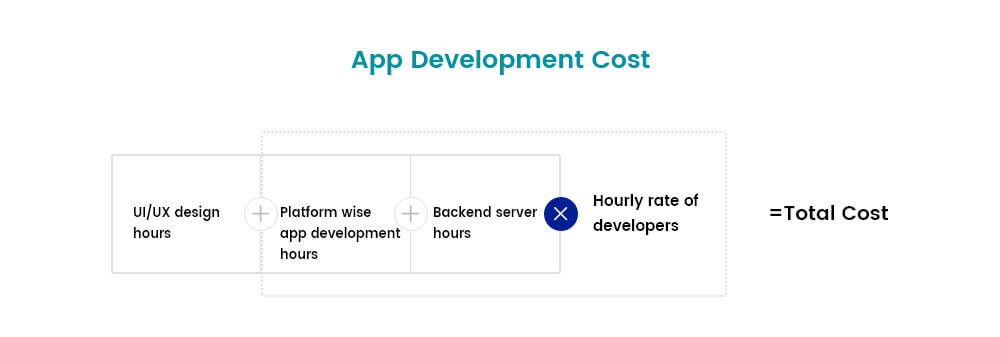
Still, if you want a simple method to roughly estimate app cost, you can consider the product of two variables: number of hours and app developer’s hourly rates. Here’s the cost estimation formula.

Related reading : The Total Cost to Create an On-Demand Delivery App

Unlock Our Complete Guide to Know In Detail the Factors That Heavily Influence the Mobile App Development Cost
ACCESS NOW

app-development-cost

How Codiant Can Help You?

Codiant empowers start-ups, physical stores, enterprises, and aggregators to take their business online with its user-friendly technology products. We’ve the combined expertise of executing technology products and developing on-demand delivery apps for more than 60+ businesses ranging from on demand food delivery, taxi services, beauty solutions, telemedicine, quick delivery of grocery, Cannabis, Alcohol and more.

Some Of the Popular On-demand Apps Developed By Us Are:

SIX Taxi App (On-demand Taxi App)

Six taxi is an on-demand taxi mobile app for public commutation that aims to assure that drivers earn more while driving less through the power of referral commission and provide a quick service fulfillment to passengers on the go.

Brilliant Move (On-demand Logistics App)

Brilliant Move is an on-demand logistics solution that powers customers, retailers, and delivery crews lacking a fully integrated and dedicated delivery network with an on-demand delivery platform.

ClickDrs (On-demand Doctor App)

ClickDrs app eliminate communication barriers between patients and doctors. This on-demand doctor app provides online appointment booking, scheduling, remote monitoring via high definition video calls, integrated billing, etc.

Qwikdrop (On-demand Courier Delivery App)

Qwikdrop is an on-demand delivery platform that connects merchants and individuals with crowd-sourced drivers to enable virtually anything to be transported locally in minutes.

Instrafresh (On-demand Grocery Delivery App)

Instafresh is a smart grocery shopping assistant app which allows shoppers to search store list nearby them. As per their favorite local stores, they can order the grocery products from the app. Instafresh personal drivers will pick and deliver their orders in as little as 60 minutes.

How eLearning Mobile Apps Are Transforming Education Industry?

Technology. Digitalization. High-Speed Internet – is rapidly transforming the education sector to maintain the pace with the ongoing requirements. The advanced learning method is supporting students to join lectures at any time and from any part of the globe.

The traditional mode of learning is now almost overtaken by eLearning mobile apps. As a result, learners and educators are now loaded with digital modes of learning, it includes digital textbooks, eLearning apps, and a range of online courses and test series.

A smartphone is no longer considered a luxury but rather a necessity, that is accessible to both teenagers and adults. Such a wider reach of mobile devices has also influenced the global EdTech market and companies to enter into the education business world. Hence, hundreds of startups have built thousands of eLearning-based smartphones supported mobile applications that follow numerous creative approaches to facilitate learning.

The eLearning trend follows the essence of teaching and information sharing. Gradually, the knowledge acquisition trend from the eLearning app has been raised to a new level. It becomes possible due to available options and module selection.

Let’s have a deeper look at the market stats of the eLearning industry, major revolutions and key changes, and technology trends that brought changes by the eLearning app in the education ecosystem.

Market Statistics of the Online Learning Industry

Market Statistics of the Online Learning Industry1677651827

  • The global eLearning apps market revenue will almost become twice as much from 2022 to 2032, reaching USD 476.5 billion at the end of 2032 at a CAGR of 7.1%.
  • 64% of trainees prefer smartphones only to access their educational content for learning.
  • 89% of mobile learners download multiple applications but a minimum of 50% of those downloads are for self-learning.
  • 46% of users prefer smartphone learning or training before going to bed.
  • 71% of learners/trainers prefer studying on a smartphone rather than on a PC or conventional learning mode.
  • Commonly, a learner dedicates about 2 hours and 51 minutes to learning on their mobile every day.
  • A mobile app learner/trainer completes their course or assignment 45% quicker instead of from a PC.
  • Educational mobile apps are the second most popular in the world’s app store with 9.31% shares.

Major Revolutions and Key Changes in the eLearning Mobile Apps Industry

Major Revolutions and Key Changes in the eLearning Mobile Apps Industry1677651879

1. Customized Learning Experiences

The learning and grasping abilities and modes of learning vary from individual, such as visual, auditory, kinesthetics, etc. The eLearning mobile apps are equipped with new digital transformational technologies that are making it convenient for students of different learning abilities and types to grow in their most suitable manner.

The learner can even set their learning goals and go at their own pace, communicating with educators and fellow students to personalize the learning experience. Advanced tech-enabled, such as AI and Machine Learning apps support varied learning methods that help students to learn faster. It includes interactive games, modeling tools, learning graphs, video production, and many more.

2. Accessibility

The portable learning and education modes have now reached the toughest terrain of the earth where people don’t have easy access to educational institutes, schools, colleges, and universities. There could also be the possibility that they are incapable to afford the heavy charges of learning institutions in large cities, where they can explore more options.

The educational trends are evolving and reaching a deeper level of subject understanding, rather than sticking to memorization. The latest eLearning app development trend is now backed with new technologies that are bridging the learning gap. It is making knowledge and learnings easily accessible to remote learners and reaching all corners of the world in the most simplified manner.

The courses and learning are available in multiple modes to allow the maximum population to understand it, such as in audio and video form, voice-to-text, and text-to-voice transcription which ensures learning is no longer confined to reading only.

3. Enhanced Interaction

The traditional mode of learning and translating it into a white paper just to pass the exams is no longer serving and enhancing students’ learning capabilities. They require a broader spectrum of an interface, and interactive learning sessions, actionable feedback that supports higher student engagement.

eLearning apps are delivering all these aspects very aptly by providing an interactive and engaging user interface with an appealing design. A well-designed and presented app attracts users’ attention and makes them stay longer on the platform, and offering engaging learning courses works as the icing on the cake. It enhances learning, understanding, and problem-solving capabilities with ease.

4. Promoted Self-Directed Learning

The self-directed learning process is in which a student takes the initiative, with or without the help of any teacher or trainer.

They can analyze their learning requirements, define learning goals, identify resources, determine and implement learning strategies and evaluate the results. The education apps provide learning support to self-directed learners in the context of their problems.

The education apps provide learning support to self-directed learners in the context of their problems.

The eLearning mobile apps promote learning beyond the classroom. It supports the self-learning method by offering personalized learning experiences. It also approaches learners to participate in a task where at a certain level they are provided the instructor’s support and later on withdrawn to encourage a self-directed learning approach.

5. Keeps Informed with Instant Updates

Push Notification in an eLearning mobile application is the aptest feature that helps the learner to remain updated about every detail and never miss any important announcement or notice.

Teachers or trainers can send alerts to students about any new updates or changes in exams, timetables, syllabus, online class timings, event information, etc. with a single tap.

The Push Notification comprises multiple elements. It typically includes a title, message, image, and URL. A push notification is a simple, informative, and attractive message that gains the reader’s attention and quick response or actions as well.

6. Encouraged Environment Sustainability

With the rising trend of digital learning mode, the excessive usage of papers and other resources to design learning materials has been controlled to a great extent.

Now, there are even subject-specific applications available in the digital market.

Did you know? About one-third of the entire learner population has shifted to a digital mode of learning.

The handy access to all the information and digitalization of all minute data has shifted the trend of preferring digital learning over traditional learning.

The on-demand education has made learning accessible from anywhere, anytime, and carved a path toward a greener and more sustainable environment.

Trending Technologies Transforming the Education Sector in 2023

Trending Technologies Transforming the Education Sector in 20231677651934

1. Artificial Intelligence (AI)

AI technology has made its presence in almost every business sector including finance, manufacturing, healthcare, and education as well.

Application of AI in eLearning mobile apps can manage time-consuming tasks to ease the workload of teachers or trainers. The technology helps to deliver an enhanced and customized learning experience to students.

The AI-enabled eLearning applications can enrich students’ performance by integrating voice-to-text and text-to-voice feature that helps students to prepare notes and learn their chapters by reading or hearing the class and notes.

2. Virtual Reality (VR)

VR is a computer-generated technology that supports an interactive learning environment by almost forming a real-world experience and helping students to better engage with the subject.

The interactive teaching and learning method promotes learning ability and increases student retention rate.

Through VR technology the student can not only see something but also experience it as real.

Integrating VR technology with your eLearning mobile app demands less equipment to interact and can help to reduce ample amount of expenses in arranging suitable infrastructure.

3. Augmented Reality (AR)

AR technology is usually used in association with VR technology to simulate its effect accurately in the real world. Whereas, the individual purpose of integrating AR technology is to provide a sense of feel and touch to learners and educators while studying anywhere and anytime.

AR technology in the eLearning segment helps to make education an immersive field rather than a rigid and forced teaching and learning atmosphere for both teachers and students. These technologies help to promote the distance learning experience.

4. Internet of Things (IoT)

IoT can introduce several changes to both online and offline learning modes. It helps schools and colleges to create smart campuses, automate recursive tasks, and allow access to advanced technologies that facilitate students’ learning processes.

The IoT-enabled devices can also be used to track students’ activities and class attendance, which instantly alerts teachers and their respective parents about the student’s status.

This feature can initiate added security and transparency in availing of digital mode of learning services.

5. Chatbots

Virtual Assistant chatbots are making our lives easier and the digital learning experience has even become more simplified and streamlined.

There are about 3.5 billion voice assistant bots available in the global market. There will be 8.4 billion such devices by 2024, which will be more than the world’s total population.

The chatbots in the eLearning system are providing a custom learning environment. For instance, supporting the conversion of lectures into chats or a series of messages.

This technology can also help specially-abled students to attend classes through text or chat teaching mode.

Final Words:

Considering the ongoing market trends the introduction of technologies is playing a vital role in redefining and enhancing the modern education system, ranging from smart classes to gamification.

The technologies are supporting mobile applications effectively, such that eLearning mobile apps have become the core of the EdTech sector. Hence, the learners can access educational videos or extract information on demand – anytime, anywhere.

Strengthen your educational pattern, institute, or training model with smart eLearning mobile applications.

Or even if you look to upgrade it with new advanced technologies to minimize budget, deliver superlative pedagogy, and achieve faster results then hire an education app development company.

Just ensure the company has a diverse and industry-rich portfolio and get a feature-rich app developed that serves your organization’s purpose and motto.

Cost to Develop an On-Demand Trucking App

For truck fleet owners or cargo movers, the average cost for running the trucking industry is going sky high. From fuel the opening expense that easily consumes more than $70,000 per year i.e. 39% of total costs, to repairs and maintenance of tires, brakes, wiring, alternators, etc. that adds up another 10%, to driver salary that overheads 26% of overall expenses, and insurance charges that also includes permits, licenses and tolls eats the major portion and costs a hefty amount.

With these increasing challenges, Top On-demand Trucking Apps are helping trucking companies, cargo movers and small to big fleet owners expand, automate and streamline their business.

on-demand-trucking-app-solution-codiant

In this blog, we will learn about the key features it takes to build an Uber for trucking app and other significant aspects mentioned below:

Key Highlights

  1. Types of business model
  2. How to develop an on-demand trucking app – key features of carriers, shippers and admin
  3. Top market players in Uber for trucking industry
  4. Technology Stack used in developing on-demand trucking app
  5. How much does it cost to develop an Uber for trucking?

Types of Business Model

If you are looking for On-demand trucking app development, there are two possible states:

    • On-Demand Trucking Marketplace App – On-demand trucking marketplace apps match trucking companies with shippers that need to move freight. By this app, you can support shippers, truck owners & operators/cargo movers and fleet dispatchers by getting built an easy-to-use “Uber for trucking” app that helps them increase their speed and efficiency.
    • On-Demand Trucking App for Truck Fleet Owners – If you have your truck fleet or logistics business you can opt for this model to automate, expand and streamline your trucking operations conveniently.

    How To Develop An On-Demand Trucking App?

    Driver App Features

    • Driver Authentication : Driver can register with their phone no, name and email id and submit other useful information like license, identity card, etc.
    • View Shipping Request : Driver can view a waiting list with a shipping request.
    • Accept/Reject Shipping Request : Driver can accept a request or cancel it.
    • View Shipper details : In this feature, driver can see the shipper’s contact details.
    • Shipment details : This feature allows driver to see freight details like type of load, pick-up and drop-off locations, and scheduled pickup time.
    • Real-time Chat : Driver can chat with the shipper for making transit seamless.
    • Route Tracking and Optimization : Driver can see LIVE map and best-optimized route with real-time traffic for reaching the delivery location.
    • Push Notifications : Driver will receive push notifications for new delivery requests, messages, and payments.
    • Proof of delivery : After making a successful shipment delivery, the driver takes a photo of the bill of shipment and proof of delivery is emailed to the shipper.
    • E-signatures : Driver can also e-sign the bill of shipment or take the photo of it as a proof of delivery.

    Shippers App Features

    • Registration & Login : Shippers can seamlessly register with email id and phone no.
    • See Available Vehicles : Shippers can see the see available trucks on the map.
    • Send Shipping Request : Shipper can list jobs by specifying freight dimensions, pick-up and delivery addresses and book and schedule the pick-up beforehand.
    • Push Notifications : Shipper will get notifications when the carrier/driver accepts the delivery request, confirms delivery by proof of delivery.
    • Vehicle Tracking : This feature allows shippers to track shipments in real-time all the way from pick-up to the destination.
    • Make Payment : Shipper can make an online payment for the shipping charges via major credit/debit cards, cash or e-wallets.
    • Rate Carriers : Users can rate and review carriers/drivers for their service.

    Admin Panel Features

    • Dashboard : Admin can view all the current and completed shipments made, active carriers/drivers, available and busy vehicles, and shippers’ order and pending requests on a single screen.
    • Driver Monitoring : Admin can check the carriers’ current location, freight details like types of load in the container, etc. Admin can also send a personal message to the carrier or even broadcast the message to all carriers in the app.
    • Bill Management : Admin can check all the incoming payments from the shippers to drivers, the total commission earned, etc.

    on-demand-trucking-app-market-leaders

    Technology Stack of On-demand Trucking App

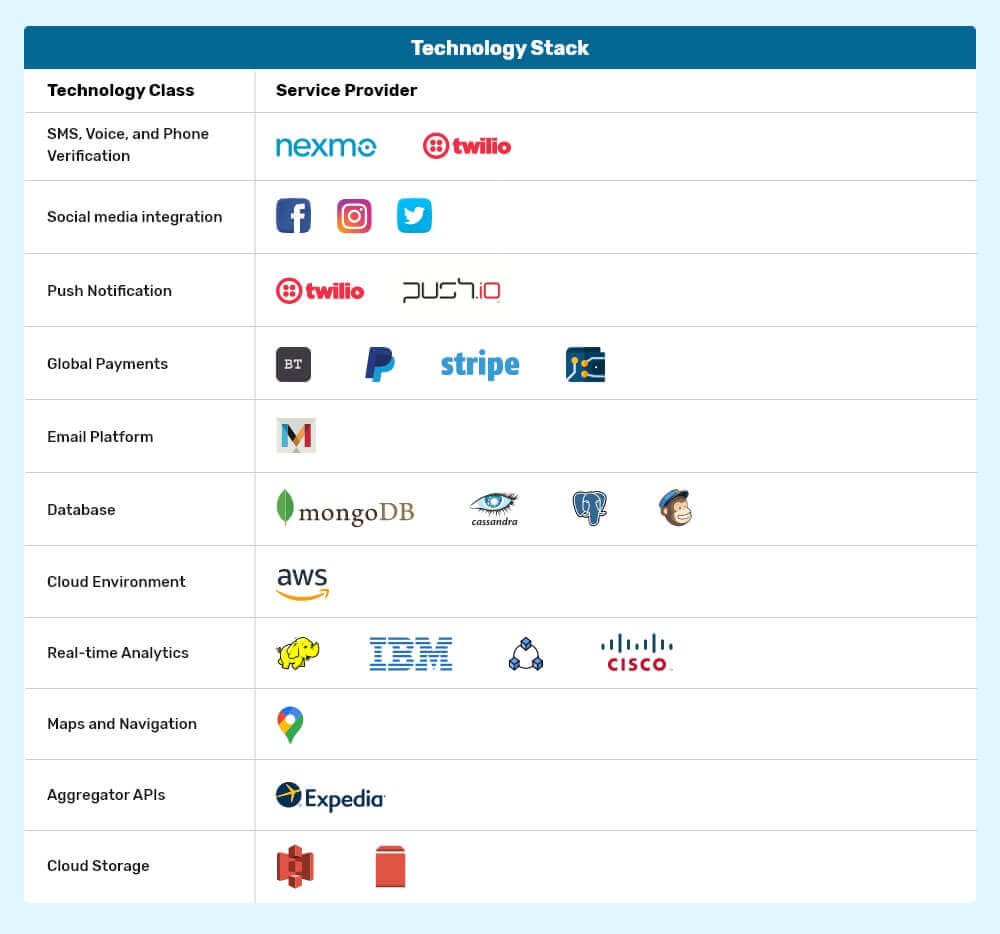
    on-demand-trucking-app-tech-stack

    How Much Does It Cost To Develop An Uber For Trucking App?

    The cost structure of the Mobile App Development Companies doesn’t only hinge on development time and hourly rates. It depends on several factors, including the app features, the complexity of the app, third-party integrations (leads to additional time spent), technology stack used and post-release support expenses.

    Furthermore, it depends on the online repute of the mobile app development company along with its expertise.

    Related reading: How Much Does It Cost to Build a Logistics and Transportation Mobile App?

How Much Does It Costs To Develop A Grocery Delivery App?

“They want great prices and wants great service as well.” You are already running late if you’ve still not transitioned to door-to-door delivery strategy from the grocery aisle.

There is a mad rush in “Grocery Delivery App Development” companies and according to a report from eMarketer, this frenetic pace seems to be unstoppable.

Key Highlights:

  • What is an online grocery delivery app?
  • The ultimate guide to create a grocery delivery app- key features included
  • Types of grocery business model
  • Top market players in grocery delivery
  • Benefits of making a grocery delivery app
  • Discussing the grocery app development cost

grocery-delivery-app

What Is An Online Grocery Delivery App?

When your fridge is running out of foodstuffs, and you’re too busy to run an errand, holding a smartphone to use a grocery app is an easy solution. Online grocery shopping apps help people in ordering grocery products from mobile app anywhere, anytime. The order gets delivered at the doorsteps.

How to Create a Grocery Delivery App

One of the biggest reasons for the growth of grocery app usage is convenience. Nielsen points out: “Functionality and ease of use should be top priorities in app and website design, help should be readily available, and the checkout process should be simple and secure.”

Today, shoppers want apps that are easy in navigation and simple to understand.

The UI design and customer experience can make or break a shopper’s experience. To curb out this risk we at Codiant have minutely crafted the desirable objectives of a grocery app whose features displays regular sense of authenticity and its design wins the confidence of a customer. Let’s understand precisely.

Grocery delivery app Codiant

Customer/User App Key Features

  • User Profile: User can easily create an account by phone no, email id or any social login.
  • Search Products: User can search grocery products by category, subcategory or by entering keywords in the search panel.
  • Browse Products: List down, select and view product descriptions, details of any product.
  • Schedule Delivery: Users can schedule a preferred delivery time as per the different time slots available.
  • Cancel Request: Users should be given liberty to cancel the request within a short time period may be 5 minutes.
  • Order Tracking: Users can track order based on service like order accepted, getting packed, deliverer reached the pick-up location, collected the package, on the way to drop off location and reached.
  • Make Payment: Multiple payment gateway integration allows users to make payment via cards, eWallet, COD or net banking.
  • Tip Deliverer (Optional): If quick deliveries, good behavior and service delights customers, they can tip the deliverer in the app itself.
  • Avail Offers: Every user vie for an offer, discount, coupon codes etc. to cut down the cost. Through this admin can giveaway interesting deals and offers.
  • Give Feedback: If the user enjoyed the whole process right from picking a product to getting it delivered; app can prompt them to rate the experience and share the feedback.

Deliverer App Key Features

  • The delivery boy receives a delivery order notification
  • Views order detail
  • View customer’s location on map
  • Accept/Reject the order request
  • View complete customer details when accepting the order and can call them if necessary
  • Message to customer
  • Update their location status
  • Pick order and drop order to the delivery address
  • Make payment to grocer/supermarket retailer
  • Take payment from customers (if COD)
  • Receive feedback and rating from customers and retailers
  • Manage account to check total accepted or cancelled order, no. of jobs done and sales made.

Admin Panel Key Features

  • Dashboard: A dashboard gives a god-view to manage and track all the orders.
  • Management: Admin can manage accounts, categories, subcategories, products, retailers (if an aggregator model), customers, and drivers.
  • Manage Order status: Admin can check the current status of the order and update it on the app say like if it is confirmed, pending, canceled or complete.
  • Manage Review and Rating: The admin has full authority to manage customer comments for a deliverer, app, services, retailer etc.
  • Manage Notifications: App notifications to be sent to users can be managed under this feature. For instance, order confirmed, order details along with arrival time, order status is pending or “on the way”, order successfully delivered, driver accepted the order request and about to reach, promotional and offers notifications etc.
  • Manage Reports: Admin can manage total registered and active customers, retailers, and deliverers (online by area on map and their availability with status).

Additional Features

  • Push Notifications
  • Inventory Management
  • Customer Support
  • Real-time Analytics
  • Communication through SMS, chats and emails.

Note: The aforementioned key features are listed for the grocery store or grocery chain owner business model. They are subjected to change for aggregator business model!

Customer/User App Key Features User Profile: User can easily create account by phone no, email id or any social login. Search Products: User can search grocery products by category, sub category or by entering keywords in the search panel. Browse Products: List down, select and view product description, details of any product. Schedule Delivery: Users can schedule a preferred delivery time as per the different time slots available. Cancel Request: Users should be given liberty to cancel the request within a short time period may be 5 minutes. Order Tracking: Users can track order based on service like order accepted, getting packed, deliverer reached the pick-up location, collected the package, on the way to drop off location and reached. Make Payment: Multiple payment gateway integration allows users to make payment via cards, eWallet, COD or net banking. Tip Deliverer (Optional): If quick deliveries, good behavior and service delights customers, they can tip the deliverer in the app itself. Avail Offers: Every user vie for an offer, discount, coupon codes etc. to cut down the cost. Through this admin can giveaway interesting deals and offers. Give Feedback: If the user enjoyed the whole process right from picking a product to getting it delivered; app can prompt them to rate the experience and share the feedback. Deliverer App Key Features The delivery boy receives a delivery order notification Views order detail View customer’s location on map Accept/Reject the order request View complete customer details when accepting the order and can call them if necessary Message to customer Update their location status Pick order and drop order to the delivery address Make payment to grocer/supermarket retailer Take payment from customers (if COD) Receive feedback and rating from customers and retailers Manage account to check total accepted or cancelled order, no. of jobs done and sales made. Admin Panel Key Features Dashboard: A dashboard gives a god-view to manage and track all the orders. Management: Admin can manage account, categories, sub categories, products, retailers (if an aggregator model), customers, and drivers. Manage Order status: Admin can check the current status of the order and update it on the app say like if it is confirmed, pending, cancelled or complete. Manage Review and Rating: Admin has full authority to manage customer comments for deliverer, app, services, retailer etc. Manage Notifications: App notifications to be sent to users can be managed under this feature. For an instance, order confirmed, order details along with arrival time, order status is pending or “on the way”, order successfully delivered, driver accepted the order request and about to reach, promotional and offers notifications etc. Manage Reports: Admin can manage total registered and active customers, retailers, deliverers (online by area on map and their availability with status). Additional Features Push Notifications Inventory Management Customer Support Real-time Analytics Communication through SMS, chats and emails. Note: The aforementioned key features are listed for the grocery store or grocery chain owner business model. They are subjected to change for aggregator business model!

Business Model of Online Grocery Stores

1. Brick & Mortar and Store-pick Model

This model is typically followed by those grocery retail or wholesale companies which either have existing grocery stores, like Tesco, or those which have partnered with supermarkets, like Grocers, also known as aggregator model.

In aggregator model, brands partners with existing supermarkets to collect orders and then deliver them as per their preferred delivery system. This model relatively has a low cost since there are no additional warehouse costs, and the goods are easily available at the supermarket the company has partnered with.

2. Pure-Play and Warehouse Pick Model

This model is followed by companies, like Freshdirect, who do not have any brick and mortar grocery store neither they partner from any supermarket. Instead they directly buy from producers/manufacturers, and operate their own warehouses where they stock the products.

3. Hybrid Model

This model is the aggregation of both store-pick model and warehouse-pick model. Example of it is Peapod- having no store of its own. But in some cities in U.S it has partnered with existing supermarkets to pick and deliver groceries.

 top-grocery-delivery-apps-codiant

Benefits of Making a Grocery Delivery App

ACCESS NOW: 5 WAYS GROCERY DELIVERY APP WILL DISRUPT SUPERMARKET CHAINS

Cost to Create an On-demand Grocery Delivery App

Though the cost of creating a grocery delivery app depends upon several factors like no. of platforms, features and functionalities, pricing model, APIs (if any), etc. you can always request a ballpark figure from the best grocery delivery app development company.

The approximate cost to develop a grocery delivery app ranges somewhere in between USD 18,000-30,000

If you’re in a hurry you can also go for a grocery delivery app script or a ready-made grocery delivery app. These types of white-label solutions help you in taking your brick-and-mortar stores online in no time. Just customize it with your requirements and res-skin with your own branding elements.

How to Develop a Fantasy Sports Mobile App like Dream11?

fantasy-cricket-app

Dream 11, the growing obsession and stimulating play, gets glued millions of sports aficionados across the country. As the name shouts ‘Fantasy Sports’, immerses everyone in a virtual game which is played more of an imaginative style.

In time, the penchant of Fantasy sports has spiked colossally and has fuelled in even greater mass velocity by rapid advancements in technology. Fantasy Sports App like Dream 11 is no exception.

An India based fantasy sports platform majorly boasting fantasy cricket league and other sports like football, kabaddi and basketball is into the spotlight, with a rapidly growing base of 20 million+ users.

The app that lures sports enthusiasts on the offerings like sign-up bonus, cash prizes, and a craze tied with lots of enthusiasm have won millions of hearts in the world and established a strong foothold, big enough to be hailed as a World’s #1 Fantasy Cricket & 6th Largest Fantasy Sports Site.

Related Article : Fantasy Sports: Statistics, Emerging Trends and Investment Opportunities

Here’s a breakdown of growing market of fantasy sports that will show you a bigger picture of this bandwagon:

Fantasy-Infographic_V3-2

Fantasy Sports Games- Market Growth and Action Stats across the World

  • Fantasy sports started in USA in 1952. Today there are over 200+ operators with 59.3 million users (21% of US population). 65% of the male sports fans in USA play fantasy sports.
  • Rapid growth in India in the last two years- from 2 million users in 2016 to 20 million in 2018.
  • Projected fantasy sports users by 2020- 100 million, 30% of online sports fans in India.
  • 2 out of 3 or 67% of online sports fans in India are aware of fantasy sports.
  • Engagement wise, users spend 42 minutes a day on fantasy sports app.
  • Fantasy Sports is highly sticky- 89% of the users play it at least once a month.
  • Out of the users who have ever played fantasy sports- 96% of them have played it at least once in the past 1 year.
  • 60 operators and growing: India is becoming the battlefield of fantasy sports operators.
  • With 20 million fantasy sports users, India rapidly catching up with western countries.
  • 53% of players primarily use their mobile device for fantasy

//SOURCE: IFSG- AC Nielsen report- Scoring big with Sports Gaming

Core App Features and Functionalities to develop an App like Dream11

Features of Participant/User App

1. User Authentication
1.1. Login
1.2. Register
1.3. Referral Code
User can register and log-in to the app via email, username, contact number or a referral code provided by any friend.
2. Main Screen
2.1 Search
2.2. List
2.3 Filter
On the home screen user can search, search by filters (like matches, sports type (Cricket, Football, NBA), category of match (Upcoming, LIVE, Results).
View match listings like tournaments name and match timings.
3. Tournaments
3.1 Filter
3.2 Listings
3.3 Join Tournament
3.4 Create fantasy team
3.5 Create Tournament
The tournaments section aggregates complete tournament listings for any match.
It allows users to filter tournaments by entry fee range, tournament type, winners count, number of teams that can join. As per that a user can join the tournament.
Here users can join the tournaments by giving the entry fees.
Users can pick a fantasy team by selecting players based on knowledge and awareness of player’s performance, player’s statistics.
Users can create their own tournament by entering details like tournament name, total winning amount, entry fees, tournament size, and multiple team permission, invite friends.
4. Payment Gateway Integration Allow users to pay online through credit card/debit card, mobile wallet, net banking and referral cash.
5. My Tournament details
5.1 View participants
5.2 Edit team players
5.3 Filter
Here the owner of the tournament can view the participants list. They can view and edit their team players and apply filters on the parameter of match status.
6. Invite and Earn Users can share or refer the app to their friends via app URL and referral code. In turn, users can be benefitted by cash or reward points bonus which gets credited directly to their wallet.
7. Content Management System A support system for the user which will include different sections like About Us, Help, Contact us, Point System.
8. User’s Dashboard User can view and update their entire profile details like:

  • Account details (referral cash bonus, winning amount, reward points, total balance).
  • Manage transactions (add and withdraw payments)
  • Check overall rankings, invite & earn, friends etc.
  • Logout

Features of Admin Panel

1. Admin Login Admin can login to the app using username and password.
2. Admin Dashboard Admin has the God view of everything from the dashboard like: total upcoming or scheduled matches, LIVE matches, already played matches, no. of participants and total revenue generated.
3. Users Management Admin has full control over edit, update, delete, add, activate and deactivate accounts.
4. League/Tournament Management Admin has full control to manage, edit, update, delete, add, activate and deactivate leagues or tournaments.
5. Category Management Admin can manage the games categorically.
6. Match Management Admin has full control to manage, edit, update, delete, add, activate and deactivate matches.
7. Revenue Management Admin can view total earnings from different matches by applying various filters.
8. Reward Points Admin can offer reward points to the users.
9. Bonus Cash Management Admin has the sole rights to add, manage the cash prizes given to the participants.
10. CMS Management Admin can manage the sections of Help, About us, Contact us and others.

Advanced Features

1. Push Notifications Send the users time-to-time notifications about match timings, scores, results and more.
2. GPS Location Tracking Send users alerts about ongoing or upcoming matches nearby their location.
3. Live Match Score Give your users an ability to watch LIVE scores for matches by LIVE score API integration.
4. Real-time Analytics Provide real-time data insights to make better decisions quickly.
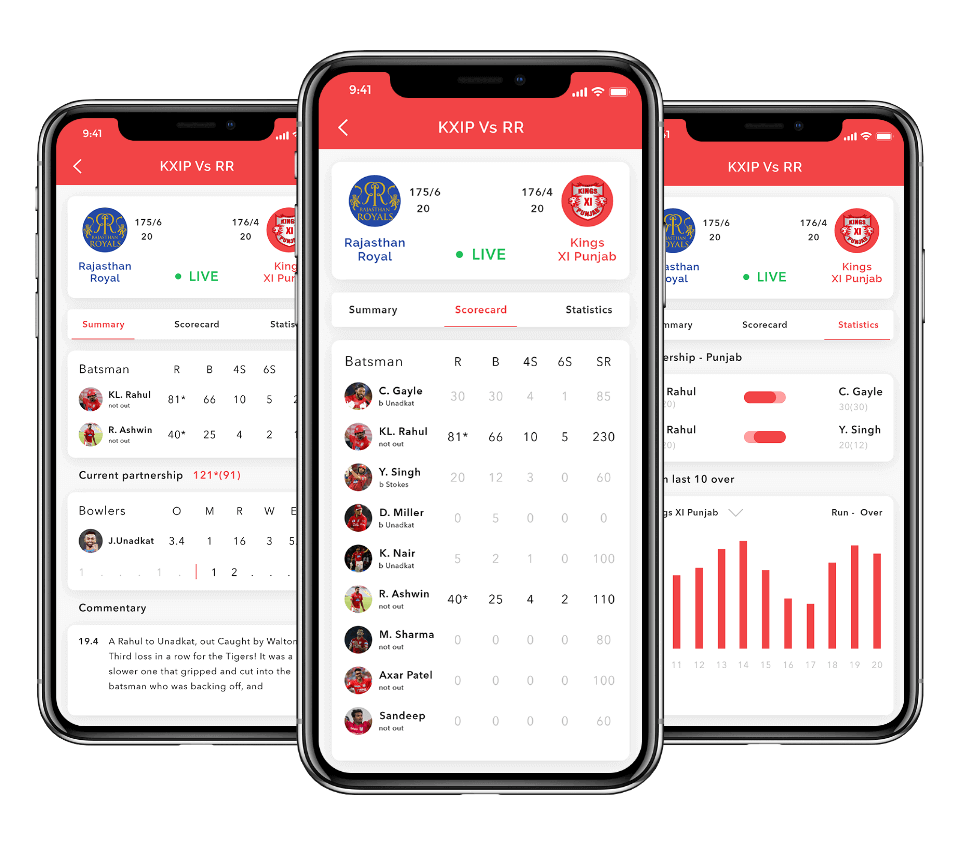
5. Miscellaneous Social Media Sharing, Live Commentary feed, Live video streaming of games, Live photos of games.

The image below shows full Leaderboard architecture of Dream 11:

leaderboard-architecture-of-dream11

Source: Dream11

The Bottom Line:

The penchant of Fantasy Sport is dramatically increasing. For those who are thinking to pitch this field as a new avenue to stack money, should now take their next step forward to build a Fantasy Sport App just like Dream 11. Codiant is your right development partner which has an expert team of Fantasy sports app developers who can perfectly strike a chord to your requirements and build a robust app cost effectively.

How To Make an App Like- Instagram Threads

It’s time to tie the new social network threads through Instagram Threads.

Keeping up to date with current trends is normal for GenZ and social media plays a crucial role to update them. This is leading to an increase in demand for social media apps that are easy to use, efficient, multi-featured, and comprise Artificial Intelligence in it.

Do you know which social media platform reached 1 million users in the least time? Well, the recently launched app Threads by Instagram has conquered this number within 2 hours of its launch. Coping with well-established platforms these days is difficult, but Threads made history.

This blog will provide a brief on how to build compatible On-demand apps like Instagram Threads.

What is Instagram Threads App?

Threads is a unique captivating app that is launched by Meta, the parent company of Facebook. The primary aim of the app is to connect with a huge audience through real-time text updates and conversations. Instagram threads users can share their posts up to 500 characters and can include photos, videos up to 5 mins, and links.

It is shooting the marketing intending to rival Twitter.

How to Use Instagram Threads App- Step-By-Step Guide

Still, wondering how to use Threads App? Here is the step-by-step guide you can follow to use Threads.

  • Find it on App Store/ Play Store and download it.
  • Open the app to log in and press the button below “Login with Instagram”
  • Set up your profile by choosing “Import from Instagram”
  • Choose options to make your profile public/private
  • Select the number of Instagram followers you want to follow on threads
  • Once done with follower selection, tap on “Join Threads”

Making It Easy for You to Navigate- Instagram Threads

Here is the list of icons that you will see on the app to navigate throughout.

  • Check your Thread feeds using House Icon
  • Search people you want to follow by typing names on the Magnifying Glass Icon
  • Create a new thread using Pen and Paper Icon
  • Track your account activity using Heart Icon like followers, post mentions, etc.
  • Check your own thread profile and activity using Human Figure Icon

Must-Have Features in Ideal Social Networking App Like Threads

Social networking app like Threads is built with a perspective to connect with a huge audience through the power of real-time text updates.

If you are looking to create a similar app then here is the list of features that you must consider.

1. Limit & Media Sharing

Threads which is a similar app to Twitter limits users to use up to 500 characters in a Thread post. This feature allows users to promote their ideas, thoughts, and relevant updates in a very concise manner.

Additionally, there is also an option to share images/photos just like Instagram and long videos of up to 5 minutes to help individuals engage with a huge like-minded audience.

2. Integration With Instagram

Threads provide a notable feature that allows users to integrate seamlessly with Instagram. Any user who already has an account can directly login to threads app with existing Instagram credentials.

As soon as the user downloads the app, the Instagram details automatically appear allowing users for the easy Threads login.

3. Ad- Free Setting

To provide an uninterrupted experience, Threads is presently not allowing any advertisements which is helping users to engage easily. However, with the expedited growth of the application, the company may introduce a new feature to allow ads.

But for now, it’s good news for users to enjoy Threads without any interruption.

4. Privacy Setting

As soon as the user login the app, the user gets the option to choose followers from their existing list of Instagram. So, either they can choose a few, all, or none of them, it totally depends on the user.

Also, users get an option to choose their profile’s privacy setting i.e., whether they want to make their account public or private.

5. User Control

Users can easily manage user interactions by limiting or allowing another followers’ activity i.e., who can mention them or reply to their thread posts.

Moreover, the user also gets the right to use specific filters where they can remove replies which don’t look suitable to them.

6. Enhanced Messaging

Similar to Twitter, the Threads app provides an interactive text-based interface where users can share short messages, like, and repost.

Also, users can even quote those text-based Threads just like retweets on Twitter.

How to Kickstart An App Development Like Threads?

If you are one such business owner, looking to build an app like Threads and vying for those unique features that others are still waiting for then congrats, you are in the right place.

Here we uncover the detailed process of developing robust social media apps like Threads.

Market Analysis

Before you begin with text-based app development, it is crucial to understand the market scenario and note down crucial stats both in value and volume. Try to find out essential factors like market competition, engagement patterns, regulations, barriers to market entry, user insights, user preferences, and trends.

Wireframing

Once you are done with the research part, begin to create a blueprint for your text-based app including visual structure and storyboard creation. Clearly define the app screen specifications, navigation, and feasibility to define user experience and interface.

UI/UX Design

After understanding all the major app components, the expert design team begins to give an attractive and user-friendly interface and look to help attract clients. A major focus of the designers is on the app’s usability and aligning the brand’s voice to make it visually appealing.

App Development

Once there is clarity on the design part, the project goes to the developers who decide the significant tech stack including programming languages and development frameworks. Developers work on building necessary components and integrating APIs, and server databases to ensure better usability, scalability, performance, and compatibility.

QA Testing

When you are launching a new app in the market it is inevitable to conduct multiple testing which helps in managing high quality at low cost. The testing is done to check the app’s compatibility, interface checks, performance, bugs, and other errors that can create issues in delivering a seamless user experience.

App Launch & Maintenance

Now, the app is ready to go live on multiple platforms with suitable app titles, descriptions, categories, keywords, launch icons, and app store screenshots. After deployment, developers keep an eye on the app’s performance, user feedback, bugs, relevant updates, and overall functioning of the app across all the platforms.

How Much Does A Social Media App Development Like Threads Cost?

The development cost of any mobile app is not fixed. There are always some of the influential factors that affect the pricing aspect which we are going to discuss further.

However, the ballpark figure of developing an app like Threads costs starts around $40,000 and goes on increasing as per the individual requirements including feature addition and more.

Some of the major factors that influence the development cost includes:

1. App Complexity

When you include exclusive features, which includes the app’s complexity and adds up more cost to the development process.

2. Number of Features

With the increase in the number of app features, the overall app development time increases as it requires more resources which ultimately increases the development cost.

3. App Size

Variations in app size will have a huge impact on the development cost. If you go for an MVP development, then the development cost will be comparatively low than a full-fledged feature-rich app.

4. Development Platform

If you are developing an application that works on multiple platforms, then you would need a developer having platform specialization which again increases the cost.

5. Developer’s Location

It is not just about the development process; the developer’s location also plays a major role. So, it’s crucial to conduct thorough research on location-based charges.

Summing Up!

So, are you excited to launch such a thrilling app in the market? We are the tech experts to help you guide through the process of creating a popular app like Instagram-Threads. Don’t miss a chance to entice your target audience by giving them an opportunity to share daily thoughts, emotions, and experiences.

Now build a similar app and make it easier for your users to connect and communicate with the ones who mean the world to you using a game-changer app Instagram-Threads.