Online Food Ordering and Delivery Trends In 2020

food-delivery-app-design-codiant

Digital platforms -> On-demand Food delivery -> Measures to Convenience.

Online Food Ordering and Delivery businesses have been growing at a skyrocketing speed.

What posed as an innovation at a course of time quickly turns into a demand for incremental changes.

Of course, trends are supposed to bring change.

With the rising boom, we have seen food delivery players like Zomato, JustEat, Deliveroo, capturing a huge market share with their marketing tactics and strategic innovations to woo customers.

The online food delivery market that seems not to slowdown has recorded a revenue of US$23,991m in 2020 with an annual growth rate of 5.1% and is expected to grow to a market volume of US$29,222m by 2024, as per the report.

Underlying these rapid advancements, food delivery businesses continue to seek new ways to improve their delivery services as well as keep themselves up to date with the latest food ordering app development trends.

Here are the top game-changing food delivery app trends to hit the market in 2020:

Technological transformation

Personalized Catering: The rise in consumer preferences (e.g. demand for gluten-free food) will demand food delivery businesses to adopt Big Data Analytics into their existing digital platforms to better understand consumer needs, monitor trends and create meals that complement every dietary need.

Food & Ingredient Transparency: Transparent food labeling enabled by various health trackers will give a strong push to QSRs and businesses to mention more accurate information about food package labels.

Voice Assistance Tools: The AR and VR and voice assistance tools will play a huge role to help customers engage with QSRs and food businesses, even when they are not physically present in the restaurant.

Social Media & Small Businesses: The budding local food delivery startups will find their sweet spot in the webspace. They will access new markets, explore new opportunities by having their own website and food delivery app. Today, 89% of Australian small businesses have a website and some engagement with social media.

AI Bots: AI bots will progressively help in maximizing delivery efficiency, handling customer interactions, and driving recommendations.

New Ways to Delivery and Concierge Services

Delivery with Drones: Experimentations in delivering food will see new heights. Companies like Domino’s, Zomato and Uber Eats have already reduced the time by half by drone delivery. Businesses may use fully autonomous on-demand drone delivery services by hiring companies like Flytrx, Zipline to avoid traffic, congestion and reduce delivery time.

Delivery with Robots: Depending on the geographic location, businesses will soon come face-to-face with a food delivering robot.

Like the Starship delivery app is the first to start delivery with robots in the UK where the user simply opens the app, choose the items to be delivered and drop a pin by selecting the delivery location on the service map.

Users can even watch the robot’s journey to them through an interactive map. Once the autonomous food delivery robot arrives, the user will receive an alert, and they can meet the robot and unlock it through the app.

These little six-wheeled machines are well-equipped to protect themselves and their goods from being stolen. They walk around with 9 cameras and travel 4mph and can reach you only if you’re in the 3-mile radius from them.

Related posts: On-demand delivery by Robots

Delivery with Parachutes: If your restaurant is on the eighth floor and your customer on the ground, how will you deliver the food quickly and efficiently? Parachute delivery is the solution. Parachute-delivered food possibly may give a real benefit for restaurateurs, as pointed out by Pop-Up City. The spaces higher up in the buildings are less-expensive and give more options to businesses to test culinary concepts.

This innovative system was started by a group of friends in Melbourne where they delivered grilled sandwiches and used Paypal for payments.

Food Market Apps Segmentation

Delivery Only Business: The increasing internet penetration and smartphones have removed the limitations of having a food outlet to deliver food. Home kitchens can help businesses reduce the upfront cost for buying space and this way they can run their delivery business from home kitchens or collaborative kitchens.

A Virtual Kitchen also runs on the same concept where they run their businesses online by taking orders only by mobile apps.

Crypto Food orders: Purchasing food online with cryptocurrency is becoming increasingly popular. Pizzaforcoins a service based in California allows you to order from major chains such as Domino’s, Pizza Hut or Papa John’s in exchange for BTC.

Takeaway:

Convenience is king. And online food delivery app development has become a necessity and no more a choice. Restaurant-to-Consumer is by far the leading category but Platform-to-Consumer Delivery is growing faster. Improving the ordering experience and working on innovative delivery methods are the two major trends every food delivery business should vie for.

Related post: How to Create An On-demand Food Delivery App like Swiggy and UberEats?


How to Build an On-demand Delivery App? An Ultimate Guide

Generative AI stands out as a fascinating and innovative technology. But what exactly it is? How does it weave its magic?

Generative AI is like a smart artist on a computer. It creates new things, like pictures or text, by learning from examples.

  • This innovative technology employs intelligent algorithms to produce authentic-looking and sounding content, including images, text, and music.
  • Essentially, it’s analogous to having a computer that can exercise creativity and generate content independently.
  • The system is designed to function like a classy brain. It draws inspiration from the workings of human-like minds. It utilizes a neural network to analyze and process data.

A fascinating example of Generative AI is the Generative Adversarial Network (GAN), which operates as a pair consisting of a generator and a discriminator in AI technology. The generator produces new things, while the discriminator checks how good they are. They team up and get better at their jobs by challenging each other. It’s like a creative dance between two digital friends.

Types of Generative AI

Types of Generative AI

  • Generative Adversarial Networks (GANs)
    Imagine a creative duo – the Generator and the Discriminator. GANs bring these two together in a dance of creation. The Generator crafts new things, like images or text, while the Discriminator evaluates how good they are. This constant back-and-forth improves their skills, resulting in realistic and creative outputs.
  • Variational Autoencoders (VAEs)
    VAEs are like artists experimenting with different styles. They learn by trying to reconstruct input data in various ways. This type of Generative AI is great for generating diverse outputs and exploring different possibilities within a given set of data.
  • AutoRegressive Models
    AutoRegressive models are like storytellers predicting what comes next in a sequence. They focus on generating content one step at a time, making them effective for tasks like language generation. GPT (Generative Pre-trained Transformer) models fall into this category, creating coherent text passages by predicting the next word based on context.
  • Boltzmann Machines
    Think of Boltzmann Machines as brainstorming buddies. They consider the relationships between different data points to generate new ideas. This type of Generative AI is often used for collaborative filtering in recommendation systems, suggesting items based on similarities in user preferences.
  • Transformer Models
    Transformers are like multitasking magicians. They can handle different types of data and this quality makes them highly versatile. GPT models, a subset of transformer models, excel in generating human-like text, demonstrating the adaptability of this Generative AI type.
  • Deep Belief Networks (DBNs)
    DBNs are similar to detectives uncovering hidden patterns. They consist of layers that learn to represent complex relationships in data. This type of Generative AI is proficient in tasks like feature learning, making it valuable in uncovering meaningful patterns within large datasets.
  • Creative Text-to-Image Models
    Picture an artist turning words into pictures. Some Generative AI models specialize in transforming text descriptions into images. These models understand textual prompts and generate corresponding visual content, showcasing the intersection of language and image generation.
  • StyleGAN (Generative Adversarial Networks for Style Transfer)
    StyleGAN is like a digital stylist, allowing artists to control the style of generated content. Its ability to transfer artistic styles between images is unparalleled, offering users an unprecedented level of creative influence over the generated outputs.
  • Recurrent Neural Networks (RNNs)
    RNNs are like time-traveling storytellers. They consider previous information when generating new content, making them suitable for tasks involving sequences, such as predicting the next element in a series.
  • Conditional Generative Models
    Conditional Generative Models are like artists taking requests. They create outputs based on specific conditions or inputs. This type of Generative AI is valuable when you want the model to generate content tailored to particular requirements.

What is Generative NLP?

Generative NLP stands for Generative Natural Language Processing. It helps in mastering language with AI.

• Generative NLP is a subset of Generative AI that focuses specifically on language.
• Generative NLP is like a digital wordsmith, understanding and generating human-like text.
• GPT models falling under this category demonstrates the language mastery of Generative NLP.

The Power of Transformer Learning Models in Generative AI

At the heart of Generative AI lies the transformer learning model. Unlike traditional models that process data sequentially, transformers excel in parallel processing, making them highly efficient. This architecture allows the model to understand relationships between words and generate coherent and contextually relevant content.

  • Transformers operate on the principle of attention. It enables them to focus on specific parts of the input sequence while generating output.
  • This mechanism empowers the model to capture long-range dependencies in data, a key factor in producing high-quality and contextually rich outputs.
  • Generative AI, powered by transformer learning models, is transforming how computers generate content.
  • These models, like OpenAI’s GPT-3.5, are built on the Transformer architecture, excelling in language tasks and beyond. Transformers stand out for their efficiency and processing information simultaneously.
  • They break down data into tokens. It helps in understanding context and relationships within sequences. And, this is very important to grasp the tone of language.

Key Components of Transformers in Generative AI

  • Self-Attention Mechanism
    Central to Transformers is the self-attention mechanism, a mechanism allowing the model to weigh different words in a sequence differently based on their relevance. This attention to context enables the model to capture dependencies and relationships within the data, facilitating a more nuanced understanding of language.
  • Multi-Head Attention
    Multi-head Attention extends the self-attention concept by employing multiple attention heads, each focusing on different aspects of the input sequence. This parallelized attention mechanism enhances the model’s ability to capture diverse patterns and dependencies, contributing to its overall effectiveness in language-related tasks.
  • Positional Encoding
    While Transformers inherently lack sequential information, positional encoding is introduced to provide the model with an understanding of token positions in a sequence. This addition ensures that the model recognizes the order of words, addressing a limitation of the original Transformer architecture.

The Power of Language Models in Generative AI

Language models, a subset of Generative AI, specialize in understanding and generating human-like text. They are trained on vast datasets, learning the tones of language, grammar, and context. This training prepares them to respond intelligently to prompts, generate coherent text, and even complete sentences.

  • A prime example – GPT-3.5, boasts 175 billion parameters. This makes it one of the most potent language models.
  • This vast parameter count enables it to understand and generate text across a wide range of topics.
  • These models go beyond mere understanding. They produce coherent and contextually relevant text.
  • It’s like having a virtual writer who can compose articles, stories, or even poetry.

Autoregressive Models and Autoencoder Models are the two prominent types of language models.

• Autoregressive models generate output one step at a time.
• Autoencoders work by encoding input data into a compact representation and then decoding it to generate output.
Both approaches contribute to the diversity and richness of language generation.

The impact of language models extends to various sectors. In healthcare, these models assist in analyzing medical texts and improving communication. In customer service, they automate responses and so, enhance efficiency. In the education sector, educational tools benefit from language models that give personalized learning experiences.

Despite their benefits, language models raise ethical concerns. They may unintentionally spread biases present in the training data. Thus, ensuring fairness and accountability in their use becomes crucial.

Key Components of Language Models in Generative AI

  • Attention Mechanism
    At the core of language models is the attention mechanism. This mechanism allows the model to weigh different words in a sequence differently based on their relevance. By attending to specific parts of the input sequence, the model can capture dependencies and contextual nuances. It facilitates a more sophisticated understanding of language.
  • Contextual Embedding
    Contextual embeddings are used by language models to represent words by considering the context in which they appear. In contrast to traditional word embeddings that assign a static vector to each word, contextual embeddings adjust their representation based on the surrounding words in a specific context. This dynamic approach enhances the model’s capacity. After which, they capture the changing meaning of words in various contexts.
  • Recurrent Neural Networks (RNNs)
    Language models are typically developed using RNN or Transformers. RNN operates by processing sequences incrementally and retaining a hidden state that preserves information from previous steps. On the contrary, Transformers excel in parallel processing. It enables more efficient handling of sequential data. The selection of these architectures is reliant upon the certain demands of the given task.

Let’s decode the difference between transformer learning models and language models below.

Transformer Learning Models VS Language Models

  • While transformer learning models are the backbone of Generative AI, language models serve as its expressive voice.
  • With the parallel processing efficiency, Transformers lay the groundwork for quick learning. While language models are exemplified by GPT-3.5. They can take this efficiency to creative heights.
  • The key difference lies in their focus: transformers focus on data processing efficiency and context understanding, while language models focuses on language generation.
  • Transformers, with their attention mechanism, excel in capturing complex relationships within data. This makes them versatile for various AI applications beyond language generation. On the other hand, Language models specialize in understanding and generating human-like text. This makes them adept storytellers and conversationalists.

Final Takeaway

The possibilities of Generative AI seem endless. From reshaping design to revolutionizing how we communicate through language; Generative AI is such worthwhile technology for uncharted creative territories.

However, like any powerful tool, Generative AI comes with responsibilities. Addressing issues like bias and privacy ensures that the magic of Generative AI contributes positively to our digital world. Thus, it fosters a creative revolution that is beneficial for all.

Unleash the power of tomorrow with Generative AI technology – where innovation meets possibility. Join hands with leading Generative AI companies like Codiant to shape a future powered by limitless creativity.

Why Businesses Need Enterprise Resource Planning Software

Alcohol Delivery App Development : Cost, Key Features, and the Business Model

How Open-Source Software Can Benefit the Oil and Gas Industry

Introduction

The oil and gas industry is a global economic cornerstone, driving energy production and shaping sectors. With rising energy demand, it fuels growth and technology. The International Energy Agency projects a 25% demand increase by 2040, underscoring the continued importance of oil and gas.

In parallel, open-source software, along with oil and gas software solutions, has emerged as a transformative model across diverse domains. Defined by its collaborative development approach, these solutions, including on-demand apps for the oil and gas industry, foster transparency, innovation, and community engagement. This methodology is not confined by sector boundaries; instead, it offers versatile solutions adaptable to specific industry requirements.

In this context, this blog delves into the intriguing intersection of the oil and gas industry and open-source software solutions. By examining the potential benefits of integrating open-source IT solutions for the oil and gas industry, we aim to uncover how this software model can address unique challenges in the oil and gas sector. Keep reading, as we navigate the possibilities of leveraging open-source software solutions for a more resilient and responsive oil and gas industry future.

Understanding Open-Source Software

Delving into the world of oil and gas software solutions, it’s crucial to comprehend the significance of software for the oil and gas industry. Open-source software stands at the forefront, distinct from proprietary alternatives. Its core traits include:

  • Transparency: Open-source software offers accessible source code for users to inspect and understand its workings.
  • Collaboration: Developers from diverse backgrounds collaborate to enhance the software’s features and functionality.
  • Community-Driven Development: The software evolves based on feedback and contributions from a user community.
  • Innovation: Open-source nature encourages rapid problem-solving, leading to innovative solutions and continuous improvements.

This software model’s ability to cater to the unique needs of the sector adds to its appeal. As the industry evolves, understanding open-source software becomes pivotal in harnessing its potential to enhance efficiency and innovation within the oil and gas landscape.

Challenges in the Oil and Gas Industry

The oil and gas industry encounters a spectrum of challenges that necessitate innovative solutions. Cost pressures, a pivotal concern, demand efficient strategies to optimize operations. Technological complexity underscores the need for specialized oil and gas software solutions and IT interventions. Such solutions streamline processes, from exploration to production.

Moreover, the industry grapples with environmental concerns, requiring sustainable practices and IT solutions for the oil and gas industry that ensure compliance and minimize ecological impact. As this sector navigates these hurdles, the integration of tailored software and IT solutions emerges as a crucial driver for progress, efficiency, and sustainability.

Redefining Oil & Gas Industry Solutions via Open Source Software

Open-source software solution is becoming increasingly attractive for oil and gas companies due to its potential to reduce costs, foster collaboration and innovation, and allow customization to meet specific requirements. Many big names in the oil & gas industry are realizing the value of open-source software. This realization is inspiring them to get involved in open-source projects and communities to collaborate and innovate.

  • British Petroleum (BP) has also ventured into the open-source realm, boasting a public GitHub account hosting 13 repositories.
  • Shell has aligned itself with the Linux Foundation Energy (LF Energy), demonstrating its commitment to enhancing the Open Subsurface Data Universe (OSDU) platform’s capabilities.
  • Chevron has positioned itself as a contributing member of the Eclipse Foundation, providing a mature and business-friendly environment for open-source software collaboration and innovation.

Benefits of Open-Source Software in Oil and Gas

In the ever-changing world of oil and gas, the adoption of technology is a must. In this regard, open-source software stands out as a powerful force. Offering cost-effectiveness, personalization, and collaboration, open-source software has the potential to transform the industry’s operations and spur innovation. Let’s explore the advantages of open-source software in the oil and gas industry.

  • Cost-Effective Solutions: Open-source oil and gas software solutions provide substantial cost savings by eliminating licensing fees and reducing development expenses, allowing companies to allocate resources more efficiently.
  • Replacement of Proprietary Software: Open-source alternatives can replace expensive proprietary software in the oil and gas sector, such as using open-source data analysis tools like Apache Hadoop and Apache Spark to manage and analyze large volumes of unstructured sensor data, reducing the need for costly proprietary data management systems.
  • Tailored Customization: Open-source software allows the oil and gas industry to customize solutions to specific needs, addressing pain points like hazardous gas leakage. Custom-built, open-source safety monitoring systems can be developed to detect and prevent leaks, ensuring personnel safety.
  • Enhanced Operational Efficiency: Utilizing open-source IT solutions for the oil and gas industry enables the development of on-demand apps tailored to streamline downstream operations. For example, custom open-source inventory management systems can improve demand prediction accuracy, reducing stockouts and optimizing revenue generation.
  • Collaborative Innovation: Open-source software fosters collaboration and innovation by enabling industry-wide collaboration on software development projects. This encourages the creation of cutting-edge solutions, such as collaborative efforts to enhance cyber security in downstream operations, safeguarding refinery IT infrastructure from potential threats.

IT Solutions for Oil and Gas Industry

As the oil and gas industry embraces digital transformation, the role of IT in providing custom oil and gas app solutions is becoming increasingly pivotal. Looking ahead, the future prospects for IT solutions in this sector are promising and dynamic. Here are some emerging key focal points:

Expansive Growth

The adoption of IT solutions, including on-demand apps and software, is poised for remarkable growth within the oil and gas industry. These solutions streamline operations, enhance data management, and optimize processes, leading to improved efficiency and reduced costs.

Open-Source Software’s Ascendance

Open-source software is projected to play a larger role in shaping the industry’s technological landscape. Beyond cost savings, its customizability and collaborative nature align well with addressing specific challenges faced by the sector, such as hazardous gas leakage and data management issues.

Renewable Energy Integration

The oil and gas industry is diversifying into renewable energy projects, and open-source software is finding application here too. As renewable technologies evolve, leveraging open-source solutions can facilitate innovation and accelerate the transition toward sustainable energy production. In this dynamic landscape, the convergence of IT solutions and open-source software holds the promise of steering the oil and gas industry toward increased efficiency, adaptability, and environmental responsibility.

Conclusion

To sum up, open-source software solutions are at the crossroads of efficiency, innovation, and sustainability in the oil and gas sector. Open-source solutions provide transparency, collaboration, and customization, allowing for cost-effective solutions tailored to industry needs. Industry professionals like Codiant offer the promise of a more flexible, efficient, and responsible future in the oil and gas industry. Stay tuned for upcoming articles where we’ll delve into the intricate technical aspects and mutually beneficial strategies of open-source software development.

Transform your aspirations in the oil & gas industry with our advanced app development solutions.
Get in touch today!

Contact us

How to Build an On-demand Delivery App? An Ultimate Guide

The unprecedented shift in consumer behavior, triggered by the influence of the COVID-19 pandemic demands everything with the highest quality, safety, and immediacy. Thus, making the on-demand delivery economy the focal point of almost every industry.

Today, every customer wants a product or service at its highest standards with “full speed, convenience, and hygiene assurance” which inherently becomes the only reason that drives companies to leverage the power of technology and connectivity.

>In doing so, not only the consumers are benefited by the ability to contract the complexities of COVID-19 but all the world’s retailers, consumer goods suppliers, pharma companies and others are able to load their economic tractor with wealth of profits.

Take Amazon’s Jeff Bezos the billionaire grew the balance sheet by $60 billion in mere two months of coronavirus crisis.At the same time, thousands of other on-demand delivery companies have also seen huge positive shifts in the bottom line.

This episodic financial results and the dire need of going digital to have streamlined and automated operations have encouraged a mob of SMBs and SMEs for on-demand courier delivery app development.This post belongs to same set of companies looking to build an on-demand delivery app but then again falling short of some insider tips, knowledge and clarity.Here’s the frame of what all points we will take you through:

  • What Defines an On-demand Delivery App?
  • The Business Model to Know How It All Works
  • Features of On-demand Delivery App Development
  • Top Industries Disrupted By On-Demand Economy
  • Getting Closer to Postmates – an Ideal Example to Fuel The Idea
  • Popular On-demand Delivery Apps and Their USPs
  • How to Kickstart On-demand Delivery App Development?
  • How Codiant Can Help You Stand Out!

Understanding On-demand Delivery Apps

Okay, enough saying on-demand delivery apps. WHAT IT IS? What makes Postmates, Doordash, TaskRabbit, Grofers quite famous on-demand delivery apps? How do they work?

On-demand-delivery-apps

Well if defined in a layman language, on-demand delivery apps are the app platforms that enable any business, enterprise, or startup to gather the demands of customers on the app and fulfill them by providing door-to-door delivery or service on an instant basis.

In short, an on-demand delivery app allows customers to order goods and services online.

There are multiple kind of door-to-door services we are leveraging today via on-demand service apps, a few of them being; on-demand medicines, grocery, food, beauty and body-care, on-demand service boys, and many more that are helping consumers meet day-to-day demand on the comfort of their home/office.

The Business Model’ to Know How It All Works

On-demand delivery apps work for specific user groups namely service providers and customers but to streamline the on-demand gig economy and successfully deliver the end product or service, on-demand developers build applications for all the user roles involved in the delivery process.

Before we understand what all users are involved in providing the service, let’s understand the types of on-demand apps.

1. Business to Consumer (B2C) Apps

B2C apps are also known as Aggregator app or Enterprise to person (E2P) apps. This category is responsible to provide products/services directly from the service provider to a single consumer.

Some of the popular examples falling under this category are:

StarbucksMcDonald’s, or McDelivery.

2. Consumer to Consumer App (C2C) Apps

Also known as Person to Person (P2P) app, C2C apps facilitate users to buy, exchange products or services from each other.

Some of the popular examples falling under this category are:

ZomatoMunchery and Frichti

3. Business to Business App (B2B) Apps

B2B or Enterprise to Enterprise (E2E) apps are focused on connecting businesses from businesses. They act as a facilitator for deliveries between businesses. They have two subdivisions namely vertical (providing services for single business) and horizontal (providing services for multiple businesses)

Apps like Cargomatic, Uber for truckers, CaterNation, Emerge and Eventio are a good example for illustrating this category.

As per the business model you’ve chosen for building an on-demand delivery app, the app stakeholders get defined. In other words, the on-demand app development company will work on developing the apps for every single user role separately.

If your app falls under the B2B category then the developers will build two apps for both businesses respectively. Similarly, if it is B2C, one app will be built for business and the other for consumers, and in the case of C2C both the apps would be focused on consumers.

Like for example, Uber Eats operates on a 3 tiered transactional strategy that involves B2B, B2P (Business to Partner), as well as B2C.

  • UberEats partnership with restaurant partners where both the business gets benefitted by each other (B2B)
  • UberEats partners with delivery persons or independent drivers and earn revenue via them (B2P).
  • The third is the customers who order the food directly from businesses (B2C).

Features Included In On-demand Delivery App Development

Based on the different app categories discussed above, the on-demand delivery apps have the following user roles or stakeholders:

  1. Customer App
  2. Service Provider App
  3. Driver App
  4. Admin Panel (Web-based)

Let’s cover their features in detail for all these user roles.
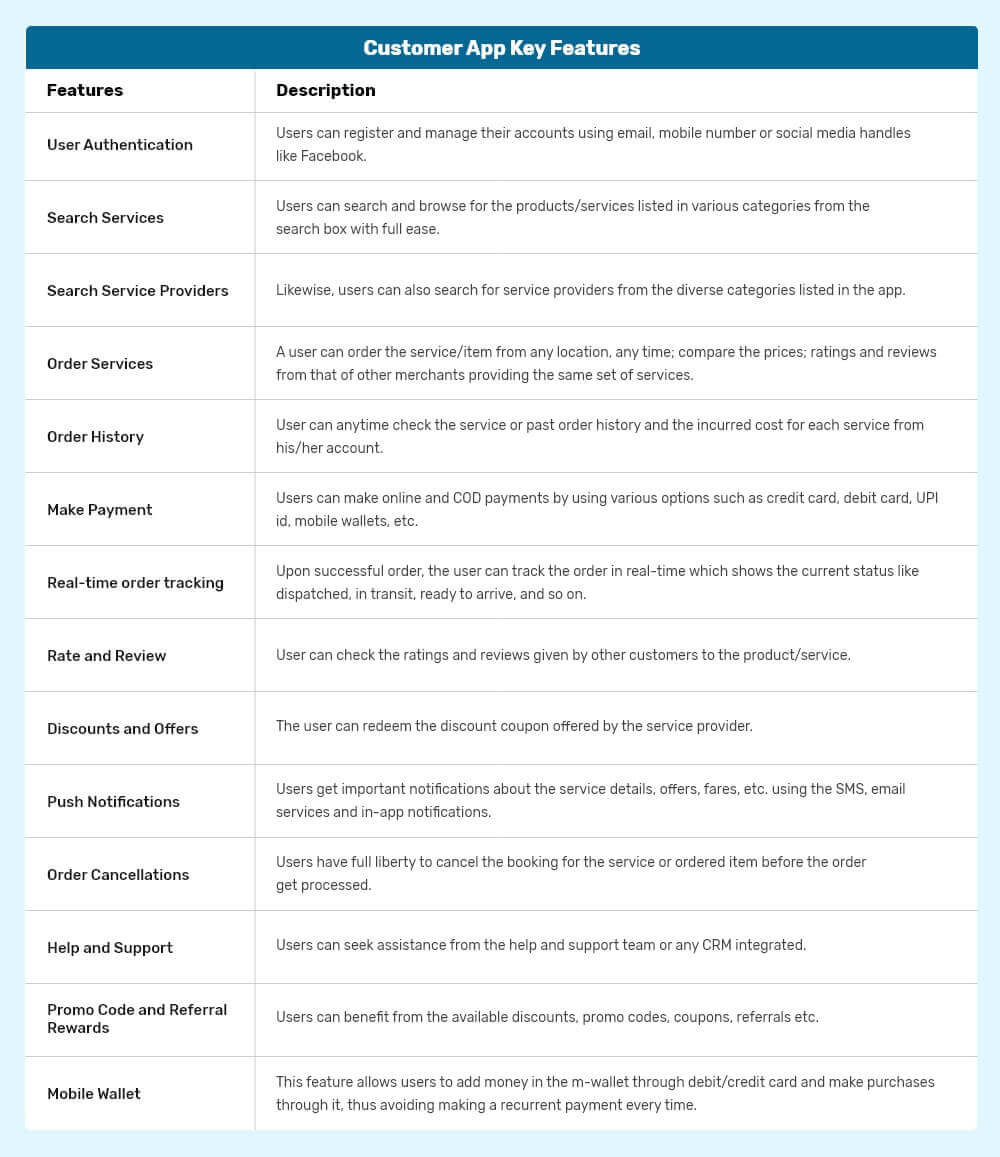
Top Industries Disrupted By On-demand Economy

1. Courier Delivery

On-demand package delivery or courier service application lets the user deliver or pick up anything from anywhere to any place. This kind of apps helps startups and businesses to deliver orders or pickup from restaurants, retail shops, grocers, and more. Examples of such kind of popular apps are:

  • Order anything from anywhere (Postmates)
  • Deliver anything within the city using your own team (Pickrr)
  • Deliver food from nearby restaurants (UberEats/Foodpanda)
  • 60 minutes express delivery service (Bigbasket)

2. Online Food Ordering

This app platform allows restaurant owners to take online food orders and deliver food at their customer’s doorsteps. The online food ordering app solution supports some of the major features like real-time order tracking, online payments, order management, menu management, adding discounts, promos or referrals etc. Some of the successful apps scoring high in the on-demand food industry include:

  • Search top local restaurants and order food online (UberEats)
  • Order from local restaurants and takeaways online (JustEat)
  • Find the best restaurants, cafés and bars (Zomato)

3. Home Services
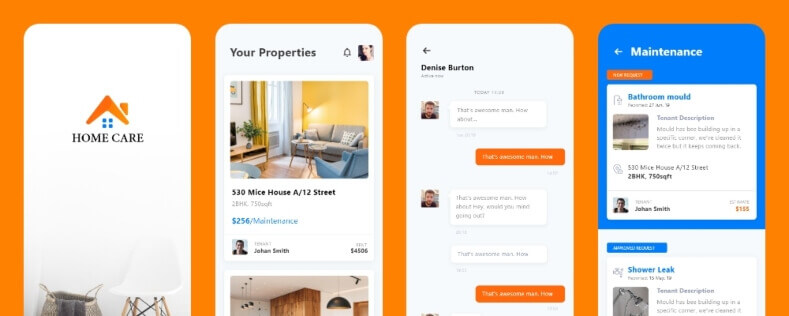
Home services app allows the users to hire safe and trusted local professionals for getting household chores or personal things done that a user needs in a day-to-day life e.g. furniture assembly, TV mounting, help moving, home cleaning and repairs, business and taxes related help, appliance repair and more.

  • A temporary staffing app to connect users with the trusted local handyman. (TaskRabbit)
  • A platform to search & hire trusted local professionals to take care of all day-to-day needs (Urbanclap)

4. Grocery Delivery
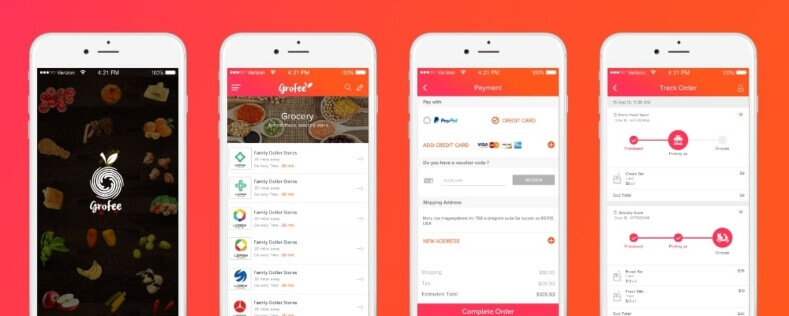
Online grocery shopping apps were already catching the pace fervently amongst the consumers. Then we met an unfortunate pandemic that forced the compulsion of using the grocery app for home delivery services and left it as no more an option.

Online grocery, food and other household chores delivery at customers’ doorsteps has become the need of the hour. For grocery store owners, supermarket chain owners or simply a store aggregator looking to improvise their ROI or expand business; an on-demand grocery app is a right medium.

Few example-setters in this industry are:

  • An app that delivers groceries from local stores to doors on the same day. (Instacart)
  • An app that stores users’ grocery lists and tracks what you don’t have in the pantry. (Mealboard)
  • An app that shows the best available deals at local supermarkets. (GroceryPal)

5. Beauty & Salon

Getting pampered in less time, in busy schedules, in the comfort of the home in this tightrope walk of the life comes as the boon that every next person wishes for.
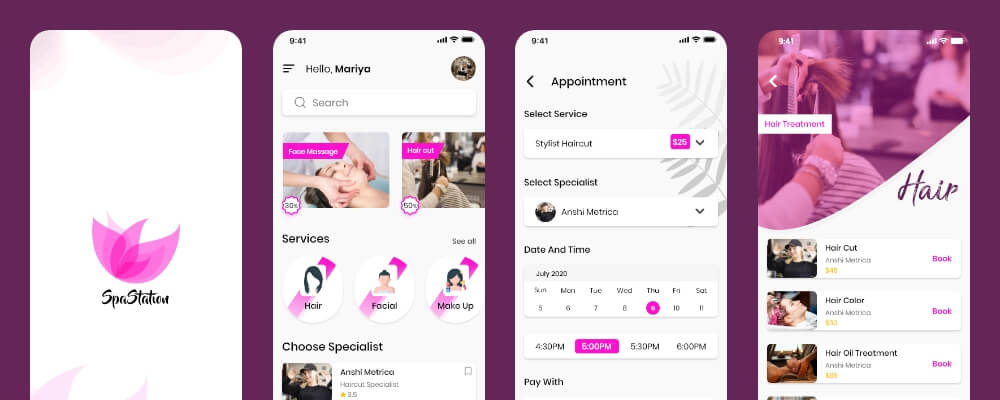
For such instant gratification, on-demand beauty and salon apps come as a rescue for people of all ages looking to be groomed at home. On-demand beauty apps have enabled users to make online salon booking appointments and hire an in-home stylist in just a few taps. Some successful models in the beauty industry include:

  • Hire stylists : Hire your own stylists to serve you at your place.
  • Salon booking appointments : To book salons online.
  • Marketplace model : To list stylists with ratings and reviews.

6. Health and Fitness

The healthcare industry is a global trillion-dollar industry comprising telemedicine, fitness, and other clinical continuum applications.

Today in the wake of COVID-19 and with the technology advancements, we’ve seen a major revolution in the way healthcare and fitness services are delivered.

Day-to-day requirements like online appointment booking, appointment scheduling, remote visits with patients, wearable technology integration, hiring personal fitness trainers etc. have become the lifeblood of healthcare and fitness service providers.

Some of the successful healthcare apps and fitness app solutions running with the on-demand model are:

  • Doctor visits the patient at his location (DoctorOnDemand)
  • A Telemedicine app solution (Amwell, TeleDocto)
  • On-Demand Medicines Delivery (MedPlus)
  • Marketplace model – An aggregation of doctors, clinics, hospitals etc. (Practo)
  • Personal trainer fitness app- (JEFIT)
  • Calorie Counter & Diet Tracker (MyFitnessPal)

Supercharge your healthcare capabilities, reduce operational cost, and advance the quality of care with our ready-to-deploy telemedicine solution.

Visit Teledocto

7. Transportation and Logistics
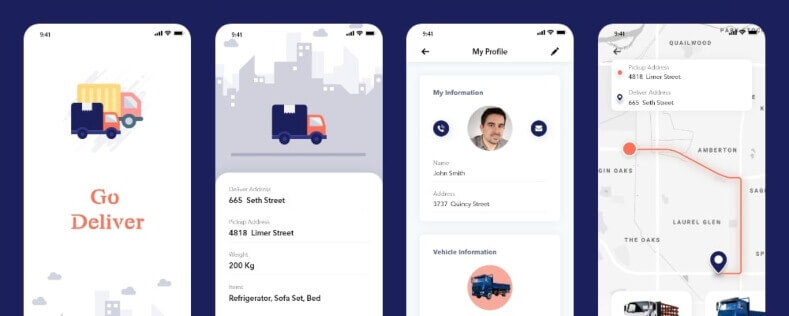
We are all aware of the phenomenal disruption bought by the on-demand taxi industry. Technology-driven platforms have made it possible for people to start their own online taxi booking business, logistics business & car-pooling platforms, which led them to rent their car on an hourly basis and earn more.

Here are few verticals in an on-demand ground transportation business that are running successfully:

  • Cabs on-demand (Uber)
  • Ridesharing Platforms or Car Pool (Lyft)
  • Transport vehicles on-demand like trucks, vans etc. (Cargomatic, Uber Freight)
  • Rental platform for cars (ZoomCar)
  • Platform to hire chauffeurs for personal cars (DriveU)
  • On-demand valet parking (Luxe)

[18:38] Nihit Thakkar

Planning To Create A Market-Winning On-demand Delivery App Fortified With Customer-Centric Functionalities and User-Friendly Experience?

GET A FREE QUOTE

How to Create An On-demand Pick-up and Delivery Service App like Postmates?

Whenever we talk about on-demand delivery, Postmates comes in the top of the mind.

Being the earliest startup to harness the power of the mobile app and the nascent on-demand ‘gig economy’ to serve city dwellers with courier services in just a tap of a button, Postmates is hailed as an influencer app in on-demand delivery economy.

Postmates is a San Francisco, U.S based logistics and delivery app facilitating order delivery or pickup services from local restaurants, grocers, and more in the U.S cities.

Postmates Biggest Rivals are DoorDash, GrubHub and UberEats

The on-demand package delivery app has three stakeholders:

  • Customer App
  • Vendor or Service Provider App
  • Delivery Boy App

Want to know how they function? Or say, what all features they have?

Get the details here with the business model of Postmates

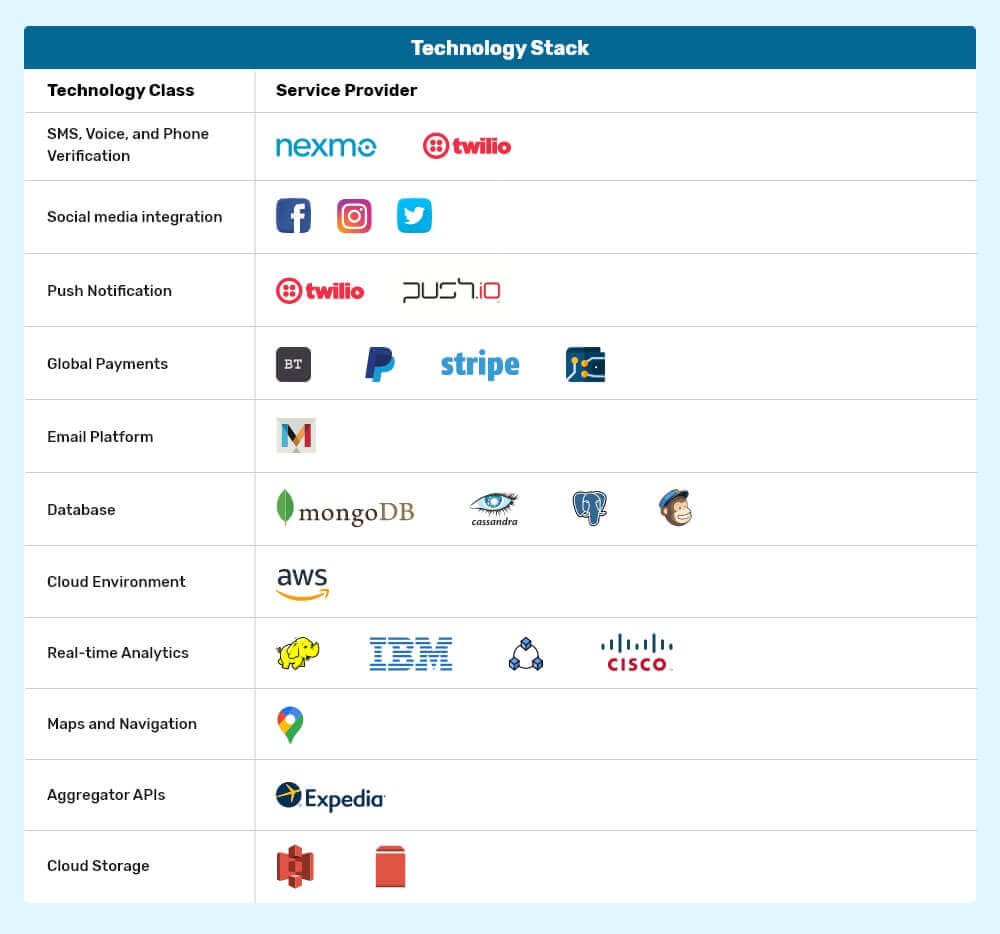
Technologies Used For On-demand Delivery App Development

1. Front-end Development

Native iOS App Platform : (Objective C, Swift)

IDE : Xcode 11, AppCode

Platform SDK : iOS SDK, Cocoa Touch

Native Android App Platform : Android SDK (Java), Kotlin

IDE : Latest Android Studio

Platform SDK : Latest Android SDK

Web Platform : HTML5, CSS3, JavaScript, TypeScript

JavaScript Frameworks : Angular JS, React JS, Vue.JS, Express.JS, etc.

2. Back-end Development

  • Programming Languages : Ruby, Elixir, Python, PHP, Java, etc.
  • Web Frameworks : Ruby On Rails (recommended), Phoenix
  • Database Servers : PostgreSQL, MySQL
  • Web Servers : NGINX, Apache
  • Cloud Server Platforms : Amazon Web Services (AWS, EC2, S3, etc.)
Top Market Players Making It Big Through On-demand Apps

Key Strategies and Value Proposition

Venture Capitals, well-established companies with backings of investors are pouring money into on-demand apps. For new startups and early-stage entrepreneurs the market has become highly competitive and full of risks.

Without any unique selling point and sustainable feature, it is hard to survive and thrive in the market.

The current market players successfully running and ruling the on-demand economy are breaking the clutter with their unique value proposition that makes them stand out from their rivals.

So, before you plan to create an on-demand delivery app it is extremely crucial to ponder- What your competitors are offering? What is their unique selling point?

To help you out, our team of marketing strategists have researched on top industry market players or on-demand delivery apps with their USPs.

Hope you find it insightful.

How to Kickstart On-demand Delivery App Development?

  1. Market analysis
  2. Choose your business model and a right marketplace
  3. Find an experienced mobile app development company
  4. Chart out required app functionality
  5. Launch and test the service

1. Market Analysis

Before shifting gear towards app development looking into the market both in volume and value is equally important. Whatever industry you’re planning to build an app conduct market research for analyzing its customer segments (both demographically and segmentation wise), buying patterns, the competition, barriers to entry, regulation, and market value.

2. Choose Your Business Model And A Right Marketplace

As a next step, find the right business model to nurture your idea into a credible business. Validate your business idea genuinely solves customer’s problems and customers are willing to pay money for same. If it doesn’t relieve the pain, the business model doesn’t work.

You can also plan to execute a local rollout by getting build a MVP and test costs, quality and pricing in a local area. Collect customer references and feedbacks.

After working on the business model it’s time to underline the pricing and app monetization strategies. The main things to consider while choosing it are:

  • How much do you need to earn?
  • How does your pricing match with your competitors?

For your idea here we’ve compiled a list of on-demand economy companies with their monetization strategies. Let’s see how they charge their customers/partners and fulfill their financial targets.

Other App Monetization Strategies

  1. In-app home page advertising
  2. Delivery charges
  3. Peak hours
  4. Commission percentage
  5. Extra fee for rush delivery
  6. Subscription plans
  7. Service fees (% from the orders and the delivery charges)

3. Find An Experienced Mobile App Development Company

After thorough market research and solid idea seeding a high-quality product is essential as that will result in your efforts and unique value proposition in the market.

In order to develop one, you have to hire a reliable mobile app development company.

Note that partnering with an illegitimate company may lead to serious consequences such as loss of confidentiality, hidden costs, loss of control and other factors that may tarnish your trust, service quality and plans.

So, what needs to be taken into consideration while hiring a mobile app development company?

Company Expertise

The easiest way to check if the company can turn your dream concept into reality is to get acquainted with their portfolio, professional experience and evaluate how well they have done similar projects.

Apart from this the other metrics that analyze company’s standards and compliances are:

  • Its flexibility to adapt to unique business needs.
  • Ratings, feedback, and reviews given by other clients as testimonials on their previous work delivered.
  • Take a glance at case studies of similar on-demand apps developed by the company.

App Development Cost

To estimate the rough cost of development you need to know the functional requirements of your app, cost per hour charged by the development company (varies country wise) and several other factors including:

  • App Discovery (on-demand)
  • Project Analysis and Scope Statement
  • UI/UX Development
  • App Platform (Native, Cross-platform, Hybrid, Web apps)
  • Technologies Used
  • App Deployment
  • App Maintenance
  • App Security

Still, if you want a simple method to roughly estimate app cost, you can consider the product of two variables: number of hours and app developer’s hourly rates. Here’s the cost estimation formula.

Related reading : The Total Cost to Create an On-Demand Delivery App

Unlock Our Complete Guide to Know In Detail the Factors That Heavily Influence the Mobile App Development Cost

ACCESS NOW
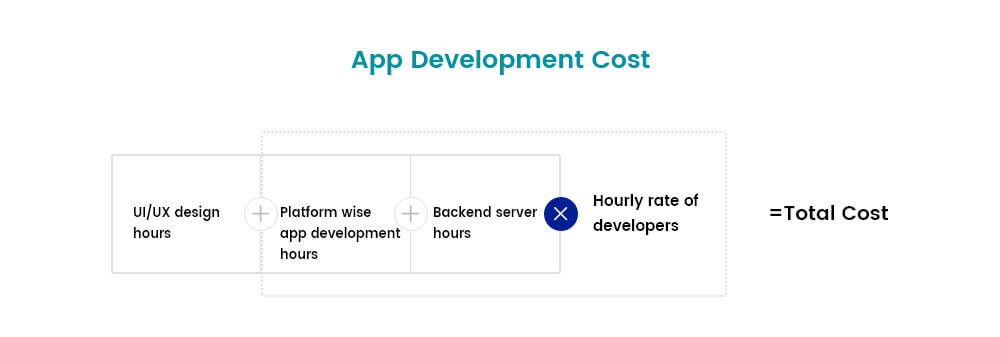
app-development-cost

How Codiant Can Help You?

Codiant empowers start-ups, physical stores, enterprises, and aggregators to take their business online with its user-friendly technology products. We’ve the combined expertise of executing technology products and developing on-demand delivery apps for more than 60+ businesses ranging from on demand food delivery, taxi services, beauty solutions, telemedicine, quick delivery of grocery, Cannabis, Alcohol and more.

Some Of the Popular On-demand Apps Developed By Us Are:

SIX Taxi App (On-demand Taxi App)

Six taxi is an on-demand taxi mobile app for public commutation that aims to assure that drivers earn more while driving less through the power of referral commission and provide a quick service fulfillment to passengers on the go.

Brilliant Move (On-demand Logistics App)

Brilliant Move is an on-demand logistics solution that powers customers, retailers, and delivery crews lacking a fully integrated and dedicated delivery network with an on-demand delivery platform.

ClickDrs (On-demand Doctor App)

ClickDrs app eliminate communication barriers between patients and doctors. This on-demand doctor app provides online appointment booking, scheduling, remote monitoring via high definition video calls, integrated billing, etc.

Qwikdrop (On-demand Courier Delivery App)

Qwikdrop is an on-demand delivery platform that connects merchants and individuals with crowd-sourced drivers to enable virtually anything to be transported locally in minutes.

Instrafresh (On-demand Grocery Delivery App)

Instafresh is a smart grocery shopping assistant app which allows shoppers to search store list nearby them. As per their favorite local stores, they can order the grocery products from the app. Instafresh personal drivers will pick and deliver their orders in as little as 60 minutes.
How eLearning Mobile Apps Are Transforming Education Industry?

Technology. Digitalization. High-Speed Internet – is rapidly transforming the education sector to maintain the pace with the ongoing requirements. The advanced learning method is supporting students to join lectures at any time and from any part of the globe.

The traditional mode of learning is now almost overtaken by eLearning mobile apps. As a result, learners and educators are now loaded with digital modes of learning, it includes digital textbooks, eLearning apps, and a range of online courses and test series.

A smartphone is no longer considered a luxury but rather a necessity, that is accessible to both teenagers and adults. Such a wider reach of mobile devices has also influenced the global EdTech market and companies to enter into the education business world. Hence, hundreds of startups have built thousands of eLearning-based smartphones supported mobile applications that follow numerous creative approaches to facilitate learning.

The eLearning trend follows the essence of teaching and information sharing. Gradually, the knowledge acquisition trend from the eLearning app has been raised to a new level. It becomes possible due to available options and module selection.

Let’s have a deeper look at the market stats of the eLearning industry, major revolutions and key changes, and technology trends that brought changes by the eLearning app in the education ecosystem.

Market Statistics of the Online Learning Industry

Market Statistics of the Online Learning Industry1677651827

  • The global eLearning apps market revenue will almost become twice as much from 2022 to 2032, reaching USD 476.5 billion at the end of 2032 at a CAGR of 7.1%.
  • 64% of trainees prefer smartphones only to access their educational content for learning.
  • 89% of mobile learners download multiple applications but a minimum of 50% of those downloads are for self-learning.
  • 46% of users prefer smartphone learning or training before going to bed.
  • 71% of learners/trainers prefer studying on a smartphone rather than on a PC or conventional learning mode.
  • Commonly, a learner dedicates about 2 hours and 51 minutes to learning on their mobile every day.
  • A mobile app learner/trainer completes their course or assignment 45% quicker instead of from a PC.
  • Educational mobile apps are the second most popular in the world’s app store with 9.31% shares.

Major Revolutions and Key Changes in the eLearning Mobile Apps Industry

Major Revolutions and Key Changes in the eLearning Mobile Apps Industry1677651879

1. Customized Learning Experiences

The learning and grasping abilities and modes of learning vary from individual, such as visual, auditory, kinesthetics, etc. The eLearning mobile apps are equipped with new digital transformational technologies that are making it convenient for students of different learning abilities and types to grow in their most suitable manner.

The learner can even set their learning goals and go at their own pace, communicating with educators and fellow students to personalize the learning experience. Advanced tech-enabled, such as AI and Machine Learning apps support varied learning methods that help students to learn faster. It includes interactive games, modeling tools, learning graphs, video production, and many more.

2. Accessibility

The portable learning and education modes have now reached the toughest terrain of the earth where people don’t have easy access to educational institutes, schools, colleges, and universities. There could also be the possibility that they are incapable to afford the heavy charges of learning institutions in large cities, where they can explore more options.

The educational trends are evolving and reaching a deeper level of subject understanding, rather than sticking to memorization. The latest eLearning app development trend is now backed with new technologies that are bridging the learning gap. It is making knowledge and learnings easily accessible to remote learners and reaching all corners of the world in the most simplified manner.

The courses and learning are available in multiple modes to allow the maximum population to understand it, such as in audio and video form, voice-to-text, and text-to-voice transcription which ensures learning is no longer confined to reading only.

3. Enhanced Interaction

The traditional mode of learning and translating it into a white paper just to pass the exams is no longer serving and enhancing students’ learning capabilities. They require a broader spectrum of an interface, and interactive learning sessions, actionable feedback that supports higher student engagement.

eLearning apps are delivering all these aspects very aptly by providing an interactive and engaging user interface with an appealing design. A well-designed and presented app attracts users’ attention and makes them stay longer on the platform, and offering engaging learning courses works as the icing on the cake. It enhances learning, understanding, and problem-solving capabilities with ease.

4. Promoted Self-Directed Learning

The self-directed learning process is in which a student takes the initiative, with or without the help of any teacher or trainer.

They can analyze their learning requirements, define learning goals, identify resources, determine and implement learning strategies and evaluate the results. The education apps provide learning support to self-directed learners in the context of their problems.

The education apps provide learning support to self-directed learners in the context of their problems.

The eLearning mobile apps promote learning beyond the classroom. It supports the self-learning method by offering personalized learning experiences. It also approaches learners to participate in a task where at a certain level they are provided the instructor’s support and later on withdrawn to encourage a self-directed learning approach.

5. Keeps Informed with Instant Updates

Push Notification in an eLearning mobile application is the aptest feature that helps the learner to remain updated about every detail and never miss any important announcement or notice.

Teachers or trainers can send alerts to students about any new updates or changes in exams, timetables, syllabus, online class timings, event information, etc. with a single tap.

The Push Notification comprises multiple elements. It typically includes a title, message, image, and URL. A push notification is a simple, informative, and attractive message that gains the reader’s attention and quick response or actions as well.

6. Encouraged Environment Sustainability

With the rising trend of digital learning mode, the excessive usage of papers and other resources to design learning materials has been controlled to a great extent.

Now, there are even subject-specific applications available in the digital market.

Did you know? About one-third of the entire learner population has shifted to a digital mode of learning.

The handy access to all the information and digitalization of all minute data has shifted the trend of preferring digital learning over traditional learning.

The on-demand education has made learning accessible from anywhere, anytime, and carved a path toward a greener and more sustainable environment.

Trending Technologies Transforming the Education Sector in 2023

Trending Technologies Transforming the Education Sector in 20231677651934

1. Artificial Intelligence (AI)

AI technology has made its presence in almost every business sector including finance, manufacturing, healthcare, and education as well.

Application of AI in eLearning mobile apps can manage time-consuming tasks to ease the workload of teachers or trainers. The technology helps to deliver an enhanced and customized learning experience to students.

The AI-enabled eLearning applications can enrich students’ performance by integrating voice-to-text and text-to-voice feature that helps students to prepare notes and learn their chapters by reading or hearing the class and notes.

2. Virtual Reality (VR)

VR is a computer-generated technology that supports an interactive learning environment by almost forming a real-world experience and helping students to better engage with the subject.

The interactive teaching and learning method promotes learning ability and increases student retention rate.

Through VR technology the student can not only see something but also experience it as real.

Integrating VR technology with your eLearning mobile app demands less equipment to interact and can help to reduce ample amount of expenses in arranging suitable infrastructure.

3. Augmented Reality (AR)

AR technology is usually used in association with VR technology to simulate its effect accurately in the real world. Whereas, the individual purpose of integrating AR technology is to provide a sense of feel and touch to learners and educators while studying anywhere and anytime.

AR technology in the eLearning segment helps to make education an immersive field rather than a rigid and forced teaching and learning atmosphere for both teachers and students. These technologies help to promote the distance learning experience.

4. Internet of Things (IoT)

IoT can introduce several changes to both online and offline learning modes. It helps schools and colleges to create smart campuses, automate recursive tasks, and allow access to advanced technologies that facilitate students’ learning processes.

The IoT-enabled devices can also be used to track students’ activities and class attendance, which instantly alerts teachers and their respective parents about the student’s status.

This feature can initiate added security and transparency in availing of digital mode of learning services.

5. Chatbots

Virtual Assistant chatbots are making our lives easier and the digital learning experience has even become more simplified and streamlined.

There are about 3.5 billion voice assistant bots available in the global market. There will be 8.4 billion such devices by 2024, which will be more than the world’s total population.

The chatbots in the eLearning system are providing a custom learning environment. For instance, supporting the conversion of lectures into chats or a series of messages.

This technology can also help specially-abled students to attend classes through text or chat teaching mode.

Final Words:

Considering the ongoing market trends the introduction of technologies is playing a vital role in redefining and enhancing the modern education system, ranging from smart classes to gamification.

The technologies are supporting mobile applications effectively, such that eLearning mobile apps have become the core of the EdTech sector. Hence, the learners can access educational videos or extract information on demand – anytime, anywhere.

Strengthen your educational pattern, institute, or training model with smart eLearning mobile applications.

Or even if you look to upgrade it with new advanced technologies to minimize budget, deliver superlative pedagogy, and achieve faster results then hire an education app development company.

Just ensure the company has a diverse and industry-rich portfolio and get a feature-rich app developed that serves your organization’s purpose and motto.

Cost to Develop an On-Demand Trucking App

For truck fleet owners or cargo movers, the average cost for running the trucking industry is going sky high. From fuel the opening expense that easily consumes more than $70,000 per year i.e. 39% of total costs, to repairs and maintenance of tires, brakes, wiring, alternators, etc. that adds up another 10%, to driver salary that overheads 26% of overall expenses, and insurance charges that also includes permits, licenses and tolls eats the major portion and costs a hefty amount.

With these increasing challenges, Top On-demand Trucking Apps are helping trucking companies, cargo movers and small to big fleet owners expand, automate and streamline their business.

on-demand-trucking-app-solution-codiant

In this blog, we will learn about the key features it takes to build an Uber for trucking app and other significant aspects mentioned below:

Key Highlights

  1. Types of business model
  2. How to develop an on-demand trucking app – key features of carriers, shippers and admin
  3. Top market players in Uber for trucking industry
  4. Technology Stack used in developing on-demand trucking app
  5. How much does it cost to develop an Uber for trucking?

Types of Business Model

If you are looking for On-demand trucking app development, there are two possible states:

    • On-Demand Trucking Marketplace App – On-demand trucking marketplace apps match trucking companies with shippers that need to move freight. By this app, you can support shippers, truck owners & operators/cargo movers and fleet dispatchers by getting built an easy-to-use “Uber for trucking” app that helps them increase their speed and efficiency.
    • On-Demand Trucking App for Truck Fleet Owners – If you have your truck fleet or logistics business you can opt for this model to automate, expand and streamline your trucking operations conveniently.

    How To Develop An On-Demand Trucking App?

    Driver App Features

    • Driver Authentication : Driver can register with their phone no, name and email id and submit other useful information like license, identity card, etc.
    • View Shipping Request : Driver can view a waiting list with a shipping request.
    • Accept/Reject Shipping Request : Driver can accept a request or cancel it.
    • View Shipper details : In this feature, driver can see the shipper’s contact details.
    • Shipment details : This feature allows driver to see freight details like type of load, pick-up and drop-off locations, and scheduled pickup time.
    • Real-time Chat : Driver can chat with the shipper for making transit seamless.
    • Route Tracking and Optimization : Driver can see LIVE map and best-optimized route with real-time traffic for reaching the delivery location.
    • Push Notifications : Driver will receive push notifications for new delivery requests, messages, and payments.
    • Proof of delivery : After making a successful shipment delivery, the driver takes a photo of the bill of shipment and proof of delivery is emailed to the shipper.
    • E-signatures : Driver can also e-sign the bill of shipment or take the photo of it as a proof of delivery.

    Shippers App Features

    • Registration & Login : Shippers can seamlessly register with email id and phone no.
    • See Available Vehicles : Shippers can see the see available trucks on the map.
    • Send Shipping Request : Shipper can list jobs by specifying freight dimensions, pick-up and delivery addresses and book and schedule the pick-up beforehand.
    • Push Notifications : Shipper will get notifications when the carrier/driver accepts the delivery request, confirms delivery by proof of delivery.
    • Vehicle Tracking : This feature allows shippers to track shipments in real-time all the way from pick-up to the destination.
    • Make Payment : Shipper can make an online payment for the shipping charges via major credit/debit cards, cash or e-wallets.
    • Rate Carriers : Users can rate and review carriers/drivers for their service.

    Admin Panel Features

    • Dashboard : Admin can view all the current and completed shipments made, active carriers/drivers, available and busy vehicles, and shippers’ order and pending requests on a single screen.
    • Driver Monitoring : Admin can check the carriers’ current location, freight details like types of load in the container, etc. Admin can also send a personal message to the carrier or even broadcast the message to all carriers in the app.
    • Bill Management : Admin can check all the incoming payments from the shippers to drivers, the total commission earned, etc.

    on-demand-trucking-app-market-leaders

    Technology Stack of On-demand Trucking App

    on-demand-trucking-app-tech-stack

    How Much Does It Cost To Develop An Uber For Trucking App?

    The cost structure of the Mobile App Development Companies doesn’t only hinge on development time and hourly rates. It depends on several factors, including the app features, the complexity of the app, third-party integrations (leads to additional time spent), technology stack used and post-release support expenses.

    Furthermore, it depends on the online repute of the mobile app development company along with its expertise.

    Related reading: How Much Does It Cost to Build a Logistics and Transportation Mobile App?

How Much Does It Costs To Develop A Grocery Delivery App?

“They want great prices and wants great service as well.” You are already running late if you’ve still not transitioned to door-to-door delivery strategy from the grocery aisle.

There is a mad rush in “Grocery Delivery App Development” companies and according to a report from eMarketer, this frenetic pace seems to be unstoppable.

Key Highlights:

  • What is an online grocery delivery app?
  • The ultimate guide to create a grocery delivery app- key features included
  • Types of grocery business model
  • Top market players in grocery delivery
  • Benefits of making a grocery delivery app
  • Discussing the grocery app development cost

grocery-delivery-app

What Is An Online Grocery Delivery App?

When your fridge is running out of foodstuffs, and you’re too busy to run an errand, holding a smartphone to use a grocery app is an easy solution. Online grocery shopping apps help people in ordering grocery products from mobile app anywhere, anytime. The order gets delivered at the doorsteps.

How to Create a Grocery Delivery App

One of the biggest reasons for the growth of grocery app usage is convenience. Nielsen points out: “Functionality and ease of use should be top priorities in app and website design, help should be readily available, and the checkout process should be simple and secure.”

Today, shoppers want apps that are easy in navigation and simple to understand.

The UI design and customer experience can make or break a shopper’s experience. To curb out this risk we at Codiant have minutely crafted the desirable objectives of a grocery app whose features displays regular sense of authenticity and its design wins the confidence of a customer. Let’s understand precisely.

Grocery delivery app Codiant

Customer/User App Key Features

  • User Profile: User can easily create an account by phone no, email id or any social login.
  • Search Products: User can search grocery products by category, subcategory or by entering keywords in the search panel.
  • Browse Products: List down, select and view product descriptions, details of any product.
  • Schedule Delivery: Users can schedule a preferred delivery time as per the different time slots available.
  • Cancel Request: Users should be given liberty to cancel the request within a short time period may be 5 minutes.
  • Order Tracking: Users can track order based on service like order accepted, getting packed, deliverer reached the pick-up location, collected the package, on the way to drop off location and reached.
  • Make Payment: Multiple payment gateway integration allows users to make payment via cards, eWallet, COD or net banking.
  • Tip Deliverer (Optional): If quick deliveries, good behavior and service delights customers, they can tip the deliverer in the app itself.
  • Avail Offers: Every user vie for an offer, discount, coupon codes etc. to cut down the cost. Through this admin can giveaway interesting deals and offers.
  • Give Feedback: If the user enjoyed the whole process right from picking a product to getting it delivered; app can prompt them to rate the experience and share the feedback.

Deliverer App Key Features

  • The delivery boy receives a delivery order notification
  • Views order detail
  • View customer’s location on map
  • Accept/Reject the order request
  • View complete customer details when accepting the order and can call them if necessary
  • Message to customer
  • Update their location status
  • Pick order and drop order to the delivery address
  • Make payment to grocer/supermarket retailer
  • Take payment from customers (if COD)
  • Receive feedback and rating from customers and retailers
  • Manage account to check total accepted or cancelled order, no. of jobs done and sales made.

Admin Panel Key Features

  • Dashboard: A dashboard gives a god-view to manage and track all the orders.
  • Management: Admin can manage accounts, categories, subcategories, products, retailers (if an aggregator model), customers, and drivers.
  • Manage Order status: Admin can check the current status of the order and update it on the app say like if it is confirmed, pending, canceled or complete.
  • Manage Review and Rating: The admin has full authority to manage customer comments for a deliverer, app, services, retailer etc.
  • Manage Notifications: App notifications to be sent to users can be managed under this feature. For instance, order confirmed, order details along with arrival time, order status is pending or “on the way”, order successfully delivered, driver accepted the order request and about to reach, promotional and offers notifications etc.
  • Manage Reports: Admin can manage total registered and active customers, retailers, and deliverers (online by area on map and their availability with status).

Additional Features

  • Push Notifications
  • Inventory Management
  • Customer Support
  • Real-time Analytics
  • Communication through SMS, chats and emails.

Note: The aforementioned key features are listed for the grocery store or grocery chain owner business model. They are subjected to change for aggregator business model!

Customer/User App Key Features User Profile: User can easily create account by phone no, email id or any social login. Search Products: User can search grocery products by category, sub category or by entering keywords in the search panel. Browse Products: List down, select and view product description, details of any product. Schedule Delivery: Users can schedule a preferred delivery time as per the different time slots available. Cancel Request: Users should be given liberty to cancel the request within a short time period may be 5 minutes. Order Tracking: Users can track order based on service like order accepted, getting packed, deliverer reached the pick-up location, collected the package, on the way to drop off location and reached. Make Payment: Multiple payment gateway integration allows users to make payment via cards, eWallet, COD or net banking. Tip Deliverer (Optional): If quick deliveries, good behavior and service delights customers, they can tip the deliverer in the app itself. Avail Offers: Every user vie for an offer, discount, coupon codes etc. to cut down the cost. Through this admin can giveaway interesting deals and offers. Give Feedback: If the user enjoyed the whole process right from picking a product to getting it delivered; app can prompt them to rate the experience and share the feedback. Deliverer App Key Features The delivery boy receives a delivery order notification Views order detail View customer’s location on map Accept/Reject the order request View complete customer details when accepting the order and can call them if necessary Message to customer Update their location status Pick order and drop order to the delivery address Make payment to grocer/supermarket retailer Take payment from customers (if COD) Receive feedback and rating from customers and retailers Manage account to check total accepted or cancelled order, no. of jobs done and sales made. Admin Panel Key Features Dashboard: A dashboard gives a god-view to manage and track all the orders. Management: Admin can manage account, categories, sub categories, products, retailers (if an aggregator model), customers, and drivers. Manage Order status: Admin can check the current status of the order and update it on the app say like if it is confirmed, pending, cancelled or complete. Manage Review and Rating: Admin has full authority to manage customer comments for deliverer, app, services, retailer etc. Manage Notifications: App notifications to be sent to users can be managed under this feature. For an instance, order confirmed, order details along with arrival time, order status is pending or “on the way”, order successfully delivered, driver accepted the order request and about to reach, promotional and offers notifications etc. Manage Reports: Admin can manage total registered and active customers, retailers, deliverers (online by area on map and their availability with status). Additional Features Push Notifications Inventory Management Customer Support Real-time Analytics Communication through SMS, chats and emails. Note: The aforementioned key features are listed for the grocery store or grocery chain owner business model. They are subjected to change for aggregator business model!

Business Model of Online Grocery Stores

1. Brick & Mortar and Store-pick Model

This model is typically followed by those grocery retail or wholesale companies which either have existing grocery stores, like Tesco, or those which have partnered with supermarkets, like Grocers, also known as aggregator model.

In aggregator model, brands partners with existing supermarkets to collect orders and then deliver them as per their preferred delivery system. This model relatively has a low cost since there are no additional warehouse costs, and the goods are easily available at the supermarket the company has partnered with.

2. Pure-Play and Warehouse Pick Model

This model is followed by companies, like Freshdirect, who do not have any brick and mortar grocery store neither they partner from any supermarket. Instead they directly buy from producers/manufacturers, and operate their own warehouses where they stock the products.

3. Hybrid Model

This model is the aggregation of both store-pick model and warehouse-pick model. Example of it is Peapod- having no store of its own. But in some cities in U.S it has partnered with existing supermarkets to pick and deliver groceries.

 top-grocery-delivery-apps-codiant

Benefits of Making a Grocery Delivery App

ACCESS NOW: 5 WAYS GROCERY DELIVERY APP WILL DISRUPT SUPERMARKET CHAINS

Cost to Create an On-demand Grocery Delivery App

Though the cost of creating a grocery delivery app depends upon several factors like no. of platforms, features and functionalities, pricing model, APIs (if any), etc. you can always request a ballpark figure from the best grocery delivery app development company.

The approximate cost to develop a grocery delivery app ranges somewhere in between USD 18,000-30,000

If you’re in a hurry you can also go for a grocery delivery app script or a ready-made grocery delivery app. These types of white-label solutions help you in taking your brick-and-mortar stores online in no time. Just customize it with your requirements and res-skin with your own branding elements.

How to Develop a Fantasy Sports Mobile App like Dream11?

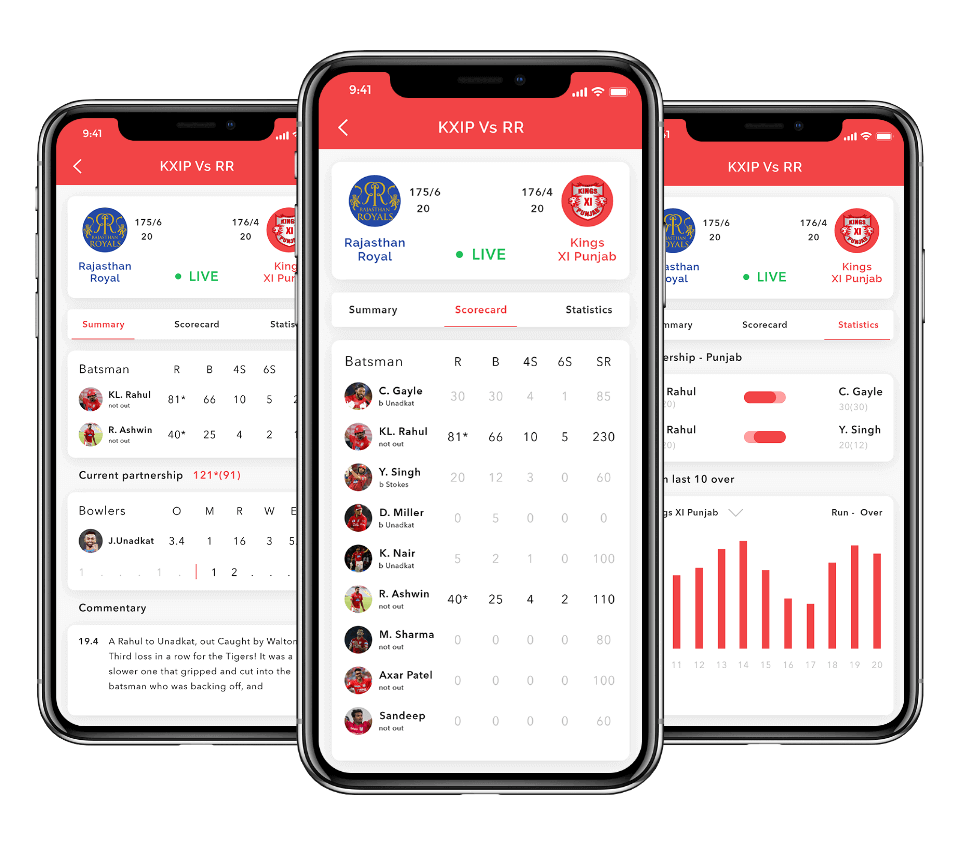
fantasy-cricket-app

Dream 11, the growing obsession and stimulating play, gets glued millions of sports aficionados across the country. As the name shouts ‘Fantasy Sports’, immerses everyone in a virtual game which is played more of an imaginative style.

In time, the penchant of Fantasy sports has spiked colossally and has fuelled in even greater mass velocity by rapid advancements in technology. Fantasy Sports App like Dream 11 is no exception.

An India based fantasy sports platform majorly boasting fantasy cricket league and other sports like football, kabaddi and basketball is into the spotlight, with a rapidly growing base of 20 million+ users.

The app that lures sports enthusiasts on the offerings like sign-up bonus, cash prizes, and a craze tied with lots of enthusiasm have won millions of hearts in the world and established a strong foothold, big enough to be hailed as a World’s #1 Fantasy Cricket & 6th Largest Fantasy Sports Site.

Related Article : Fantasy Sports: Statistics, Emerging Trends and Investment Opportunities

Here’s a breakdown of growing market of fantasy sports that will show you a bigger picture of this bandwagon:

Fantasy-Infographic_V3-2

Fantasy Sports Games- Market Growth and Action Stats across the World

  • Fantasy sports started in USA in 1952. Today there are over 200+ operators with 59.3 million users (21% of US population). 65% of the male sports fans in USA play fantasy sports.
  • Rapid growth in India in the last two years- from 2 million users in 2016 to 20 million in 2018.
  • Projected fantasy sports users by 2020- 100 million, 30% of online sports fans in India.
  • 2 out of 3 or 67% of online sports fans in India are aware of fantasy sports.
  • Engagement wise, users spend 42 minutes a day on fantasy sports app.
  • Fantasy Sports is highly sticky- 89% of the users play it at least once a month.
  • Out of the users who have ever played fantasy sports- 96% of them have played it at least once in the past 1 year.
  • 60 operators and growing: India is becoming the battlefield of fantasy sports operators.
  • With 20 million fantasy sports users, India rapidly catching up with western countries.
  • 53% of players primarily use their mobile device for fantasy

//SOURCE: IFSG- AC Nielsen report- Scoring big with Sports Gaming

Core App Features and Functionalities to develop an App like Dream11

Features of Participant/User App

1. User Authentication
1.1. Login
1.2. Register
1.3. Referral Code
User can register and log-in to the app via email, username, contact number or a referral code provided by any friend.
2. Main Screen
2.1 Search
2.2. List
2.3 Filter
On the home screen user can search, search by filters (like matches, sports type (Cricket, Football, NBA), category of match (Upcoming, LIVE, Results).
View match listings like tournaments name and match timings.
3. Tournaments
3.1 Filter
3.2 Listings
3.3 Join Tournament
3.4 Create fantasy team
3.5 Create Tournament
The tournaments section aggregates complete tournament listings for any match.
It allows users to filter tournaments by entry fee range, tournament type, winners count, number of teams that can join. As per that a user can join the tournament.
Here users can join the tournaments by giving the entry fees.
Users can pick a fantasy team by selecting players based on knowledge and awareness of player’s performance, player’s statistics.
Users can create their own tournament by entering details like tournament name, total winning amount, entry fees, tournament size, and multiple team permission, invite friends.
4. Payment Gateway Integration Allow users to pay online through credit card/debit card, mobile wallet, net banking and referral cash.
5. My Tournament details
5.1 View participants
5.2 Edit team players
5.3 Filter
Here the owner of the tournament can view the participants list. They can view and edit their team players and apply filters on the parameter of match status.
6. Invite and Earn Users can share or refer the app to their friends via app URL and referral code. In turn, users can be benefitted by cash or reward points bonus which gets credited directly to their wallet.
7. Content Management System A support system for the user which will include different sections like About Us, Help, Contact us, Point System.
8. User’s Dashboard User can view and update their entire profile details like:

  • Account details (referral cash bonus, winning amount, reward points, total balance).
  • Manage transactions (add and withdraw payments)
  • Check overall rankings, invite & earn, friends etc.
  • Logout

Features of Admin Panel

1. Admin Login Admin can login to the app using username and password.
2. Admin Dashboard Admin has the God view of everything from the dashboard like: total upcoming or scheduled matches, LIVE matches, already played matches, no. of participants and total revenue generated.
3. Users Management Admin has full control over edit, update, delete, add, activate and deactivate accounts.
4. League/Tournament Management Admin has full control to manage, edit, update, delete, add, activate and deactivate leagues or tournaments.
5. Category Management Admin can manage the games categorically.
6. Match Management Admin has full control to manage, edit, update, delete, add, activate and deactivate matches.
7. Revenue Management Admin can view total earnings from different matches by applying various filters.
8. Reward Points Admin can offer reward points to the users.
9. Bonus Cash Management Admin has the sole rights to add, manage the cash prizes given to the participants.
10. CMS Management Admin can manage the sections of Help, About us, Contact us and others.

Advanced Features

1. Push Notifications Send the users time-to-time notifications about match timings, scores, results and more.
2. GPS Location Tracking Send users alerts about ongoing or upcoming matches nearby their location.
3. Live Match Score Give your users an ability to watch LIVE scores for matches by LIVE score API integration.
4. Real-time Analytics Provide real-time data insights to make better decisions quickly.
5. Miscellaneous Social Media Sharing, Live Commentary feed, Live video streaming of games, Live photos of games.

The image below shows full Leaderboard architecture of Dream 11:

leaderboard-architecture-of-dream11

Source: Dream11

The Bottom Line:

The penchant of Fantasy Sport is dramatically increasing. For those who are thinking to pitch this field as a new avenue to stack money, should now take their next step forward to build a Fantasy Sport App just like Dream 11. Codiant is your right development partner which has an expert team of Fantasy sports app developers who can perfectly strike a chord to your requirements and build a robust app cost effectively.

How To Make an App Like- Instagram Threads

It’s time to tie the new social network threads through Instagram Threads.

Keeping up to date with current trends is normal for GenZ and social media plays a crucial role to update them. This is leading to an increase in demand for social media apps that are easy to use, efficient, multi-featured, and comprise Artificial Intelligence in it.

Do you know which social media platform reached 1 million users in the least time? Well, the recently launched app Threads by Instagram has conquered this number within 2 hours of its launch. Coping with well-established platforms these days is difficult, but Threads made history.

This blog will provide a brief on how to build compatible On-demand apps like Instagram Threads.

What is Instagram Threads App?

Threads is a unique captivating app that is launched by Meta, the parent company of Facebook. The primary aim of the app is to connect with a huge audience through real-time text updates and conversations. Instagram threads users can share their posts up to 500 characters and can include photos, videos up to 5 mins, and links.

It is shooting the marketing intending to rival Twitter.

How to Use Instagram Threads App- Step-By-Step Guide

Still, wondering how to use Threads App? Here is the step-by-step guide you can follow to use Threads.

  • Find it on App Store/ Play Store and download it.
  • Open the app to log in and press the button below “Login with Instagram”
  • Set up your profile by choosing “Import from Instagram”
  • Choose options to make your profile public/private
  • Select the number of Instagram followers you want to follow on threads
  • Once done with follower selection, tap on “Join Threads”

Making It Easy for You to Navigate- Instagram Threads

Here is the list of icons that you will see on the app to navigate throughout.

  • Check your Thread feeds using House Icon
  • Search people you want to follow by typing names on the Magnifying Glass Icon
  • Create a new thread using Pen and Paper Icon
  • Track your account activity using Heart Icon like followers, post mentions, etc.
  • Check your own thread profile and activity using Human Figure Icon

Must-Have Features in Ideal Social Networking App Like Threads

Social networking app like Threads is built with a perspective to connect with a huge audience through the power of real-time text updates.

If you are looking to create a similar app then here is the list of features that you must consider.

1. Limit & Media Sharing

Threads which is a similar app to Twitter limits users to use up to 500 characters in a Thread post. This feature allows users to promote their ideas, thoughts, and relevant updates in a very concise manner.

Additionally, there is also an option to share images/photos just like Instagram and long videos of up to 5 minutes to help individuals engage with a huge like-minded audience.

2. Integration With Instagram

Threads provide a notable feature that allows users to integrate seamlessly with Instagram. Any user who already has an account can directly login to threads app with existing Instagram credentials.

As soon as the user downloads the app, the Instagram details automatically appear allowing users for the easy Threads login.

3. Ad- Free Setting

To provide an uninterrupted experience, Threads is presently not allowing any advertisements which is helping users to engage easily. However, with the expedited growth of the application, the company may introduce a new feature to allow ads.

But for now, it’s good news for users to enjoy Threads without any interruption.

4. Privacy Setting

As soon as the user login the app, the user gets the option to choose followers from their existing list of Instagram. So, either they can choose a few, all, or none of them, it totally depends on the user.

Also, users get an option to choose their profile’s privacy setting i.e., whether they want to make their account public or private.

5. User Control

Users can easily manage user interactions by limiting or allowing another followers’ activity i.e., who can mention them or reply to their thread posts.

Moreover, the user also gets the right to use specific filters where they can remove replies which don’t look suitable to them.

6. Enhanced Messaging

Similar to Twitter, the Threads app provides an interactive text-based interface where users can share short messages, like, and repost.

Also, users can even quote those text-based Threads just like retweets on Twitter.

How to Kickstart An App Development Like Threads?

If you are one such business owner, looking to build an app like Threads and vying for those unique features that others are still waiting for then congrats, you are in the right place.

Here we uncover the detailed process of developing robust social media apps like Threads.

Market Analysis

Before you begin with text-based app development, it is crucial to understand the market scenario and note down crucial stats both in value and volume. Try to find out essential factors like market competition, engagement patterns, regulations, barriers to market entry, user insights, user preferences, and trends.

Wireframing

Once you are done with the research part, begin to create a blueprint for your text-based app including visual structure and storyboard creation. Clearly define the app screen specifications, navigation, and feasibility to define user experience and interface.

UI/UX Design

After understanding all the major app components, the expert design team begins to give an attractive and user-friendly interface and look to help attract clients. A major focus of the designers is on the app’s usability and aligning the brand’s voice to make it visually appealing.

App Development

Once there is clarity on the design part, the project goes to the developers who decide the significant tech stack including programming languages and development frameworks. Developers work on building necessary components and integrating APIs, and server databases to ensure better usability, scalability, performance, and compatibility.

QA Testing

When you are launching a new app in the market it is inevitable to conduct multiple testing which helps in managing high quality at low cost. The testing is done to check the app’s compatibility, interface checks, performance, bugs, and other errors that can create issues in delivering a seamless user experience.

App Launch & Maintenance

Now, the app is ready to go live on multiple platforms with suitable app titles, descriptions, categories, keywords, launch icons, and app store screenshots. After deployment, developers keep an eye on the app’s performance, user feedback, bugs, relevant updates, and overall functioning of the app across all the platforms.

How Much Does A Social Media App Development Like Threads Cost?

The development cost of any mobile app is not fixed. There are always some of the influential factors that affect the pricing aspect which we are going to discuss further.

However, the ballpark figure of developing an app like Threads costs starts around $40,000 and goes on increasing as per the individual requirements including feature addition and more.

Some of the major factors that influence the development cost includes:

1. App Complexity

When you include exclusive features, which includes the app’s complexity and adds up more cost to the development process.

2. Number of Features

With the increase in the number of app features, the overall app development time increases as it requires more resources which ultimately increases the development cost.

3. App Size

Variations in app size will have a huge impact on the development cost. If you go for an MVP development, then the development cost will be comparatively low than a full-fledged feature-rich app.

4. Development Platform

If you are developing an application that works on multiple platforms, then you would need a developer having platform specialization which again increases the cost.

5. Developer’s Location

It is not just about the development process; the developer’s location also plays a major role. So, it’s crucial to conduct thorough research on location-based charges.

Summing Up!

So, are you excited to launch such a thrilling app in the market? We are the tech experts to help you guide through the process of creating a popular app like Instagram-Threads. Don’t miss a chance to entice your target audience by giving them an opportunity to share daily thoughts, emotions, and experiences.

Now build a similar app and make it easier for your users to connect and communicate with the ones who mean the world to you using a game-changer app Instagram-Threads.

How A Custom Gym Management Software Can Boost Your Branding

Almost half of the youth population today is involved in fantasy sports games. The concept of gaming
entertainment came a year ago but digitalization gave it a more spurt and NFTs are a part of it.

Tokenization in the gaming industry is another level of innovation that is enticing the population and
helping players to experience another level of success. With this speedy growth, a large number of people
are ready to make investments in non-fungible tokens.

Keep reading the blog to explore detailed information about NFTs, their benefits, features, and how they are
transforming the fantasy sports world.

What Are NFT Games?

NFT games are unique digital collectibles on the blockchain. These are used to represent the ownership of
any asset in the gaming world. NFTs allow players to own gaming tools and assets and earn money out of
them.

Any user can earn profits by either playing or trading their NFTs for real currencies. It is essential to
note that while transferring one NFT to other, the NFT must be in a viable wallet.

Majorly Ethereum is used by NFTs but many other network platforms help in the further process i.e. NEO
(Blocklords), TRON (Blockchain Cuties), and EOSIO (EOS Knights). This allows to follow the decentralized
method and offers exceptional benefits to the players.

Players Have the Ownership, Control, and Ownership
Transfer Rights

Unlike traditional games, the players have ownership of the game collectibles and other gaming tools
while playing. These gaming NFTs help players in earning desirable profits. Players have full control
over it and they cannot use or lose them as the game is over because it is kept securely in the wallet.
Also, the ownership of the collectibles can be transferred easily to the buyer and the same is updated
in the blockchain.

Provable NFTs

The detailed information of the NFT games are recorded in the form of codes that are kept safely in the
blockchain. This information is further used to learn about the NFT creator and all other previous
owners. Thus, no other player can undergo any fraudulent activity and this proves the precision of the
NFT.

NFT’s In Fantasy Sports

The world of NFTs in fantasy sports is growing remarkably. This penchant comes from the tech-savvy
youngsters who want a twin package of entertainment and profits altogether.

Traditional fantasy sports failed to attain the desired success. But the discovery of NFT and blockchain in sports has
given it new dimensions.

NFT allows a user to get the tokens of their favorite players/teams and they can enjoy the real-life
game. The performance of the real star players fluctuates with the value of their NFTs.

This field explains that users need not be part of the game to earn through it. Rather they can just
enjoy other players’ performance. Having knowledge in this field helps in selecting the correct player
or team as an NFT token.

NFT’s As Gaming Tokens

These are the assets used to showcase the value of the gaming tools, armor, or weapons on a blockchain.
The gaming token is an attractive way of trading items as NFTs. Any asset that people want to buy, can
be purchased as attractive images instead of those gloomy numbers. Users can also get access to more
tournaments, locations, and customization options by earning more tokens via gaming performance.

What Are Sports NFTs and How Do They Work?

Sports NFTs are digital collectibles and trading cards of users’ favorite players in any sport. It
allows users to own and engage with their favorite teams and players which was not possible physically
before. NFTs in sports are known to keep records of assets and digital collectibles. These can be owned
by players or teams. This helps them to monetize their own brand and directly serve their own fan base
while eliminating the role of middlemen.

How Do Sports NFTs Work?

Below are some examples of how NFT’s work in sports:

Sports Fan Tokens

The fan tokens are used by users to participate in the fan game processes. The fans have the right to
vote for the internal things of their favorite teams like deciding game playlist, choosing their emblem,
preparation of the new training kit, etc. Moreover, the user also gets the right to easy access to the
tickets and other club discounts.

Sports Video Clips

This allows users to buy the bundle of rare video clips of the players of their highlighted performances.
These are usually the best moments of the play.

Metaverse Games in Sports NFT

The fans can own the tokens and interact in a much better way with the players. In this type, the users
can buy racing cars as NFTs, and each player plays against the other player from all over the world.

Features In A Fantasy Sports App

User App Features

  • User Registration: The user will register themselves using phone no., email id, or
    social media credentials.
  • Home Screen: Users will get the basic information to browse their favorite players,
    matches, sports, etc.
  • Filter: Multiple choices will be available to get customized information/details as
    per the user.
  • View Player Statistics: Users can see the scoreboards, the number of games played,
    team members, and more.
  • My Winnings/My Offers: User can check their achievements in past matches and offers
    for the upcoming ones.
  • Create New/Join Leagues and Tournaments: Users can create new or join existing
    tournaments and leagues.
  • Payment Mode for Subscription: Multiple payment options must be added for easy exit
    of the user.
  • Check Reward Points: It allows users to check their earnings in the rewards
    section.
  • Invite and Earn: Users can get benefits by referring the app to others.

Web Administrator Panel

  • Login/Registration: Admin can register or log in using their mobile number, email,
    or social media credentials.
  • Dashboard: Admin can check all the previous transactions done and the number
    of matches played. The dashboard provides all the essential information in one place.
  • Manage Matches: Admin has full access to handle the ongoing events over the
    app.
  • Manage Payment: The payment collected at the end of the period will be managed
    at all of their respective places.
  • CRM: Integrating CRM will help in managing & getting answers to the
    customers. This helps in improving customer relationships.
  • Manage Payment/Transactions: Admin manages and checks the error in the payment
    transactions.
  • Manage Notifications and Requests: Admin handles all the requests and
    notifications and responds to them.
  • Players, Players Assignments, and Leagues Management: Admin manage the number
    of players, assignments, and leagues performed in a particular duration.
  • Manage lists of users, and transactions along with the history: Admin manages
    the list of users, and the transactions performed along with historical details

Way to Monetize Your NFT Fantasy Sports App

Non-fungible tokens can help users to earn a huge amount of money. Here we list down the most widespread
ways:

  • Rent out your NFT: Renting your NFT works better when it is already attracting
    others. In this way, you can earn more money.
  • Charge Royalty Fees: A minimum of 8% royalty is given to the owner after the NFT is
    sold in the secondary market.
  • Go for NFT staking: When you lock or deposit your NFT then it is known as staking
    it. Its income is usually distributed in the form of tokens.
  • Advertisements: Market your NFTs in a user-centralized platform which will help in
    gaining more income.

Legal Implications in NFTs and Fantasy Sports

As NFTs deal in huge monetary terms, therefore, the transactions need to be managed very clearly. There
are a few legal issues related to NFTs that are mentioned below.

Ownership rights

It is possible that the buyer rights may not be mentioned in the contract. And this may create many legal
issues like what a buyer can do or what not? Usually, the owner owns the copyrights, but it can be
confusing if it is not mentioned clearly in the agreement.

Securities Law

Ensuring NFT security is necessary. Many times a single-owner NFT i.e. an NFT which is only purchased by
a single owner may not have any security. A Howey analysis case by case must be done to check the NFT
security.

Copyright Law

The law is used to safeguard the NFT owner copyrights. When an NFT of any artwork is sold to another
person then in that case only the ownership is passed and the copyrights still stay with the owner. In
case, the buyer creates a copy without taking copyrights from the owner then, legal action must be taken
against it.

Name, Image, and Likeness (NIL)

This allows the athlete players to promote their names, image, and likeness and capitalize on it to
earn profits. This was possible after the NIL rights were issued by the state governments.

Summing Up!

The world of NFT in fantasy sports is growing at a very rapid pace. The field of NFT sports app
development
requires a mindful investment as well as in-depth information to gain
the expected insights. As an entrepreneur or an enthusiast business person, investing in NFT fantasy
sports can give flourishing results. You must also look at the top market player’s performance and grab
information to bridge your gap in the NFT fantasy sports industry.

Stay Ahead Of The Time With High Tech Focus.

arrow

Choose The Right Staff Augmentation Model For Your Business

Recruiting new and skilled staff for your team is not at all a quick or cheap process in any manner. On average, hiring the skilled software engineer costs an organization about $4,000 and takes about 58 days.

The staff augmentation model can help businesses to minimize such upfront costs and fill the skilled-resources gap in the minimum time. Through the resource and staff augmentation model, businesses can easily hire short-term or long-term remote employees with different skill sets.

Before, implementing this model in your organization it is important to analyze your requirement and define your business processes accurately. This will help you to understand your resource gap and how to practice the staff augmentation model to stand out from the crowd.

Here is our in-depth to help you choose the suitable staff augmentation model for your business.

How To Determine Staff Augmentation Is The Right Model For Your Business?

1. When You Need To Reinforce Your Team

When you are having your in-house team, but need additional resources to improve your expertise or fasten the development process and product release. In this situation, you can easily add one or more specialized resources to your existing team from any part of the globe.

This type of staff reinforcement can be commonly seen in organizations that adopt a staff augmentation model to fulfil their urgent and short-term requirements.

2. When A Deadline Is Approaching

Recruiting an expert resource for your ongoing project is a costly and timely affair – if you are following a traditional advertising and hiring approach. Evidently, considering the project’s urgency you won’t possess such luxury of time and patience to fill the resource gap.

Thus, implementing an IT staff augmentation model in your project, can easily fulfill your urgent project demand and meet the project’s deadline. Based on the project’s requirement, it is needless to mention that you can hire the resource on a contract basis and for a short-term period.

With such flexibility, you can explore the global market and hire the right resource instantly and for a definite time to handle your ongoing project.

3. When You Need Specific Skilled Resource

Resource and staff augmentation can help to fill an IT skilled or software development requirement by infusing additional staff with the required skills to complete the specific project or task. With this augmentation model, you can easily expand your team size in no time just by introducing specialized techies or engineers. It includes Data Analysts, Business Analysts, Quality Assurance Engineers, DevOps, and others.

Apart from that, you can also hire an especially skilled resource for your team to streamline the project processes and train the team to achieve the targets. Such resources are not considered as part or extension of the team, rather they are the support or manager of the team for a definite period.

4. When You Need Resource As A Bridge Before Permanent Recruitment

Adopting a staff augmentation model for your ongoing or urgent project can help you onboard software developers to meet your instant requirements while allowing you ample amount of time to recruit skilled full-time employees.

Moreover, this allows you to bridge your resource gap to keep your project on track and equip you with a sizeable window to recruit full-time employees through the traditional recruitment process.

Points To Consider While Choosing The Right Staff Augmentation Service

1. Assess Your Resource Requirements

It is a must for any organization to analyze and even predict the current and future requirements of specialized and non-specialized resources. It is necessary for an organization to define its requirements before seeking the market to fill the specific skill gaps.

But the point is, not all departments are going to have the common requirement or demand for outsourced resources at each hour. Therefore, to understand the specifics, it is suggested that HRs should be in regular communication with project managers and the team leads to figure out their needs and plan the future requirement simultaneously.

Such, interaction with the teams will allow the recruitment officer a decent amount of time to introduce the right resource with specific skill sets in the organization, as well as on a project-by-project basis.

2. Evaluate Contract Processes

When you are associating with a staff augmentation service provider to fulfill your organization’s resource demand, then it is important to have a transparent contract with detailed terms and conditions enlisted into it. Such transparency will help you to tackle challenges in a simplified manner for the betterment of your company.

Having a detailed contract or going with a tailored agreement on mutual understanding with the staff augmentation service provider will help you define your business requirements and achieve the organization’s goal with ease.

Likewise, such a cordial relationship with the development team and the staff augmentation service providers will ensure you avail of exceptional technical talent whenever your team and organization need the most.

3. Clear Understanding Of Technical Skills

While adopting a staff augmentation model, companies should have a clear understanding of the project’s nature or industry they are having expertise. This will allow them to analyze the upcoming requirement for additional resources or new resources for the proposed projects.

It could be a serious issue for companies who close the deal without having the right resource or analyzing the project’s requirements and work quality.

To eliminate such issues, it is suggested to establish regular communication with the team and senior staff members or project managers to figure out the technical availability and future demands. Apart from that can also discuss with the team leads regarding how they utilize and integrate the augmented resources to companies work culture.

4.Analyze Staffing Partner’s Experience and Expertise

After analyzing the contractual staffing service providers’ expertise and experience in a specific field will help you to figure out the deliverables of the augmentation agency that can fulfill your organization’s specific demands.

The timely availability of the required resources for your organization will help you handle the staffing challenges that may arise during the ongoing project. Hence, review and analyze your vendor’s professional credentials, client’s experience and work history. As you do the same when hiring a permanent employee.

Some important points that could be considered while onboarding the staff augmentation service providers are;

  • Carefully do the background check and connect with previous clients to learn about their experience and deliverables.
  • Ensure the augmentation agency has the experience in recruiting skilled staff under the specific field and especially that you demand.
  • Read reviews and testimonials about the vendor on reliable sources and third-party platforms, such as Clutch, Good Firm or Glassdoor.

5. Evaluate The Local & International Market Reach Of Your Provider’s

App and software development is sometimes a very unpredictable business, where you can’t expect to hear a unique or different demand from the client during the ongoing project, but he does. Interestingly, you can’t say no to that or couldn’t think of convincing the client to drop the idea, because you also know it is a unique and fascinating one.

Hence, you need to be prepared to implement varied staffing approaches to bridge the random resource demands. The demands could be for engineering or creative department with rare expertise and skills to deal with algorithmic complexity in emerging technology.

To gain access to top-notch yet rare experts, you have to look into each small to the large-scale platform, which is quite a tedious and time-taking procedure for an organization. But, can do so easily with staff augmentation service providers who are having diverse connections, experience and infrastructure in place to fulfil demands.

Thus, for such unique demands, you need to evaluate your service providers’ local and international reach to ensure the smooth flow of your project and meet the deadline.

6. Take Care Of Language And Cultural Barrier

Companies working with remote employees most often experience language and culture compatibility issues between the in-house and outsourced members. Therefore, before hiring talent from different parts of the globe, evaluate your compatibility and company background, who can easily deal with such issues and provide the right and suitable resources that can effectively work with the team.

If the cultural and communication differences are not addressed at the initial stage, can also lead to a compromised project outcome. It may hamper the organization’s credibility and lose clients as well.

To an extent, the cultural difference can be ignored but the communication barrier can not be ignored at any cost if the team is not equipped in communicating with that specific language. Hence, ensure the recruited staff or the service provider doesn’t have to experience too much difference in language and culture.

7. Assess Contract Types & Delivery Schedules

While engaging with a staff augmentation service-providing agency, ensure to have a transparent yet flexible agreement, that is open to provide you resources that can fulfill your custom requirements and help you the most when needed. To deliver such services on time, the agency must have access to the exceptional talent that you need the most.

It is also important to understand that the agency is capable of outsourcing your resource requirements with your products’ requirements or the pace of the project development schedule. An experienced outsourcing agency can deliver the right and skilled resources to the company in a minimum time frame.

Hence, always keep a close tab on the flexibility and type of contract you are engaging with the staff augmentation agency and study their past record to learn about their working styles. All such details will help you to understand their efficiency and make you confident in avoiding interruption during project progress due to the lack of resources.

Conclusion – Why Businesses Choose Augmentation

Building a team equipped with the right and skilled tech knowledge can help your organization to reach its goals swiftly. The companies who adopt the Staff Augmentation model: support them to stay ahead of the competition and meet the deadlines without much struggle.

In addition to that, the staff augmentation model serves various advantages, such as minimizing legal responsibilities, reduction in operational expenses, minimizing paperwork and boosting flexibility. With all these benefits, the smooth integration of flexible team augmentation ensures the organization can have the access to experienced resources at any time it’s needed.

We, at Codiant, are also a highly experienced, responsible and efficient IT Staff Augmentation service provider to take care of our client’s short-term and long-term requirements and take the project to a next level. For any assistance or web and app development, you can connect us to hire qualified developers for your next project.

Edge Computing: The Next Generation of Innovation

The IDC report forecasts global spending on edge computing market growth will reach $317 billion by 2026. The estimated expenditure on edge computing will reach $208 billion by 2023, with an increased rate of 13.1% from the 2022 figure.

Edge Computing is one of the revolutionary technologies that can evolve organizations aiming to let themselves free from the limitation of traditional cloud networks. Initially, edge computing is applied to low-latency situations, which demand high computing ability and quick actions. These activities can be IoT robots working on gestures or sensors that regularly monitor vaccine temperature during production.

In the data-dependent world, almost 90% of the generated data is processed in centralized data centers. However, according to a popular study, about 75% of the existing data demands analysis and action at the edge by 2023.

Organizations are still under debate on how edge computing is different from traditional data processing and how it can be one of the vital players in the innovation of next-gen technology and create a seamless IT infrastructure.

What is Edge Computing?

Edge Computing is a networking philosophy that works in a direction to minimize the latency between computing and the source of data and bandwidth use.

In simple words, Edge Computing architecture means implementing a few processes in the cloud and then rapidly moving those processes to local user storage or devices, like a user computer, an edge server, or an IoT device. Introducing process computation to the network’s edge minimizes the number of distant and time-taking interactions that occurs between the client and server.

The edge computing applications which interact closely with local devices are becoming more intelligent and standardized with time. Edge Computing have a lot to offer for both end customers and businesses. The edge computing-based application delivers a seamless and personalized user experience, enhances business processes, and more.

Further, let’s examine some promising use cases for Edge Computing. We’ll then exploring some challenges users usually experience with edge computing.

Edge Computing Use Cases Across Various Industries

Edge Computing has a lot to offer to smart IoT applications across various industries. It offers advanced security, and productivity, and enhances the overall performance of enterprises.

1. Edge Computing in Retail & eCommerce Industry

Retail and eCommerce apply edge computing architecture to enhance and refine customer experience and gather more raw information about the business.

Inventory Management: To maintain a cordial customer experience, it is the major responsibility of businesses to maintain secure and efficient inventory management services. Such that products are available for customers when they want, and understand the customer’s needs and products availability.

All this can be managed by integrating in-store intelligent video image recognition. AI technology can track inventory status and take action accordingly.

Big Data & Analytics: Edge supports real-time data processing and analytics at the source of data generation. This makes it easier for retailers to use AI and Big Data technology with a pool of raw data and generate meaningful results.

The generated insights from the available and collected raw data help retail and eCommerce businesses boost their operational efficiency level.

2. Edge Computing in Banking & Finance Industry

The banking & finance industry is combining edge computing’s potential with other technologies like Cloud, AI, and 5G networking across banking networks. And some of the exciting applications of edge computing in this industry are;

Data Privacy: Organizations with cloud hosting services transfer their data to a central location. Hence, to remain a reliable institution, it becomes mandatory for them to practice high-end privacy and security guidelines to minimize the cases of data theft or unauthorized access. Despite that, the data are always prone to theft or loss.

Integrating edge computing makes data handling quite easier for banks and financial institutions. These institutions can deploy edge computing-integrating applications to their local branches and minimize the dependency on cloud computing and also the chances of data loss.

ATM Security: Edge AI technology can be used to enhance ATM security by accessing video feeds that can be analyzed through the edge by integrating image recognition. Moreover, it doesn’t require human interaction and even doesn’t demand initially to transfer the data to the cloud.

On the other hand, if an ATM machine experiences any tampering, then the machine will shut down automatically without delay. Simultaneously alerts the bank about any malpractices and can act by contacting law enforcement.

3. Edge Computing in Healthcare Industry

Edge Computing supports healthcare industry data analysis in solving issues, and making accurate decisions by integrating ML capabilities without requiring cloud support.

Remote & On-Premise Patient Monitoring and Care: Engaging edge at the on-premise of the hospital can process data locally and ensure data privacy and compliance, compile multi-source data within the hospital, and yields relevant information. This promotes resource efficiency for clinicians, boosts productivity, and minimizes the expenses on patient care.

In remote patient monitoring, the edge technology with IoT-integrated devices or wearables can provide real-time patient health status and also alert patients and clinicians in case of any error, health deterioration or medicine skip. It promotes patient care and assistance in remote areas without a clinician all-time presence at the location.

Operation Theatre Assistance: Edge Computing adoption with AI is transforming operation theatre experiences by introducing AI-assisted surgeries. The AI system can instantly start monitoring a patient’s condition and can even perform identical surgeries in the absence of experts. This becomes possible as the AI-operated devices can learn from previous experiences and perform processes with much-needed precision.

4. Edge Computing in Manufacturing Industry

The manufacturing industry is adopting edge computing for transformation by merging Information Technology (IT) with Operational Technology (OT) to present advanced efficiency, transparency, and timely data analysis.

Predictive Maintenance: This process predicts the failure or any issue in advance that may arise in upcoming days. It provides a window for the business owner to prepare themselves for the potential breakdown or avoid such situations by implementing preventive measures.

Despite that, there are many challenges to integrating insights from operational technologies into IT systems. With edge computing, it becomes possible to process the data that are closer to the device where it is generated and avoid the cost of transporting data to the cloud and improve data accessibility.

Condition-Based Monitoring: Manufacturing businesses generates a huge amount of data that helps manufacturers to analyze data patterns and make accurate and profitable business decisions.

The massive generation of raw data usually overloads the central server. Thus, to reduce this burden on the cloud and make the fast-moving of only valuable data, edge helps to clean the data and transfer only the required data to the cloud server.

Benefits Of Using Edge Computing

1. Speed

Edge Computing architecture promotes on-spot data processing or at a local data center, which minimizes operational latency. As a result, when the data is stored or accessed from the cloud the processing of data becomes much faster.

2. Scalability

Edge computing adoption in an organization can expand the number of computational resources and presents consistence performance with the combination of multiple dedicated devices and local data centers. This expansion of devices and data centers doesn’t hamper the bandwidth of the central network.

3. Versatility

Edge Computing supports the collection of a huge amount of valuable data from multiple sources. The edge computing architecture handles the raw data and allows the central network to hold processed and organized data for further machine learning or data analysis.

4. Reliability

The edge computing architecture supports data management to the nearest device of the user. Hence the system remains less dependent on central networking.

5. Security

Edge Computing infrastructure supports the spreading of storage, processing, and related applications on near devices and local data centers. This security formation structure neutralizes the disruption of the entire network.

Challenges In Using Edge Computing

1. Network Bandwidth

The network bandwidth usually varies as the organizations transfer their processed and raw data to the edge. Moreover, by following the traditional method the enterprises allocate higher bandwidth to the data center, and for endpoints it allocates lower bandwidth.

Edge Computing demands the need for higher bandwidth across all networks. This remains the challenge for edge computing architecture to maintain the balance between networks while maintaining high performance.

2. Geolocation

Edge Computing promotes the role of location in the data processing. It is so because to maintain the proper workload and deliver results consistently, organizations need to have the local data center present at the nearest location.

3. Public & Private Cloud

The usage of native cloud technology on multiple edge computing generates the demand to build a private cloud cluster across these edges. Whereas, the hyperedge cloud services like Amazon Web Services, Microsoft Azure, etc. offer the services of hyperscale economics availing public cloud constructions.

As a result, the infrastructure could now be scaled up to a smart and cost-efficient architecture by leveraging APIs (Application Programmable Interfaces) on the infrastructure built by the public cloud provider.

4. Security and Privacy

With edge computing and applications centralized at a data center, enterprises can standardize the level of security at both technical and physical levels by building a virtual security wall around the resources.

Edge computing architecture can evolve the security footprints that require remote servers for the same network and physical security structure to present traffic patterns and location. The IT networking team require to clearly present user access, as edge computing needs access rights for users over multiple devices at a time.

5. Edge Computing Framework

The edge computing framework follows different approaches to store data and manage accessibility. Whereas the centralized infrastructure only follows a unified approach for edge computing, hence it requires detailed attention on every “edge” point.

Conclusion

The adoption of cloud computing infrastructure has introduced a new level of data analytics. The multiple clouds’ interconnectivity supported a more detailed approach to collecting and analyzing raw data.

Edge Computing adoption has made things even more efficient. Hence, the business operations quality has improved significantly. It is a viable solution for data-driven operations that demand instant results with a high level of flexibility based on the current state of things.

By integrating edge computing in your organization, it will support your organization to run more effectively, deploy incredible innovations at a rapid pace, and derive better value from affiliations.

To give a new dimension to your digital business and fasten the operations by integrating advanced technologies, you can connect with our tech experts to build a tailored solution catering to your business requirements.

How AR-VR Is Taking Space in Education and Entertainment Industries?

As AR-VR technologies continue to create a buzz in the market, industries like education and entertainment are also taking advantage of the new streams to engage a huge audience. These technologies have drastically reduced the necessity of traditional approaches.

Now, these industries are benefiting at a large scale by getting millions of opportunities to increase engagement, generate revenues, create better connections and find out other ways for growth.

According to Statista 2023, the global market of augmented reality, virtual reality, and mixed reality has reached 29.26 billion US dollars in 2022 and it is expected to rise to over 100 billion US dollars by 2026.

This blog will look at some of the critical advancements that education and entertainment industry creators and platforms are leveraging currently.

Augmented Reality

It is a term that is used to create an artificial environment using a perfect blend of the digital world and physical elements. In simple words, Augmented reality enhances real-world objects into perceptual information by using computer-generated high-quality sensors and cameras by AR-VR App Development.

There are four major elements that create superimposed images of the real-world environment i.e. camera and sensors, projection, processing, and reflection.

Example- Pokémon Go game is one of the best examples of AR technology where players are allowed to locate and capture characters who appear in the real world.

Virtual Reality

It is a fully immersive experience that turns a real-life environment into a simulated one. Virtual reality makes use of a headset that places an individual into a virtual universe that an individual can explore by themselves.

The VR works on the technology called head tracking which allows an individual to explore the environment by just moving their head.

For example- Hotels are using virtual reality to take their customers inside their properties to give them a real feel of the location.

Benefits of Augmented & Virtual Reality in Education

1. Improves Student Engagement

Schools and teachers generally face the challenge of low student engagement which is smartly managed by using AR-VR technology. Teachers can include immersive and interactive content i.e. images and visual scenarios to engage children. Using such interactive elements, it becomes easy to kindle child’s curiosity by securing their involvement and providing them with the best practices to remember the acquired knowledge.

2. Better Understanding of Concepts

Giving a better understanding of the topic was not possible in the traditional teaching methods but it is now possible with AR/VR. Students get a clear 360-degree view of the images which makes it easy to understand and learn. VR supports conceptual learning methods by presenting dynamic visualization and representations.

3. Integrating Learning with Gamification

Using these technologies, students can emerge themselves in a fun and interactive learning process through multiple games. Providing students an opportunity to play where they can participate boost student learning and engagement and allow them to think beyond their imaginations. Moreover, the badges, points, and other awards through games generate intrinsic motivation among students of all ages.

4. Generates Multi-Sensory Experiences

By multi-sensory experience, we mean that all the senses of the students will be targeted parallelly. Unlike traditional learning methods, students do not just indulge in learning or reading experiences rather they are engaged through their hearing capability, vision, and touch. Such techniques excellently inspire and excite students to adopt concepts effectively. Examples- Using AR-VR, students can even hold the apple, feel it and even count the seeds inside the apple.

5. Offers Distraction Free Learning

AR VR creates a virtual environment that is distraction-free. In such an environment students can even concentrate, memorize and gain concepts in a better way. This is exactly what virtual reality can deliver to students and educators alike. Students who experience learning in VR have displayed higher scores on exams and tend to retain concepts better. Virtual reality has the potential to revolutionize the way the world knows.

With VR, students can explore a limitless world of knowledge, engaging with lessons interactively and memorably.

Benefits of Augmented & Virtual Reality in Entertainment

1. Easily Captures the Interest of the Audience

Virtual images offered by technology always captivate both adults’ and child’s attention. It is always guaranteed that people will receive a favorable outcome whenever any entertaining activity is performed using virtual or augmented reality.

2. Aids in Creating Unique Promotional Strategies

Whether you are planning to launch a new product or promote your existing ones, you can easily incorporate it with augmented or virtual reality. The great technology allows you to deliver exciting teasers. Such amazing experiences using AR/VR technology only allow you to fetch a win-win situation for the audience and a good engagement rate.

3. Supports in Boosting Business Sales

Entertainment events like movies, shows, concerts, events, etc. can be created with AR/VR technology that provides a different dimension to the entertainment world. The technology helps businesses to interact with individuals and create buzz around social media and other related platforms.

4. Allow Engaging Younger Audience Using Filters

Face filters are commonly used among Gen Z audiences. They not only help in engaging the audience but also increases brand popularity through word-of-mouth sharing. The most popular example is cricket event filters where sunglasses of different IPL teams are used with funky designs and different colors to increase awareness among younger audiences.

5. Stand-In an Abiding Connection with Your Audience

Every individual is interested in knowing more about the product and services they are using. The AR/VR technology allows the audience to provide a single link including info like origin, bio, making, ingredients, etc. The more audience knows about the product, the better they will be able to connect with you.

Summing Up!

Technologies are having a dynamic impact on industries and AR-VR is on top of the list today. Leaders in education and entertainment are accelerating their promotional activities to achieve targeted growth. They can easily provide a better visual supplement that helps the audience to grasp a topic or gain a comprehensive experience of the scenario.

Therefore, more and more organizations and companies must start incorporating AR-VR into their businesses to not only focus on better business performance but to create a strong social impact among society.

How To Use Social Media In Business Marketing: A Detailed Guide

Social Media is turning out to be an incredible way for businesses to engage with their existing customer and prospective customers. But, if your business doesn’t have a presence on social media platforms, then you are missing out on a ton of benefits that you can leverage with ease. Social Media Marketing is a highly efficient, cost-effective, and personalized mode of reaching out to your customers, gaining new ones, and retaining them.

Renowned brands have even included social media advertising in their daily marketing structure. On the other hand, small to medium-scale and even startups are very profoundly using the variety of social media platforms for brand awareness, brand building, promotion, advertising, and more.

Howsoever, there are many positive and negative impacts of social media on businesses, which we are going to evaluate further in this post. Before that, let’s have a brief look at what is social media marketing.

What is Social Media Marketing?

Businesses engaging with customers and prospects through one or more social media platforms for brand awareness, brand building, driving sales, product or service promotion, increasing website traffic, and other purposes, but without any payment is termed as Social Media Marketing.

Contrary to this, the businesses following all these agendas or operations, by adopting paid services to specific platforms to reach a wider audience is termed as Social Media Advertising.

Social Media Marketing and Social Media Advertising, both are excellent ways for companies to educate their customers on new products/services or industry trends and reach a wider audience without much manual effort.

It is quite similar to the form of word-of-mouth marketing, which empowers customers to post user-generated content, such as comments, reviews, etc. These are more positive for businesses that deploy paid marketing strategies.

How to use Social Media for Businesses?

There are multiple aspects in which Social Media Advertising can help businesses, such as

  • Marketing
  • Sales
  • Customer Service
  • Recruitment & Hiring
  • Crisis Management

Social Media for Business Marketing

Every business demands marketing to sustain itself in the highly competitive world. So, if you are adopting social media marketing strategies with a business-specific plan, then you can quickly scale up your business by reaching customers and prospects in global locations. Some of the most beneficial reasons for businesses to adopt social media advertising are:

  • Increase brand awareness
  • Generate more leads and boost conversion
  • Build new and rejuvenate your relationship with customers
  • Follow and learn from your competitors

To achieve all these aspects, it is important to craft effective social media advertising strategies such as;

  1. Plan your mode of interaction: It means defining your post style, such that how you like to introduce your business to your customers, your mode of communication i.e. directly through posts or interacting on previous comments, and more.
  2. Post consistently: To make your presence visible, with social media advertising it is important to post regularly in an organized manner to connect with customers. But, don’t overdo anything, it may put off the customers and works negatively as well.
  3. Define a Communication Structure: Study your audience and define a tone to interact and advertise your business that resonates with your audience. Try to be interactive, friendly, and relevant with your words.
  4. Study your Audience: Prefer Social Media Analytics & Insights Tools with all social media platforms to study customer behavior, the latest market trends, and all details based on demographics as well. It will help you to engage more effectively with your prospects and customers.
  5. Create Unique & Engaging Content: You need to define your USP to make the most out of it. It will help you to present creative and attractive posts that raise engagement and ultimately promotes social media ROI for your business.

Social Media for Sales

The ultimate goal of any business is to generate revenue while raising brand awareness and customer shopping experience. The intelligent usage of social media platforms will help any business to attract customers, attract word-of-mouth referrals, and increase sales for your business.

To gain ROI by engaging through Social Media Platforms, businesses can adopt the following best practices:

  1. Use engaging & informative content for advertisement: To engage with customers through social media advertising the intelligent usage of words would be in the form of running polls or contests rather than being too much pushy. It will grab customer attention and provide them with information about your products & services.
  2. Showcase user-generated content: To engage with customers and raise sales, highlight customers’ great experiences and feedback with you during social media engagement. Moreover, you can even adopt this tactic and share user-generated content on your business website.
  3. Engage with brand ambassadors & influencers: For new entrants, influencer marketing can do wonders to raise sales. Whereas established brands can collaborate with their brand ambassadors to highlight the brand presence and use their influence on customers to raise sales.
  4. Run flash sales: Flash sales are one of the latest marketing tactics that businesses are adopting for brand awareness and to generate FOMO and raise sales. It could be run randomly on your platform or can advertise about it to attract more and informed customers to sales.

Social Media for Customer Services

Adopting a social media engagement strategy for customer services will support your business to communicate one-on-one with your customers. It builds a sense of comfort, makes customers acknowledged, and encourages them to recommend your brand to others. Some of the benefits that you can avail by following social media customer services for your business are:

  • Increases openness in communication between customers and employees
  • Regular interaction builds trust between customers and the brand
  • Allows customers to easily connect with respective departments to share their feedback or complaints

To avail all the social media marketing benefits with convenient customer services you can prefer implementing the following social media marketing strategies;

  1. Respond quickly: Monitor your social media channels regularly and try to respond to customers’ comments, queries, and complaints quickly to build a healthy and strong relationship. According to research, about 42% of customers expect a response within 60 minutes on social media, especially to a complaint.
  2. Strategic use of hashtags: Use hashtags to keep your content/posts organized and easy to navigate on social media platforms. However, update your learnings regularly, as the algorithm’s likely to change frequently.
  3. Connect with complainant privately: People often use social media platforms to share their bad experiences with companies to a wider audience. Try to connect with such customers personally and adopt best practices to resolve their issues.
  4. Standardize your voice: Define a mode of communication and tone of presenting your views and response to customer queries. Having multiple people operating social media handle increases the chance of voice dilution, and you need to avoid that.

Social Media for Recruitment & Hiring

Some of the major benefits of eying on social media platforms for recruitment and hiring are:

  1. Most of the time, passive job seekers turn out to be a great asset for companies. And through social platforms, you can not only connect with active job seekers but also passive job seekers, who would consider a better offer easily.
  2. Taking social media for recruitment & hiring will be more cost-effective for companies and seekers than traditional hiring platforms. It brings high-quality talent in a significantly short time duration and expenses.
  3. Most job seekers visit companies’ profiles on social media platforms. That’s why it is important to build a good social profile and works as a business showcase builds brand awareness to present your organization’s culture, values, and various positive points.

Social Media for Crisis Management

From a business’s perspective, a crisis could be an event or situation that negatively impacts your brand reputation. On the other hand, global crises or incidences can also be considered under this, but it is up to you, as to what types of issues you are acknowledging on your social media platform.

During a crisis, exercising social media engagement demonstrates you are interacting with the brand and can impact your brand’s business, market image, operations, and community. As a social eye, it is crucial to understand when you need to respond and when to remain silent under not-so-friendly situations.

Make sure, with your words during crisis you are providing clear and empathetic information to your followers, which supports customer retention. Some of the preventive steps you can adopt during crisis management are:

  • Pause all your campaigns and scheduled posts
  • Establish a communication plan for effective crisis management
  • Acknowledge people’s expressions, but don’t argue during the crisis period
  • If you don’t have anything nice or positive to say, it’s better not to say anything rather than make things worse
  • Look for various modes through your business that can extend meaningful support to those who need it.

Social Media portals have become a widely adopted medium for top talent recruitment. A majority of companies prefer social media platforms to connect and hire excellent and active candidates as well as passive candidates.

Start Marketing on Social Media

A huge number of populations are regularly using social media platforms and on average, about 80% of users spend about 2+ hours daily with these platforms. So, it is a great opportunity for businesses and marketers to avail of these channels to promote their products/services and engage with customers.

You can use social media advertising to serve all these above-mentioned purposes. But an intelligent and planned way of usage can yield the best results for your business. So, start working on building your social media strategies, social media engagement patterns, customer retention, social media engagement, and more.

For more details and assistance, you can connect with our digital marketing experts, who can help you in formulating business-specific strategies and implementing them accurately.

Top 10 Strategies To Reduce Shopping Cart Abandonment

Cart abandonment directly affects the company’s profit margin and the rate of customer conversions. The users leaving their shopping carts without placing the order is a major concern for businesses. So, to avoid cart abandonment and to reduce its negative impact on the e-commerce industry, it is essential to conduct market research that brings clarity to the thoughts.

So, let’s pick up the data and facts and draw some strategies to figure out the best strategies that help in minimizing shopping cart abandonment.

This blog profoundly covers the 10 best strategies to tackle shopping cart abandonment by ensuring the arising problems in the e-commerce business strategy.

Manage and Eradicate Hidden Costs Throughout Buyers’ Journey

One of the topmost reasons for cart abandonment is the hidden cost, which the user finds out during the final order placement and this forces the user to leave the cart. Hidden cost creates trust as well as credibility issues and people lose the excitement of buying those items.

The major hidden cost that compels the customer to leave the cart is the hidden shipping cost which was not disclosed before. Moreover, there can be other hidden costs too like taxes, the cost of complimentary items, and more whose effect will be as similar to other costs. Thus, to ensure the success of your digital store, it is required to maintain transparency by disclosing the total cost beforehand.

Use A/B Testing to Check Conversions

Before moving forward with any strategy, it is essential to keep track of its performance. A/B testing is one of the excellent ways to understand how customers are reacting to the marketing plan. Do the strategies can influence the users or is there any other factor that is affecting the user behavior?

To reach a particular decision, it is required to conduct the A/B testing in detail.

  • Analyze the number of steps that will be involved in the checkout process for users.
  • Consider understanding the value propositions of your product and the number of special discounts offered.
  • Try using different CTA buttons to check the user’s response
  • Try upselling and cross-selling strategies

Try To Simplify The Checkout Process

Sometimes the items checkout process becomes so lengthy that the user gets irritated and leaves the process in between. Consequently, creating a complex buyer journey is one of the major reasons that compel shoppers to break the checkout flow.

But the situation can be improved by enhancing the UX elements and eliminating the unnecessary roadblocks like fulfilling a multi-step process in a few steps to carryout quick checkout by hiring Top Ui Ux designer.

Always remember that lengthy online forms are usually exhausting, and people leave it then and there. Likewise, when it comes to product purchase, shoppers want a simple and easy funnel to turn their Wishlist into reality.

Check the Analysis Of Intent-Based Incentives

It is necessary to understand whether the user intends to buy the items or not. Many times, it happens that people have no intent to buy any item at that moment, rather they just prefer to browse and check the availability of new items or simply explore the latest trends.

But this can be improved by optimizing the intent-based incentive strategy where we force buyers to turn their intent into reality.

You can easily attract customers by using these steps like:

  • Create an urgent situation by offering promos for a limited period
  • Apply scarcity tactics that provide limited-period availability
  • Track real-time behavior to offer personalized promotional offers.

Likewise, one can plan and strategize such engaging tactics to get more possible customer conversions online.

Plan Customer Re-Engagement Activities

This strategy is about how you retain your customers and plan your business success. To achieve that, customer engagement is must to win their heart and retain them for long. Some of the practices you can follow to engage with your customers multiple times are:

  • Integrate AI tools to make real-time product recommendations
  • Try to engage with your customer on their most significant days
  • Reminding them about other checkout wallet alternatives
  • Offer recommendations for the items that are complimentary to the cart
  • Send notifications when the sale begins for the cart items
  • Minimize hassle during the checkout process

Likewise, there are many more strategies that you can follow to help customers in taking better decisions, which will be profitable to your business at the same time. One thing that needs to be focused on is to motivate customers and ensure that your strategies are being noticed seriously to let your brand stand out in the market.

Add Multiple Payment Options

Online payment is not a safe place for everyone, and some people have specific online payment choices because of certain trust issues. Therefore, it becomes difficult to convince them to proceed with the available payment option.

Consequently, it is always suggested to offer them multiple online payment options, especially the popular ones that are preferred by the huge target audience like Phone Pay, GPay, Amex, PayPal, etc.

Along with these payment options, a quick button and pre-filled forms can also be added to ensure that the customer does not get stuck in between. Thus, using these tactics a seamless checkout process can be implemented and you can easily restrict your business from losing potential customers.

Send Reminder Email for Cart Abandonment

Dealing with cart abandonment requires efforts in improving user experience on the website. But sometimes nothing works and users are forced to leave the cart without any compelling reason.

Nonetheless, sending emails for the abandoned cart can help influencing users to complete the checkout process seamlessly. The reminder emails will motivate them about the leftover stuff and the user might think of proceeding with the same.

Also, retargeting the abandoned cart by e-mailing different kinds of discounts or coupon codes can help in re-engaging customers to a great extent. Recent research statistics show that 60% of people are likely to complete their purchase when they receive a personalized email for cart abandonment.

Add Clear and Simple CTAs (Call to Action)

Many times, it happens that people are not clear about the items that are added to their cart, so it is essential to offer a clear indication of the items once they are successfully added to the cart. After that add a clear call to action that directs the users, to a simple pathway to move forward.

A clear and good CTA provokes users about the cart’s credibility and thus users are more likely to complete the cart process for the purchase.

Disclose the Warranty and Return Policy Fairly

Maintaining transparency is the best way of building trust among visitors and users. It is obvious that every buyer wants to collect information about the refund and warranty policy.

So, displaying it clearly on the cart will help users in making quick and wise decisions. This will also reduce the additional time that shoppers will be spending on scrolling to fetch information about warranty and return policy.

Provide Limited-Period Special Offers with Countdown

Countdown offers are usually used to create urgency and this generates a strong urge to buy and use the offer. Also, the special pop-up offer works psychologically and helps in reducing cart abandonment to a great extent.

Sometimes a small ray in the right direction helps in moving ahead. Moreover, it is also a good way to grab the attention and focus of the target audience.

Summing Up!

The number of cart abandonments is increasing at a similar pace as the number of buyers in the market and this is becoming a great issue for the business industry. Whether it is a startup or any other growing online business, everyone is struggling to retain customers and minimize cart abandonment.

Nonetheless, it can be easily managed by enhancing the user experience as per the preferences of frequent visitors and potential customers. But to be more precise and straightforward in your approach, some excellent strategies are discussed above to help in utilizing the potential sales.

Moreover, to discuss some other organizational issues and to get an expert suggestion, you can connect with our proficient highly skilled team at Codiant.

Importance Of Mobile App Market Research And Its Process

Are you ready with your mobile app development idea and not sure about how viable it is?

You know, even a basic idea if implemented strategically can-do wonders in the mobile app development field. But before you move ahead in the process, you need to explore the prerequisites of the app development and how things can be improved and managed.

First and foremost, the step that you need to take is to conduct in-depth market research because even a little investment will help in reaping out the best results. Currently, many brands have significantly achieved their desired targets by investing in market research to gain a thorough understanding of their customers.

Further, in this blog, we will discuss profoundly about the mobile app market research, reasons to invest, and the set of robust strategies to be followed to bridge the gap.

Read on!

What Is Mobile App Market Research?

Mobile app market research can be explained as the term that helps in gaining a deep understanding of consumers’ needs and desires. The research insights let you discover about the latest market trends and client preferences in the market. Also, you can determine the loopholes that may lead to the failure of the app.

However, app market research also brings clarity on certain questions like what will be the total profit, how can you improve the company’s efficiency, what is customer anticipation from items, will it serve the customers’ todays and future expectations, and more. Once you get a defined solution for the discussed questions then you can assure a successful journey.

Why to Invest In The App Market Research?

Here are the major reasons behind mobile app failure, which raises the need of conducting market research.

Market research is like wealth building for a business which not only discloses valuable data and insights but also gives a plentiful supply of information. The app market research includes rival company status, industry trends, and most importantly the major market gap.

Using this market research, investors can recheck and re-plan their marketing pitch to achieve their business goals. While considering the current market scenario, there is so much of similarity between different mobile apps but they only differ on the success part.

The companies which are successful today haven’t done something extraordinary, rather they’ve paid close attention to consumer needs and demands. Majorly the constant efforts on how they can fill the current gap help in updating themselves according to consumer expectations.

Strategies to Be Followed to Conduct an Efficient Market Research:

1. Understand the Target Audience

The clear identification of the target audience helps in capturing the audience’s attention because the goals and needs of the audience are clearly visible to you. But how will you find your target audience?

You need to look for a group of people sharing similar interests and to do so, collect general info like language, age, gender, location, and sometimes their preferences. However, this will be much easy with numbers i.e., stats about your target audience.

2. Collect Pieces of Relevant Data

Data is never constant, it keeps changing around the way and so when you gather real-time data, you get a chance to understand and innovate. Data also bring you closer to the continuous market changes which reflects the points where you as a marketer need to update.

The collection of real-time data can be done through multiple sources and the most authentic ones are Statista, Gartner, Gallup, Google Trends, and more. Just ensure that you are choosing a genuine source of information.

3. Bring on Your Business to Social Media

Social media is not just a great way to interact and engage but to attract and get feedback on a large scale. The platform helps businesses to utilize the ongoing trends and create new ones that ultimately help in upscaling their strategies to meet the desired goals.

Including social media in the app market research helps in finding out the best options to understand consumer preferences. You can also make use of social media features to analyze and curate engaging content and plan your strategies as per how your customers want to see it.

4. Get Detailed Knowledge of Your Competitors

You should always have the knowledge of what your competitors are doing that gives you a good amount of valuable information. Keeping an eye on the competitors is not just about what they are doing but you also need to analyze their marketing strategies and customer experience.

Research gives you solid facts and figures and minute details on the competitors’ actions. Also, the mistakes done by the competitors’ side can be a great learning for you. So, try to monitor not just the good scenarios but also the bad ones to improvise and update your learnings.

5. Include SWOT Analysis in Your Plan

SWOT analysis is a phase that you should conduct right from the project initiation phase to the incubation and innovation. This helps you learn more about your strengths and weaknesses internally and the opportunities and threats externally.

Moreover, performing a SWOT analysis for your competitors is also important so that you can analyze, compare and make modifications to your strategies as needed. SWOT analysis is nothing but a planned strategy to become aware of your own organization along with the market and its leaders as a whole.

6. Pitch Ideas and Collect Feedback

After conducting all the research work, now is the time to apply your efforts into actions and gain valuable feedback on the same. Carry out user testing and capture their experience in terms of usability, navigation, apps feature, and functionalities.

Reviewing customer reports can also include sending an informational survey or hosting a particular group of people to collect data and details. Having a direct conversation with a focus group will help in gathering qualitative data whereas you can collect information like user pain points, preferences, and areas of improvement from user surveys.

7. Build A Business Plan

A well-structured business plan is a key to gain success for the mobile app. You can use researched insights to devise a better marketing strategy that will act as the route map for further processes.

The strategies on revenues, sales, marketplace, and profitability will be planned to assure a smooth and profitable business journey. However, planning a strong and simple marketing strategy is one of the best ways to guarantee effective implementation and returns.

Bottom Line

Precaution is better than cure! So, why to try and test any random strategies when you already have the backup of working with tried-n-tested marketing strategies that benefit you in the long run? The above set of tactics has already defined the importance of detailed awareness about the target audience and competitors.

So, put down the hard work by formulating the concept, understanding rivals, knowing the target market, and effectively creating the overall set of strategies and budgets that bring success to the mobile app.

Now, considering the significance of the mobile app market research, it is essential to go through the discovery phase to make better projections on app ideas and to convert them into reality.

If you need any assistance on how to carry out mobile market app research, then you can contact the experienced IT team of Codiant.

Tactics To Optimize Your E-commerce Website Performance

The E-commerce industry has become highly competitive in a short span of time and demands remarkable strategies to optimize online presence and enhance customer experience. Apart from that, it directly influences business conversion and sales.

If you like to optimize your digital presence to remain competitive, then this guide will prove to be a great source to gain an upper hand against your competitors. Being and e-commerce app development company, we also suggest you to follow relevant tactics to optimize your e-commerce website performance as well as e-commerce mobile app, which will help you to witness am increase in page responsiveness, page navigation, page speed, SEO, website traffic, search engine ranking, sales, conversion, and much more.

With much ado, let’s indulge in varied tactics that will help you to optimize your E-commerce website performance.

Tactics To Optimize Your E-commerce Website Performance

1. Web Scraping for Analytics and SEO

Web Scraping is often termed, Data Scraping – it follows the process of extracting and saving information from a specific website in the form of a local file or spreadsheet on the user’s computer.

It is a tried and tested tactic for e-commerce optimization to fetch data or channel that data to another website.

The popular uses of web scraping include;

  • E-commerce web content or business intelligence research
  • Price comparison sites
  • Performing market research or exploring sales lead by browsing public data sources e.g. Twitter and Yell
  • Sharing e-commerce website performance over product data to another digital vendor
  • Manufacturers in the e-commerce industry can easily and effectively monitor MAP (Minimum Advertised Price) compliance

2. Optimize Title Tag, Meta Description and Images of your Web Pages

Ensure to optimize your web page’s title tag, meta description and images. It will be beneficial for your e-commerce website performance – these details will help you to build rich snippet on the Search Engine Results Page (SERP).

The rich snippet feature will easily communicate to search engines and web surfers about what your website is promoting and serving.

Some points to be considered to optimize your website performance, such as

  • Ensure the title tag is of 60 characters approx.
  • Can include your brand name and location in the title tag
  • Make sure to use relevant and effective keywords that promote your business on the search engine page
  • Optimize images that help potential buyers see what they are purchasing
  • Add ALT text in the images, which provides a brief description of the image and helps search engine crawlers

3. Product Page Segmentation

The e-commerce website development companies follow multiple ways for website segmentation, where product page segmentation is one of them. It will help you to specifically aim your efforts on product circulation in the market.

This will ultimately help you to boost your revenue and also allows you to put an eye on other tactics and improvement areas for your e-commerce website optimization.

The primary steps/tactics you can implement in e-commerce optimization are;

  • Consider URL patterns, like ending with “.html” or containing “/product/”
  • Segment products by their stock status, bestsellers, or product recommendation
  • Perform web scraping to have a granular view of specific on-page elements
  • Exercise the PushEngage tactic to understand the user’s activity, who checks the product and its details, then leaves the page

4. Structured Data Markup

Structured Data Markup is used in e-commerce website optimization by providing additional details about the webpage. This supports search engines to have simplified information about the web page that leads to high-ranking results in the SERPs.

The result your e-commerce website experiences with structured data markup are;

  • It will create rich snippets, knowledge boxes, carousels, rich cards, etc.
  • Improves CTR (Click Through Rate) by 20%-30%
  • Promotes web page ranking in organic search results
  • Promote the breadcrumb navigation tool to help users to navigate through the website and find bookmarks, specific pages and content

5. Review and Rating Schema

The number of positive reviews on a product will help you to optimize your website performance and build an influential image in the business world. The more positive reviews, the higher the chances of visitors purchasing the product, especially when compared to your competitors.

The review and rating schema can be implemented in different manners;

  • The product review and rating can be fetched from product markup through third-party tools or from on-page customer reviews. It will motivate the user to check out the product and consider it as a suitable purchase option. For example,
  • The user’s review and feedback can also be seen on the right side of the google result page. It influences buyers’ decisions to a great extent. This result often turns into a reliable guide for buyers to make a sensible and informed decision for understanding existing users’ reviews and star ratings at various parameters. For example,

6. Use a DNS Level Website Firewall

To keep your website data safe and at an optimized speed then make sure to enhance the website security by integrating top-quality firewalls.

Usually, in an e-commerce platform, hackers try to overload the website server to steal data or install malware. This increases data vulnerability and influences the website load time as well. Which ultimately hampers user experience and results in low turnaround, bad reviews, and a failed business at worse.

There are several firewalls and firewall plugins that you can integrate into your e-commerce website to maintain data security and hold a healthy and smooth sailing e-commerce business in the competitive business world.

7. Optimizing Web Page Crawling

To optimize your e-commerce website performance, you can set the hierarchy of your pages based on how useful the page could be in influencing users’ decisions and finding the right product without any delay.

Pages like, thank you pages after order placement, log in or sign up pages, etc. are not so important for users to search or find the products.

The web page crawling on google costs businesses in terms of time and money, so the web pages need to budget accordingly. This web page crawling optimization will guide search engines to pick the essential and valuable pages of your e-commerce business platform.

8. Utilizing Caching

The caching memory allows your business temporarily store customer browsing activities and other details.

This helps your digital platform to directly fetch the detail from cache memory when the user revisits the platform and seeks the same information.

It enables your website database server not to again raise the same query, rather, access the page from the cache, which doesn’t influence the page load time.

9. Reduce Web Page Redirects

Whenever a web page redirects to another page, to fulfil the HTTP request query the user has to wait for a while to complete the redirection cycle. This results in a delay in page load time and also negatively hampers the website speed, which in the end influences the user’s experience.

Thus, to optimize your e-commerce website performance;

  • Firstly, try to minimize the number of web page redirections. However, if needed, include only the necessary pages
  • Try to implement 301 and 302 server-side redirects to optimize your e-commerce website loading speed

10. Website Testing Location Selection

To carry out e-commerce optimization, maintaining the website speed is one of the major concerns for any business owner. The website speed influences from location to location. Thus, implement location testing close to your data center, as well as one that is distant.

Such, location-based website speed testing helps you to have an idea about how your real-time customers are having an experience with your digital store.

The various tools can be used to test location-specific website speed, such as Web Page Test, GTmetrix, PageSpeed Insights, etc.

Apart from that, you can also install CDN (Content Delivery Network), like Cloudflare. It helps to understand how much the content is influencing the website load speed and what tactics can be implemented to optimize the speed.

In a Nutshell!

According to the market study, about 30% of e-commerce website visitors enter the platform after having the consideration for a specific product. It means they are not just jogging around, they know what they want and are planning to make purchases. So, being an e-commerce platform owner, it is your responsibility to serve them with the best options your platform contains.

Therefore, if you like to learn more about e-commerce website performance optimization, you can reach out to us. Codiant is a well-known face among the e-commerce app development companies and we have expert SEO analysts and strategists, who can help and guide you in building the most appropriate strategies, as your business demands to outperform in the market.

7 Best React Development Tools and Libraries To Write Clean Code

ReactJS is a front-end web development tool and is widely accepted among the developer’s community as the JavaScript library. However, there are about 30 to 40 react development tools and libraries that boost unique and user-friendly app development.

Such a wide range of React developer tools availability causes difficult decision-making for entrepreneurs and even developers too to choose the right one for project development. These popular React libraries and tools ease developers’ tasks with debugging, visibility and boost performance in software development.

React is used by a number of renowned companies, including Skype, Airbnb, Facebook and others, as it has diverse features to offer to its users.

As a top ReactJS Development Company, we have an expert team of developers having years of expertise using React developer tools and libraries. For your reference, we have brought down a list of popular react libraries and top react development tools that our development team usually prefers to write clean codes.

7 Best React Development Tools and Libraries

1. Reactide

Reactide is a React Developer tool extension that serves Integrated Development Environment (IDE) for developing web applications. It is a cross-platform framework that eases the development process by automating the React project rendering in the browser when a single React JSX file is opened.

Reactide offers ready-to-use modules that don’t seek manual configuration or third-party developed tools. It enables the live representation of the project architecture, which supports visual editing and makes it easier to get feedback from the browser simulation.

Features of Reactide

  • A highly compatible framework for commands, workflow, etc.
  • Serves quick understanding with structured and streamlined configuration
  • Supports extensible development environment with integrated Node server
  • Offers hot reloading, allows developers to implement changes and view the result instantly in the browser

2. React Cosmos

React Cosmos is a sandbox for development and the best react UI library for testing. This React library allows developers to build, manage and track reusable components in complex projects. It provides a definite structure for generating reusable components. The surface dependencies in React Cosmos enable boosting the component design.

This React developer tool analyzes the component’s input, promotes debugging and predicts UIs for react app development. With React Cosmos, the developers have the access to Visual TDD, component library functions, open-platform, debugging options and other vital functionalities.

Features of React Cosmos

  • Reusable components can be built with shareable UIs
  • Possess a rich component library for document test cases and organization
  • Supports visual test-driven development to support prototyping and rapid iterations
  • Component reusability and UI isolation help developers maintain quality

3. React Sight

React Sight is one of the best react development tools that supports app structure visualization through a tree-structured flow-chart in real time. The most unique feature React Sight has to offer to the developer is that it can work with all major React libraries, including React Router, Redux, React fiber, etc.

React Sight comes with an additional upper hand, such that it doesn’t require any setup and can be operated without making any changes in the codebase. To use this tool, a chrome extension is only required to be downloaded and installed on the developer’s device.

Features of React Sight

  • Open-source react development tool and easy to learn
  • Gives a massive boost to the development speed
  • No prior setup or installation is required
  • To avoid deviations, it is equipped with built-in filters

4. Storybook

Another tool included in our React developers’ tools list is Storybook, which allows visualizing different states of each component involved in your application. It has its unique fan following among experienced React developers because of what it does and how it goes about it. It is a clever tool and the best React UI library that UI developers love about it.

Storybook allows developers to write high-quality and reusable codes. This React developer’s tool extension has its web server and can present an organized catalog view for UI code whenever required. The developers don’t have to juggle between the browser and the source code while writing code in Storybook.

Features of Storybook

  • Have a universal sandbox to build UIs in isolation
  • Follows UI documentation with an eye on tracking, searching and reusing
  • It replicates hard-to-reach use cases by rendering components feature
  • To get feedback, it uses real-time publication and performance measurement

5.CodeSandbox

CodeSandbox is an easy-to-go online available tool that allows developers to code and builds application at their convenience. It is often termed an online code editor. This popular React library entirely automates the processes, such as bundling, transpiling and dependency management. It also supports starting a new project development only with a single click.

The React developers can even share the project URL with others so that they can see it, and also preview live functions to see the outcome of typed codes. CodeSandbox allows developers to use any type of NPM dependency whatever they require.

Features of CodeSandbox

  • Supports on-the-go facility to develop react application online
  • Promotes live collaboration for efficient project development
  • Enables static file hosting for generating reliability
  • Supports varied types of NPM dependency

6. React Developer Tools

It is the best React Native debugger tool and the most convenient development tool for react developers. The react developer tools is available as a web browser extension for Chrome and Firefox. It just requires installation on the device and a whole bunch of tabs gets appeared to carry out inspection, debugging, visual representation of re-renders, etc.

The React developer tools library supports ReactJS hooks that support the accessibility of all React features without requiring the creation of a class. With its filter mechanisms, the developers can conveniently navigate through nested hierarchies.

Features of React Developer Tools

  • Promotes debugging performance with the profiler
  • Supports interaction in the console
  • Allows source code viewing like a pro
  • Supports React code’s tree examination and hierarchy

7. Evergreen

Evergreen is an open-source JavaScript framework that does not support a preset configuration. However, it allows developers to build a new system that infuses the design specifics in a much-needed manner. It is entirely managed by the designing and maintenance of segments. The main agenda of such React development tools is to deliver exceptional results and present a smart development surrounding that can be controlled with ease.

Evergreen develops customized systems that target to predict future design requirements. It is supported with sound documentation, making it a highly flexible and composable React UI library toolkit. Its unique design system provides dedicated support to build enterprise-level apps.

Features of Evergreen

  • Enables easy setup and implementation
  • The expressive APIs can customize the built-in sensible defaults
  • Provides insightful and detailed documentation, which makes it contributor friendly
  • Supports Server-Side Rendering (SSR) with automatic hydration, which is compatible with Gatsby

Final Take on React Development Tools

We have learned about the top 7 React Development Tools and Libraries in this blog post that can help any React developer to write clean codes. These tools include everything a project development demands, ranging from browser extensions to APIs with libraries and GUI for React app development.

These tools allow any React developer from around the globe to build a highly robust and maintainable code while accelerating the development pace. All these above-listed tools can be used to develop web apps, write codes, generate visuals, etc.

Codiant has a well-equipped and highly-experienced React JS development team that can effectively integrate more than one React development tool and libraries to create a complementary effect. Share your idea or requirements with our experts and we assure you to provide end-to-end React JS development services in no time.