Popular Food Delivery Apps in the USA

The Pricing Strategy and the Virtual Differentiators

Americans are hungry for delivery. Yes, including us! Raising a toast to all the online food delivery apps out there making a statement amid their food delivery wars between the top giants.

With the food delivery sector grown 300% faster than dine-in traffic since 2014 and an epic surge in food delivery demand post-pandemic while having worldwide revenues expected to reach almost 97 billion U.S. dollars by 2024, we’re clearly not the only one turning to delivery apps even before the COVID crisis.

We have subscribed to convenience long back the pandemic hit. Though the spike in food delivery seen now is the result of restaurants and consumers self-isolating, a survey reveals there are only 14% of Americans who had yet not ordered food online.

That dramatic change in personal behavior occurred long before which compounded as a startup source for many technology-led startups funded by VCs. Although the services of these food delivery giants in the USA are virtually the same, the innovation however lies in their pricing strategy and marketing tactics.

Hence this post “Top Online Food Delivery Apps in The USA”- with the business model and pricing strategy outlined.

Top 5 Online Food Delivery Apps in the USA

  1. Doordash
  2. Uber Eats
  3. Postmates
  4. GrubHub -Seamless
  5. Caviar

third-party-popular-apps1629712937

1. Doordash

Doordash1629712698

Doordash is a food delivery and takeout app for customers and a white-label fulfillment platform for restaurants giving affordable delivery options to both. DoorDash hires its own drivers who are called Dashers.

Available in over 4,000 cities, hosting over 300,000 local and national favorites in the U.S., Canada, and Australia, DoorDash is now bigger and bolder- in financial health, stronger communities, wider network, and happier people.

Business Model: Doordash works with a 4 step model- where users choose the order, make payments, track orders and get delivery.

Pricing Strategy for Restaurants: For Restaurants Partnership Plan, DoorDash offers four different delivery commission price points DoorDash Basic (15%), DoorDash Plus (25%) and DoorDash Premier (30%), and Pickup Pricing (6%)- all these plans are designed to help restaurants grow orders with in-app marketing plans.

2. Uber Eats

Uber-Eats1629712714

Uber Eats is an online and mobile food ordering and delivery platform that delivers local flavors, cuisines, and food from restaurants, patisseries, and bakeries right to your door.

With more than 320,000 restaurant partners in more than 500 cities globally, UberEats is best known for its fast delivery with its average delivery window of 30 minutes.

The app has easy to navigate menu that sorts restaurant choices based on users’ previous orders, most popular, price range, delivery time and fee, highest ratings, and dish names. Mega and mini menus with special offers, deals, and discounts, along with categories like “Popular near You” and National Brands also takes the front seat on the app’s home screen.

Business Model: Alike DoorDash, UberEats also works with a 4 step model-

  • Browse hundreds of local restaurants
  • Order from the restaurant’s menu
  • Track the order in real-time in the app
  • Rate your experience at the end of every delivery trip

Pricing Strategy For Restaurants: For Restaurants Partnership Plan, UberEats charges two fees- Activation fee and Marketplace fee. Activation Fee is a one-time fee of $350 where they install food ordering software in restaurant to streamline online deliveries. Whereas, second is a Marketplace fee where the fee is applied as part of every order fulfilled by the restaurant to the customer.

3. Postmates

Postmates1629712748

Postmates a food delivery app that has so many things on its plate other than just delivering food is in demand for good reasons. Postmates pick-ups and delivers just anything- from food, drinks, groceries, and more across all your city.

Postmates registers more than 600,000 restaurants, retailers and grocers and enables delivery through an easy-to-use app platform that allows users to discover, order, and track food and get things delivered in a minimum window of 60 minutes.

The app partners with local merchants, grocers other than restaurants to deliver almost anything and everything.

Business Model

  • Browse stores and products
  • Make online payment
  • Track, receive orders, and tips

Pricing Strategy For Restaurants and Merchants: Postmates and UberEats has partnered to serve a larger and efficient merchant and delivery network. They have different contracts with different merchant partners and they charge a commission between 15 and 30%.

4. Grubhub

GrubHub-Seamless1629712768

Grubhub that is now acquired by Just Eat Takeaway.com on 15 June 2021, is a local food delivery and restaurant takeout app helping users to find and get fast food delivery from their favorite restaurants.

Grubhub is the most popular online food delivery marketplace app in the USA that hosts and features over 300,000 restaurants and is present in over 4,000 U.S cities.

With 33 million active diners and 745,000 daily orders, the app has positioned 4th rank in the most installed food delivery apps in the USA. It provides 24X7 services and fosters powerful AI and ML features that memorize users’ previous orders, preferences, and payment information and enables repeat orders.

Business Model: Here’s explaining in 4 simple steps how does GrubHub work:

  • Sign-up and create an account
  • Browse and explore nearby restaurants and place order
  • Once the order is placed, the customer gets an ETA
  • The food package will be out for delivery

Pricing Strategy For Restaurants: GrubHub merged with Seamless app (another popular food delivery company) in 2013 has a systematic and efficient payment model for restaurants. The amount of commission being charged ranges from 5% to 15%.

5. Caviar

Caviar1629712785

Caviar is a premium local food delivery and takeout app (now being owned by Doordash) that has an extra use-case of pick-up and delivery other than delivering food.

Caviar has an interesting set of features that attracts user groups of all ages- right from millennials to baby boomers. Some of the attention-grabbing features making into the list are:

  • In-house dietitians curating healthy meals for vegans, vegetarians, and more.
  • A $0 delivery fees model with dash-pass eligible spots.
  • Easy and breezy user interface that helps users to search results by a variety of filters.
  • Customer can schedule orders in advance.

Caviar currently operates in Atlanta, Boston, Brooklyn, Chicago, Dallas, Los Angeles, Manhattan, Miami, Minneapolis, Philadelphia, Portland, Sacramento, San Francisco, Seattle, SF East Bay, SF South Bay, and Washington DC.

Business Model:

  • Customers can order food via the web or apps (Android, iOS)
  • An only app allowing users to get delivery from top rates restaurants from Yelp
  • After payment is processed, the user can track the order status
  • Get the order delivered right to the doorstep

Pricing Strategy For Restaurants: Doordash’s new partnership plans works on 3 tier model: Basic, Plus, and Premier. These plans have different interest rates for delivery commission, pickup commission, and services.

Doordash’s “Premier” plan charges a 30% commission on delivery and 6% for pickup commission. While the “Basic” and “Plus” plan has a 15% and 6% commission rate.

food-cta

Pricing Strategy For Customers of Top 5 On-demand Food Delivery Apps

The pricing breakdown of the on-demand food delivery app for customers can be better understood by a pricing matrix that all these 5 food delivery giants in the U.S.- DoorDash, Uber Eats, Postmates, Grubhub and Caviar stick at.

Price Breakdown: How the Pricing Works?

price-breakdown1629712894

Menu item List of all the food items ordered by the customer Service Fee A fee charged by the delivery app company for providing their services Taxes Sales tax as applicable under local tax laws Delivery Fee The price for having the food delivered Gratuity* An optional tip to be paid to the delivery driver The Process: Understanding the Total Cost Customers Have To Pay

Let’s understand how much premium fee customers have to pay over the actual price of the food item as listed by the restaurant to achieve convenience through delivery apps.

To help clarify the differences in pricing we have used two metrics to refer to the base price of the items by “Restaurant list price” and to refer the total cost charged by the delivery apps as “Total meal cost”.

Total Meal Cost (TMC) = the overall amount it costs to order a meal through a delivery app.

Restaurant List Price (RLP) = the overall cost when ordering directly from a restaurant

Below is the graph describing how much extra customers have to pay over Restaurant List Price (RLP) while ordering through 5 different on-demand delivery apps?
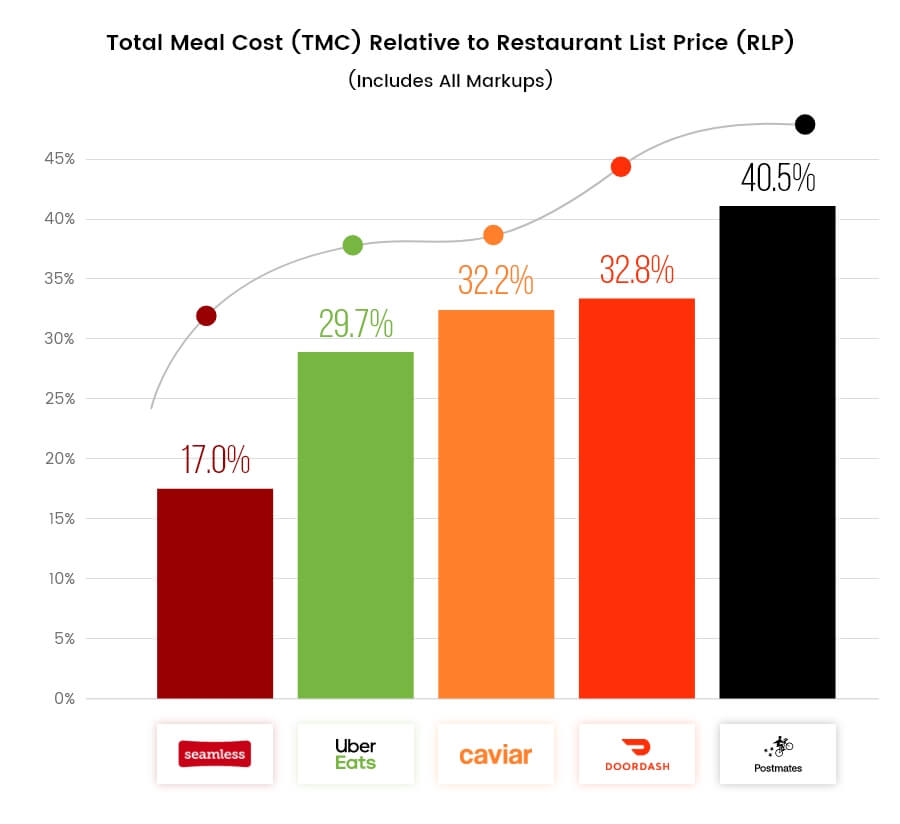
total-meal-cost-relative-to-restaurant-list-price1629712839

Image credits: Techcrunch

Meaning, when ordering through Seamless, customers have to pay extra 17% over RLP, while a customer would pay a whopping 40.5% extra over RLP when ordered through Postmates.

The Bottom line

After having studied the top food delivery giants in the U.S. with their pricing strategy and operational model, one thing is clear. Almost every food delivery app operates on the near-to-same business model. The only difference lies in their pricing strategy which nowhere defines the differentiation on the grounds of uniqueness.

Companies seeking to invest and foray into the delivery segment with an ambition of building a sustainable brand with high profitability should think of consumer-facing innovation from a different perspective. We couldn’t agree more, online food delivery app marketplace is still on a nascent stage and is ready for innovation.

Eventually, the Food Delivery Market leader would be the one who just not have its use cases limited to food delivery coupled with offers and discounts but the one who sells superior services, superior product with clear prices.

Related post: Online Food Delivery App Development Guide : Cost and Key Features Included

How Codiant Can Help?

Codiant is a leading on-demand food delivery app development company helping enterprises and restaurants develop a feature-rich on-demand food delivery app powered with advanced technologies like AI, ML to understand and deploy buying behavior of consumers and their motivations to purchase in the app functionalities.

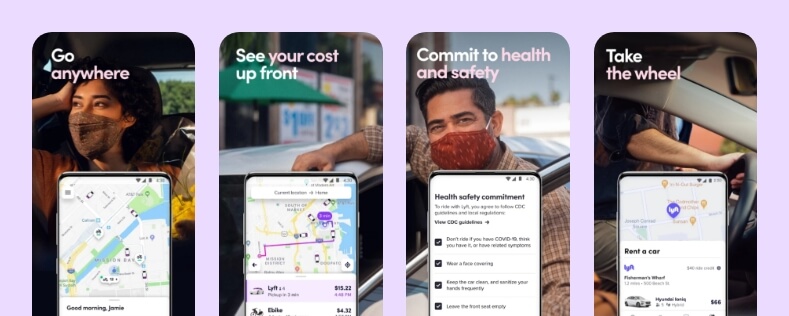
Top Taxi Booking Apps in the USA 2021-22

These popular taxi apps are ruling the streets of the United States. Are you ready as well?

Are you curious which taxi booking apps in the USA are poised to trigger competition with a distinct digital identity? After an impeccable legacy staged by Uber on the global streets, the taxi app network has geared up to shoot a phenomenal competition.

Not surprisingly, only a few of them could create thunder on the face of Uber. Resulting in the list of top taxi-booking apps, Americans couldn’t resist but commute.

Taxi app owners are expanding their fleets with the backing of an on-demand taxi app solution. All just to meet the scope of public transportation in a relatively safer and convenient way, reduce downtime, and meet last-mile deliveries- but with a unique proposition!

In this post, we will take a ride to all those taxi booking or ride-hailing apps that are increasingly recording happy customers and impactful sales and ROI- all under the hood of incredible features satisfying customers to the core.

Let’s begin!

Top Taxi Booking Apps in the USA

  • Uber
  • Lyft
  • Gett
  • Curb
  • Via
  • Wingz
  • Bridj
  • Flywheel

Uber

uber

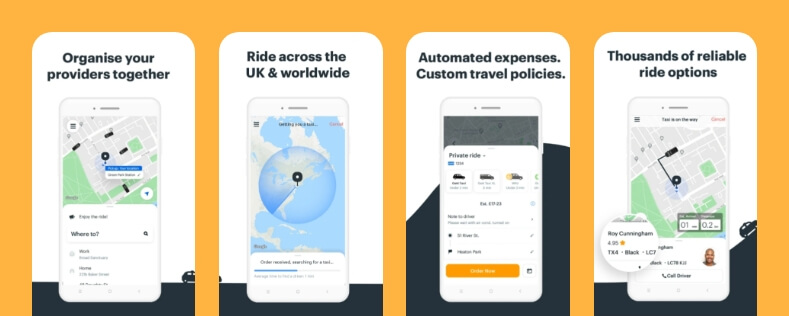
Uber- Lords of the lord in the taxi industry; from whom companies take inspiration. Uber is a San Francisco-based app that connects drivers with riders through its wide-ranging app model available as taxi booking, ride scheduling, carpooling, trip sharing, adding stops in between, and more.

Available to download on iOS and Android, Uber is quite popular as it offers a fairly competitive price with a variety of ride types with different price points like Uber X, Uber XL, Uber Select, Uber Black Black/Black SUV, Uber Comfort.

Here’re some interesting facts that perfectly defines Uber’s popularity in taxi economy:

  • With over 93 million active users, Uber completes 1.44 billion rides every quarter.
  • Uber has 93 million active platform consumers.
  • Uber completes 1.44 billion trips per quarter.
  • Uber processes $26.61 billion in gross mobility bookings.
  • Uber has a 68% share of the US ride-hailing market.
  • 5 cities alone contribute 22% of Uber’s gross ridesharing bookings.

Lyft

Lyft

Lyft the second-largest app in the USA was originally started as a long-distance carpooling business. But to improve daily engagement, the founders of Lyft worked on a taxi app development solution that offers shorter rides in cities, with riders and drivers connecting.

Much like Uber, Lyft applied the policy of demand-based pricing during peak hours, expanded its monetization through different services like carpooling called Lyft Line, self-driving car, and ride-hailing apps. Lyft also offers a few ride options like Lyft Lux rides, Lux Black and Lux Black XL with different price points changing with car’s sizes.

Best known for its pink mustaches as a brand identity, Lyft offers transport in over 600 U.S. cities including New York City, Los Angeles, and San Francisco.

Over years, Uber shadowed Lyft in the US and barred it to plant its flags in US cities through its one-side dominance. But it was only until the ‘Cancel Uber campaign’ that Lyft got a potential chance to grab a bite into Uber market share in the US (accounting for 31%) and the rest is history.

Gett

gett

Gett is an Israel-based taxi-hailing app that operates in the United States, Britain, Russia, and Israel. As a closely-held company, Gett doesn’t open figures about riders and usage, but sources estimate it accounts for about 20 million riders annually (much less prominent than Uber and Lyft).

Unlike other giants, Gett doesn’t employ drivers or own taxis instead acts as a channel between riders and drivers and earns by collecting a fee for connecting both parties.

What makes Gett different from others?

  • Gett’s constant pricing that resists demand-based charges during peak hours makes it the biggest winner while traveling abroad.
  • Another related incentive for riders that comes with the Gett app is its transparency. Drivers can never overcharge naïve customers.
  • Gett users in states can book rides with Lyft cars using the Gett app.


taxi-cta

Curb

curb

Curb- A small juggernaut based out in California expanding aggressively! Curb is the #1 taxi app in the United States that operates in more than 45 U.S. cities. With the proposition “Easily request and Contactlessly pay for rides”, Curb caters rides through over 50,000 taxis within a tap of a button.

Some of the interesting facts of Curb worth highlighting:

  • Curb fares are determined dynamically using live and historical trip data that they have recorded after taking hundreds or thousands of trips.
  • Curb offers a “Pair and Pay” feature in NYC, Boston, Philadelphia, Miami, and Las Vegas, allowing you to pay via the app after entering a matching code for your chosen Taxi Cab.
  • Curb’s ride scheduling feature allows users to schedule pick-ups for their upcoming rides on a given date and time.
  • There is no surge pricing because rates are typically regulated by the local transportation commission.

Also Read: Profitable Taxi App Development Ideas to Follow in 2021

Via

via

If you’re okay to share rides with multiple people, Via must be your choice! Designed with an algorithm to fill as many seats as possible, Via is a logistics engine playing its filler mechanism.

Unlike other ride-hailing apps, Via cabs move to its pre-set static routes, and users are dropped onto their desired location falling along the way. However, Via nowhere blocks you to accompany a family or friend. The app enables you to find a car with the required seating capacities.

Via operates 24/7 in U.S cities that include Arlington, VA; Chicago; New York; Los Angeles; West Sacramento, CA; Salt Lake City, UT; Birmingham, AL; Cupertino, CA; Washington D.C, and Newton, and MA.

Wingz

wingz

Wingz is a San-Francisco-based taxi-hailing startup that provides to and from transportation services for airport rides, events, doctors’ apartments, business meetings, and more. The app is currently up and running in 16 metro areas, including 21 airports. Wingz app rides are flat-rate and do not undergo volatile pricing shifts during high or low demand phases. Another differentiator that makes Wingz apart from others is that it gives the ability to riders to pick and choose their favorite drivers for future bookings.

Bridj

bridj

Bridj is a Boston, Massachusetts-based on-demand bus service app founded by Via, Split, and others. With 14-seat luxe shuttles with Wi-Fi and leather seats, Bridj fuels the idea of crowd-sourced busing or private commuter shuttle business. The Bridj mobile application was eventually acquired by an Australian-based Transit Systems and now the company is operating in Sydney.

Flywheel

flywheel

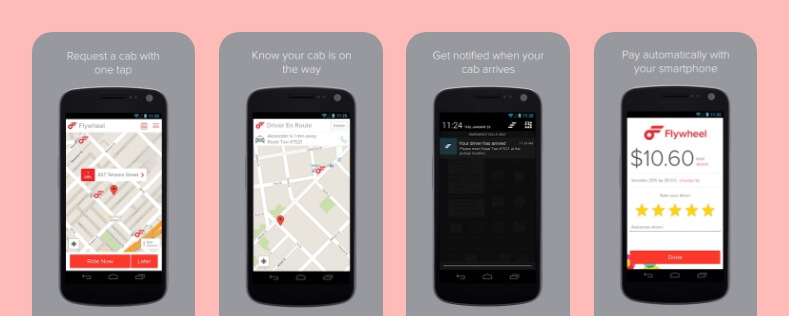
Flywheel is a bay area-based e-hail app company that uses iconic yellow taxis in New York City. Supercharged by 2 main products i.e. e-hail app for riders and a smartphone-based OS for taxi drivers, Flywheel replaces the clutter of meters, navigation system, and dispatch.

While the app shares many features in common with other ride-sharing networks, Flywheel has joined hands with taxi companies and fleet owners to create a convenient taxi service that is a notch above.

Flywheel is available in top cities like San Diego, San Francisco Bay Area, Sacramento, and Seattle.

Wrapping Up

The increasingly fierce competition of taxi apps in the USA has called for an immediate value-driven taxi app development solution. Armed with advanced technologies and enhanced sustainability, fleet owners and taxi companies have to give their taxis a digital edge with a winning proposition.

Codiant’s ride-hailing apps shielded with fascinating features is designed with a cutting-edge rider-attractive module and shaped with shrewd marketing strategies that can help you stay ahead of your taxi app competitors.

How to Develop a Cannabis Delivery App That Stands Out

As the push for the legalization of marijuana or cannabis grows in countries, cannabis delivery app development is attracting significant attention of investors and entrepreneurs globally.

In figures, the drug is legalized in 35 states for medical use with a whopping 15 states allowing adults to legally use it for recreational purposes as well. And apparently, the numbers are in no mood to slow down.

If the prediction is to be believed, A Cowen analyst Vivien Azer revealed the U.S. marijuana industry will generate $85 billion in sales in 2030. That said, taking the first leap on this quickly penetrating and persuasive industry would be a point of difference.

To back you for your next step, here we uncover the basics needed to start an online cannabis delivery app development.

Starting from the business model to key features and technology stack, here you go.

The Business Model of Online Cannabis Delivery App

A Cannabis Delivery App utilizes three types of business model which enables it to grow incredibly fast at zero marginal cost:

1.On-demand Delivery App Model

On-demand delivery app model calls for the need for the delivery partner for various medical stores, clinics, and dispensaries dealing with weed delivery/medical marijuana delivery. You can simply be their delivery and logistics partner and charge a commission on every fulfilled order.

2. Cannabis Store-owner Model

Often known as the bricks-and-clicks model, this model is suitable for businesses that have physical stores or say medical shop(s) and look to operate online as well as offline. This model will give you the flexibility to sell medicinal marijuana or legalized cannabis to customers who do not have medical stores but want its doorstep delivery.

3. Aggregator Model

The most popular model seen these days is the Aggregator business model. Works just like Uber, here you have to handle every single operation. From monitoring buying, selling to handling delivery, you have to partner with various service providers and sell, deliver their services under your own brand. The aggregator type will need you to develop an app for three stakeholders i.e. Buyer, Seller, and Delivery Boy.

App Monetization Model

There are three common ways you can earn through medical marijuana delivery app:

  1. Commission and Fees : Charge commission on every order placed via the app.
  2. In-App Advertisement : Provide medical dispensaries to run ads of their cannabis products.
  3. Paid Promotions : Feature cannabis providers on your app for promotion.

Here in this post, we will discuss the features of different stakeholders and discuss in detail all the key features that should be included.

Key Features of Cannabis Delivery App

Customer App

  • App Registration : The user should be able to easily sign up on the app through email id, social media handles, or mobile number. You can also use two-factor authentication that includes SMS or phone verification.
  • Search Dispensaries : Users should be able to search local dispensaries nearby them.
  • Browse Strains : Users should be able to browse compatible strains and cannabis.
  • Filter By Category : Users should be able to filter the strains by their categories like Indica, Sativa, and other hybrid strains.
  • View Detail : Enrich your product detail page with information like benefits, ingredients, dosage and frequency of use along with other basic details like price, storage instructions, ratings, etc.
  • Add to Cart : Users should be able to add multiple products to the cart and place an order for single/multiple medicines.
  • In-App Payments : Avail easy app payments through credit/debit card, UPI, net banking, etc.
  • Push Notifications : Once the customer places the order, notifications should be sent on order updates, offers, discounts, etc.
  • Order Tracking : This feature allows the customer to track the delivery boy from his way to the customer’s preferred destination.

Pharmacy Owner App

  • Store Details : A pharmacy owner must be able to add, change, update and delete the list of cannabis strains and information.
  • Receive Order Notifications : Pharmacy owners should receive order notifications on new orders received from the customer and should be able to manage them in real-time.
  • Order Management : Pharmacy owners should be able to streamline and automate order processing, returns, and refunds by the pharmacy staff.
  • Manage Discounts : Allow them to manage custom offers, discounts, promo codes, and loyalty point algorithms.
  • Price Management : Pharmacists should be able to manage and update prices for all cannabis strains.
  • Ratings and Reviews : Pharmacy owners should be able to manage the ratings and reviews given by the users.

Delivery Boy Features

  • Real-time Request : The delivery boy should receive a real-time request for order delivery. He can accept/reject order delivery request
  • Delivery Details : Delivery boy can view details like customer address or delivery location when accepting the delivery request.
  • View Map : Delivery boy can view customer location on the map with an optimized route to reach the delivery destination on time.
  • Delivery History : Enable option for the delivery boy to check delivery history like total confirmed orders and canceled orders.
  • Payment History : The delivery boy should have the ability to check the total payments received weekly and month wise.

Admin Panel Features

  • Dashboard : A dashboard to view total received orders, total earnings, total users, and suppliers with interactive graphs and charts.
  • Manage Dispensaries : The admin should be able to manage (add, edit, update, delete) dispensaries with ease.
  • Manage Users : The admin should be able to manage app users with the controls of add, edit, update, and delete their details.
  • Manage Delivery Boys : Admin can manage delivery boys, add, update, verify and activate/deactivate their profiles.
  • Manage Earnings : Admin should be able to check the total weekly, monthly, and yearly earnings made by the pharmacy owners.
  • Manage Commissions : Admins should be able to set commission rates with pharmacy owners and enable payments.
  • Reporting and Analytics : Admin can check analytics and reports of all sales, revenue, new customers, suppliers, etc. and plan next actions based on the reports.
  • Notifications Management : Admin can manage app notifications, messages, and emails sent to users and pharmacy owners.

Want To Developed a Feature-rich, User-Obsessive Cannabis Delivery App That Converts?

Read More

Advance Features of Cannabis Delivery App

1. Showing A Huge Variety of Strains & Products

Cannabis has its existence in multiple varieties and sub-species that create hybrids and specific strains. With each cannabis strain having a different concentration of THC and other compounds, there are various medical conditions where the effects of these strains work predominantly.

Listing down all these cannabis strains (typically there are over 700 strains called as indica, sativa, or hybrid) in your on-demand cannabis delivery solution can attract a large customer base with zero bounce rates.

2. Personalized Feeds

Personalization improves user experience and helps in enhancing your app’s engagement and user retention. Giving your users personalized product recommendations, product discovery feeds that interest the user can improve the conversions dramatically.

By integrating analytics or through machine learning personalization you can help extract meaningful data that interest your users.

3. Detailed Product Description

Make your cannabis delivery app platform an ideal app for the user’s experience. Allow your users to explore the best strains and educate them on their taste and aftereffects on the body. Like what it is for, what does it cures, why you will love it, and so on!

4. Unified Search and Delivery Channels

Give your users the ability to search all the nearby dispensaries, variety of strains, products, and make the app even more wanted by providing deliveries at the time and place they want.

If you do not have your logistics and delivery team, it’s good to hire a Courier Delivery Company that can take care of pick-up and drop-offs from medical dispensary to the customer’s location.

5. Arrange a Scheduled Delivery

Cannabis or Marijuana products are sensitive drugs and shouldn’t come within reach of children or persons with non-medical history. While cannabis for Medical purposes helps in the treatment of chronic conditions, recreational marijuana is used without medical justification.

Having said that, people prefer to be very specific in delivery timings. Understanding the delicacy of the subject, giving users the flexibility to order at the time most suitable to them will add another feather to your app.

You can accomplish this by integrating different delivery slots having batch timings. Users can pick the date and time and schedule the delivery.

Best Online Cannabis Development Company to Hire

Codiant is one of the few Online Cannabis Delivery App Development Companies that integrate all these user-centric features in cannabis delivery app. For more details, tips, and tricks to enhance or develop a user-obsessed cannabis delivery app, connect now.

Want To Developed a Feature-rich, User-Obsessive Cannabis Delivery App That Converts?

Get in Touch

Top 10 Flutter App Development Tools for App Developers

Barely three years of launch and Google’s Flutter UI toolkit for cross-platform app development has become the first choice of many developers. No sooner, the framework’s rising popularity and ease to develop ‘Android and iOS’ applications enabled Google to spread its wings and go beyond cross-platform to the web.

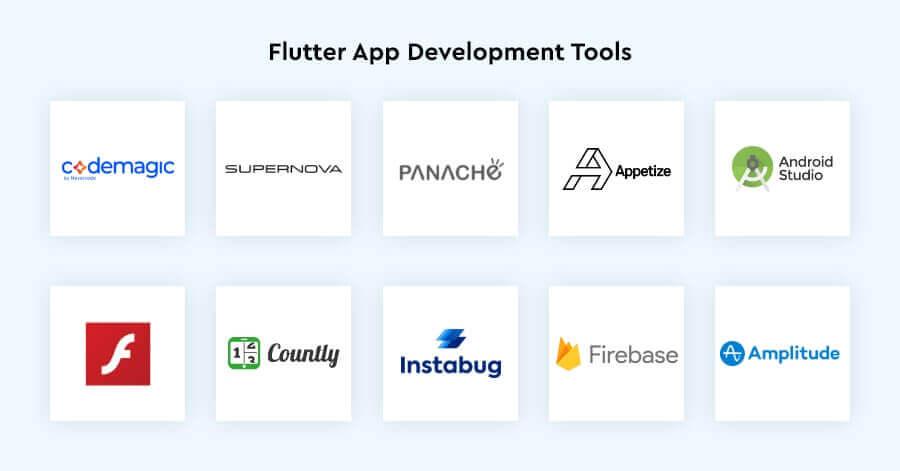
Flutter has now become the developer’s favorite. Plus, as major engineering support, the framework enables developers to pick from the range of tools for building an application quickly and easily. From code completion to code debugging and from analytics to visual support, Flutter app development tools have everything in store, a developer can vouch for.

Here are the top Flutter App Development Tools.

top-10-flutter-tools

1. Codemagic

Codemagic is the most trusted and powerful Flutter software creation tool for developers that allows you to leverage your preferred framework and automate the entire build, test and release pipeline with codemagic.yaml, which integrates with your tech stack.

Codemagic’s fast feedback to teams help you to fuel your app development process by saving the development time that otherwise goes into build, test, and release steps manually.

Apart from that, you can count on Codemagic for the following reasons:

  • Allows you to integrate with third-party services to automate your CI/CD pipeline
  • Equips you with the latest tools that you need to build mobile apps
  • Easy testing as it runs the test commands in the scripts section of the codemagic.yaml file
  • Full Apple developer portal integration

2. Panache

Panache is a Flutter Material Theme editor that helps you to create beautiful material themes for your Flutter applications. You can customize the colors, shapes, and others theme properties and export them as a .dart file to your Google drive folder.

3. Appetize

Appetize is a web-based Android Emulator and iOS Simulator. Appetize runs native mobile apps in your browser and makes it available to stream immediately. Moreover, it is fully managed, up to date, and can be embedded into any HTML with an iFrame. Also, this Flutter development tool is highly configurable and customizable to meet your enterprise needs.

Other Added Advantage of using Appetize:

  • Run iOS & Android apps within a web browser on any computer
  • Allows selecting any choice of device, operating system, and app version
  • Software-based solution, it is easy to manage and maintain
  • Easily access network traffic, debug logs, and video recordings
  • Ability to view the remote device in action to quickly diagnose any problems

4. Supernova

Looking to sync the design and code seamlessly of all your app components, themes, and patterns? Supernova is the handy tool that helps you to generate UI Code for Flutter. Through Supernova, designers can work across multiple design environments smoothly and developers can convert every component, style, and screen in customizable front-end code for multiple platforms with changes reflecting in real-time.

Key Capabilities of Supernova:

  • Instantly converts design elements into front end code for multiple platforms.
  • Customizes to match your unique styling and standards for code generation.
  • Helps designers to collaborate more efficiently and sync design and code (across multiple/major design tool.

5. Adobe Plugins

Adobe Plugins for Flutter App Development simplifies the designer-to-developer workflows by allowing them to convert XD Designs into working code to build native apps. This new XD plugin is a part of Flutter Interact and it generates code for creating apps with Flutter based on your designs in Adobe XD.

The Main Benefit

With XD to Flutter, you can make any real-time decision and allow your team to switch from design to working code in just a few minutes.

6. Count.ly

Countly is an ultimate open-source analytics platform that enhances customer journeys in web, desktop, and mobile apps. With full privacy and protection of your results, Count.ly helps you track individual-level customer sessions, event activities, retrieves and analyzes every detail about customers, and monitors the performance of your mobile app and web before it affects business.

Here’s how Count.ly helps in enhancing your customer journey:

  • Engages with your customers
  • Explores user behavior on an individual level
  • Monitors performance before it affects business
  • Retrieves and analyze every detail about customers

7. Instabug

Instabug is a perfect solution for flutter app developers’ looking to improve their mobile app’s user experience quality, collect valuable user insights, and identify/resolve severe crashes. It allows developers to improve their app quality and performance and release apps with real-time contextual insights.

Moreover, Instabug automatically attaches screenshots, device details, network logs, and loads of other critical insights needed to resolve issues and prioritize product backlogs.

Instabug SDK can be integrated across multiple platforms including iOS, Android, React Native, Xamarin, Cordova, Flutter and Unity mobile apps.

8. Firebase

Firebase is a Flutter SDK or an app development platform by Google that gives you access to backend services for mobile apps- including authentication, storage, database, and hosting—without maintaining your servers.

Benefits of using Firebase:

  • Easy and Flexible infrastructure
  • Develops a backend without managing servers
  • Keeps your logic private and secure
  • Has low maintenance

9. Android Studio

Android Studio is a gold standard Flutter app development tools used by the Flutter app developers. Most used and highly popular, Android Studio helps in developing apps much more productively at a larger scale. It provides the fastest tools for building responsive, feature-rich, and effective apps on every Android device.

Key Capabilities of Android Studio

  • Intelligent Code Editor
  • Fast and feature-rich emulator
  • Code templates and sample apps
  • Testing tools and frameworks
  • Offers widget editing support
  • Code completion feature, syntax highlight procedures, and more.

10. Amplitude

Amplitude is a product intelligence tool and an official Flutter SDK that provides best-in-class analytics, highest data trust and security with an easy-to-use interface. This ultimate product analytics tool tells how the user behaved or interacted on your app. Tracks insights and gives you the ability to which actions should be taken next.

Wrapping Up

These are the most promising and reliable Flutter app development tools that you can pick to build an app using the Flutter framework. And if you have a quest to why choose Flutter for cross-platform app development this blog has got you covered.

Read here: Why Flutter Is the Best Framework for Cross-Platform App Development?

Microsoft Officially Announces Windows 11- Introduction, Key Highlights and Release Date

Happy Windows 11 Day. After weeks of hype, leaks, and talks worldwide, Microsoft has finally announced Windows 11 making its new version of operating system official.

Planned to release for the general public by the holidays, the news certainly leaves us with no speculations. We can expect it sometime around late November. But before that, we are lucky enough to see a slew of public betas, coming next week.

The new update of Microsoft 11 that is also named as “Next Generation” of Windows has evolved with a fresh lively interface and centrally placed Start menu. With a slew of other advancements, here we will take a look at the forgoing major point launches and features of Windows 11.

A Fresh Look and Feel

Windows 11 brings to its users a new interface with a fresh setup screen, and look and feel across all core Windows elements. With rounded corners on menus and windows the new look gives the same feel like the recent iPadOS release. Also, the centrally-placed Start menu- with no Live Tiles as in Win-10 gives it a touch of modernity.

windows-11-homescreen

Image Credits: Microsoft

New Experience From Sound To Widgets

Windows 11 has matched up the radiance as it brings on front new sounds and alerts, fresh startup sound, and smooth gestures upgrades. Whereas, new themes, new wallpapers, and improved dark mode with updated widget experience are yet another game-changer.

Snap Layouts to Maximize Productivity

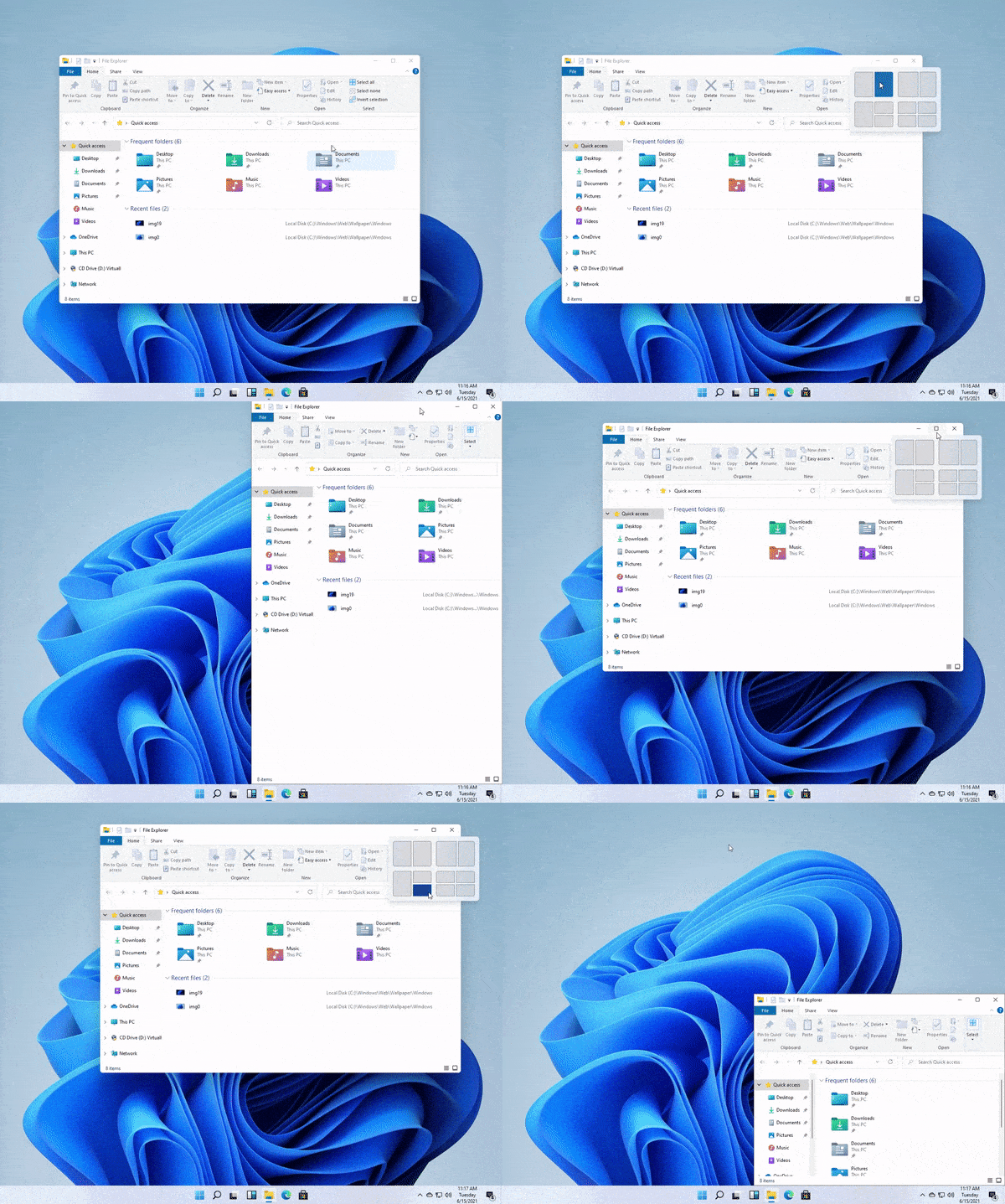
Opening the doors for an optimized multi-tasking experience, Windows 11 has introduced a new user experience called as “Snap layout”. Its maximize button allows users to split the active screens between multiple areas of the desktop. These layouts ease users to shrink multiple screens and simultaneously open when in need- simply by hovering the mouse over the maximize button.

In addition, these Snap layouts are memorized by Windows 11 and it creates a Snap group for all the layouts which can be used for future access.

win11snap

Improved Touch Keyboards

Windows 11 has worked on keyboard enhancement in its new version. Here’s a sneak peek at its efforts and updates:

  • Included GIFs integration from Tenor to improve the touch keyboard.
  • A preloaded virtual keyboard free to be placed anywhere on the screen.
  • Voice typing and voice commands to ease typing.
  • A universal mute and unmute functionality to help people make virtual calls conveniently.
  • A Desktop Share feature to let users share their windows with people connected over a virtual meeting.

Improved Version of Microsoft Store

With new search capabilities and improved design, Windows 11 has overhauled its preloaded app store. This will give app developers a new edge to increase their app reach.

The Behind the Scene Updates

Overall, the Windows has delivered a fabulous experience by making the functioning smoother and faster than ever– that to with remarkable battery life. Thus, providing a seamless experience to users at the front-end.

It’s A Wrap!

It’s no secret Microsoft has given us the best look with its newly launched Windows 11. The operating system- also considered as the backbone of global businesses- had all the hopes pinned with its new release. Eventually, it has done full justice to meet all the expected and thrilling updates users were looking for.

With simplified design and user experience, we all look forward to empowering our and team’s productivity with a hint of infused creativity this coming November.

If you have a few other questions taking the latest updates and release of Windows 11 feel free to reach out. We’re on our way to experiment with the little-good nuggets of its beta release. ?

How to Develop an Online Courier Delivery App?

On-demand courier delivery, especially packages or parcels, has recently made a large number of headlines and is getting a great deal of attention from investors and businessmen.

The cost of the courier delivery market, including express and parcel delivery, is valued at more than USD 400 billion by 2024 with a CAGR of 8-10% during the forecast period (2019-2024).That said, South East Asia and North America are one of the emerging hotspots that account for almost 40 percent of total delivery volume across the world (where the express delivery market stands largest).The biggest drivers of growth for this courier, express, and parcel delivery (CEP) market are the emerging trends of on-demand delivery and eCommerce. Besides that, omnichannel retailing and growth in trade in countries like China, North America, and Germany are also acting as the key drivers to give a significant peak to courier delivery or last-mile delivery industry.But as we see the courier delivery market has a weak backbone owing to improper infrastructure and lack of technology resources which makes the industry inefficient on the grounds of delivery optimization, fleet handling, and warehouse management.

This technology gap and the rising demand to overcome one; pushes us to talk about online courier delivery app development. It’s a necessary subject.

courier-industry-stats

Here in this post, we’ll cover:

Types of On-demand Courier Delivery App

Courier delivery companies generally follow the following types of business models :

1. Postal and Courier Service App

The best example of a Postal and Courier Service App is FedEx. This kind of app allows users to create domestic/international shipments, request a pickup, track shipment status, and manage packages.

2. Real-time Package Tracking App

Real-time package tracking app collects and aggregates data from different courier network at one single place and help users track packages from multiple carriers at one place. Users can track packages using batch numbers, barcodes and QR codes, or unique tracking id. The app also keeps users posted through notifications if the package is shipped, in transit, picked up and delivered.

3. Parcel Delivery App

Meant for hyperlocal delivery service, Parcel Delivery Apps are meant for small eCommerce businesses looking to fulfill the daily needs of individuals like on-demand food delivery, pick and drop service, package delivery within the city. Such types of apps help users get anything they want from anywhere in the city in a window of 1-2 hr.

4. Branded Delivery App

Branded delivery apps are integrated solutions mostly used by online retailers and eCommerce apps as they do doorstep deliveries with full order tracking feature. This type of app keeps customers updated with complete order status like it is packed/prepared, shipped, or is out for delivery. E.g.: Doorman, Deliv, Quicksilver, MightFly, etc.

Delivery Model Customer Preferences, In Percent

With the rise of on-demand service, the significance of consumer preferences has risen multifold. From the giant eCommerce players to small startups, companies are keeping no stone unturned to match the pace of rising customer demands and improving customer experience, especially they’re focusing more towards Delivery Time.

Delivery time has always been a key differentiator when it comes to superior customer experience. When Mckinsey conducted a survey, to understand consumer preferences in the United States, they found nearly 25 percent of consumers are willing to pay premiums for the privilege of same-day or instant delivery.

courier-delivery-model

Different Types of Delivery Models

As mentioned above, customer experience is paramount and above all. Where last-mile delivery is the milestone or let’s say a crucial piece of the logistics industry. With this in mind, companies must increasingly look to meet the escalating demand of consumers by integrating last-mile deliveries in-to their existing services.

The many different models helping companies surpass the last mile delivery are:

Delivery by Autonomous Vehicles

Autonomous delivery vehicles are electrical built-to-purpose on-road vehicles just like remote controlled cars. Also known as AV technology, deliveries made by these driverless vehicles are safe and helps in delivering faster.

Crowdsourced Deliveries

Crowdsourced delivery, aka crowdsourced shipping or collaborative delivery model, handles same-day or last-mile deliveries by leveraging networks of local, non-professional couriers to deliver packages to customers’ doors at a predictable cost.

Drone Deliveries

Delivery drones are unmanned aerial delivery vehicles (UAVs) that are designed to deliver lightweight packages. With propellers and rechargeable batteries, the delivery drones are operated remotely by operators. Best used for time-sensitive deliveries, Delivery drones help to achieve last-mile deliveries on time.

Must Have Features of Online Courier Delivery App

1. Real-Time Package Tracking

Serve Omni-channel retailers or eCommerce app owners with platform technology featuring smart routing through GPS-enabled smartphones and a crowdsourced driver pool. This will allow their shoppers to track their delivery in real-time right from the time of package dispatch until it gets delivered to their doors.

Users can also track the live delivery status of the shipment, packages by a unique tracking id and stay informed with periodic notifications like when the order is packed, dispatched, reached its current location, delivered, etc.

2. Integrated Payment Gateway

Integrate the courier delivery app with various payment gateways and allow users to leverage flexible payment options like cards, cash or online banking. Renowned and trusted payment gateway providers such as Stripe and Paypal will help you simplify the integration of credit and debit card payments for both Android and iOS apps.

3. Transparent Pricing

Giving an accurate breakup of the invoice with clear pricing and tax details calculated based on package weight or size can help customers estimate the delivery cost ahead of time.

4. Pickup Request

Enable customers to request a pick-up of package thereby, creating a mobile shipment label.

5. Sign-up/Login

Create an easy onboarding process that allows users to access order history and do convenient tracking.

6. Chat Assistant

Prioritizing customers to help them better understand what they are trying to achieve is necessary to attain higher customer satisfaction. Chat assistants help customers get the route based on their questions and allows you to speed up the resolution time for standard inquiries.

7. Search Shipments

Allow your customers to search the list of shipments by tracking number, references, vendors, and more.

8. Rewards

Giving your customers cashback, rewards, gift cards, or points can increase app retention and customer acquisition and in turn lower the churn rate.

Related post : The Rising Demand of Online Courier Delivery App

Technologies Required To Build A Courier Delivery App

Native Mobile App Development : iOS (Objective C, Swift), Android SDK (Java)

Hybrid Mobile Application Development : Ionic, React Native, Angular, React JS, Xamarin etc.

GPS Tracking : Core Location Framework for iOS, Google Places API for Android

For Payment Integration : Square API, Braintree, Stripe, PayPal, e-wallets

To Find Directions (Navigation) : Google Maps, MapKit

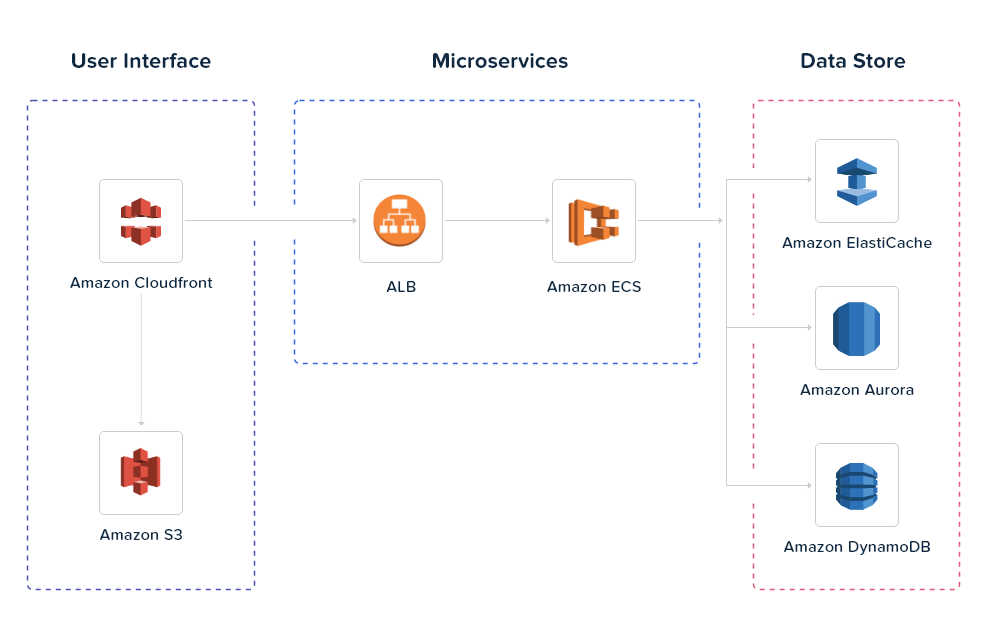
For Cloud Storage : Amazon AWS, EC2, RDS, S3, Digital Ocean, etc.

Push Notification integration : Twilio

Total Cost to Develop Online Courier Delivery App

The overall price of your courier delivery app solution will depend on the following factors:

  • Extent of features and functionalities added : A basic app with standard features will be relatively cost-effective. Similarly, an app with advanced features increases the overall budget of the app.
  • Number of App Platforms : Decide if you would like to build a native app for both Android and iOS app platforms or you want to go with a hybrid/cross-platform app (runs on both Android and iOS).
  • Technologies Used : If you’re low in the budget go for third-party integrations, this will save you from a long process of backend development that increases the cost. But if you seek a long-term, robust and stable app, we recommend going for backend development.

Basic Team Needed to Build A Courier Delivery App

  • UI/UX designer (2)
  • Developers (3-4)
  • Quality Assurance Engineer (2)
  • Backend Developer (2-3)
  • Team Manager/Project Manager (1)
  • Admin panel developer (1)
  • Business Analyst (1-2)

Wrapping Up

Seeing the current market dynamics and growth opportunities in the field of courier delivery app, investors and businessmen should not overlook the competitive landscape and the emergent need arrived in the industry.

Retailers and eCommerce companies are concentrating more on last-mile delivery. With focus on price and speed, companies are tightening the belts to fasten deliveries with low prices. Technology i.e. Online Courier Delivery App Solution with robust backend infrastructure is a key differentiator for last mile delivery operators. And this is where the product innovation takes place.

It’s time to gear up and dominate the logistics, courier, express, and parcel delivery (CEP) market with a well-developed software infrastructure.

A Handy Guide to Amazon Web Services Cloud (AWS)

Amazon Web Services (AWS), a leading cloud computing platform has a capture of more than one-third of the cloud market. In 2020, AWS has embarked on a record breaking $10 billion business. What flows in that makes it a giant player on clouds? Or say one of the primary profit driver for Amazon!

What is AWS exactly? Let us roll our eyes and understand in-depth about the world’s most comprehensive and largely adopted Cloud computing platform- Amazon Web Services Cloud.

What is Amazon Web Services Cloud?

Amazon Web Services (AWS) is a platform that offers flexible, reliable, scalable, easy-to-use and cost-effective cloud computing solutions.

  • Amazon Web Services (AWS) is a highly robust, reliable, scalable infrastructure platform in the cloud that offers a broad set of on-demand cloud services and products including compute, storage, databases, analytics, networking, enterprise applications and other functionalities (like developer tools, management tools, IoT, security) to enterprises and businesses with a pay-as-you-go pricing model. (Discussed below in detail)
  • AWS is comprised of an expansive and wide-ranging bundle of cloud computing products and services which when collaborated and joint with each other helps in building highly dynamic and secured applications.
  • AWS cloud helps growing startups, enterprises, leading government agencies and businesses become more agile, robust and scalable with its holistic, on-demand secure cloud services.
  • AWS is widely used for a variety of computing purposes like: Website hosting, application hosting, media sharing, mobile and social applications, content delivery, storage, backup and disaster recovery among others.

amazon-web-services-cloud

What Are Amazon Web Services Cloud Products?

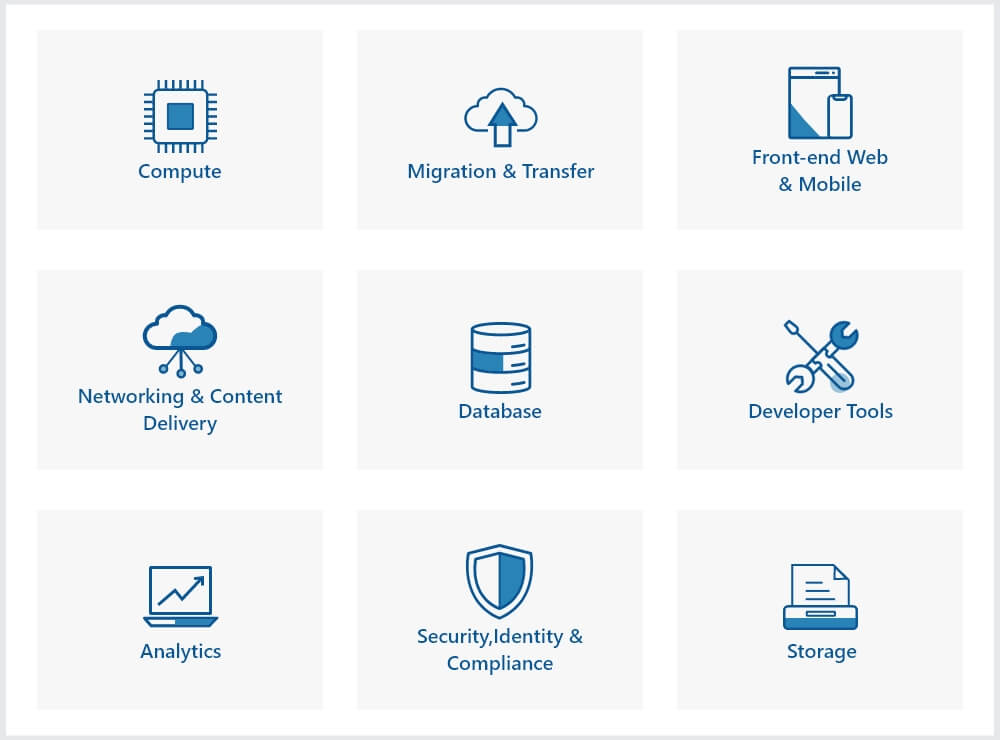
The Amazon Web Services consists of a wide range of cloud services and products that you can customize as per your business needs on a pay-as-you-use model. From analytics, application integration, front-end web and mobile, machine learning, developer tools, database and more in your disposal; let us introduce you to the major AWS Cloud products with their different functionalities.

Amazon Web Services Cloud Products

amazon-web-services-cloud-products

Let’s understand these products in detail.

AWS Compute

1. Amazon EC2

Amazon Elastic Compute Cloud (Amazon EC2) is a web service that allows creating a secure, resizable virtual server in the cloud where you can host and execute applications with minimal friction.

2. Amazon EC2 Auto Scaling

Amazon EC2 Auto Scaling helps you in maintaining application availability when needed. Simply put, you can scale application on-demand and ensure that right amount of compute.

3. Amazon Lightsail

Amazon Lightsail allows you to easily deploy and manage a web application, quickly launch and manage virtual private servers, and run commercial software with ease.

4. AWS Batch

AWS run enables you to batch computing jobs on AWS at any scale without any need to install or manage batch servers. As the batch is integrated with the AWS platform, it allows to scale and access management capabilities of AWS.

5. AWS Elastic Beanstalk

Elastic Beanstalk is the quickest and simplest way to run and manage web apps on AWS. It provides the capability to handle peaks in traffic while lowering costs and also facilitates tools that preserves app performance.

6. AWS Lambda

AWS Lambda allows you to automatically run code for any type of application based on an event trigger, or say with no administration. Just write the code and upload it to Lambda.

7. Miscellaneous

Other products include Serverless Application Repository, Outposts, Snow Family, VMware cloud and wavelength to deliver ultra-low latency apps for 5G devices.

Front-End Web & Mobile

1. AWS Amplify

It is an end-to-end solution that helps mobile and front-end web developers to develop and deploy robust and scalable full stack mobile and web apps powered by AWS. The framework consists of libraries, UI components, and a CLI toolchain.

2. Amazon API Gateway

API Gateway helps mobile and web developers to build, deploy, maintain and secure APIs at any scale. API Types include RESTful APIs and WebSocket APIs.

3. Amazon Pinpoint

Personalize user engagement at all channels using Pinpoint marketing communication service. Pinpoint allows you to connect with customers through communication channels like email, SMS, Push and voice.

4. AWS AppSync

Boost your app development process with right data from many sources at scale. Appsync powers your apps with simple and secure data access, built-in real-time and offline capabilities and offers fully managed API setup, administration and maintenance with high availability.

5. Device Farm

It is an application testing service that lets you test web and mobile apps on real devices in the AWS Cloud.

Applications when done right, can boost your enterprise efficiency and speed to innovate. Codiant can make it possible!

Contact Us for App Development

AWS Analytics

1. Amazon Athena

A serverless, zero infrastructure, service that makes it convenient to analyze the data and execute queries on the AWS S3.

2. CloudSearch

A simplified, robust and scalable way that ensures you can create a custom-rich search solution without any hassles of setup and maintenance.

3. Elasticsearch Service

Deploy, secure, and run Elasticsearch at scale. Elasticsearch Service also provides you the tool to scale on-demand and simplifies management tasks such as software installation, failure recovery, backups, and monitoring.

4. QuickSight

A business intelligence tool and a fully managed service that lets you create and publish dashboards and ML insights.

5. Other Features

Other important features packaged with Analytics include Data Exchange, Data Pipeline, Glue, Lake Formation, EMR, and Lake Formation.

AWS Database

1. Aurora

Aurora is a high-performance, distributed, fault-tolerant relational database or storage system managed by Amazon Relational Database Service (RDS) that has the capabilities of automating admin tasks that consume a lot of time.

2. Amazon RDS

A managed RDS for MySQL, PostgreSQL, Oracle, SQL Server and MariaDB that makes the process of set-up, operate, and scaling up relatively simple.

3. Database Migration Service

Amazon database migration service helps you in migrating database to AWS with minimal downtime securely with rapid speed.

4. Dynamo DB

Dynamo DB is a widely used NoSQL database used for apps that needs little latency data access. Its consistency and fastest response time make it perfect fit for large-scale applications. Few apps supported by DynamoDB are Lyft, Airbnb, and Redfin.

5. Other Features

Other important features include Timestream, Database Migration Service, Keyspaces, and ElastiCache.

AWS Security, Identity & Compliance

1. Identity and Access Management (IAM)

AWS IAM lets you securely manage and access AWS services. It helps you to analyze access, control and protect across the AWS environment.

2. Amazon Cognito

Cognito enables you to handle the authentication process in your mobile app in a fast and convenient way. Its user pool is rich with a user directory that can scale to millions of users. Also, it helps you to do social logins and provides solutions to control access to backend resources.

3. Amazon Detective

Detective makes it easy to find the bug and the main cause of potential security issues or anything suspicious in security findings. It analyzes, investigates and visualizes the security data to give you earlier insights into the root problem.

4. Security Hub

AWS security hub as the name suggests is a home giving you a god view to all your security alerts and posture across your AWS accounts. It provides you robust tools ranging from firewalls and endpoint protection to vulnerability and compliance scanners.

5. Other Features

IAM includes many other features responsible to make the services secure, simple, authenticated and reliable. Some other crucial features include SSO, Shield, Security hub, Inspector, Resource Access Manager (RAM), Firewall Manager and Guard Duty amongst others.

AWS Networking and Content Delivery

1. Virtual Private Cloud

VPC allows launching AWS resources in a virtual network. It provides advanced security features, creates a VPC quickly using the AWS management console and helps in controlling your virtual networking environment.

2. API Gateway

It is a fully managed service that helps developers to create and monitor application interface at scale. It handles all the tasks including traffic management, authorization, and throttling and API version management.

3. CloudFront

CloudFront is a fast, highly secure content delivery network that helps in securely delivering data, videos, applications and APIs at rapid speed to customers geographically.

4. Route 53

Amazon Route 53 is a reliable, highly available and scalable way that connects user requests to infrastructure.

5. Other Features

Global Accelerator, App Mesh, Direct Connect, CloudMap, Private Link, Elastic Load Balancing and Transit Gateway are some other network and content delivery features.

AWS Migration and Transfer

1. Migration Hub

Migration Hub allows you to migrate to AWS in a simple and transparent way. By choosing the AWS and partner migration tools you can see the status of migrations with better visibility throughout your apps.

2. Transfer Family

Easily transfer files to and from Amazon S3 using Secure File Transfer Protocol (SFTP), File Transfer Protocol over SSL (FTPS), and File Transfer Protocol (FTP). This feature is a perfect fit for industries like healthcare, retail, BFSI and others. As it helps in securely transferring files like medical records, invoices, and artifacts.

3. DataSync

DataSync allows you to easily move massive data online into and out AWS at the fastest speed (10 times faster). The process is cost-effective, secured and performance rich.

4. Snow Family

Snow family helps customers that run operations in a poor network connection. The Family consists of tools having in-built computing capabilities and capacity points that improve performance irrespective of the network connectivity health.

5. Miscellaneous

Discover other fully managed features of migration and transfer like CloudEndure, Evaluator, and Transfer family on Amazon documentation guide.

AWS Storage

1. Amazon S3 Glacier

Amazon S3 Glacier enables cloud storage for data archiving and long-term backup. Highly durable, S3 Glacier comes with inclusive security and compliance capabilities.

2. S3 (Simple, Storage, Service)

Designed for providing cutting-edge scalability, data availability, security and performance, S3 is used to store, protect data for mobile apps, websites and other digital assets. S3 works wonder in maintaining compliances and meet regulatory requirements for health applications.

3. AWS Backup

AWS Backup simplifies, centralize and automate the backup of data across AWS services. Further, AWS automated backup processes are fully managed, saves time and money.

4. Elastic File System (EFS)

It is a simple, fully managed, secured and resilient file system that can be used with AWS cloud services and on-premise resources. EFS has broadly used business-specific apps and home directories.

5. Other Crucial Features

Some other features include Storage Gateway, Cloud Endure Disaster Recovery, FSx for the windows file server.

Developer Tools

1. AWS Corretto

Amazon Corretto is a free long-lasting support provider to help you upgrade versions. It is production-ready, multiplatform support which includes performance enhancements and security fixes.

2. Cloud Development Kit (CDK)

Amazon CDK is an open-source software development framework that comes with a plethora of benefits like it accelerates your onboarding to AWS, helps you define your infrastructure or cloud application resources using programming languages.

3. AWS Cloud9

It is a cloud IDE that enables you to write, run, and debug your code with just a browser. Cloud9 is power-packed with tools for widely-used programming languages like JavaScript, PHP, Python and more.

4. AWS CodeBuild

CodeBuild allows you to build and test code while eliminating the need to set up, patch, and manage your build servers. CloudBuild is highly resilient and helps you to process and run builds in parallel.

5. Miscellaneous

Several other vital features of developer tools include CodeBuild (build and test code), CodeCommit (store code in private Git repositories), CodeStar (develop and deploy AWS apps), DeviceFarm (to test Android, iOS and web apps on real devices.

Benefits of the Amazon Web Services Cloud

  • Lower Variable Cost: AWS Cloud is designed to support startups as it offers full flexibility and a lower pricing model to those who cannot afford the huge cost involved in data server maintenance and installation.
  • Increased Speed and Agility: AWS reduces the time to make resources available to developers in a matter of time. Which in turn, lowers the development cost and boosts the efficiency of the organization.
  • Top Security: AWS cloud maintains top security levels of the cloud thereby helping in cutting down in-house security costs.

popular-apps-built-on-aws-cloud

How Codiant Can Help You?

Codiant is a leading Web And Mobile App Development Company that designs, develops, deploys robust applications for enterprises, non-profit organizations, small scale to large scale industries and growing businesses.

From strategy to implementation to customer engagement, Codiant equips clients with their flexible software needs at cost-effective prices. Whether it is developing mobile/web apps or migrating data or enterprise systems to the cloud, we harness robust tools and technologies to empower organizations at their constraint budgets.

Leverage our experience in technologies like:

Native Mobile App Development: iOS (Objective C, Swift), Android SDK (Java)

Hybrid Mobile Application Development: Ionic, React Native, Angular, React JS, Xamarin etc.

Web App Development: MEAN Stack, React JS, AngularJS, NodeJS, PHP, HTML5, CSS.

Cloud Infrastructure: Amazon AWS, EC2, RDS, S3, Digital Ocean, etc.

Hardware/System Integration with App: Wireless protocol Sensors/Chips, Accelerometer, pressure sensors gyro-meter, feedback systems, temperature sensors, transducers etc.

Internet of things (IoT): with protocols using Bluetooth, BLE, RFID, NFC, WiFi, etc.

What Is Online Reputation Management (ORM)? A Brief Guide

All things internet- this is the new world where we live. Everything, everyone, and anyone is available on the internet today. From brands to celebrities, businesses to customers; all seeking each other either to proffer or to avail services.

However, this direct connection of business and customers comes with own set of challenges. Any content on a digital network, positive or negative, can make or break a business. Thus, directly impacting a business’s reputation. For that reason, businesses or brands, or public figures have to be vigilant round the clock to keep their image intact on the internet or digital channels.

That said, the brands, business, or a person that seek or apply strategies to monitor the reputation, address the content or any customer feedback online to maintain, enhance, or create a positive public perception online is known as Online Reputation Management (ORM).

The Logic Behind

ORM matters. Actually matters a lot. Research shows that one negative review takes away 22% of prospects and around 30 customers. Three negative reviews will take away 59.2% and more than four negative reviews will increase the lost customers by 70%. In a nutshell, the greater the negative reviews the greater is the percentage of customer lost.

A negative review changes customer perception towards the brand, tarnishes the business reputation, tumbles the revenue, and ultimately decreases the profits.

As a result, the accountability of online reputation management turns up.

Digging Deep : What ORM does not mean?

Online Reputation Management never means you’re hiding the news, deleting the negative reviews, wooing the media, or burying the news headlines. Instead, ORM helps you to deploy strategies that prepare you to confront feedbacks and customer opinions and improve online reviews.

Generally, the popular online review sites include Google My Business, Facebook, YelpAngiTrip Advisor, Four Square, Yellow pages, among others.

The Need : Why Should You Care?

A brand is no longer what
we tell the consumer, it is what
consumers tell each other it is.

Scott Cook

Founder, Intuit

Your brand’s reputation is what people say about you.

Consumers before buying the products or services from you, “Google” you first. Check out what people say about you, look for customer opinions and recommendations.

A good example to emphasize this diring need of building a positive reputation can be explained by a few industry leading stats. It goes as:

  • Two out of three people see the Internet as the most reliable source of information about a person or a business (Edelman Insights).
  • When looking for a local business, 97% of people read online reviews (BIA Kelsey) — Businesses with excellent online reviews excel in the run of attracting more customers.
  • Over 80% of reputation damage comes from a mismatch between the buzz and the reality (Digimind) — Companies with a lot of negative reviews miss out on profits and avenues to new opportunities.

  • 79% of consumers place equal weight on both online reviews and personal recommendations.
  • Online defamation by angry customers and former employees can destroy a business reputation.

In a nutshell, the better your reputation, the more you build brand awareness. And with Online Reputation Management, businesses choose to show what they want to show their audience. An ORM strategy generates smart insights to increase brand awareness.

What Does Online Reputation Management Involve?

ORM is a strategic combination of search engine optimization SEO, marketing, public relations, and legal to promote, protect and defend your online image or business reputation.

The basic plans for ORM typically involve the following activities:

  • Deploying ORM software for review lifecycle management. The phases in this cycle include seeking user reviews, monitoring reviews, and promoting reviews. This review cycle helps brands in building trust and reputation, as well as attracting new customers.
  • Giving response to both positive and negative reviews to express gratitude to customers for relying on the services or addressing the concern/issue.
  • Actively prompting customers to leave positive reviews about the brand/business.
  • Doing promotional activities or marketing of positive reviews through paid ads, newsletters, popular social media channels like Facebook, Instagram, LinkedIn, and other multiple owned channels like websites, apps, etc.
  • Business profile development and social media profile optimization.
  • Press release distribution, sponsoring contests and giveaways.
  • Content marketing through blogs, articles, and web 2.0.
  • On-page optimization of brand’s online assets.

The Direct Benefits of Building Online Reputation

  • Attracts more business
  • Generates good business insights
  • Good reputation attracts better employees
  • Increases sales and profits
  • Improves customer experience
  • Increases the brands’ exposure
  • Builds trust and credibility
  • Improves online visibility

Additional Benefits of an Excellent Online Reputation Campaign

  • Focuses on building a positive brand image
  • Ensures brands get a first good positive impression by the visitors
  • Effectively encounters negative rumors and propagandas viraling out
  • Turns cold visitors into prospects by its positive brand image and trust built up

How Codiant Can Help You to Manage your Online Reputation

Codiant’s framework for online risk and digital reputation management helps enterprises manage risks and threats from digital channels.

Our process to build a secure infrastructure of ORM for our clients comprises of:

  • Analyzing the consumer sentiments taking the brand in the digital network.
  • Monitoring keywords, digital channels, and stakeholders who can influence the most.
  • Building a technology architecture to secure the digital assets and online ecosystem using monitoring tools.
  • Preventing unauthorized access and fraud usage through devices like antivirus and firewalls.
  • Kick starting the reputation management tasks to get better rankings, reviews, and conversions.

The Biggest Trends in Online Medicine Delivery Industry

Your phone can order almost anything and everything—where ordering medicines has come as a bliss. A touch can bring all health services on your doorsteps.

The development of online medicine delivery app is defying gravity. The ease, convenience, and increased access to healthcare facilities—with full instructions — are all coming from a swipe.

Even local pharmacies, diagnosis centers, emerging medicine brands, which have a questionable future are performing decently.

Research Nester has released a report titled “e-Pharmacy Market – Global Demand Analysis & Opportunity Outlook 2028”, in which they anticipated global online pharmacy app market to record a CAGR of 14.22% during the forecast period i.e. 2020-2028.

Apparently, this implies the majority of medicine delivery growth lies online. And it goes without saying, there are some greater expectations from this industry, which comes after the wake of the turmoil and disruption caused by the COVID-19 pandemic.

Coming at this critical time, developments made in online medicine delivery apps presents an excellent opportunity for pharmacists to release updates in the apps with features that are likely to make a statement in the coming time.

Here are the Five unique challenges which could be opportunities for the pharma industry and when integrated into apps can improve medical service efficiency and quality

  1. Consumers, mostly patients with chronic disease, are getting obsessed and opportunely dependent on online pharmacy apps. They like how easily they can find and consult doctors for any concern, book appointments, make a diagnosis, and buy medicines.Implication : Develop an online pharmacy app solution embedded with features like:
    • Searching doctors online by filters like specialty, ratings, location, availability, qualification, etc.
    • Online appointment booking and scheduling feature to choose the time slot and book consultation.
    • Telemedicine or teleconsultation feature where patients can book a video, voice, or chat consultation.
  2. Internet pre-diagnosis services are helping patients identify and understand their condition before it is clinically apparent and becoming more knowledgeable about which hospitals or doctors might hold the best facilities and specialty.Implication : If your on-demand medicine delivery solution allows users to search doctors in the app, it should have an online doctor or clinic rating system that can help patients find the right care provider.
  3. Communicable diseases or highly contagious viral diseases are a threat to global health. Raising concern and being a part to mitigate the disease impact on human health comes as a responsibility to anyone falling in the healthcare industry.The companies drafting and monitoring measures that ensure national preparedness and strengthen the core capacities of people and government will be a frontrunner.

    Implication : Taking health surveillance, giving disease warning and health advices can lead to better care for users and increase the app’s mass reach.

  4. Telemedicine integrated into an online medicine delivery app can help people living in remote and rural areas, particularly the vulnerable and disadvantaged populations to get urgent care facilities along with the provision to order medicines through the prescription shared by Doctor then and there.Implication : Telemedicine is paramount and its significance has soared even more after the COVID outbreak. Integrating telemedicine app solutions can provide patients with more comprehensive services.
  5. Security is a major concern in the healthcare industry. Biopharma and Medtech companies will focus more on regulating digital health and apps to address privacy, security, and regulatory concerns.Implication : Developing a compliant app with robust infrastructure in place would be the key. The app should be regularly maintained and be ensured it is scalable and can meet time-sensitive features on a fast timeline.

Some Valuable ePharmacy Market Statistics (2021-2026)

e-pharmacy-market-statistics
Source: Mordor Intelligence

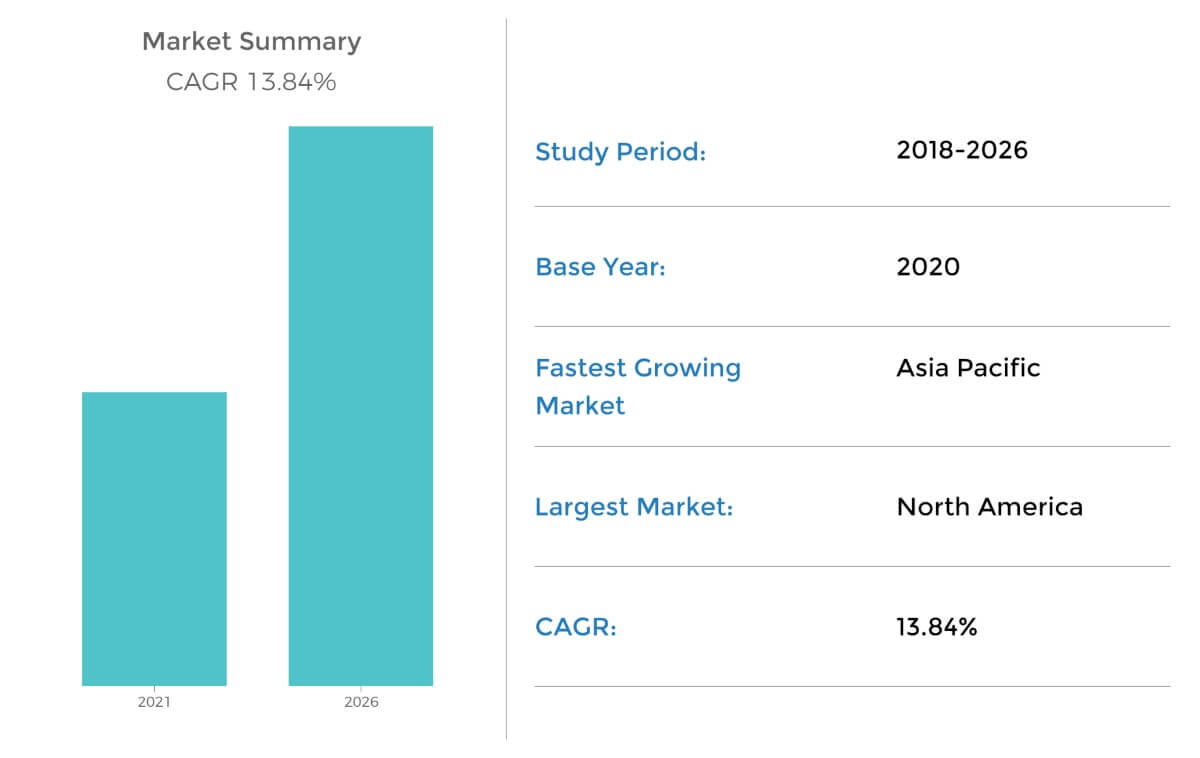
  • The e-pharmacy market was valued at approximately USD 60,430.14 million in 2020, and it is expected to witness a revenue of USD 136,160.27 million in 2026, with a CAGR of 13.84% over the forecast period.
  • The in-clinic doctor visits are replaced by virtual-based teleconsultations which directly results in e-prescription generation resulting in an upsurge of online medicine orders.
  • North America holds the largest market share of the e-pharmacy market and is expected to witness the same trend over the forecast period.

Competitive Landscape

The key market players of the studied market comprise CVS Health Corporation, Albertsons Companies Inc., ALTO, and Axelia Solutions (Pharmeasy), among others.

Finding the Best Online Medicine Delivery App Development Company

Codiant is the top reviewed Online Medicine Delivery App Development Company having an expansive portfolio in the healthcare industry. The company’s mastery of patient-centered solutions has proven quite useful during COVID-19.

With a complete healthcare suite ranging from telemedicine app developmentremote patient monitoring to online pharmacy apps, Codiant has outpaced the competition in healthcare sector by serving more than 100 clients globally.

3 Top Tips Businesses Should Use To Successfully Navigate After COVID-19

COVID-19- the other name of disruption? An event that has reset the entire economy. An event that has transformed companies and investors’ needs; shifted the strategies, rules, policies and made the economy and its operations all chaotic.

There is a dire need for markets to embrace change, reimagine the business models, and create frameworks that could help them to cure the dynamics and repercussions of COVID-19.

Here we discuss the three phases from the experiential notes of Goldman Sachs that happen to be most resilient in curing the disruption of COVID-19.

1.Preservation

The rule for preservation is quite simple! The more financial reserves you have the more will be the future returns. Though the concept of preservation is not limited to financial assets, it is also concerned with digitally preserving business processes and services that ensure long-term continued access.

So, preserve what you have for a better tomorrow. This can include any underlying dependencies like technical infrastructure, hardware, or any other third-party services and information. It will help you to combat risks, chaos, uncertainty, and foster business continuity management with full resilience.

2.Consolidation

If you’re a company with a business model that is performing well in every stage in the uncertain times means you have separated yourself from the pack. Reason? This is the time where customers want their needs to be met immediately with full ease even if it is served by locals with a narrow supply chain.

In the consolidation phase, you need to know:

  • Which strategy is working which isn’t?
  • Will the supplier be able to supply things?
  • Which customer is still buying?

Companies like Amazon, Zoom have tapped the trend of order from home and work from home.

Skype was an early entrant or say ahead of its time but Zoom nailed it well.

So, basically, it’s all about consolidation and restructuring to existing technologies rather than reinventing the whole model.

3.Innovation

In the innovation phase, everyone in the system will have to see things that work, will have to evaluate new needs, new nature of the business. Then innovate.

This creates a greater opportunity to make disruption easier with bigger returns and capitals. From an investment and innovation standpoint, the companies that fix the problem first can be the new entrant.

Summing Up

It is important for companies to determine the right growth opportunities and pick the right strategy to ensure they work with a competitive advantage. And this can happen only if companies can successfully determine which product suites, software bundles and services are best suited for their business.

Codiant’s comprehensive suite of Digital Research and Strategy Planning services assess companies with strategy building, project roadmaps, and the right technology products, platforms and channels.

We encourage innovation by helping our customers pull the right digital enablers like websites, mobile apps and analytical platforms all supported by exclusive digital strategies that help businesses achieve the desired goals and milestones.

Google I/O 2021 Keynote Highlights: Everything from Android 12 to a New Wear OS.

“Innovation in the Open” – The most awaited Google I/O 2021 is incessantly proving over years- it doesn’t build castles in the air, but amazes us with a tail of newest developments.

Unlike every year, which unfortunately was canceled in 2020, due to concerns around coronavirus, Google I/O 2021 keynote finally took place on Tuesday 18th May where CEO Sundar Pichai and his team of executives announced a list of new developments, along with the major hit product release of Android 12 and new Wear OS.

Being laser-focused and adamant on “we’re building something cool” instead of “giving a usual buy option”, this year’s I/O event has surprised us with a pack of punch.

Here’s everything in bits Google announced at the I/O 2021 Conference.

Biggest Announcements From the Google I/O 2021 Keynote

Android 12 Gets A First New Look

Android 12 the world’s most popular OS gets a new look, called Material You. As it sounds, your OS will now show you colors of seasons. Things like time of day and weather will change the UI’s colors and other aspects dynamically.

Along with UI, you get safety features like a new camera, microphone use indicators parked with some adventurous “private core computer features” designed to improve custom replies and notifications through AI processes.

Project Starline

This will excite you to the nerve! Project Starline is a video calling booth that uses 3D imagery on a 3D display to create a lifelike image of the people on both sides. Oh my god yes! Now you’ll be like:

“I feel I can touch you” or as if “we are in the same room” – It’s a 3D experience.

starline-gif

High-resolution cameras and custom-built depth sensors- too less if said two or three- it should be dozen around the display- capturing your shape from multiple perspectives, with a breakthrough light field display showcasing a real representation of someone sitting right in front of you in 3D. Aren’t you excited to experience it?

New Wear OS- The Biggest Update To ‘Wear’ Ever

android-wear-update

Image Credits: Google

In partnership with Samsung, Google has come up with the biggest update to Wear with a fresh consumer experience to bring the best of Wear OS and Tizen into a single platform.

With features like support for third-party tiles, nimbleness to switch between apps by double-tapping on the screen, new interface, and health and tracking updates infused, Wear OS gets a real revamp powered with health-focused apps you’re sure to fall in love with.

Smart Canvas in Google Workspace

smart-canvas

Image Credits: Google

For easy collaboration of teams on Google Docs, Sheets and other productivity tools- Google brought the Smart canvas. It enables team members on video calls to communicate with their team and simultaneously work on the Doc/sheet using Google Workspace for the first time.

Smarter meeting notes template, Google Meet integration, pageless Docs are some other productivity-boosting advancements announced by Google with Smart Canvas.

With LaMDA AI Conversations Gets More Natural

It will no more feel like a robot talking when next time you’ll ask a query to a search function. Google’s latest breakthrough LamDA is a language model for dialogue applications. LamDA can make conversation no matter what we talk about.

Mr. Pichai well explained it by picturing a conversation with a paper airplane.

What’s the worst place you’ve ever landed?

LamBDA: That would have to be in a puddle. I was just barely still intact. So I was stuck there for a few minutes.

Can see conversations getting more like a REAL person talking and less like a voice interface.

UWB Is New In Town

Well, no sooner you will trash the little old-school way of unlocking your cars with Bluetooth. Yes, guess right! Android phone would be your new car key- that will use Ultra Wideband (UWB) technology (acts like a tiny radar) to lock and unlock the vehicle without taking the phone out.

FYI, UWB is a form of radio transmission for which the sensor can tell the direction of the signal. Right now, Google is working with BMW with this digital car key. Later, it will join hands with other automakers.

This Google Photos Feature Will Awe You

Until now, finding a photo of you wearing a red color hat from those huge library of Google Photos was no less than finding a needle from a haystack.

But this time, to potentially make it more convenient, Google has powered new features that will allow you to search pictures with a specification. Meaning you can find “selfies with my red hat”, “selfies with friends in cafeteria”, “my photo with a sassy clutch”, so on. Isn’t it a cool dive into your sea-like gallery?

Meet Duplex To Fix Your Stolen Passwords

Next time when your password will get compromised, Google will do the homework for you. From filling in your old password to picking a new one and letting you copy it- Google will be your personal assistant- powered by Duplex on the Web, enabling you to automatically change your password.

Google Lens Upgrades

Solve the dining’s most annoying problems with Google Lens Upgrades. The company’s AI/AR platform has got new capabilities for restaurant diners. By simply pointing the camera at the receipt, users can calculate the tip, split the bills, and by pointing the lens at a restaurant’s menu, one can highlight the most popular items.

The other amazing round of features that did the rounds in Mountain View, California were:

  • Google Photos with Memories, Cinematic moments, Locked Folders
  • AI-powered medical tools
  • A unified smartwatch platform by Samsung and Google
  • Vertex collecting machine learning development tools in one place
  • Flutter cross-platform devkit gets an update
  • The next version of Android Studio is Arctic Fox

Codiant Positions Itself as a Top Real Estate App Developer of 2021

Technology has brought in some unprecedented changes in various business fields over the years and the story of the real estate sector is no different. The steep rise in the real estate sector in recent years is a testimony to two things:

  • Countries around the world are developing rapidly
  • Technology is helping in the expansion of the real estate sector

We realized the importance of developing state-of-the-art apps for the real estate sector at the very beginning of our journey. We develop customer-centric apps and this is the reason why in a press release about the leading real estate application developers, TopDevelopers.co has included us in the list of top companies of January 2021.

Since our beginning, we have focused on rendering real estate app solutions that accelerate your business growth. Our application development method is based on data insights and innovations. This we do by keeping the changing customer needs in mind. The reason why if you opt for Codiant for your next real estate application development or other software solution project, you will have a definite edge over your competitors. Moreover, our astute work ethics, efficiency, and research skills are the main reasons why we are included in the list of top real estate application development companies.
Codiant Software Technologies was founded in the year 2010 and in the last 11 years, we have grown by leaps and bounds in terms of providing excellent software solutions. Besides immaculate mobile application development, we are front-runners in eCommerce development, UI/UX designing, Blockchain, web and software development, big data analytics, and many more.

We have the knack of maintaining a good client-retention ratio as we study all their requirements before rendering them the best possible solution. In case you wish to have a quick look at what our previous clients have to say about us, please visit Codiant’s profile on TopDevelopers.co.

In the last 11 years, Codiant has rendered its services to companies from a different set of industries. The list includes Healthcare and Life Sciences, eCommerce, Transport and Logistics, Real estate & Property, Travel & Hospitality, BFSI, On-demand Mobility, and more.

Our prowess in Codeigniter development has proved its mettle around the world. We at Codiant leave no stone unturned in the pursuit of providing nothing but the best website development solutions to our clients. Thus, we reserve a place in the list of leading codeigniter development companies across the globe.

We have a very widespread work portfolio manifesting our offbeat expertise in mobile app and web development with specialties in industries ranging from healthcare, social networking, transportation, real estate, banking & finance, fantasy sports, etc. Our case study is where you can understand our services and technical skillset better.

Related reading: Cost and Key Features to build a Real Estate Mobile App

Padtime - Real Estate App Development

Who is TopDevelopers.co

TopDevelopers.co is a widely respected directory and review platform of B2B IT service providers. They take a neutral approach in analyzing the companies. The team of analysts at TopDevelopers.co vets the companies through stringent parameters which ensure that only the most competitive firms, businesses, enterprises, and entrepreneurs are filtered through their process. This helps the service seekers in getting a ready to use pool of companies from which they can choose the appropriate firm according to their need.

Get Developed a Real Estate app from the industry leaders

Get in Touch

Why Flutter Is The Best Framework For Cross-Platform App Development?

Mobile apps today have become a riding factor in the success of businesses all around. Especially, when it comes to the marketing or product launch stage, the mobile app is considered the fastest, most efficient, and simplest way of reaching the audience at large.

Around the total number of apps in both platforms i.e. Android and iOS count to three million which is creating a significant need for a smooth app development framework.

So, craft a well-thought plan with the right set of tools at hand i.e. Flutter app development framework. It is a simple, quick, and cost-effective way of launching any product or service in the market. The aspects like a simple programming language, robust development tools, features, kits, and exclusive brand experience supported on multiple platforms are openly fulfilled.

With such an excellent image and ability of the flutter framework in the market, it is crucial to know more about flutter’s working environment.

Let’s begin the knowledge with basics about what is flutter and what are the major reasons for its popularity and usage around the world.

Read On!

What Is Flutter?

Flutter is known as the open-source software development toolkit and a cross-platform app development tool that supports Android, iOS, Windows, Linux, and Mac. It is introduced by Google that helps developers to build applications infusing attractive and functional user interfaces to ensure the high performance of the apps.

Organizations worldwide use the dart programming language to build apps with Flutter and release MVPs efficiently and rapidly.

In simple words, Flutter is a portable UI toolkit of Google that helps in beautifully crafting natively compiled applications. As a user, you can run apps build with a flutter on any device i.e. mobile, smart TVs, laptops, wearables, etc.

Other reasons behind the popularity of flutter development tools include material design and a graphic library that ensures developers give an astonishing look to the app and also makes the operations fast irrespective of the platform. Recently, a new version of flutter has also been developed i.e. 3.3.

Top Companies That Are Using Flutter

Why-Flutter-is-the-best-framework-for-cross-platform-app-development1677229157

Businesses and organizations of all sizes are building apps using Flutter. Let’s see the top companies that have scaled up their business segments using flutter.

  • Alibaba
  • Google Pay
  • BMW
  • Dream11
  • TOYOTA
  • Amazon
  • eBay
  • Hamilton

Top 10 Reasons To Choose Flutter App Development

1. Cross-Platform App Development

The popularity of the flutter app has skyrocketed because it offers the ability to use a single codebase across all the platforms iOS, Android, and Web. It saves the developer’s time at each stage by cutting down the development time that was wasted before in writing multiple codes. Moreover, it also helps in reducing the development cost as fewer resources will be used and make the app development faster.

2. High Performance

Another significant reason why flutter is used by many companies is its robust performance and speed. In comparison to other hybrid apps, it works faster and performs better. Also, the flutter development does not require any other mediator code like JavaScript interactions. This ultimately helps in reducing interpretation bugs and enhances overall app performance.

3. Faster and Dynamic Platform

The hot-reload feature of the app makes the flutter development faster and more dynamic. It allows developers to directly view the code changes/alterations in the application. The feature ensures developers find and fix the bug in seconds without even restarting the code from the beginning. Developers can easily create, test, and improve other new features. Thus, the overall app development process becomes more productive and promotes better team collaboration between designers and developers as they can react to the changes in real-time.

4. Ready-Made and Reusable Widgets

The availability of ready-made widgets allows developers to build user interfaces quickly. Many times, it becomes difficult for developers to build the same design look for Android and iOS but this problem can be eliminated by flutter widgets. The built-in design widgets like material-design widgets, design-centric widgets, and Cupertino widget help in developing attractive UI.

Also, the flutter framework detects the common components that are frequently used by developers and creates them into reusable design widgets. It thus saves a lot of time and effort wasted on repetitive tasks.

5. Dart Programming Language

The use of Dart programming language allows developers to build apps that perform quickly on every platform. A list of exclusive elements of dart including fast compilation, native code, and the predictable feature ensures writing almost all types of code. This is how the flutter is known as fast and super customizable. Additionally, other fundamentals of dart language like the elimination of XML files, scaffolding, and JavaScript bridging add more to its popularity.

6. Perfect for MVP Products

While developing the minimum viable product, users usually have less time and money, and using a lot of resources to build a product just for market validation will be a bad choice. But this is easily possible with flexible UI, quick turnaround time, easy integration, and high performance of the flutter framework. Also, the independence to use a single codebase helps in launching MVP across multiple platforms without putting much effort. This, ultimately makes the process affordable and fast for entrepreneurs.

7. Smooth Animation

The developers can easily animate any property from one value to another using the transition animation feature of flutter. This element allows multiple animation changes at once like height, opacity, width, transforming the scale, and transforming origin. Other built-in adjustments of flutter like GUI rendering, gestures, and animation help developers gain full control over all pixelated elements that are displayed.

Also, the material motion system of flutter provides an excellent ability to design smooth transitions between UI elements to give a polished and smooth look to their apps.

8. Excellent Support from Large Community

Flutter is backed by a large community i.e. Google which consistently keeps posting all the bug fixes and recent updates on the platform that allows developers to get big support and help from them. Flutter also ensures regular performance improvement in comparison to other technologies.

Moreover, small start-ups and other businesses also get the opportunity to learn, discuss and grow from various events that are organized by Google at regular intervals.

9. Support IDEs

Android Studio or Visual Studio is the best to get IDE experience for flutter. However, other famous IDEs like IntelliJ IDEA Ultimate, IntelliJ IDEA Community, Emac, Codemagic, etc. are also used by the developers as editor plugins to get a better experience during the app development process. The selection of IDEs allows developers to make their coding part easy and quick. Also, both IDEs and tools of flutter act as unparalleled allies in terms of code completion, visual assistance, and code debugging.

10. Easy Learning Curve

The dart programming language used in flutter offers a smooth learning curve as compared to the other competitors like Swift, React native, Java, etc. The learning ability of developers goes exponential if they have the basic knowledge of Java & C# language. Also, flutter being the latest/modern framework makes the functioning of apps easier whereas working with other options like Swift, Java, or React maybe can be difficult and different.

What Is the Future of Flutter App Development?

Undoubtedly, the future of the flutter framework is bright. The launch of flutter 3.0 has gained confirmation of the continued support, investment, and dedication to growing this framework Google. There is a continuous expansion in the list of target platforms that are open for flutter development with improved applications and tools.

Many big tech giants including Google is making use of flutter to improve and simplify their development process. Recently, Google apps like Google stadia and AdWords are using the flutter framework for producing Google’s assistant.

Additionally, the market is already flooded with around 500,000 apps that are built on flutter and now the launch of the latest version with a list of excellent new features will strengthen the growth.

How Much Does It Cost to Build A Flutter Mobile Application?

The cost of developing a flutter mobile application is dependent on many factors which can differ in every case like the complexity of the app, the structure of the app, development method, features included, location of the development of the app, etc.

However, the estimated cost of developing a basic flutter app will fall between the range of US $25,000 to $200,000 based on the features and functionalities that you choose.

In case, you are looking for a final cost of developing the reliable flutter app then conduct market research and contact the expert team.

Wrapping Up!

The above reasons have definitely justified the popularity of flutter app development with a range of advantages in comparison to native or other frameworks available for cross-platform development. The Flutter framework is especially favorable for start-ups as it leverages efficiency by ensuring cost-effectiveness, better performance, and reduced development time.

Moreover, the ability of the flutter framework to enhance the user interface with in-built widgets helps developers in easily meet the client requirements of designing the app. Till now, flutter has significantly attracted a huge community of developers which is consistently growing with each passing day.

So, if you are looking to develop an app then why not choose the hot trending technology that can help in validating and monetizing the basic idea of your app?

Case Study : How We Created A Social Online Dating App?

Just when you think about modern dating; one thing that pull hearts in the eyes is surely the ‘online dating app’. The hookup culture has become infectious amongst millennial and turned them into date-hungry swipe freaks.

We can’t agree more online dating apps have drenched people despite the teething troubles and disappointments that comes stapled with the app.

People are actively trying to find meaningful relationships, or just want to casually hookup. And we can’t deny the dating apps provide them all.

The whole selling point of the dating app is no wonder “Oh, you can so easily find a date”. But to its bad with many invisible strings attached.

We focused heavily on the negative surfaces of on-demand dating and thought to curb those sucking points.

online dating app

Here we discuss with you a detailed case study of online dating app development.

The Downsides of Online Dating

  • As per a research report from pew research, 30% of U.S. adults have used a dating app. Out of them a majority of online daters shared their overall experience as positive, but many users – particularly younger women – reported being harassed or sent explicit messages on these platforms.
  • 45% of Americans who have used a dating app said the experience left them more frustrated as for example 60% of female users aged 18 to 34 complained people continued to contact them even if they were not interested.
  • 57% of females reported being sent a sexually explicit message or image they didn’t ask for.
  • People sometimes express regret that these platforms facilitate superficial relationships rather than meaningful ones. They find themselves engaged in flirty message exchange and sometimes they are deceived by ghost profiles.
  • In many cases, people find themselves stuck if they’re matched with wrong type of person.
  • Many singles feel mentally fatiguing to find a right match with people as they have to swipe profile after profile.
  • Many people find themselves out of decent matches as there are a slew of people moving in and logging onto the apps.
  • There are a plethora of other pain points as well that surely hit bad and makes the experience draining.

Solving the Pain Points and Frustrations

“Everything is fair in love and law”

  • Bringing in a legal framework governing mobile matchmaking that regulates dating apps. For example, laws and regulations would come into effect over issues like misuse of private, sensitive data, and its wrongful disclosure.
  • Launching the app with a global privacy programme developed to meet all the applicable GDPR standards. In this case, regardless of the country users are living in; they have to follow the same rights and access the same data.
  • To counter the problem of mental fatigue the app will restrict the amount of time spent on dating app by the user.
  • To avoid the certainty of getting tucked with wrong dates; the app will compel user to respond on some serious questions while signing up. This will portray the right image of user to others and will not keep others in wrong notion. Like for e.g. users will tick if they are looking for a meaningful relationship. Reading this; casual daters will avoid spending time with them.
  • If the user is running out of decent matches, he/she can set a radius or an area/location where they want to meet people.

Development of Key Functionalities : App Features

  • Sign up Our first concern was to set off a red flag against users that breach the app privacy laws and get involved in some mischievous acts that leak the sensitive user data, outrage their modesty and/or contain sexually explicit words or photos that encourage harassment. To answer this, during sign up process where user has to fill in basic details (like name, email, phone, personal identity card, location, date of birth, profile picture, etc.) we made it mandatory for the user to agree on terms and conditions set in the app that attaches some legalities and regulations with a global privacy program designed to meet applicable GDPR standards.
  • Sign-in Easy onboarding with registered email id/phone no. and OTP.
  • Social Login Users can also login using Facebook, Instagram, or Google ID.
  • Upload Profile Picture or Video Users can upload their single/multiple profile pictures and also opt to upload the video to introduce themselves.
  • Find Nearby Daters Geolocation integration allows users to fetch contacts nearby their location.
  • Find Location-Specific DatersTo make the date finding experience a breeze, we have integrated a geofencing functionality in the app that allows daters to search location-specific matches.
  • Swipe Daters Unlike other dating apps, this dating app allows users to swipe other potential daters that fall in their interest list (selected during sign-up). Like daters set on following priorities will be displayed first:
    1. Matching basic interests
    2. Based on Relationship mood- casual, hook-up, serious
    3. Geographical Location/selected location radius (geofencing)
    4. Total number of mutual friends
  • Accept/Reject Request Users can accept or reject potential matches. Other users can engage in communication only if the user accepts the connection request.
  • It’ a Match A user can chat, call, or video call other people only if there’s a match.
  • Real-time Chat Daters can connect each other safely with encrypted chats. To keep the conversation completely private we have restricted screenshots. Read receipts are also enabled.
  • Video/Voice Calling Users can make video/voice calls with their matches and mature conversations and relationships ahead without exchanging their numbers until they’re sure.
  • Privacy Controls For paid users, there is a standard-setting available where users can control toggles like:
    1. Hide profiles you’ve visited
    2. Allow only paid members to visit your profile
    3. Display profiles only based on your search criteria
    4. Nobody can view your profile until you send them a connect request
  • Filter Searches Users can search daters based on filters like:
    1. Relationship mood: casual, hook up, serious
    2. Job profile like businessmen, doctor, designer, architect, engineer, etc.
    3. Location-based searches (country, state, city, area, pin code)
    4. Mutual friends
    5. Height, age, language, interests, etc.
  • Buy Subscription Users can buy app subscription (Pearl, Platinum, and Emerald) to upgrade their profile and access a different set of features.
  • Block/Report Users To maintain personal security, users can block other members they would not like to get in touch with. They can also report users violating the app norms.
  • Lift Me Feature If the user wants to bypass the queue and come on top of the searches he/she can access the paid feature ‘lift me’. This will increase their visibility in the searches.

Technologies We Used

Behind this beautiful app UI, our developers have engineered a strong back end built with top tools and technologies. Since the app was built on Android and iOS, two teams worked on it- iOS & Android app development team.

Web Platform

  • Language : PHP
  • Database : MySQL (relational)
  • Framework : Laravel
  • Front End Development : HTML and jquery
  • Caching : ReDIS non-relational database for all data storage

Android Application Technology

  • Programming Languages : Java(version 8/9)
  • Toolkit : Android Studio 3.4.0 & Android Developer Tools
  • Architecture Pattern : MVVM
  • Chatting & Video Messaging : Soket.io

iOS Application Technology

  • Programming Language : Swift 4.0
  • IDE : XCode 10.0

Project Handover

The dating app development process took almost 3 months. During the development, the project was divided into milestones, as soon as we reached completion we have launched the app for beta testing.

Post successful app deployment, we’ve continually worked on bug fixing and maintenance support.

Codiant has hands-on expertise in developing different types of online dating app solutions. If it sparks an interest in you drop us a line. We will show you a quick demo that best matches your app requirement.

Looking to Develop A Standout Dating App That Attract Users?

Contact us

Why Should You Use Hospital Management Software?

The healthcare industry is the lifeblood for the entire ecosystem and sectors in society while hospitals a lifesaving ventilator for humans battling to survive. Therefore, the latter carries more liabilities and accountabilities—influenced by the essential volume of information lying in the health registers and sometimes silos of hospitals.

Unfortunately, many times, this health-related critical information is not available or lost in the crucial time and urgencies when needed most.

To our dismay, so many hospitals are still relying on paper-based records and considering it as the aptest way to handle care. Little do they know, the range of benefits a hospital management software has to offer!

So, to help understand the importance of Hospital Management Software, in this post we have discussed the benefits of adopting this leading healthcare technology- HMS software.

Let’s see what the Hospital Management System is and how it is improving healthcare delivery.

What is The Hospital Management System?

  • A hospital management system (HMS) is a web-based software system developed for healthcare organizations to manage their operational processes, workflows, and all users working in the hospital. The software provides individual interfaces to various stakeholders of the hospital to help them effectively capture, access, and manage crucial information on hospital functioning.
  • A Hospital management system technically empower hospitals to optimize and digitize the processes that help them in being agile and quick in offering a better patient experience and achieving greater patient satisfaction.
  • A good HMS solution helps hospitals in improvising care delivery, enhancing staff efficiency, reducing costs and paper-works, eliminates any chances of errors, and assures complete patients’ data security and privacy through compliances.
  • An HMS solution enables hospitals to be digitally interconnected with the entire ecosystem that includes patients, providers, payers, health agencies, insurance agencies, pharmacies, diagnostics, and other staff.

Connectivity in hospitals is mandatory. It is necessary for hospitals to know the entire patient history like the events that happened before hospital admission and the current health undertakings in order to oversee and plan the next care provision phases and post-discharge interventions.

An HMS solution controls, manage, and provides easy access to all patient records, right from their entry into health service to hospital discharge. Thus, ensuring smoother and friction-free care delivery with greater satisfaction.

Related Reading : How to Develop a Hospital Management Software? Features, Modules, and Cost Covered

Benefits of Integrating a Hospital Management System

benefits-of-hospital-management-system

1. Improved Patient Care

Today with increasing technological advancements, patients’ expectations for improved care delivery are on the rise. Patients want greater efficiency, convenience, and comfort. An HMS solution has it all. The software comprises many features that improve care delivery, outcomes, and costs.

For instance, an online appointment scheduling portal allows patients to schedule and book an appointment with a doctor online. It helps them in saving waiting time and money. Another example, patient’s data collection and storage, its easy accessibility enables Doctors to make error-free, quick decisions. Thus, improving patient care and clinical processes.

2. Reduction in Costs

An HMIS solution automates every process, reduces the staff workload, and increases efficiency. The software lessens the need for manpower. Obviously, why deploy resources to the work that can be easily handled by the software! Thus, helping with cutting costs. The hospitals that have integrated HMS no longer need paper records, physical storage spaces, and operators to manage the workflow as it is now all automated.

3. Greater Efficiency

An HMIS solution helps care providers to quickly check clinical documents, diagnosis reports, patient medical records and history at right time in a moment. Thus, helping them to make precise decisions and improve hospital productivity.

4. Enables Patients’ Data Security

Since the HMS solution holds and maintains large volume of sensitive health data, test results, and treatments, the software is securely designed and developed to protect all this sensitive information. It is technically safeguarded through various healthcare regulations and compliances.

5. Reduced Hospital Readmission

A hospital management system promotes communication between providers and patients and improves patient experiences. The frequent interventions and connected care enabled after patients’ hospital discharge to post-acute care reduces the risk of readmission. For the reason that the severity of illness is reduced by frequent and timely online checkups and follow-up routines taken by the patient.

For instance, connected care allows doctors to grasp early signs and symptoms of potential diseases and enables them to provide immediate treatment or prepare the patient for the next phase of their care before it turns into a health hazard. Thus, helping providers decrease hospital readmissions.


telemedicine-cta

6. Automated and Seamless Management

The Hospital Management Systems comprise a variety of valuable and critical data. Such data are often used to optimize employees, patients care, clinical decisions, etc. Moreover, the smart hospital management software can also resolve issues on its own and remind users about their tasks.

The primary objective of hospital management software is to manage the entire journey of the patients, right from consultation to admission to discharge in the hospitals. It also allows ditching the usage papers to maintain the patients, employees, and other operational process documentation.

7. Eliminates Occurrence of Human Errors

The medical staff, practitioners, and other officers in the hospital can’t afford to avail the window of any error. Even a microscopic error could cause a serious blunder with the patients’ precious lives.

As a matter of fact, all these medical administrative staffs have to go through a pool of data on a daily basis, and the manual management of such an enormous amount of data increases the chances of errors. However, with an automated healthcare management system, such manual errors can be eliminated to a great extent.

Top Trending Technologies that are Empowering Smart Hospital Management Software

The importance of hospital and their management can be very well supported by the top technologies that are transforming the healthcare industry are:

1. Artificial Intelligence (AI)

Healthcare management systems have to deal with a pool of data every single day and after a period of time, the overwhelming amount of data is unmanageable for humans. Here comes Artificial Intelligence technology entering into the frame and turning out to be a life savior for hospitals.

The AI-enabled tool integration in hospital management system can separate large and complex sets of data from records, images, devices, and sensors to identify trends. This study and analysis of data can help to improve patient care and help researchers to improve their medical treatment practices.

2. Internet of Things (IoT)

The IoT allows healthcare specialists to keep a closer tab on their patients remotely. The IoT-enabled gadgets support remote tracking and monitoring, which helps to provide and avail better treatments for patients. Medical practitioners can take care of their patients from any location without being physically present there.

The IoT technology equips healthcare specialists with relevant tools to provide accurate diagnoses and services to patients. There are many wearable devices equipped with IoT that are integrated with smart healthcare management software. The software and device together enable accurate tracking of patients’ vitals, support end-to-end communication, and remote patient monitoring. All this becomes possible with IoT technology.

3. Virtual Reality and Augmented Reality (VR & AR)

VR & AR technology are helping healthcare specialists in a variety of ways, such as training young professionals to assist practitioners in operations. The usage of technology allows specialists to perform surgeries more accurately by using both hands. Additionally, another specialist counterpart of the team can also wear a VR lens and give suggestions during the surgery.

The AR technology provides real-life experience to the trainees to learn and perform their surgeries with accuracy.

4. Machine Learning (ML) (IoT)

With the rising number of health data, the study of these data in hospital management can help to understand a pattern and suggest preventive measures for better health assistance. ML technology understands the importance of healthcare management system, healthcare data and streamlines data analysis.

ML is turning out to be a great tool that helps in drug development, improvements in pharmaceutical processes, and drug discovery.

TO SUM THINGS UP…

Better late than never! The hospitals should now take a leapfrog over traditional care delivery methods and focus on value and accountability more than ever. Hospital automation and management software supported with EHR/EMR, telehealth apps, clinical software, and interfaces for every hospital stakeholder can dramatically impact the bottom line besides other benefits of improved care delivery and higher patient satisfaction. Act Now!

M-commerce App Optimization : Tips to Increase Customer Engagement

Developing an M-commerce app to launch a new business can woo anyone.

But when it comes to capturing a quality lead and keeping the customers engaged with solid customer engagement and retention strategy, the drive demands knowledge.

Your M-commerce app development journey plays a key role in generating serious revenue and keep your customers coming back.

Also known as customer journey optimization, here in this post we will run through a heap of technical aspects that can help you retain your customers while keeping them motivated and happy.

1. Create An Enjoyable Onboarding Experience

Customer satisfaction has always been a staple to a successful eCommerce business so we need not question its power.

We just need to ensure that our M-commerce app development company creates a smoother and enjoyable customer onboarding that familiarizes the customer with the product or service instead of quickly jumping to billing and payments.

Features like social logins, browsing products with filters, product details with description, pictures and other time-sensitive information (like no. of products left, out of stock, when it will be back, etc.), customer reviews and ratings can enable them to gain confidence on product and stay satisfied while making a purchase.

However, in the digital shopping realm we also have marketing automation tools that can enhance the customer experience by providing personalized outreach to customers. One example can be of email automation program that triggers a mail sequence to keep customers educated with the help of tutorials, blogs, and other intuitive content making them learn to use the service smoothly.

Related Reading: eCommerce Development : A Digital Transformation and Modernization Guide to Help Your Business Outshine

2. Keep Your Customers Educated With Product Updates

The most crucial tip to save your customers slipping away to your competitors- “keep them informed”- of new innovations, product updates, and services.

Just leaving your customers as soon as the product is sold is not a good practice.

You never know if they’re facing some problems, experiencing pain points, or are uninformed if there is something new in the market that can make their daily routines easier. This vacant communication can likely influence your customers to go to your competitors.

To keep your customers in loop, Push notifications can play a great role.

Notifying customers all together by catchy subject lines can help them stay updated, plus, gain trust in your brand.

3. Invest in Customer Nurturing Program

Customer nurturing programs are not just for generating new leads. But also for keeping those customers engaged who keep investing in your M-commerce app.

This is the way to create customer loyalty, build a stronger relationship, and boost revenue by making repeat business, differentiate yourself from competitors, encourage word-of-mouth marketing and ultimately drive customers’ satisfaction.

However, the question is HOW? How do they work?

Here are a few ways to nurture, inspire and connect with customers:

  • Sending thank you or welcoming mails when a customer onboard.
  • Celebrating anniversary, milestone, festivals with big offers and promotions.
  • Launching and announcing new products and services.
  • Generate customer loyalty programs like subscription-based, points-based, spend-based or gaming based.

4. Personalized Marketing Based on Customers’ Current Sentiments

Understanding customer reactions, behavior, and opinions towards your products or services are known as sentiment analysis. Big eCommerce giants use this analysis to increase their customer acquisition, satisfaction, and retention rate.

Marketing automation tools and several other brand monitoring techniques help you know the most used keywords, click-through rates and do customer segmentation based on product choices, price range, etc.

This data helps you in making their next purchase journey smoother by erasing the pain points and increasing the choice pool that eases the decision-making process of buying.

“A study by Mckinsey reveals that personalized marketing yields 5X8 ROI and around 10% significant increase in sales.”

5. Referral Programs Can Make Your Customers Your Brand Advocate

Brand advocates are the customers who are willing to refer and recommend your brand to others through word-of-mouth (offline) or apps (online) channels through natural passion.

76% of people say they’re more likely to trust content shared by their peers. This makes brand advocates a more credible form of advertisers as they give more credibility to your USPs and brand values and give an unforced recommendation to other prospects which are more likely to get converted as your customers.

To set up a referral program follow these steps:

  1. Define your goal- whether it is for revenue generation or customer retention?
  2. Make a list of your brand advocates. They can be any- existing customers, past customers, vendors, or industry leaders.
  3. Do segmentation of your brand advocates by funneling down more intense advocates also known as the inner circle. These are the people who will refer your brand without any incentive.
  4. Reach out to these inner circle advocates and ask them to take part in your referral program.
  5. Identify the incentives you would like to give ‘cash or non-cash incentive’. While both play their role but a study found non-cash incentives are better than cash.
  6. Send alerts to your customers and remind them of the referral program through newsletters, blogs, CTAs, and product updates.
  7. Track the referred accounts by knowing who referred, when referred, did they convert and nurture the prospects by following them.
  8. At last, say thank you to the referrer for recommending and referral to join.

How Codiant Can Help You Optimize Your M-commerce App with Greater Customer Engagement Campaigns?

Codiant has everything you need to take off for the successful launch of your M-commerce project. From idea validation, market research to M-commerce app development and customer marketing campaigns, we provide you end-to-end support.

Our M-commerce app solution is a set of right tools, techniques and strategies with easy-to-understand reports that help you cruise in the M-commerce segment with high profits and happy customers.

Alcohol Delivery App Development : Cost, Key Features, and the Business Model

Investors are raising a toast to triple-digit growth witnessed after online alcohol delivery app development. Not many thought when the lockdown was imposed that Online Alcohol delivery would be a huge success. Quite literally, the human race with the pandemic has made the beverage industry a champion. An unprecedented growth was recorded in sales.

Over the last sixteen months, the online spirits market matured 10X faster than spirits sales overall. Drizly- the fastest growing on-demand alcohol delivery app acquired Buttery its competitor and forayed into forty new markets.

Here’s a quick insider view of the soaring growth.

Alcohol Delivery App Market Share

The average order of App for Alcohol Delivery  has grown after the COVID-19 crisis which led popular alcohol delivery apps like Drizly, Wine, and others to increase their workforce by more than 50%. Moreover, in the wake of the expansion of alcohol delivery laws for home delivery services has also boomed the average dollar sales which increased by 30% since last year.

With New York, Massachusetts, California, Texas, and Colorado as its respective leading markets for Drizly and New York, Florida, and New Jersey, and California for Wine.com, beverage alcohol home delivery has accelerated in markets at a greater speed.

Here are some interesting facts about Alcohol Delivery Apps:

  • Drizly has seen a spike of 350% in sales post-crisis.
  • According to scheduling platform Doodle, group meetings booked specifically for virtual happy hours and drinking events are clocked in at more than 296% than usual.
  • Delivery apps have jumped the order size with total cost per order by a plunge of 20%.
  • The global alcohol beverages market is anticipated to reach $1,684 billion by 2025, registering a CAGR of 2.0% from 2018 to 2025.

Seeing this incredible buying behavior ramping up online, brands are looking to invest in on-demand alcohol delivery app development and be the early catcher of the on-demand wave. No doubt, to increase the visibility and reach and to tap the coveted consumer’s traffic app is the only way out in today’s tech-savvy world.

Here in this post, we’ve tried to cover all the nitty-gritty required to kickstart this profitable project. Rundown.

App Monetization Model for Alcohol Delivery App

  • Commission-based model

An alcohol delivery app earns revenue based on commissions earned per order delivery. That means whenever a customer places an order, the liquor store has to pay a commission to the app owner.

  • Premium Advertisement Services

One of the most famous ways to capitalize from the app is by offering in-app advertisement services to different liquor stores. By featuring them on the top banner of the app home page can help them in the promotion and give an extra source of revenue to the app owner.

  • Third Party Advertisement

By allowing different brands to display ads on the app can help earn a sustainable source of revenue. App owner simply has to give ad space to different global brands and they can earn more revenue.

  • Dynamic Delivery Charges

By dynamically charging delivery fees based on a customer’s distance to the restaurant, or surging the fee based on impromptu events such as pandemic, strikes, and odd times or subscription-based delivery model can be another source of revenue.

Top Market Players in Alcohol Delivery

popular-alcohol-delivery-app

How Alcohol Delivery App Works?

Customer App

  1. Customer search nearby liquor stores
  2. Orders the preferred liquor
  3. Choose the mode of payment from online/cash on delivery
  4. Delivery boy brings the order to doorstep
  5. The customer shares the feedback

Liquor Store Owner App

  1. Liquor store receives the customer order
  2. Accept/Reject the order
  3. Handover the liquor to delivery boy
  4. Receives Payment
  5. Checks the feedback

General Features of Alcohol Delivery App

Customer App Features

  • Social Signup/Login : The user should be able to easily onboard to the app using social channels, email or mobile number.
  • Browse Liquor Stores (if Marketplace App) : Allow users to search nearby liquor stores and view their details like address, items listed, ongoing offers, ratings and reviews, etc.
  • Browse Liquor (if Aggregator App) : Allow users to search and browse liquors in the app by filters like brand, alcohol types, size, expert reviews, taste, and so on.
  • Mark Favorite : If users can mark alcohols in their favorite list, it becomes quicker and easier for them to order it next time.
  • View Detail : A product detail page can help them understand more about the liquor they’re ordering. Some common details include price, size, taste, ingredients, quantity, etc.
  • Add to Cart : After selecting single/multiple liquors, the user can add the product to the virtual cart.
  • Place Order : As a next step, the user can see all the products added to the cart, see their pricing, taxes, and the total bill. Apply coupon (if any) and eventually, place the order.
  • Instant Billing : After placing the order, users should be able to make online payments through credit/debit cards, PayPal, eWallets, or other country-famous payment gateways.
  • Real-Time Order Tracking : After placing the order, the user should be able to track the order in real-time and get notifications for the same.
  • Share Feedback : Collecting the ratings and reviews increases the likelihood of the product being purchased by 270%. As 86% of users today read online reviews before making a purchase. So ratings and reviews is a good feature to keep.
  • Customer Assistance : Handling complaints is as important as selling your product. Customer support through in-app chat, social media, and phone will make you more authorized and increase your brand loyalty.
  • Manage Profile : User profile management options include updating an email address, phone number, delivery locations/addresses saved, and payment card details among others.

Liquor Store Owner App

  • App Registration and Login : Liquor store owner should also be able to easily register to the app by entering details like registration license, store details, email address, phone no, etc. And should also be able to log in through email/phone and OTP verification.
  • Manage Liquor Products : Liquor store owners can online manage the products by adding, updating or deleting products to the item list.
  • Manage Add-ons : Liquor store owner should be effortlessly able to manage (add, update, delete) add-ons ordered with liquor.
  • Manage Liquor Prices : Liquor store owner can manage (add, update, delete) prices of the liquor added to their list.
  • View Feedback : They can view the ratings or feedback given to them by customers post order delivery.
  • View Store Earnings : Ability to check earnings (day, week, and month wise).

Delivery Boy App

  • Accept/Reject Orders : The delivery boy can receive an order request, he can accept/reject the order request.
  • Active/inactive : The delivery boy should have the liberty to mark himself available/unavailable by switching on the toggle between Active/inactive.
  • Order History : Delivery boy can see the total orders delivered by him.
  • View Customer Location : Delivery boy can view the customer’s delivery location and other details like contact number.
  • In-App Chat : Delivery boy can chat to customers for confirming the delivery location.
  • Check Earnings : Delivery boy can check total earnings made by online deliveries (day, week, and month-wise).

Admin Panel

  • Dashboard : An interactive dashboard to view total ongoing orders, active drivers, total customers, total earnings, etc.
  • Manage Categories : Admin can manage (add, update, edit, delete) product categories mentioned in the app.
  • Manage Liquor Products : Admin can manage liquor products by updating their details, adding or deleting them from the lists.
  • Manage Pricing : Admin can manage the price of the products added.
  • Earnings Management : Admin can check total earnings and set the commission rate for different stakeholders.
  • Reporting and Analytics : This feature allows admin to see the analytics report and take necessary action for marketing, feature editing.
  • Manage Offers : Admin can manage offers, discounts, coupons, loyalty programs, etc.

Advanced Features

advanced-features

Technologies Required For Alcohol Delivery App Development

tech_stack_1

How Much Does It Cost To Develop an on-demand Alcohol Delivery App?

The total cost involved to develop an alcohol delivery app depends on several factors including a number of features, functionalities, third-party integrations, app complexity, and more. Furthermore, several other factors that account for app development cost, the major ones include:

The Ballpark Figure

Taking into consideration, all the aforementioned technical factors, the hourly rate of developers, and the features described above the average cost to develop a basic to advanced alcohol delivery app range from USD 18,000 to USD 35,000.

How to Develop An On-demand Fuel Delivery App

“A point of friction and the pain gets translated into an app.” So is the tale of on-demand fuel delivery app solution.

The first-world problem stands on the woes of the gas station which inspired hundreds and thousands of startups to refill the vehicles wherever it is parked.

Certainly, the way to plug the problem went only through on-demand app, thus giving birth to on-demand fuel delivery app development.

….and you’re reading this, as we bring to you a complete business development package of disrupting door-step fuel delivery app development.

Starting with the definition and the steps to develop one, here we take a rundown.

What is an On-Demand Fuel Delivery App?

On-demand fuel delivery apps allow customers to refuel their vehicles anywhere in the city without having to visit the fuel station. The customer simply has to schedule the delivery, pin the vehicle’s location and the fuel delivery boy will come and refill the tank at the preferred time and location.

How does it works?

  1. The user installs the app and registers on it.
  2. Set the time and pins the place to refuel the vehicle
  3. Adds the quantity of petrol required and confirms the order
  4. Delivery Boy comes and refuels the vehicle

How to Create an On-Demand Fuel Delivery App?

  1. Obtain Necessary Permits And Licenses From Government
  2. Get A GPS enabled Fuel Delivery Fleet or Transportation System
  3. Partner With Fuel Stations or Gas Service Provider
  4. Develop A Fuel Delivery Mobile App and Web Portal
  5. Integrate Offline and Online Marketing

Let’s cover these steps in bit detail:

Step 1 : Obtain Necessary Permits and Licenses from Government

This should be the foremost step while starting a new fuel delivery business. You can’t operate unless you first get a variance or government permit. Setting up, operating and scaling up an on-demand fuel delivery often poses a challenge in many countries owing to the plethora of regulations, licensing, and guidelines that goes from the long tail process of acquiring, storing, and consuming the fuel. So, make sure before taking a leap to the advanced stages of business acceleration, you begin with getting a fuel delivery business license.

Step 2 : Get A GPS enabled Fuel Delivery Fleet or Transportation System

Now for successfully delivering fuel to bikes, cars, transport fleet or boats, you will need fuel delivery trucks and vehicles all integrated with GPS and self-contained, demountable fuel dispensing units. Additionally, make sure the vehicles are designed to fight fire hazards with the emergency medical care unit.

Along with the general considerations, the delivery drivers you hire should seek out and follow the specific advice of emergency responder. They should strictly comply with hazard-specific safety and health standards enforced in the health act.

Developing a handout or doing a presentation that simply shares the general code of conduct and disaster management tips would be a great start.

Step 3 : Partner with Fuel Stations or Gas Service Provider

There are a host of public and private dealers who supply petrol or diesel to private companies or on-demand fuel solutions corporations. Like in the USA we have Chevron Corp, ExxonMobil Corp. In UAE, Abu Dhabi National Oil Company (ADNOC), Abu Dhabi National Energy Company (TAQA) and Emirates National Oil Company (ENOC) are major petroleum distributors. While in India the big three Oil Marketing Companies—BPCL, IOC, and HP—play a central role. You can tie-up with such public or private fuel suppliers and streamline the delivery operations.

Step 4 : Develop A Fuel Delivery Mobile App and Web Portal

Now is the time to lay the foundation of the online fuel delivery business. Here are some points you need to follow the process:

  • Register the app domain name
    Search and book a unique name for your app. Mind that the name should be memorable, short, search-engine friendly and relate to the fuel delivery app concept.
  • Search a reliable On-Demand Fuel Delivery App Development Company
    Try to hire an on-demand delivery app development company with development center in India, as the per hour development cost in India is relatively less as compared to other countries and services are remarkable. As a leader in on-demand mobility, our team at Codiant is well versed in developing and marketing on-demand fuel delivery apps that engage customers, increases conversions, and endures lasting brand-customer relationships. Check our mobile app portfolio here.
  • Create a Scope Document Listing The Features You Want to Include
    Prepare a list of features and functionalities you want to get developed. Basically, you will have to think of features for 3 major stakeholders: Customer App, Driver App, and Admin Panel. For your convenience, we have covered all the significant features needed to complement a full-fledged online fuel delivery app.

How Does An On-Demand Fuel Delivery App Works?

Developing an on-demand fuel delivery app can be the most prominent niche market for an entrepreneur. So, before getting into the development phase and hiring the on-demand fuel delivery app development company, it is important to understand the workflow of the services. The working of an on-demand fuel delivery app goes as follows;

  1. Signup- At first, the user needs to download the app and create an account on the app by providing some mandatory details to log in and signup. Customers can also use the social networking signup process.
  1. Place the Order- Next step is to place the order. The customer can place an order by selecting the product and the brand name with the amount they require. The customer can get real-time delivery updates as well.
  1. Make the Payment- After placing the order, the customer can select the mode of payment i.e. Cash or Digital mode. The customer can explore the range of payment options under digital mode.
  1. Order Processing- Once the customer place the order, the fuel delivery company assigns it to the nearest driver. The driver can accept the order and re-fill the required amount of fuel to ensure timely delivery.
  1. Order Delivery- The driver then moves ahead towards his delivery destination. The driver can track the address and find the right path with the help of the map and real-time tracking feature.
  1. Order Fulfilment- The user can now make the payment after successful order completion. At the last moment again, customers can make payments through cash or digital mode. The customer receives the order receipt with order details, price, and other information’s.

Key Features to Develop an Online Fuel Delivery App

1. Customer App

  • Easy Onboarding
    You need to give a smooth app registration process to give friction-free app access to customers. To make the onboarding seamless and quick, you can integrate social media plugins that allow customers to create the app account in a single tap without having the need to fill the multiple fields. You can also have a mobile number and OTP verification for the signup and login process.
  • Enable Location
    Prompt users to share their live location through the app or ask them to adjust and pin the location their vehicle is parked in the app. This way the delivery driver can trace the real-time vehicle location and refuel the tank.
  • Select Fuel Type
    In this feature, the user is asked to select the type of fuel he/she wants on-demand. The user can select one from Petrol, Diesel, and Gas. Then the user can pick the quantity of fuel required.
  • Check Pricing
    Based on choosing the quantity of fuel type the user can see the total price of the order and on tapping ‘Yes’ customer can be taken to the payment screen.
  • Flexible Online Payment
    Allowing users with multiple types of payment modes i.e. credit/debit cards, PayPal, eWallet, or other popular payment modes that usually vary state to state can help in the hassle-free and secured payment transaction.
  • Real-time Tracking
    This feature will allow the customer to track the real-time location of the delivery driver on the map with an estimated time of arrival.
  • Order History
    By giving them access to the entire current and past fuel delivery order history customers can take a glance at bills and calculate the total amount spent on fuel.
  • Reviews and Ratings
    Based on the fuel delivery experience with the delivery driver, customers can provide their reviews and feedback in the app.

2. Delivery Person App

  • Sign-up/Login
    The driver can install the app and register with necessary documents, license and profile details.
  • Active Status
    Driver app should have the toggle to switch modes between active and inactive. This way drivers can have full flexibility to manage their work timings and be job satisfied.
  • Dashboard
    The drivers can view the total scheduled and finished deliveries and earnings on the dashboard.
  • Receive Request
    The drivers can accept or reject the driving request.
  • Payment
    The drivers can check their daily earnings on the app.
  • Digital Signature
    This feature enables driver to take e-signature from the customer post the fuel delivery.
  • Help and Support
    Drivers can seek the help from support team when needed.

3. Admin Panel

  • Login/Signup
    The admin can securely log in to the web-based panel through email id and password.
  • Dashboard
    Admin can view total delivery drivers, customers, and total earnings in the app.
  • Fuel Tankers
    The admin can update (add, edit, delete, update) the fuel tankers in the admin panel.
  • Features Management
    The admin can update customers and drivers, manage payments, pricing, and other details.
  • Push Notifications
    The admin can manage notifications and receive important event notifications.

Step 5 : Integrate Offline and Online Marketing

Create an online as well as offline marketing campaign and develop parameters for how the outcomes will be measured but before that prepare a marketing budget. This will help you to stay on track financially and give the ability to track how much you spend on each strategy. Thus, empowering your decision-making whether or not you can spend more.
The best way to structure your marketing campaigns is to combine your digital marketing as well as offline marketing campaigns and convey your brand message and value proposition more effectively.

Leverage Our Growth Marketing Plan To Build A Winning Digital Strategy.

Take an Interactive Tour

Top Market Players of Online Fuel Delivery Apps

top-online-fuel-delivery-apps

1. Booster (USA)

Booster is a most popular gas delivery service in the USA that enables customers to order fuel by selecting the quantity of fuel needed, adjusting the pin of vehicle parked, make online payment and the delivery person comes and fills the tank.

2. Filld (USA)

Filld targets transportation fleets along with individuals in Washington DC and Vancouver BC to serve fuel delivery. The model of filld differs a bit with that of other peers. As the company delivers the fuel to vehicle overnight between 22:00-5:00 hrs. to avoid the traffic congestion in the daytime.

3. Yoshi (USA)

Yoshi adds another feather to cap by providing additional car maintenance services along with gas delivery service. It serves customers in Boston, Houston, LA, San Fransisco and Austin 24/7 fuel delivery.

4. Cafu (UAE)

Cafu has quickly gained prominence in Dubai, Sharjah and Ajman to deliver on-demand petrol to cars, bikes, transportation fleets and even boats. Apparently, Cafu offers its services based on two service models i.e. on-demand fuel service (fix price per fill up) and subscription based model (fix price per month) which offers unlimited fuel delivery service.

5. Gaston (Paris)

Gaston is a Paris based fuel delivery startup that aims to lessen the frustration people face while standing in the long queues on fuel station by refueling the vehicle parked even in the public location. Additionally, the fuel delivery person also checks the health of car by checking the tire pressure, windshield wipers, mirrors and lights.

6. Fuel Buddy (India)

Fuelbuddy is a Delhi-based IoT and cloud enabled on-demand fuel delivery app that revolutionizes the way fuel is purchased, stored and delivered. FuelBuddy works with the three large oil marketing companies (OMCs) in India- IOCL, BPCL and HPCL for procurement of the highest grade of fuel to its customers. The app competitors are My PetrolPump, Pepfuels, Humsafar among others.

Challenges Faced By On-Demand Fuel Delivery App

Evidently, every business opportunity always comes with some challenges, and the on-demand fuel delivery service is no exception. Below are the few challenges that business experience before and after getting into the industry.

1. Taking Care of Government Regulations and Legal Issues

Every business should have to abide by legalities and government regulations as it varies from country to country. Setting up a business and getting a license from the regulatory bodies is quite a time taking process. Every country have its respective department to ensure the business authenticity and deal with such things at the same time.

2. Modern Infrastructure

The businesses should follow latest technologies and fleets to ensure the safe delivery and the drivers’ well-being too. It requires a well-trained staff with significant driving and maintenance experience. Apart from that, the on-demand fuel delivery app should be well-designed and equipped with the latest technologies to track the ongoing vehicle and deliveries.

3. Fleet Management

For an on-demand fuel delivery business, having a fleet for transporting fuels ranging from gasoline to other fuels, which are the basic necessity. The vehicles should follow all the rules and regulations of the business industry to operate in the ongoing market.

4. Safety Concerns

Maintaining safety is the major challenge in fuel delivery services. To ensure the safety of drivers and surroundings, the businesses require good quality tanks, the right security system, and a hi-tech safety system to eliminate the casualties or accidents that can arise due to fires. These stand as the significant safety concerns in the industry.

5. Reporting and Analysis

In an on-demand delivery app, reporting and analysis are one of the major bedrock functions that poses a sheer challenge for a business to deal with. Thus, it requires smart technologies to incorporate the app and delivery provider i.e. driver and vehicle with each other to access the real-time updates. All such concerns can be managed by enabling geo-fencing techniques which ensure real-time updates of varied operations. The smart technologies allow keeping a tab on each vehicle’s fuel quality, quantity, real-time temperature, and other on-delivery details.

Benefits of An On-Demand Fuel Delivery App

On-demand fuel delivery app is a very convenient platform that fulfils the requirement of both the customer and the business. Some of the top benefits of an on-demand fuel delivery app are underpinned.

1. Convenience

Convenience is the major benefit of any on-demand delivery service app. In reference to that, the on-demand fuel delivery app can facilitate its customer to easily book the fuel delivery from anywhere and at any time. To get the fuel, the customer doesn’t have to wait in the queue or travel to the fuel station, all they need is to simply place the order and get it delivered at their doorsteps; easily and conveniently.

2. Superior Quality

Fuel contamination is the major concern of customers, but with on-demand delivery service, such issues can be minimized to a great extent. The businesses can also build a good customer market with their top-quality services and fuel delivery.

3. Minimizes Carbon Footprints

The on-demand fuel delivery service can also help in reducing the emission of carbon by minimizing the customer’s frequent journey to local gas stations.

4. Minimize Cost

Consumer can save their expenses over storing the fuel on bulk purchases of fuel and their usage. They can save about 30% to 50% on fuel expenses by eliminating the requirement of additional storage infrastructure.

5. Fulfils Emergency Request

The on-demand fuel delivery apps could be a life-savior on numerous situations. For instance, when people get stuck at nowhere while on the move; they are out of fuel and have no gas station nearby to access the fuel. In that situation, the customer can place an order for fuel delivery through the app and can move out of such a situation.

Strategies To Retain Customers With Fuel Delivery App

To build a successful business market, it is important to retain customers and analyze business activities, such as what is working positively for the business and what not. So, let’s take a look at how the on-demand fuel delivery services can retain customers.

  1. Customer Service is the primary concern for any business, therefore to retain customers, ensure the best possible customer assistance service and query resolution.
  2. Provide occasional discounts and offers to grab users’ attention and make them stick to the platform for further purchases, as well as become loyal customers.
  3. Customer Feedback and Reviews demonstrate a lot about the business, therefore keep a close tab on all posts. These submissions will help a business to grow, resolve customer issues, and enhance service delivery through the application.
  4. Make sure to recruit qualified, genuine, and thoroughly screened candidates, as they are going to be the face of your business’s service delivery.
  5. Patiently interact and listen to your customer’s problems, sympathize with them, and provide a positive result to the extent it is possible.

Strategies To Retain Contractors With On-Demand Fuel Delivery Business

Every business relies on two wheels, where one is the customer and another is the seller/contractor. When the on-demand fuel delivery business is focusing on retaining customers, then what about the service providers. The contractors are going to be the service provider for the on-demand fuel delivery app. Therefore, to maintain a balance in the business it is mandatory to retain contractors as well. Let’s learn a few strategies for how the on-demand fuel delivery businesses can retain contractors.

  1. The price of the contractors should be highly competitive to retain clients for a longer time.
  2. The on-demand services provide flexible working hours to the contractors and schedule it accordingly. Working on convenience promotes consistency in work and builds an excellent affinity between the app and the contractor.

Technology Stack Required For Developing a Fuel Delivery App

tech-stack

Total Cost to Develop an Online Fuel Delivery App

The total cost to develop an online fuel delivery app ranges somewhere in between USD 18,000-USD 35,000 provided you implement the aforementioned features.

Furthermore, the total app development cost also depends on time size, geographic location of the app development company, and other factors like:

  • Market Investigation (App discovery)
  • App Prototype and Wireframing
  • UI/UX design
  • Minimum Viable Product (MVP)
  • Technical specifications
  • Development (No. of App Platforms)
  • Key Features Involved
  • QA and Testing
  • App Release and Deployment
  • Maintenance and Support

The Rising Demand of Online Courier Delivery App

he huge demand for speedy delivery, easy returns, and uninterrupted supply chain increases the demand for robust courier delivery software.

Brought to you by on-demand apps, door-step delivery has become the norm in the pandemic. Thanks to the courier delivery network that made it smoother.

The sudden shift in consumer behavior post-COVID has given a big boost to the on-demand economy.

On-demand apps that were spending dollars in marketing, applying customer engagement strategies, doing propaganda of benefits availed through them are now sitting on apex. And how smoothly they were escalated needs no explanation!

In the wake of prolonged lockdown, on-demand courier delivery apps have picked up an incredible pace in supplying essential goods and services to people staying indoors.

With on-demand courier app solution, manpower, and logistics the courier delivery network piloted the doorstep deliveries across the affected countries.

In the last few months, a wide range of eCommerce companies operating on on-demand delivery apps increased their partnership with courier service providers and backed them with mobility services.

The online courier delivery app development solutions make these courier delivery networks and freight forwarders resilient with features like:

courier-delivery-app-features

Benefits provided by the courier delivery app to almost any industry today, be it healthcare, eCommerce, food/grocery delivery, alcohol delivery, or logistics delivery is dominant. They have empowered every industry by acting as a bridge that connects the customer with the service provider easily.

For any startup business providing doorstep deliveries, a courier delivery app solution can be beneficial at all edges. Few of the benefits of outsourcing courier services could be:

  • Transport expenses like fuel, maintenance, repair costs can be reduced
  • All your products are insured by the courier service provider so there are no risks and liabilities as it gets transferred to the courier service provider
  • Speedy delivery help you boost customer confidence
  • You can get other facilities like products packaging and warehousing along with logistics support
  • Ease of use, affordability, and reliability are some other benefits

The Spotlight

According to Easwaran P.S., partner and lead, supply chain, Deloitte, delivery of essentials will see a disruption both on the consumer and company side. Until now, consumers were not very comfortable purchasing online. As they valued the touch and feel of products more in the online stores.

However, the pandemic has bought a historical change and contactless delivery or on-demand app solutions are only going to be adopted more. Even the smallest trade stores operating offline will consider this model and leverage courier services to accomplish them.

How to Get Started?

Codiant helps startups, small-to-mid businesses, and large enterprises move their stores online with custom on-demand delivery app development services. Further, the company also empowers courier delivery businesses with online courier delivery app solutions so that they can gain complete control over their operations and automate the journey from pickup to drop-off at every touchpoint.

How to Develop a Hospital Management Software?

You as a Doctor, a general Physician, or the dean of your hospital already know the utmost significance of hospital management software for better clinical outcomes and patient satisfaction.

This is why it goes without saying it’s exceptionally important to learn how to effectively start and develop a Hospital management system that helps you streamline operations, enhance administration, and deliver real plausible benefits to hospitals.

Without healthcare software solutions, Physician specialists, and hospital executives experience a number of problems such as poor communication, lack of procedural inter-hospital collaboration, increased paperwork and dependencies, work inefficiency, and more. All potentially resulting in unnecessary costs or even danger to patients’ lives.

So why, still not, many healthcare administrators including CEOs and board of directors accountable for ensuring patient safety, patient satisfaction, and maintaining the financial health and stability of a healthcare organization lack mandatory Hospital management system software and other latest technologies?

Well, the time for excuses should now be over and this guide is here to help you understand why. We’ll cover how a Hospital administration system can help you in driving better decisions, enhancing clinical outcomes, administration, control, and improved profitability.

Let’s get started by first understanding this.

What is Hospital Management Software?

A Hospital Management Software is a powerful, flexible, and easy-to-use web-based system that integrates all the information related to patients, doctors, hospital staff, and all departments into one single software. The software efficiently manages the data of departments such as Patients, Doctors, Pharmacists, Radiologist, Pathologist, Accountant, Receptionist, etc.

A Good Hospital Management System Software-

  • Provides A Connected Healthcare Ecosystem
  • Streamlines Medical Records
  • Enhances Administration And Control
  • Optimizes Patient Care and Satisfaction
  • Reduces Hospital Operating Costs
  • Manages Patients Information Privacy

A smart Hospital Management System is custom built to meet the specific requirement of mid and large size hospitals. The modules and features are built as per individual hospitals’ departmental and administrative needs.

If you contact a Hospital Software Solution Provider to purchase the ready-made healthcare software you can get the entire web-based application customized and modified as per your needs and requirements. (An expert healthcare software development company will always be flexible to customize the software).

Next, if you’re looking to develop the software from scratch you should know what all features, modules, and technologies are used to build a powerful HMS solution. Let’s understand in detail.

telemedicine-cta1637135879

How to Develop a Hospital Management Software?

A hospital management software comprises a spectrum of modules and interfaces that accounts for the effective functioning of hospital administration. Here we will discuss the most used and adopted healthcare modules that contribute to improved health care and medical services.

healthcare-management-software-modules

1. Features of Patient Module

The features involved in the patient interface are:

  • Patient Registration (OPD/IPD)
    1. Outpatient Registration (OPD): Patients who only come for diagnosis, consultation, or other medical treatment but are not admitted to hospital.
    2. In-Patient Registration (IPD): Patients who are admitted into the hospital. In this module, the interfaces can be divided into patient personal information, guardian information, and Doctor’s information.
  • Online Appointment Scheduling
  • View upcoming appointment
  • View medication prescriptions online
  • View Doctor/Physician detail
  • Invoice Details
  • See Admin and Operation history
  • Check their invoices/bills
  • See a list of documents, notices, if any

2. Features of Doctor Module

The Doctor should be able to (but not limited to) perform the following functions:

  • Doctors can create and manage their appointments
  • Manage patients admissions
  • Manage bed assigns
  • Create prescriptions for their patients
  • Manage reports of patients from OPD/IPD and OT
  • Doctors can set their schedules of appointments
  • See the latest notifications

3. Features of Pharmacist Module

A Pharmacist should be able to manage the following interfaces:

  • Manage medicine categories
  • Manage medicines
  • Manage medicine bills
  • View reports of medicine bills
  • See the latest notice
  • View reports of expired medicines
  • Import medicine
  • Purchase medicines
  • Do Live consultation with patients
  • Be notified with messages, reports, new medicines added, etc.

4. Features of Radiologist Module

A Radiologist should be able to manage the following interfaces:

  • Manage radiology test & reports
  • View radiology report
  • Access their leaves and payrolls
  • Access patient list
  • Add charges for the test
  • Do Live video consultations

5. Features of Pathologist Module

A Pathologist should be able to perform the following functions:

  • Manage pathology test & reports
  • Add pathology test
  • View live video consultation
  • Access their leaves and payrolls
  • Post new messages inter department
  • Upload content related to department
  • Access patients list with patient’s details and medications
  • Add charges against all the type of test

6. Features of Accountant Module

The functions of an accountant in a hospital information system include (but not limited to):

  • Manage invoices created against any bills
  • Manage Payments by viewing income list, expense list
  • Access payrolls of all staff members
  • Access Bills generated against income and expenses
  • See notifications and alerts from staff, admin

7. Features of Receptionist Module

A Receptionist should be able to perform the following functions:

  • Create and manage all appointments
  • See all Patients appointment list and have the option to approve them
  • Change Patients’ doctors as per availability
  • Manage all mail services like sending messages to all departments or particular staff member
  • Create noticeboards and broadcast them for all departments or a single staff member

8. Features of the Admin Module

An Admin should be able to manage the following functions:

  • Manage all the departments and users
  • Manage departments and roles
  • See visual dashboard with total income, upcoming appointments, list of all departments, no. of members in each department
  • Access payrolls of all staff members, department wise
  • Set permissions for all departments as well as members

9. Features of Super Admin Module

A Super Admin should be able to manage the following functions:

  • Manage admins and create roles for them
  • Assign and manage various staffs roles and permission
  • Approve and disapprove leaves
  • Manage and approve attendance
  • View income versus expenses
  • View and manage appointments and schedules
  • Setup department-wise action items and controls
  • Have an overall view on the numbers of patients and staffs in the system
  • View the logs of the staff members and should be able to access their information
  • Access to all the reports including transaction report, patient, doctor, other staff and departments
  • Send notices, events and announcement
  • Manage site setting, CMS, and Calendars
  • Manage all the modules in the hospital information system
  • Backup and Restore

hms-software-interface

Cost to Develop a Hospital Management Software

As we have seen an online hospital management software consists of many modules that can be flexibly added or removed according to hospital specific needs and each of these modules has their own set of features and functionalities which require separate coding. Therefore, the cost estimation of the HMS solution is difficult.

However, some of the factors that heavily contribute to the total cost are:

  • User Interface Design
  • Module Development
  • No. of features and functionalities in each module
  • Third-Party API Integrations
  • App Complexity
  • Testing and Maintenance

Additional Factor

  • Location of software development partner
  • Development team size
  • Hour per development
  • Project timeline

A Ballpark Figure

The total cost to develop a hospital management software may range somewhere around $20,000 to $70,000.

Improvements in Hospital Productivity Means Automated Health System

Hospital and health system looking to improve the clinical and financial performance of their facilities should shift their entire administration to a robust, flexible, and easy-to-use hospital software system. That said, a good hospital software solution can help in increasing care quality, streamlining processes, and enhancing operational efficiency, ultimately improving the system performance and financial profitability.

Codiant’s custom-built Hospital Management System is designed and developed to meet the specific requirement of mid and large-size hospitals across the globe. Our HMS solution integrates all the required modules and features that are particularly built to fit into your requirements.