How to Develop an On-demand Medicine Delivery App?

The competition for health or pharmacy products online is soaring at breakneck speed. The trend will persist as the pandemic has turned the necessity of ordering online into a habit comforted with convenience and ease.

While sales in online pharmacy continue to flourish, entrepreneurs have tapped channel innovation and competitive pricing in their online medicine delivery app solution. They have started to increase their dollar spend on features that bind consumer’s motivations to purchase more.

Factors that heavily affect shopper’s behavior like convenience, product innovations, and assortments, and detailed product information and reviews that give value for customer’s money are taking center stage in providing a winning shopping experience to consumers.

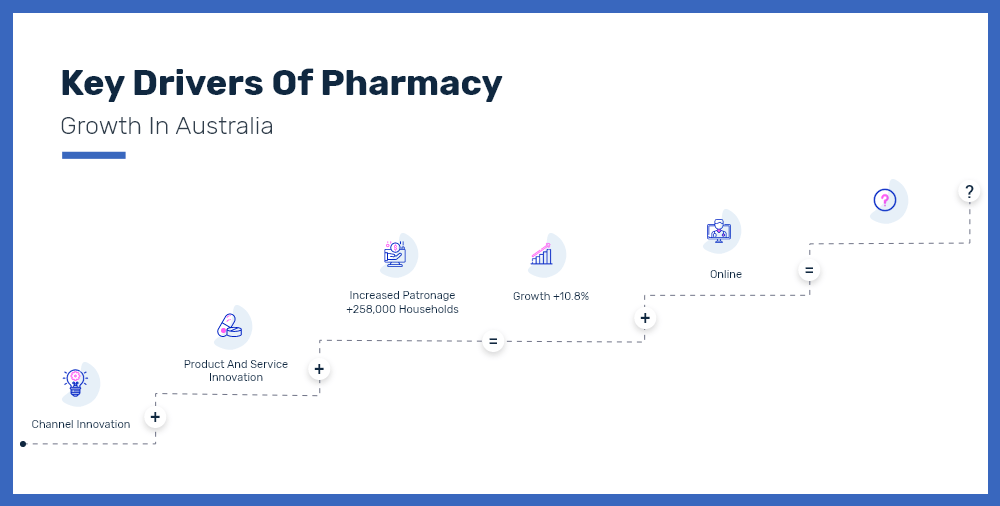
Looking towards Australia, Pharmacy owners are embracing an integrated approach of online as well as offline to drive sales and keeping the customer engaged in-store as well as online.

The exhibit given below by Neilson presents the concept more clearly.
key-drivers

Boarding our pitch on the same ideology of channel innovations, convenience, and customer motivations or preferences, we would take our discussion further on the following key points:

  1. How to Develop a Customer-Centric Online Medicine Delivery App?
  2. The Best Technology Standards To Choose
  3. Market-Oriented Tips and Tricks to Attract Sales
  4. Best Online Medicine Delivery App Development Company to Hire

How to Develop a Customer-Centric Online Medicine Delivery App?

When developing an on-demand medicine delivery app, consider that you need to develop an app for the following user roles for both platforms- Android and iOS:

  • Customer App/User App
  • Pharmacy Owner App
  • Delivery Boy App
  • Admin Panel (Web)

However, if you’re a startup with a tight budget, you can develop a single operating system. Moreover, you can also plan to launch the MVP of the app with basic features and target local audiences. If everything moves as planned, you can further enhance the app with advanced features.

Basic Features for Customer App

  • Registration and Login A seamless customer onboarding process helps in decreasing the app bounce rate. Customers must be easily able to sign up and login through mobile no, email id or social logins and password.Codiant Tip : Sign up should not be kept mandatory for customers. If they wish to order medicines without creating an account the app must allow doing so. This removes the barrier to checkout and increases more chances of customer retention.
  • User Profiles Allowing your users to create a profile helps both users as well as the brand. Users can be kept updated with in-app notifications while brands can get a complete hold on customer behavior and as per that they can develop engagement patterns and complete conversions.
  • How Does A User Profile Work? In a user profile creation, you can collect information like name, physical address, locality, country, age, email address, mobile number, general health issues, etc.
  • Upload Prescriptions Customers should be able to upload images of their prescription from their phone’s gallery and the same should be forwarded to pharmacist to review.
  • Search Medicines In the search tab, keep it easy to search medicines customers are looking for.Codiant Tip : Auto-complete suggestions as they type few characters will help in speeding up the human-app interaction.
  • Category Search For the customer, it should be easy to search for medications with the help of filters. You can categorize medicines like Fitness & Supplements (Weight Management, Protein Supplements, Nutritional Drinks, etc.), Diabetes, Healthcare Devices, Personal Care, Ayurveda, Homeopathy, and Health Conditions (Such as Stomach care, Respiratory care, Eyecare, Pain Relief, Cold & Cough) and so on.
  • Product Details Giving Product details of the drug/medicine educates the customer more about the product, builds trust in your brand, and help you reach your target audience.So, enrich your product detail page with information like benefits, ingredients, dosage, and frequency of use, storage instructions, how to use, price, combo price benefits, ratings, and reviews, etc.
  • Order Medicines After visiting the product detail page customers should be able to place an order for single or multiple medicines.
  • Add to CartCustomers should be able to add medicines to the cart and directly jump to the checkout page. From the cart page, they can also check their order history (if previously ordered).
  • In-App Payments Allow your customers to make online payments through all payment modes like credit/debit card, mobile wallet, net banking, and other popular modes of payments.
  • Push Notifications Once the customer places the order, notifications should be sent on order updates (like order packed, shipped, on the way, delivered), offers, cash prizes, coupons, etc.

Advanced Features of Customer App

  • Reviews and Ratings 82% of consumers say the content of a review has convinced them to make a purchase. Taking the product feedback from the customer helps in more conversions, increased trust, boosting app revenue. That said, your app should allow customers to view and post ratings and reviews of the products.
  • Lab Tests On-demand lab tests allow customers to take lab tests from the comfort of their homes. They can also visit a lab near them for visiting the pathology physically.
  • Ask a Doctor or On-demand Doctor Consultation Enable users to consult Doctors across all specialties over chat, video, and voice calls. This will give you dual benefits- a commission from Doctors and patients, second, you can deliver the medicines on-door as mentioned by the prescription given by the doctors.
  • Advanced Filters There are various other search filters to be used in on-demand medicine delivery app development. Few categories being: Search by brand, popular categories, combo deals, newly added products, deals of the day, etc.

Features for Pharmacy Owner App

features-of-pharmacy-owner-app

  • Store Details : A pharmacy owner must be able to add, change, update, and delete lists of medications and information.
  • Digital Prescriptions : The prescriptions sent by the customers must be ready to review for pharmacy owners with a quick option to accept or reject.
  • Receive Order Notifications : Pharmacy owners should receive order details placed by the customers with the ability to manage them in real-time on the go.
  • Order Management : Ability to streamline and automate order processing, returns, and refunds by the pharmacy staff.
  • Manage Discounts : Pharmacy owners can manage discounts, promo codes, and offers to raise customer loyalty.
  • Receiving Payments : Pharmacy should receive payments as directed by the app owner directly in the app.
  • Price Management : Pharmacy managers should be able to easily update prices for all medicines and health-related products given on the app/web app.
  • Order History : Pharmacy managers should be able to access the entire order history of customers.
  • Ratings and Reviews : Pharmacy staff should be able to view and manage users’ ratings and reviews.
  • Related Products : Pharmacy staff should be able to display related products of the medicine viewed by the user in real-time.

Features for in-house Delivery or Courier App

  • Real-time Request : The courier boy should be able to receive a delivery order notification. Upon reception, the delivery boy should have the freedom to accept/reject the delivery request.
  • View Delivery Details : Delivery boy can view details like customer address or delivery location when accepting the delivery request.
  • View Map : Delivery boy can view customer location on the map with an optimized route to reach the delivery destination on time.
  • Delivery History : The delivery boy can check the delivery history like total confirmed orders and canceled orders.
  • Payment History : Drivers can check the total payments received weekly and month wise.

Features for Admin Panel
features-of-admin-panel

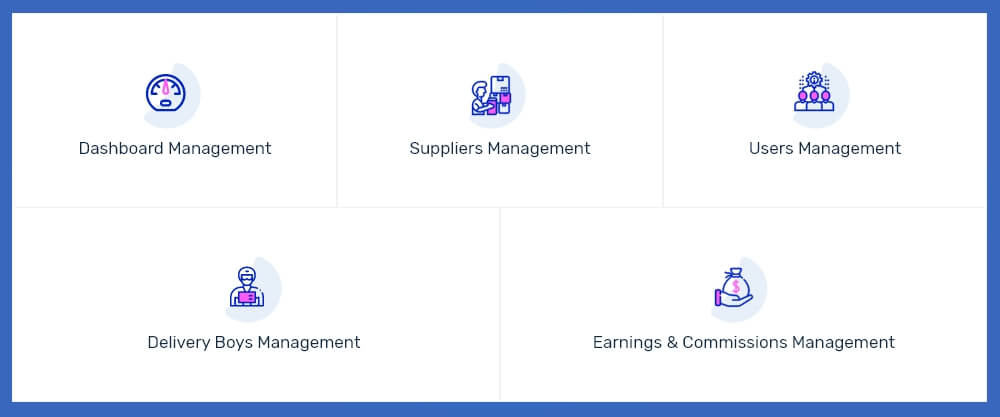
  • Dashboard : A dashboard to have a god view on total orders received, total earnings, total users and suppliers with interactive graphs and charts.
  • Manage Suppliers : The admin should be able to manage (add, edit, update, delete) suppliers and manufacturers with ease.
  • Manage Users : The admin should be able to manage new and already registered users with the controls of add, edit, update, and delete their details.
  • Manage Delivery Boys : Admin can manage delivery boys, add, update, verify and activate/deactivate their profiles.
  • Manage Earnings : Admin should be able to check yearly, monthly, and weekly earnings made by the suppliers and the app in total.
  • Manage Commissions : Admins should be able to set commission rates with suppliers or pharmacy owners and enable payments.
  • Feedback Management : Admins should be able to view, respond, and manage feedback, or ratings and reviews given by the app users.
  • Reporting and Analytics : Admin can check analytics and reports of all sales, revenue, new customers, suppliers, etc. and plan next actions based on the reports.
  • Notifications Management : Admin can manage app notifications, messages, and emails sent to various stakeholders.
  • Inventory Management (Advance feature) : Admins should be able to track and manage inventory in real-time as well as order scheduling. This helps them eliminate situations where expired medicines sit on shelves for months on end. As per the seasonal demands and consumer buying habits, the system analyzes data and minimize screws up.

tech-stack-of-online-medicine-delivery-app

Market-Oriented Tips and Tricks to Attract Sales for On-Demand Medicine Delivery App

  • Pricing And Acquisition The best way to earn money from an on-demand medicine delivery solution is by making a flexible pricing strategy for listed items. That price should range from MRP (as the highest) and offer price (variable).You can also reward your customers with a certain amount of cash prize that is valid till a particular time. And that cash prize can only be redeemed by shopping on your app with other conditions applied such as on shopping of $20, $1 can be redeemed. This strategy will attract customers to come back and shop more.
  • In-App Advertising In-app advertising is a no-brainer monetizing feature that attracts new customers as well as new pharmacy suppliers. By featuring your suppliers on the home page of the app you can help you gain some extra dollars other than the set commission.
  • Delivery Charges Charging delivery rates as per different areas of delivery location is another way to enhance your bottom line.
  • Loyalty Offers Loyalty program is another popular marketing strategy designed to encourage customers to keep shopping to earn a loyalty reward. These rewards are in a form of card or points and can be used for their future purchases from your app.

Best Online Medicine Delivery App Development Company to Hire

Codiant is one of the few online medicine delivery app development companies offering custom app designing, development, and customer engagement program with marketing strategies to its customers. We help our customers with complete customer acquisition and retention strategy and tools along with app development.

Our competency in on-demand app development across industries has helped more than a hundred brands and businesses earn a valuable spot in their local or national area.

Once you reach out to us, our business development manager will understand your requirements, budget, and timeline. As per that, we will send you a free quote with a flexible pricing structure in custom medicine delivery app development depending upon your needs.

How Remote Patient Monitoring is Helping Care Providers to Improve Patient Outcomes?

Now more than ever, US health systems and hospitals are turning to Remote patient monitoring technologies. It is widely helping them eliminate unimportant patient contact and also helping hospitals reduce the burden.

Physicians know it. Not every illness need hospitalization. Patients undergoing vague symptoms such as dizziness, fluctuations in blood pressure, blood oxygen, heart rates, etc. can be effectively treated without hospital admissions.

In such cases, Remote patient monitoring and/or telehealth solutions play a vital role. These technologies enable a continuous uninterrupted connection between patients and caregivers, offer a continuous stream of real-time health data, and save costs to a great extent.

It is convenient, time-saving, patient-centric, and makes healthcare accessible and efficient. But what it is? How does it work? What are its benefits? How does it help Doctors? Let us find it out.

What is Remote Patient Monitoring?

Remote patient monitoring (RPM) is a type of healthcare delivery method that helps doctors use medical devices that tracks and transmits user’s vital signs such as heart rate, ECG, blood pressure, skin temperature, etc. and provide real-time insights to care providers that help them in identifying next steps.

Through RPM and video conferencing solutions, Doctors can monitor patients’ health outside of the clinical walls. Some of the most common examples of RPM devices include digital blood pressure cuffs that measure pulse rate and blood pressures of the patients and enable them to remotely send it to physicians. The other can be an implantable sensor or a smartphone app for real-time diabetes monitoring and management.

How Remote Patient Monitoring Works?

RPM technologies allow providers to send uncritical patients to home with wearable tools that track metrics. The real-time/recorded data is then sent to cloud storage and eventually, Doctors can go through the actual readings and notify staff if required.

how-remote-patient-monitoring-works-codiant

How Remote Patient Monitoring Programs Are Beneficial

According to the latest trends by Spyglass Consulting, 88% of healthcare providers have invested in or are evaluating remote patient monitoring technologies to support high risk, chronically ill patients at risk for hospital admission.

There are even more benefits of remote patients monitoring that is helping to improve patients’ outcome, gain economic benefits, and provide peace of mind. Let’s understand in detail.

1. Helps in Delivering Convenient and Quality Care

The PewResearchCenter estimates that 92 percent of Americans have cell phones, and 45 percent have access to a tablet computing device. This type of familiarity with smartphones and technology make people comfortable and increases the likelihood of patient engagement.

Embracing an effective RPM can help in improving quality of care as when people are more engaged for their health, they’re more likely to adopt it in daily practice—this in turn, can help providers gain positive benefits in health care.

2. Helps In Preventing Hospital Readmissions

“A KLAS Research Report surveyed 25 Healthcare organizations that have deployed remote patient monitoring tools have witnessed a 38% reduction in hospital readmissions.” Patients with non-acute conditions can simply apply a bedside monitoring device depending on their health requirement and that device can monitor the patients’ vital signs and send patients’ charts and notifications to the provider’s phone or system.

This virtual health monitoring further aids in providing intensive care beds, staff supplies, and other resources to those in need.

3. Improved Patient Satisfaction

“Reports says, RPM tools have helped in 25% improvement in patient satisfaction rate”. The in-home monitoring capabilities provided by RPM solutions improve patient engagement and helps in better management of chronic diseases. Patients are able to regularly contact Doctors or stay in their touch, easily adhere to treatment and care plans, follow medications, and reduce their dependency to travel into the hospitals for vague issues; thus saving their time and travel expenses.

Codiant’s Remote Patient Monitoring Solutions enable care providers in the USA to improve patient engagement by helping them track daily health activities as outlined under their care plan via their personal device.

4. Helps In Reduction Of Costs

“As per a KLAS Research report, which surveyed 25 healthcare organizations found that 17% of hospitals and healthcare organizations running RPM programs cited significant cost reductions”. RPM’s effectiveness, proactive nature, and ability to monitor virtually has increased staff’s efficiency, provided high-quality care to patients, and addressed the gaps in health care. This in turn, has helped in cutting expenses hugely as providers can now focus on patients more rather than spending time on tracking down each patient’s data and other administrative work.

We think remote patient monitoring would be a near-default option in the future of healthcare delivery. Along with better patient engagement and experience, the technology when combined with telemedicine and electronic health records (EHRs) will drive value across all the five key areas including:

virtual-health-codiant

Role Played By Remote Monitoring During the Pandemic

Statistics Findings As per the Harvard Business Review:

  • The U.S. Centers for Medicare and Medicaid Services expanded Medicare coverage for remote patient monitoring to include patients with acute conditions and new patients as well as existing patients.
  • The U.S. Food and Drug Administration issued a new policy allowing certain devices (FDA-approved non-invasive devices used to monitor vital signs) to be used in remote settings.
  • Healthcare organizations such as Mount Sinai Health System in New York City, University Hospitals in Cleveland, Ohio, St. Luke’s University Health Network in Bethlehem, Pennsylvania, and Providence St. Joseph Health in Renton, Washington, is using remote patient monitoring to care for patients during the COVID-19 pandemic.

How Telemedicine App Is Playing A Huge Role In Remote Monitoring for the Physicians in the USA?

Telemedicine app solutions are acting as a best-in-class online video conferencing solution helping care providers in treating the patients outside the traditional clinical settings with full security, ease, and convenience through online video calls, text messages, ePrescriptions, medical data sharing, and online appointment scheduling.

telemedicine-stats

  • Facilitating Rapid Stroke Diagnosis and Treatment
  • A Significant Reduction In Hospital Readmission Rates
  • Solving Healthcare Challenges in Rural Areas
  • Simplifying Acute, Chronic Care and Dermatology Consultations

Read More: How USA Physicians, Clinics, and Hospitals Are Benefiting From Telemedicine Program?

telemedicine-cta1637135879

The Bottom Line:

COVID-19 has created an open opportunity to accelerate the adoption of virtual care with the support of technologies like remote patient monitoring and telemedicine app solutions. We encourage healthcare organizations, hospitals, and clinical chains to embrace the power of telehealth programs and take the value-based care delivery model to the next level.

How Codiant Can Help?

Codiant designs and develops custom telemedicine platform adaptable to the needs of clinics, hospital chains, and healthcare enterprises. Our telemedicine app development solutions integrate with your EHR to create better user experiences. The software utilizes online appointment booking, scheduling, cloud-based online video calling, video conferencing, screen sharing and whiteboards to streamline doctor-patient communication.

We also help organizations with the readymade telemedicine platform ‘TeleDocto’. It is a white-label, open to customization, ready-to-deploy telemedicine solution with a range of features.

What Makes On-Demand Taxi Business A Unicorn?

How taxi app companies can disrupt the way people travel? — From the Spectrum of Codiant

Codiant- A Yash Technologies Company, holds expertise in on-demand taxi mobility. The company serves taxi aggregators, taxi fleet owners with on-demand taxi app development solutions on Android and iOS app platforms. Codiant has served a range of taxi app brands operating across 20+ countries, by developing value innovation channels, strategic logics, and radically customer-focused models.

Given the experience, the company has been a forefront runner as a “disruptor of an inefficient taxi industry”. In this post, we’ve conversed with creative directors, strategy makers, and business developers of Codiant to discuss: how Codiant served brands with their differentiated taxi app solutions, the action points where innovation lies, and how early-stage taxi startups can design their business model.

Converse 1: How You’ve Helped Taxi App Companies to Differentiate from Others?

Creative Director: The core of our taxi app solution is an online platform that allows users to map nearby taxis. Users are fascinated by the convenience of the platform, i.e. the foundation of ‘book, pay, & go’, and in a matter of time they become very loyal to it. (This is how it looks to others, laughs!)

Little do they know, users are attracted to the platform that provides them value, benefits, and an experience that makes them loyal towards the brand.

The taxi app helps them identify quickly which taxis are available near to them and which one is good for them (as we give the option to choose from the cab sizes- mini, micro, sedan, SUV), they can LIVE track the taxis on integrated maps in real-time. And if they’re in a hotel or resort they can order a taxi with a simple click of a button (known as Butler integration).

It’s also a breeze experience because users can get estimated fare based on locations, distance and time, they can pre-book rides, and if in case, the driver cancels the ride at the last moment, our taxi app software will assign a new driver.

It’s a good innovation model for drivers, as well. Our taxi app solution channels more business to them and they increase their per day earnings.

taxi-cta

Converse 2: What Are The Action Points Where Innovation Lies In Taxi App Industry?

Codiant Strategist: “Innovation works at its best when it disrupts what already exists.”

The key to innovation in almost every customer-centric industry not limited to transport or ride-hailing lies in action points that deliver state-of-the-art customer experiences.

What we have implemented in our taxi app development solution for our clients is the absorption of key ideas in the landscape. We’ve focused on customer journeys, rather than investing our efforts on touchpoints.

It’s probably not a stretch to say that today taxi companies operating their business online have forayed on the lesser or similar lines of top service providers or say rivals in the list like Uber, Lyft, GrabTaxi, Hailo, DidiChuxing, and so on. Down the line, by mediocre or early stage startups, the copy didn’t come out as a copy or if it happened to be same it didn’t work in their geographical areas.

To deliver great customer experiences, it is necessary to work on an interactive design that is more customer-centric. That said, a taxi app user could be as smart as a digital-savvy millennial and as low-skilled as a digitally contracted baby boomer (60+ persons).

We have aligned our taxi mobile app to deliver customer experiences that cover cognitive of all ages. Every time we board a new client coming with a dream to build an app like Uber or XYZ, we just don’t start to start.

The development behind the scenes process is more about re-scoping (the idea/project scope they present), re-inventing (what’s already present)—all by presenting a template of breakthrough ideas for uncontested markets and customers.

Converse 3: How Early Stage Taxi Startups Can Design Their Business Model?

Codiant Business Development Manager: “I will only say one thing- Startups should not hesitate in taking bold and unexpected moves”.

The stepping stone of a brand defines how it looks, thinks, and feels like. This is the only time when customers and the market come to know you and see you from a different angle.

This is the time when you set your brand identity and the reason why the market should talk about you.

Such kind of mindset with transformative ideas may entail certain risk, manage to gain a good chunk of attention, and consume monetary expenses with other resources. But if successful, the rewards are many. It will help:

  • Attract new customers
  • Secure competitive advantage
  • Stand as a differentiator
  • Increase market share
  • Unlock new sources of revenue

To be a game-changer, make sure you play your taxi app development game right. Bring ideas, project scope well rooted with your brand value and growth plan that ensure high-impact results for the long term.

Key Takeaway:

  • Be an early adopter if you have an idea with a distinct advantage. This will help you gain a competitive edge.
  • Provide attractive offers, coupons, and deals to attract customers. This appeals to users and attracts them to install the app and avail of services.
  • Start locally and test within a geographical area. This will increase your influence firmly and empower you to make better decisions.
  • Do not limit. Penetrate to new markets using demand generation marketing tactics.

How Quick-Serve Restaurants in the US Can Thrive In the Next Normal

After weeks of quarantine, social distancing and shutdown regulations, many fast-food and quick-serve restaurants are either permanently closed, declared bankruptcy, or are simply surviving.

Only strong economic units who have evolved key aspects of safeguarding customer experiences are doing better than simply surviving.

By adopting digital or navigating to online food ordering app development with a refined restaurant model can help quick-serve restaurants to thrive in the next normal.

Here are some tips and techniques for the restaurant industry to return to stability and reimagine the next normal.

A. Low-Touch Customer Experience

Any plan build for responding to COVID crisis should be built on low-touch customer experience- optimized on both off-premises as well as on-premises.

To facilitate the off-premises experience, quick-serve restaurants should leverage mobile technology i.e. on-demand food delivery apps to compete and thrive in a low touch environment. As people are considering safety on touchpoints like contact with staff, menu, eliminating the need for physical money exchange, and more.
Online food ordering app solutions create a safer way to promote, interact, and serve potential and loyal customers with its contactless nature. Like the customer can browse the online menu, place order, make digital payment and receive the food parcel on the doorsteps, without having to go anywhere.
Look how to reimagine the on-premise or in-restaurant experience with Contactless Dining.

B. Regain Market Traction with Sentiment Marketing

We all have faced an unprecedented challenging time that has hit people really bad. Customers are in panic, concern, and confused to respond to the post-crisis situation. At this sensitive time, during and post-pandemic climate, restaurant marketers will need to work upon marketing tile that cooks well with the guests sentiment.

Correct use of tone, words and visuals that reflects safety promises and hygiene consciousness will help them regain confidence in restaurants. Also, by keeping them posted with the sanitary measures your restaurants take to ensure a safe guest experience will instill trust.
food-cta

C. Employ Key Strategies to Rethink the New Normal

Do not resume the restaurant operations the same old school way you did before. Rethink, redesign and reinvent to respond to the next normal. Touchpoints you can work upon-

“Consumers appear to care about in-store safety and prefer offerings that are healthy and locally sourced more than they did before COVID-19- Mckinsey “

  • Work upon menu by including food items such as green-leaf proteins, low-carb food, paleo diets, etc.
  • Be agile to adapt and sustain the changing customer needs, preferences and market trends.
  • Redesign the customer journey and every point of interaction, address their needs by identifying their behavior.
  • Enhance the digital experience by deep personalization in online food ordering and delivery, pricing and promotions, etc.

D. Tailor Your Approach to Customer Segmentation

You can use the above marketing strategies by segmenting your customers on the following levels and reactivate them by sending personalized in-app notifications, offer messages, emails and other marketing levers.

  • Loyal guests who were your customers before the crisis.
  • People who became your first-time customers during the crisis.
  • Customers who are enticed by offers and prefer to spend on multiple channels.
  • Potential customers who can more likely be your customer.

The Big Picture…

The post-pandemic crisis and the shift in changing the order and consuming behavior in the food and restaurant industry will continue to a long period. Enhancing the digital experience by equipping time-sensitive features in the online food ordering app has become crucial to retain customers and capture leads not just during the pandemic but also long after the recovery.

To cater to speed, convenience and value to customers, QSRs should quickly turn to mobile technologies and push out a completely new delivery model.
At Codiant, we have helped a plethora of food and restaurant companies, aggregators to develop a unique on-demand food delivery app with full digital marketing support that have helped them increase visibility in the market with a significant boost in sales.
If you want any app development support or extra feature additions in your existing food ordering app or just want expert advice, we’re here to help!

How On-Demand Home Services App Key Players Are Keeping Pace with Peers

In a strong paradox, people have gradually shifted the definition of laziness to efficiency and efficiency to instant gratification.

Often nowadays in the cynical circles of society, the definition of efficiency has taken a progressive U-turn. People are discovering new ways to get the gigs, daily errands and chores to be done effortlessly. Thus, giving a new opportunity to unskilled labors to climb the ladder of online ecosystem.

Constructing on this lifestyle, on-demand home services startups are monetizing by building an app solution that satisfies the demands of every homeowner. Be it washing clothes, or repairing electrical, scrubbing dishes or plumbing chores or more- the tasks are done in a tap of a button.

on-demand-home-services-app-codiant

How On-Demand Home Services App Solution Challenging Other On-demand Peers?

In this rampantly dominating on-demand economy, we have seen a growing number of startups focusing on core categories of domains to cash upon. Take on-demand beauty apps, on-demand baby sitters, packers and movers, on-demand health services, photographers, car washers and the list is endless. These companies totally rely on one segment to make business.

Contrarily, businesses in the online home services marketplace have made a clever move by unlocking a multi-closet of services — by focusing on multiple and broad categories—scaled up by a full-stack approach.

Here are the extended categories helping them to scale up in the on-demand model.

On-demand Home Service App Development : Categories Inclusion

By aggregating range of services in one single app, businesses are leaving no stone unturned to lose customers. The most common and ever-demanding service categories covered by popular home service apps are:

  • Salon-at home Spot independent beauty professionals, stylists, barbers, spa-givers around the nearby area or city and get pampered at comfort of your home.
  • Cleaning and Pest Control Instantly call deep cleaner professionals or pest control guys to and get your kitchen, bathroom and home peculiars like curtains, sofa or even fridge free with pests like rodents or insects. Indeed, a good value proposition to sanitization post-pandemic.
  • On-demand Electricians Carry out repairs of any home appliances like fridge, ac, geysers, etc. by calling anyone from the team of professionals by authorized service centers.
  • Plumbers and Carpenters Get plumbing and carpentry services done by hiring verified independent service professionals registered in-app.
  • Laundry Services Most people don’t have enough time to wash clothes regularly or during some events, they seek various dry cleaning services and often seek laundry solutions only on-demand basis, this service allows them to book Laundromats in a tap of a button without having to subscribe daily services.
  • Wedding Services On-demand wedding services, indeed a big segment blanketing multiple service categories. Allowing users to book caterers, wedding planners, beauticians, photographers, Heena artists, florists and what not.
  • Healthcare Services Yet, another important category and an alternative to healthcare apps like yoga and fitness. Enabling people to hire on-demand yoga and fitness trainers who can provide them yoga and fitness training in-person or online.
  • Other Miscellaneous Other service category includes on-demand baby sitters, housemaids, cooks, adult caretakers, packers and movers, pickups and drop delivery boys and many more.

home-service-app-case-study

On-Demand Home Service App Features

Customer Panel App:

  • User Login/ Account Make the registration process simple and easy. Allow users to create a profile using a mobile number/ e-mail or let them integrate their social media account to make the registration even quick.
  • Quick Browsing Make the searching process easy. Let users land on the services they are looking for quickly.
  • Easy Filters Enhance the user experience by allowing them personalized search. Integrate simple filters like search home services based on cost, ratings, distance, specialty, etc.
  • Notifications Keep your users updated with the essential piece of information. Users need not navigate to know the status of their order, offers, deals, order tracking, and more.
  • Service Bookings Using this feature, users can easily book services at their convenience. Also, you can add a rescheduling feature in case the desired service is not available at the moment.
  • Rate & Review Users can easily share their experiences and rate the services they have already used. This feature will also help new users to check the ratings and reviews before using any service from the app.
  • Payment Gateways Payment gateways are the exit door of transactions. So, make this process easy and secure. Integrate payment methods like Credit/Debit cards, e-wallets, PayPal, or any other third-party common payment mode.
  • Help & Support There are times when the user may get stuck. So, provide them instant support and help via chatbots, FAQs, and tutorial videos, and in case of emergency provide a customer care number to contact.

Admin Panel Features

  • Interactive Dashboard This is the overall managing window of the app. The dashboard contains all the essential features included in the app.
  • Manage service providers Admin can manage profiles of registered service providers and can add new ones. They can also verify and check, in case of any fraudulent activity taking place.
  • Manage customers Admin can manage the customer details and control their activities on the app i.e. cancellation charges, offers, discounts, and more.
  • Manage promotions The admin has the access to run multiple offers and discounts to attract customers and other users. This feature also allows tracking the performance of each promotional transaction carried out.
  • Activity analytics This feature contains all the essential information i.e. statistics about the business performance. The admin can track and view information like service provider performance, their earnings, most preferred services, cancelled bookings, discounts and coupons performance, other codes, etc.
  • Manage Reviews The admin can review all the positive and negative reviews of their customers. They can thus analyse the feedback and plan better strategies to enhance their online business app.

Service Provider App

  • Register/ Login The service provider can register themselves by filling in information such as mobile numbers, email, and social media accounts. Make this process simple and easy to attract more service providers.
  • Manage Service Information The service provider can update or eliminate any information from their service section.
  • Accept/Reject Requests The requests sent by consumers on the service page can be accepted or rejected by the service provider based on their availability.
  • Manage Daily Performance The service provider can check daily transactions i.e. the total number of transactions done, total earnings, total cancellations, total pre-bookings, etc.
  • Manage Revenue The service provider will be able to track the total amount of services they manage and how much earnings they generate from it.
  • Customer Support The service provider can share their contact details or allow personal chat options to the customers in case they are facing any challenges in completing their service request.

Key Factors To Consider While Developing A Home Service App

  • Recognize Your Target Audience Requirements Before you launch your app, it is essential to understand the requirements and market demand of your target audience. Consider all the positive and negative aspects, and note down the possible future opportunities and the estimated ROI by conducting thorough market research.This step will help you to analyze the market gap that you can bridge with your on-demand service app. After performing this task, you can easily analyze and achieve success for your app.
  • Pay Attention To Competitor’s Activities After you are done with your research, consider analyzing competitors’ activities because there are already successful market players who are offering similar services to your target audience. In this step, you will learn the fact that there is a need to bring something unique to attract customers and satisfy their demands. Also, the competitive study will help you gain a lot of motivation and ideas to plot your strategy and achieve your targets.
  • Offer On-Time Services On-demand itself explains the fact that service must be provided by considering the time factor deliberately. Your service must be readily available for the people who are seeking it. If in case you miss any chance or there are delays due to some reason than other competitors might take up your place and your business may face a steep downfall.
  • Make Smart Use Of Notifications Notifications can either help you to win or lose the whole market scenario, so it is always advisable to use them wisely. Make sure that you are not bombarding notifications, providing them with useful information, and ensuring a correct time to share. Notifications are used to provide value to the customers and not to irritate them.A single notification with valuable information can really do work and help you to succeed in this competitive world.
  • Enhance Operations and Performance The vital key to winning the race is to focus on enhancing customer satisfaction and personalized operations that fulfil market demand. No other strategy is going to work in front of these. So, it is very clear that to increase the visibility of your app and make it a success, you need to focus on improving your services and overall business performance. Set your budget wisely, instead of spending the whole money on marketing strategies and promotions, do it for enhancing operations and performance of your app.

Surviving and Thriving by Adding Immense Value

By developing a value-driven home services app that allows users or service seeker to perform the following functions makes these apps a step ahead.

  • See the list of service categories and sub-categories listed in the app.
  • Once the user selects the service he can book the service professional (freelancer/company profile) now or schedule for later.
  • View details of the service provider like ratings, profile, photo, id, visiting charge, etc.
  • Enter the service address where the user seeks the facilities.
  • After the booking is accepted, user can track the serviceman.
  • If needed, user can view contact details and send in-app message and call.
  • Make online payment for the services.
  • Rate and review the serviceman in the app.
  • 24X7 services and online help will make the app extremely useful.

Want To Be A Home Services Aggregator?

Want to be an aggregator of a range of demanding home services in your city? Scale, expand and start monetizing by developing a one-stop on-demand home services app development solution. Connect all local service providers, freelancers and service-based companies with customers and start earning from this revolutionary trend.

Codiant can be your trusted technology partner to develop a custom on-demand home services app feature-rich with all essential functionalities and technology stack to make your app outstanding in the on-demand landscape.

Read More : Top 10 On-demand Home Service Apps to Get Inspired From

We have developed a slew of on-demand home service apps for clients across the countries like US, Australia, UAE, UK and more. Contact us to view the demo or just say hi to know more about our expertise in the on-demand segment.

E-Commerce App Development: A Comprehensive Guide 2022

The rapid digital advancements need no more exaggeration. As more and more corporations are looking to absorb more customers worldwide without any geographical limitations, developing an eCommerce website and a mCommerce app has become a prevailing need.

As per eMarketer’s research report,” Worldwide Retail and eCommerce Sales” by 2021, we expect global ecommerce will approach $5 trillion and will account for 72.9% of the eCommerce market.

This prediction demands a more sophisticated, convenient and psychological eCommerce system that adds value to any company.

For attaining this, there is a pressing need of creating a seamless process that guides shoppers through the purchase, don’t let them shift their focus and ensures the merchants are gaining a greater proportion of their hard-fought revenue.

At Codiant, we help eCommerce companies develop one by providing an eCommerce website and a mCommerce app that is straight forward and has an intuitive shopping and checkout process.

In this blog post, we will discuss the following topics:

  • The problems faced by the shoppers while purchasing online
  • The tactical solution by Codiant to overcome those problems by defining:
    1. Key features of customers
    2. Key features of merchant or store vendor
    3. Key features of admin panel
  • The benefits achieved by developing the eCommerce app
  • The number of third party integrations
  • The technology stack
  • The total cost to develop the eCommerce website and mCommerce app

The Pain Points Customers Face While Shopping Online

1. Non-Optimized Payment Flow

Step 1 : Shoppers fills out shipping information.

Problem : Shoppers patience comes on the test when filling out too much information.

Step 2 : Shopper selects a payment method.

Problem : The shoppers preferred payment method is not available.

Step 3 : Shopper provides payment data.

Problem : Mistakenly, they enter incorrect data and realize after the payment gets rejected.

Step 4 : Shopper previews and places order.

Problem : The payment process is too long and the shopper abandons the shopping cart.

Step 5 : Shopper receives the payment confirmation.

Problem : The merchant’s fraud checks doubt the shopper’s authenticity and block the sale.

2. Poor Navigation

Step 1 : Shopper looks for a specific product.

Problem : The shopper has to navigate through all the products to look for one.

Solution : A search bar can help in finding the right product without thinking too much.

Step 2 : Shoppers find a favorite product.

Problem : But either the size is not available or the product is out of stock or the cost is too high.

Solution : The notifications can inform customers when the product is back in stock or the product can be added to the wish list for buying later.

Step 3 : Looking for different products from different brands

Problem : Most customers shop using more than one channel (online marketplaces, branded websites, in-store, etc.)

Solution : By making sales channels interconnected and offering multiple brands on the same platform, the pain point can be solved.

3. Tracking and Delivery Pain Points

Step 1 : Customer orders the product and makes the payment

Problem : As soon as the shopper orders they want to be informed of the status of the orders

Solution : A smart shipping software can keep the customers informed at every stage

How To Develop An Ecommerce App That Can Solve The Pain Points Of Customers

Key Features of Customer

Signup/Sign-in : Easy onboarding for users through social channels like Facebook, Twitter or through email id. Manage Profile : Users can manage their profile:

  • Change profile picture
  • Update email id
  • Change address and phone number

Find Brands: Users can search for products or items by their favorite brands.

Direct Search : Users can directly search the product on search bar by voice or text.

Advanced Filters : Users can refine their search based on factors like:

  • Popularity
  • Discount
  • Prices
  • Colors
  • Sizes and more using sort and filter features

Product List : Users can view and choose from thousands of products listed in the app

Product Description : After selecting a product, user can view complete detail of the product:

  • Price
  • Size
  • Offers
  • Product Details
  • Features & Benefits
  • EMI Options

Image Zoom : Hover over the product image to see the image zooming effect and view the item clearly.

View Offers : Search brands or products categorized by offers, discounts.

Augmented Reality : This is an advanced feature help customers stay up-to-date with the latest fashion trends. The Dressing Room app is a good example of this. Launched by Gap, this app allows customers to try its clothes on virtually. Based on height and weight the app creates a 3D mannequin that mimics the measurement.

Voice Search : This feature use device’s voice recognition interface to record search query. Through this feature, users can search products in the search bar by voice which is then converted into text. Hence, simplifying the search process. Loyalty Programs (customizable): Through the loyalty program, the repeat customers can get:

  • Discounts and rebates
  • Rewards
  • Free merchandise
  • Coupons
  • Access to unreleased products

Wish list : Users can add their favorite, most desired and likely to purchase items in the wish list.

Order Tracking : Users can track their orders:

  • Order packed
  • Order dispatched
  • On the way
  • Order delivered

Add to Cart : Users can add purchased items to the cart.

Try and Buy : This feature allows users to ‘touch and feel’ the product before buying. Multiple payment options: Users can pay through multiple options like:

  • Credit/debit cards,
  • Net banking
  • mWallet

mWallet Integration : Enable users to add money in the wallet and make quick easy payments.

Image Search : Users can search a product by an image if they are not able to find it by simple text.

Return/Exchange Product : Users can return or exchange the product by following the return policy.

Rate Product : Customers can rate and review the product.

Discount Codes : To entice customers’ users can be given promo codes, cashback offers.

Instant Checkout : Faster checkouts from the product page and shopping cart screen.

Product Comparison Tool : Users can compare similar products across parameters like

  • Product features,
  • Product dimensions (size of product)
  • Free shipping,
  • Product price and more.

Buy on EMI : Avail users with EMI option (monthly, quarterly, yearly)

Live Chat : Live chat with the customer support team.

Notifications : Users can get notifications for new offers, deals, and order updates through:

  • Email,
  • SMS
  • Push notifications

Ratings and Reviews : Users can give ratings and reviews to the app.

Vendor Features

  • Registration/Login : The vendor can easily login through email id and password.
  • Active Subscription Plan : Vendor can subscribe themselves (activate/deactivate) and extend the subscription.
  • Manage Profile : Vendor can set up store by adding store and product details.
  • Product Catalog : Vendor can manage (add, update, delete) products in a hassle free way.
  • Manage Orders : Vendor can manage incoming orders and dispatch it accordingly.
  • Import/export : Vendor can upload the products in bulk quantity on the software.
  • Payment Integration : This feature will allow the system to integrate and take multiple payment gateways like Authorize.Net, PayPal, Stripe, etc.
  • Reporting Tools : Vendor can view sales reports, returned items, product performance reports.
  • Notifications & Alerts : Vendor will get alerts through email, SMS and push notifications.

Admin Features

  • Dashboard
  • Manage Customers
  • Multi-vendor management
  • Order Management
  • Manage Product Category/Subcategory
  • Manage Discounts And Offers
  • Manage Payment
  • Manage Referral/Invites
  • Reporting And Analytics
  • Visitor Statistics

Advanced Features

  • Product search with QR codes
  • Augmented reality view
  • Social media sharing
  • Live chat support
  • Automatic tax calculation
  • Multi-currency
  • CRM integration
  • Cloud storage

Third Party Integration

ecommerce-third-party-integration

Technology Stack for eCommerce Website

tech-stack-ecommerce

Integrations :

  • Amazon simple storage service (Amazon S3) as file storage.
  • Amazon simple email service (Amazon SES).
  • Payments gateway- PayPal, Stripe, Authorize.net, etc.
  • Firebase cloud messaging for notifications.
  • Social logins- social media API (Facebook, Twitter), Gmail.

Benefits of Developing an eCommerce App Platform

The Fact

  • 82% of Internet users in the United States have used a mobile device to shop online.
  • 78% of users would rather access a store via a mobile app instead of a mobile site.
  • The average order value in eCommerce apps is 140% higher than on mobile sites and 130% higher than on desktop sites.
  • The online shopping business in the USA is growing 3X faster than the offline segment.
  • Mobile consumers make twice as many purchases by app than on mobile web.
  • By the year 2021, worldwide retail ecommerce sales will reach $4.9 trillion.
  • More than half, or 58% of people reported shopping online because of the ability to shop 24/7. As much as 61% of people have a better opinion of brands that offer a good mobile experience.

The Outcome

  • Enhanced usability
  • Drives higher user engagement
  • Push notifications increase conversion rate
  • eCommerce apps builds a loyal customer base and customer retention
  • Quicker checkouts reduce shopping cart abandonment rate
  • Enhanced user experience increases user satisfaction
  • Helps in reaching target audience

The Total Cost To Develop An eCommerce App Platform

The app features are divided as per basic, medium and advanced version that varies for native iOS app development, Android app development and cross platform app development. Additionally, the cost also depends upon other factors like :

  • Number of features and complexity of app functionalities
  • Number of third party integrations
  • Developers and their location
  • Hourly rates of the eCommerce app development company
  • eCommerce website hosting cost
  • Marketing and SEO expenditures

While the total cost to develop eCommerce website depends upon :

  • UI/UX Design
  • Web front-end development
  • Web back-end development
  • Quality assurance and testing
  • Project Management

The Cost Components of an eCommerce Website Development

cost-to-develop-an-ecommerce-website

Why Telemedicine Matters? Finding a Safe Future of Healthcare Provision

his Time is a tipping point for the global healthcare sector. Whether healthcare organizations are prepared or not, the era of virtual care delivery and remote patient monitoring has arrived, with telemedicine applications as a facet of change. We have all seen a ‘V’ shaped adoption curve for telehealth in over little six months. There are a huge number of patient care organizations around U.S that have witnessed an exponential surge in virtual care visits. From 11% of US consumers using telehealth in 2019 have massively accelerated to 46% of consumers now using telemedicine. As per McKinsey analysis, the telehealth market could surge up to $250 billion as opposed to $3 billion pre-COVID. The analysis also noted care providers who have adopted the ‘virtual urgent care’ model are seeing 50 to 175X the number of patients via telehealth than they did before. The exhibit below clearly shows healthcare visits are replaced by virtual care.

How Telemedicine Is Embracing the Future of Healthcare

Telemedicine has proved itself as the next frontier of healthcare. The capabilities of telemedicine and mHealth have expanded beyond the interaction between care providers and patients. From enhanced patient experience, increased provider satisfaction to reduced costs, telemedicine has become a trendsetter in the healthcare industry. Until recently, what posed as an option for healthcare providers is now geared up as the most safest and convenient way of providing care. The escalating demand for social distancing, challenges like restricted travel, fear of the contracting virus, and halt in normal working since the outbreak of COVID-19 have all been met by telehealth applications. Even for patients having medical conditions unrelated to COVID, telemedicine app platforms have supported in providing secured real-time virtual visits. That said, the business case of virtual care technology is already very strong and is poised to surpass the traditional care delivery model in the healthcare arena. Let’s realize a few of its potential advantages in shaping the future of healthcare:

1. Telemedicine Apps Facilitates Rapid Stroke Diagnosis and Treatment

As per research from Partners Telestroke Center, the faster is the assessment and treatment of stroke patients, the better are the chances of recovery. Many hospitals fail to shift patients into the hands of the right experts. In this case, the telemedicine app solution works as a lifeblood. If stats are to be shown, the results of treating stroke patients in Canada are intense. Reportedly, remote hospitals have seen nearly a 90% decrease in patient transfer to emergency rooms.

2. A Significant Reduction In Hospital Readmission Rates

A recent report claimed that one in five chronic care patients are readmitted to a hospital within 30 days of discharge and that number soars to one in three after 90 days. And to your surprise, using telemedicine applications 75% of these hospital readmission cases can be treated remotely. Nonetheless, telemedicine app solutions have proved itself as an antidote to combat repeat trips in the hospital.

3. Solving Healthcare Challenges in Rural Areas

Rural areas come with a host of barriers when it comes to leveraging convenience in healthcare. But the topmost challenge posed is the lack of access to reach care providers. The distance and travel time between the rural areas and the university hospitals in urban areas are intimidating. Secondly, it’s hard to monitor patients who are on medications. Owing to the long-distance issues, patients avoid traveling regularly for smaller check-ups. This eventually leads to certain medication errors, discontinuation of medication, and incomplete treatments. Telemedicine and telehealth programs eliminate geographical barriers and allow patients to connect with top healthcare providers by enabling quick virtual check-ins. Patients can easily upload images, reports and request an online consultation with Doctor, and cut travel expenses and time tremendously.

4. Simplifies Acute, Chronic Care and Dermatology Consultations

Studies show that around 40% of the U.S. population suffers from a chronic disease – approximately 133 million Americans. And with around 57 million Americans currently living in a rural area, many patients across the country lack access to care facilities. Patients with chronic care tend to rely on specialized care and it is hard for them to see a Doctor on regular basis. Telemedicine apps provides a simpler way to treat chronic care diseases like diabetes, cancer, mental illness, hypertension, etc. that require continual treatment for months; thus reducing the need for in-person consultations. Furthermore, doctors and specialists can also leverage telemedicine app solutions to treat skin problems remotely. Telemedicine is rich with features like image sharing applications that support medical selfie. A dermatologist can closely view the skin problem and can send the prescription electronically.

Are You Taking a Swift Action to Improve Doctor-patient Communication?

Increasing Acceptance of Telehealth as a Trend in Standard of Care

Before we met COVID, telemedicine was just evolution and an innovative approach presenting itself as an ideal way to curb chronic and acute healthcare issues outside the clinical walls. Not being compulsive; it posed just as an option for many healthcare providers. And then we met COVID-19… It turned the entire ecosystem upside down. Just in a matter of days, nearly all healthcare stakeholders were scrambling to find telemedicine software for their infrastructure. As soon as they implemented, they galloped to embrace telehealth and started dictating people to take online doctor consultations in a bid to limit the spread of the virus. And the results were shocking.

COVID-19 brought telemedicine as a digital flashpoint of the healthcare Industry

Health systems have experienced an exponential increase in telemedicine usage. Since February, the number of telemedicine investments has increased to over 30% of investment activity in Health IT.

Source: www.hgp.com

Views Expressed By Healthcare Providers after Adoption of Telehealth

What after COVID?

Telemedicine is turning out to be the cheapest and fastest way to seek care. The quality, effectiveness, and its value is increasing as Doctors have more access to patient data. It is a gateway to a holistic framework for apps, data security, privacy, confidentiality, medical ethics, prescriptions, online invoices and documents, mode of communication, and much more. COVID has proved to be an inflection point for telemedicine adoption. With convenience, cost effectiveness, and quality in front, the trend shows no signs of slowing down.

How USA Physicians, Clinics, and Hospitals Are Befitting From Telemedicine Program

  • Increased Revenue
  • Scheduling Flexibility
  • Minimize No-Shows And Last Minute Cancellations
  • Improved Patient Engagement And Health Outcomes
  • Expand Access To Care And Reach To More Patients
  • Work-Life Balance
  • Happy And Satisfied Staff
  • Advanced New Business Models
  • Increased Patient Revenue And Reduced Overhead Costs

How Codiant Can Help In Setting up The Practice through Telemedicine?

Market-Ready Telemedicine App Solution Codiant has designed and developed the TeleDocto telemedicine platform to enable physician groups, health care providers belonging to same or different hospitals to run their own virtual clinic with well-rounded telemedicine capabilities. The solution allows clinical healthcare providers to connect with patients in distant places. Patients can consult healthcare specialists for urgent care and medical treatments from a remote site in a secured real-time condition. Additionally, primary care providers in remote clinics can obtain immediate consultations with specialists at larger healthcare facilities before making a diagnosis or shifting patients to distant hospitals or major facilities. The system utilizes cloud-based online video calling, video conferencing or group calling, audio calling, secured messaging, screen sharing, and whiteboards to provide its services. Online appointment booking and scheduling are also used to book consultations.

Custom Telemedicine App Development Services Codiant adopts clinical innovations, digital interconnect and elevating healthcare market regulations to provide comprehensive telemedicine app development services to clinicians, hospitals, and healthcare organizations. Our telemedicine solution is:

  • Customizable and scalable across use cases and workflows
  • Adaptable to the needs of patient and provider
  • Integrates with your EHR to create better user experiences

Some of our key telemedicine software development services include:

  • Telehealth or mHealth App development
  • Cloud-based video conferencing solution
  • Exclusive video conferencing platforms
  • Group conferencing telemedicine solution
  • Medical data sharing
  • Virtual office platform development

The Window To Act Is Now

At Codiant, we practice a competitive approach to inspect undergoing healthcare challenges, patient dissatisfaction points, and workforce burnouts to create automated medical solutions backed with trending technologies such as Big Data, Artificial Intelligence, cognitive computing and robotics, internet of things (IoT) and blockchain. Telemedicine is good for providers, patients, and the entire practice. Adopt the trend now and start reaping the benefits.

The Manifest Names Codiant Software Technologies Private Limited as the Best Reviewed IoT Company for 2022

Founded in 2010, we at Codiant- A Yash Technologies Company, are a team passionate about working with industry disruptors and brilliant companies. Based in East Moline, Illinois, we have vast experience providing a wide range of customized services like Mobile App Development and Custom Web Product Development, UI/UX Development, Enterprise Mobility Solutions, and Application Maintenance Services across various platforms.

Today, we’re absolutely proud to share and celebrate with you all our newest recognition from a business blog resource for companies called The Manifest. According to their esteemed global company awards, Codiant Software Technologies Private Limited is one of the best reviewed and recommended IoT companies for 2022!

Receiving “The Most Reviewed Company Award” highlights the fact that we design our products and development services to fit the needs of our clients and fulfill their goal of enhancing people’s lives through technology. It supports our commitment to providing excellent, quality-driven products that showcase our team’s tenacity and commitment to continue providing the best without compromising for less.

To help you understand this distinction, The Manifest is an independent online source for business news that publishes informative content including agency shortlists, how-to guides, and market reports. The winners of their first company awards were selected based on the recommendations and testimonies they received during the previous 12 months.

It goes without saying that our clients made this moment possible. Thank you so much for your tremendous faith and confidence in Codiant Software Technologies Private Limited! We are all indebted to you for this amazing moment. We are eager to see what the upcoming year holds for all of us.

Have the ultimate solutions to help you accelerate your business. Get in touch with us and let’s schedule your free consultation so we can discuss how we can work together.

Crack the Top Trending Types of Dating App Business Models

The increasing number of dating app users are heavily dominating the dating app industry. Pushing the dire need of business models that bring novelties pinned with security, reliance and authenticity.

Dating app users, nowadays promises to reject anything that doesn’t offer a high-quality experience.

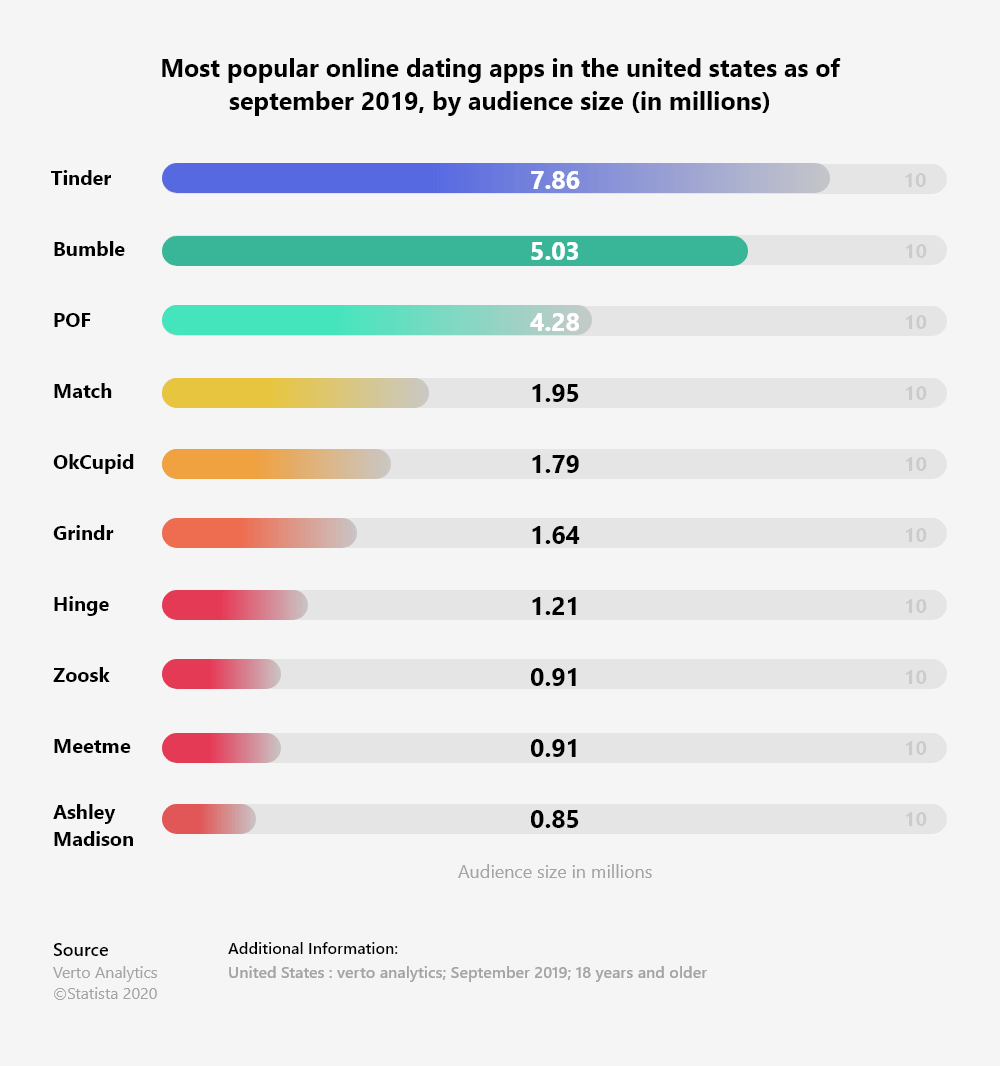
As per the reports from Statista, in 2020 there was an estimated 26.6 million smartphone dating app users in the United States itself. Further, the prediction states the number will soar to 25.7 million dating app users in 2023 in states. Where the most popular online dating app by audience size is Tinder, followed by POF and Bumble.

Ever wondered how this industry has managed to scale up so much despite having a freemium based business model which acts as a virtual cupid to all its users.

Well, the highly ranked apps have shown exits to features that sparked notorious behavior. Rather focused on functionalities that stream services promising safety, effectiveness and brings onboard eligible individuals as potential matches.

The speedy business models resulting in a remarkable uplift in the dating industry are:

Geolocation Matching

These types of dating app solutions search for potential matches, but in a very limited sphere, say within a specific geographic proximity for non- premium members. Once the user upgrades to a premium version, restricted features are unlocked. For e.g.: interstate or international swipes, unlimited swipes, stickers, etc. Most dating apps have the same manner of functioning be it Tinder or Bumble.

Traditional Dating Apps

This dating app type promotes a more mainstream way of dating. The major target audience for these apps are people who have recently discovered the field of online dating, or people who are done with the hype of tinder and are considering serious dating for some time.

In short, traditional dating apps provide the same experience of dating, with the only advantage of having the first few encounters virtually or through social media. Very generic apps like astrology and matchmaking apps fall under this category.

Matching Algorithm-Based Dating Apps

Matching algorithm-based apps are backed by offline matching services or similar algorithms which depend on personal survey information entered at the time of login and registration.

The same algorithm discloses potential matches with the same interests that of the user. This mechanism also recommends based on electives and right swipes. Generally, hobbies, interests, preferences, and basic bio influences the search in these types of apps.

 Niche-based Dating App

Niche dating apps target specific groups of people. These apps are based on narrow searches and are preference centric. Structured to target a specific set of audience. Such apps market themselves discreetly with their most unique feature.

To give you an idea, consider a kind of niche dating app that allows only celebrities and elite people to register. Think of an app favoring the entries of only Harvard or Oxford University passed out or say people with degrees from top universities.

Other general examples include community-based apps, LGBTQ apps, and religion-specific dating apps falling under this category.

The Big Picture

Dating apps are making billions from millions of people. Opening new opportunities for business capitalists.

Investing in dating app development with a unique business concept is a good idea. It will not only bridge the gaps between the current market holes but also increase users’ stickiness.

One of our clients, on the similar lines has developed a charismatic dating app solution that refutes deception, permits only ‘one date at a time’ and curbs the sucking issues of false-hearted dates or infidelities.

If any of the above business models have picked your interest and if you’re looking for a dating app development company to implement the one, we at Codiant are the mainstream disruptor.

From community-based apps to matchmaking apps, traditional apps to geolocation dating apps, we’ve an expansive portfolio in dating app development fueling different business models.

Related Reading: How Much Does It Cost To Develop an Online Dating App?

IoT in Healthcare : Use Cases and Benefits

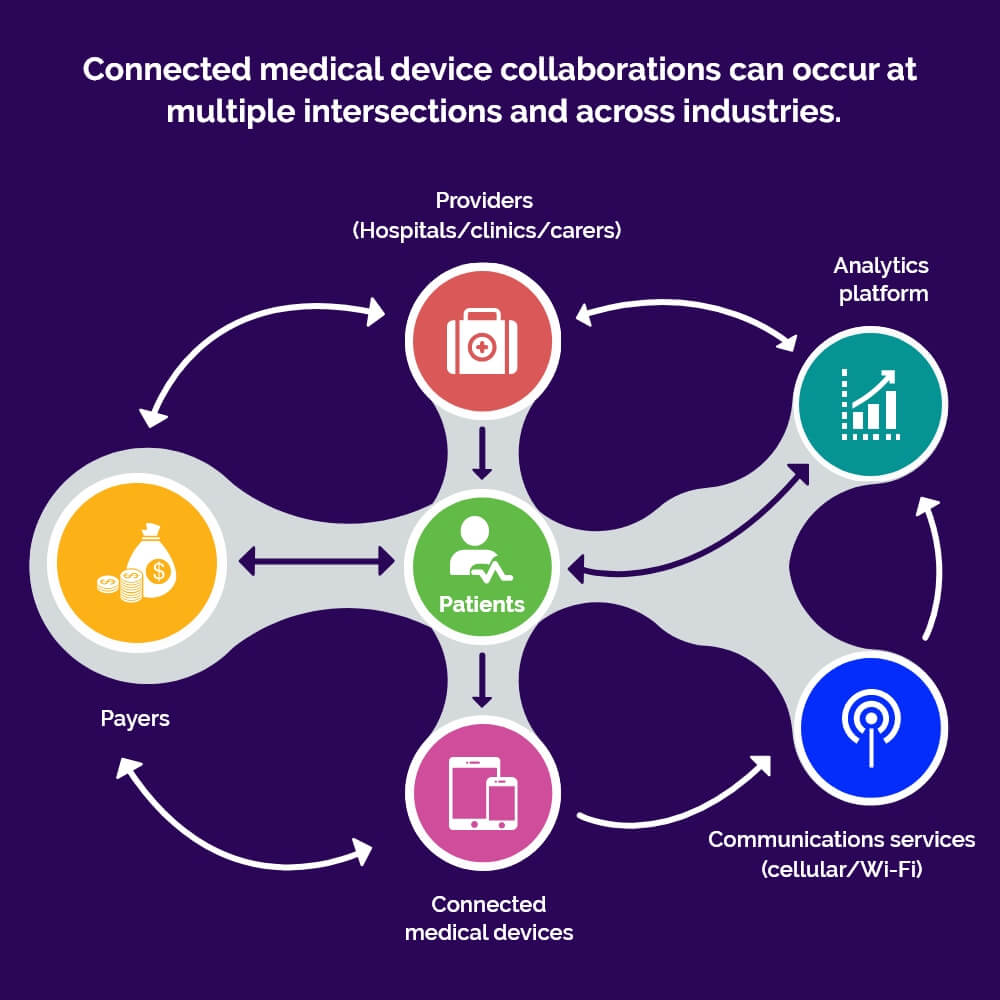
Patient interactions with the healthcare system are not possible without equipment and devices. Neither there existed a way doctors or hospitals could monitor patients’ health continuously while keeping patients in loop i.e. giving them recommendations. Until we saw the Internet of Things coming into the health ecosystem.

The Internet of Things (IoT) in healthcare with its wide range of products to diagnose, monitor, and treat patients remotely has led to a dramatic revolution in the healthcare industry.

IoT enabled devices have made remote monitoring in healthcare an easy feat by empowering physicians and healthcare organizations to achieve better patient outcomes, lower healthcare costs and improve treatment outcomes.

Undoubtedly, IoT has redefined the healthcare space and unlocked its potential in all applications of healthcare to benefit patients, hospitals and health insurance companies.

connected-medical-devices

How IoT is Helping Patients and Keeping them Safe

Individual Health Monitoring

Wearable health monitoring devices like fitness bands or smart wristbands and other wirelessly connected devices like blood pressure and heart rate monitoring cuffs, glucometer, etc. helps patients in tracking exercise, calorie count, and tune into sleeping patterns, monitor heart rate, blood pressure variations and much more.

These wearable devices have transformed the lives of patients by giving them personalized attention where they can constantly keep a check and track on their health conditions. Especially, it has turned as an elixir for elderly patients and aged citizens who are living alone.

On any disturbance or changes in the routine activities these connected devices (which are also tied to healthcare mobile apps) send alerts to connected health providers and family members.

How IoT is Helping Physicians in Providing Quality Care

If we discuss, what’s beyond remote patient monitoring where IoT devices are useful; it is devices with sensors. IoT devices tagged with sensors are used for finding and tracking the real-time location of medical equipment, assets in ICU, solutions and other healthcare facilities.

Be it defibrillators, nebulizers, oxygen pumps or any health monitoring asset; Connected devices have the ability to determine the exact location of needed tools with full accuracy.

And when surgeons and physicians can provide treatment without any interruption by challenges like misplaced equipment they can provide seamless care with increased job satisfaction.

Apart from this, IoT enabled hygiene monitoring devices to help in preventing patients from getting exposed to infection. For pharmacists, IoT enabled Find and Track solutions can help in asset management, inventory control, temperature monitoring of time-sensitive medicines and more.

How IoT Opens Opportunities for Healthcare Insurance Company

Connected devices allow health insurers to build a targeted customer base and enhance customer relationships by helping them interact with their customers more frequently to offer new services based on the data they have collected through IoT devices.

The data insights collected by connected devices help insurers to develop new service and business models and monetize through them.

In a nutshell, IoT technologies enable insurance companies to determine risks more precisely and create more compelling IoT offerings.

iot-healthcare-for-insurance

Conclusion:

Technological advancements in healthcare solutions and the increasing role of healthcare-specific IoT products have opened up a new avenue of opportunities to provide quality care and reduce costs. The massive amount of data generated by these connected devices is transforming healthcare at another level.

If you want to integrate IoT enabled solution in your existing healthcare app or are looking to leverage the power of IoT in your organization, Codiant is your trusted technology partner.

Your Complete Guide to Music Streaming App Development

Key Features, Business Model and the Cost Involved Music streaming apps have been winning the ears tremendously since its inception. Apps like Apple Music, Spotify, Pandora, Tidal and more have become the favorite fancy sparking millennials interest. With easy accessibility and tons of features, these music apps have aced the personalization technology and have made millions flock towards it. Cheers to advanced music streaming app development services. The technologies, business model, game-changing features and monetization tactics have played on it strength to give financial muscles to service providers. In this client guide, we will discuss all these growth engines that will help you reach the long-term ambitions you’ve marked for the music industry.
Topics Covered:

  1. Music Streaming App Market Overview
  2. Popular Music Streaming Apps
  3. Types of Music Streaming Services
  4. How to Develop A Music App: Key Features
  5. App Licensing
  6. Technology Stack
  7. Music App Monetization Strategies
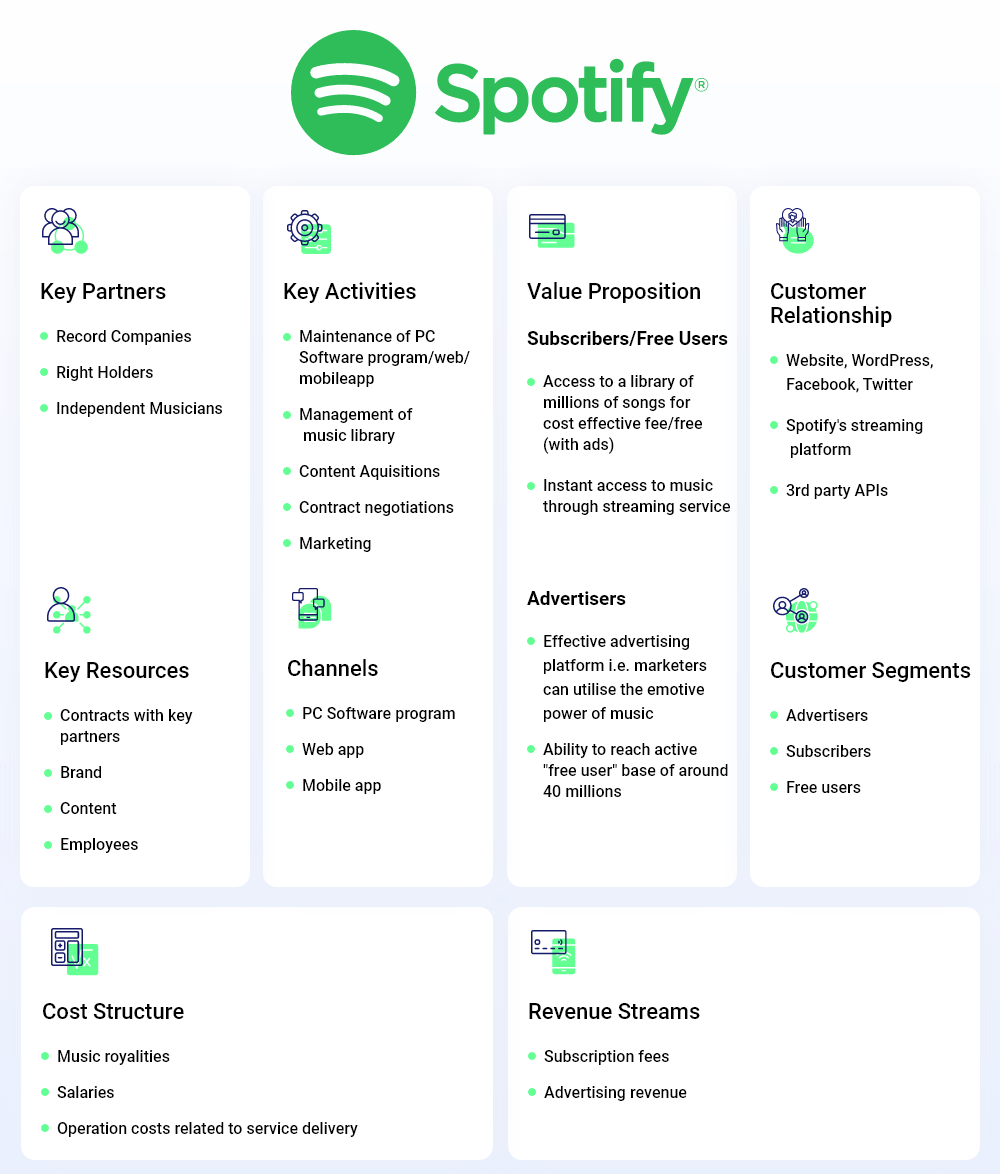
  8. The Business Model of Spotify
  9. Cost to Develop a Music Streaming App

Music Streaming App Market Overview

Music streaming is like the heart and soul of the U.S music industry. Its popularity is only surging by leaps and bounds day by day and the statistics coming are just astonishing. Here are the latest reports from top research companies showing the towering figures:

  • The music streaming market is projected to reach $10 billion in 2023.
  • User penetration is expected to hit 12.0% by 2025.
  • The average revenue per user is expected to reach US$28
  • In global comparison, the highest music revenue will be generated in the US in 2020 amounting to $6,000 million.
  • Spotify claims a 35% market share with 286 million monthly active Spotify users and 130 million premium subscribers.

Apple Music

Launched in 2015, apple music is an exclusive iPhone app with 70 million songs. With the tagline “Where music comes to life” it truly delivers on it! It has been so popular since, that it has positioned itself as a potential competitor to big names like Spotify, Google play music and Amazon music. Despite having a ton of curated playlists, several handcrafted music picked by musicians and tastemakers, it still lacks the simple sharing options like that of Spotify.

Tidal

Launched on October 24, 2014, Tidal is the only music streaming app which offers lossless audio streaming. The service acts as a bridge that unifies artists and fans. It offers the exact reproduction of original songs. This process aka lossless streaming if you are a premium subscriber. It consists of a collection of 60 million songs with a special focus on urban music. Despite Spotify and Youtube music leading the charts, tidal remains a strong player.

Pandora

There was a time when Pandora had a limited library, but recently its deals have bolstered its music selection. Being in a neck to neck competition with Spotify, it remains the most popular radio streaming service in the states.

SoundCloud

A single app for all indie song lovers across the world, Soundcloud is an exceedingly famous Android music streaming app. The service has the potential to avail around 150 million tracks. Second largest to that of the collective numbers of its competitors. Exclusive to indie music, it remains generic with features that of playlists and stations.

Spotify

Spotify is like a breath of fresh air when it comes to talking about music streaming apps. A huge library, Music discovery, Customized playlists, Smart algorithms; Spotify has it all. It is shareable on multiple platforms, and most of its models are free.

Types of Music Streaming Services

There are majorly three types of music streaming services: Radio, On-Demand Music Streaming (often called as music library), and Cloud Storage. Let’s understand their nature and attributes:

1. On-Demand Streaming Services

Apps like Spotify, Apple Music, and Tidal are the best example of on-demand music streaming. If you are looking to build one, you only have to create a server-based music library where you can upload millions of tracks and limit its accessibility to customers as per your terms and conditions. Like competitors generally bifurcate it to the Freemium model and Paid subscriptions.

2. Radio Stations

Unlike on-demand streaming apps, Radio Stations do not allow users to play songs on-demand. Rather, the service has a virtual DJ that picks and plays songs in order. Mostly the songs are tuned with your personal preferences. The best presenters of radio apps are Pandora, Shoutcast and iHeartRadio. Plus, radio station apps cannot play songs on-demand, not even in the blue moon. The reason being their licensing agreements. Further, these apps are relatively low-priced compared to their rivals like on-demand streaming services.

3. Cloud Storage

In cloud storage apps, you can give your users audio file hosting capabilities. Means, your users can use the app to upload their favorite music, stream audio and make a file transfer to other people. So, eventually, you’ll be a cloud storage provider to back-up songs. Popular cloud storage app market players allowing users to save their music catalog online are AudioBox, CloudPlayer, Google Play, and Groove Music.

How to Develop a Music App: Key Features

To create your own music streaming service you need to ponder upon the features that would increase accessibility, user stickiness, and convenience. Here we have created a draft of essential music app features (fit for basic music app development) plus an advanced set of features (perfect for anyone looking to monetize and compete with current music market players).

  • User Registration: A must-have feature enabling the user to create their own personalized virtual music room in the app. It’s good to make this process of sign-up/login fast through social logins like Facebook or Google. Other options like email address, mobile and password combinations are also a requisite.
  • My Profile: Once the user creates an account he/she should be able to set their music listening preferences, languages, edit their profile, manage subscription details, etc.
  • Discover Music: Allow your users to browse and search music of their choice by filters like song, album, movie, artist, lyrics, genre, mood, etc.
  • Browse Categories: Let your users search the best music by genres like Pop, Blues, Folk, Alternative, Oldies, Heavy metal, Jazz, classical, hip hop, electronic, Reggae and many more.
  • Voice Search: This feature enables your users to search for music by voice.
  • My Music: Users can maintain their own music catalog by downloading their favorite songs or tracks, creating playlists, following playlists and artists. The downloaded songs can be played offline.
  • Social Sharing: Through this sharing feature, users can share playlists with their friends through social media.
  • Offline Availability: Allow your users to play a song when they are offline or do not have an internet connection.
  • Personalization: This is an advance feature in which app learns about user choices and gives personalized suggestion as ‘Recommended For You’, lists ‘Recently Played’ music, ask for your mood and suggests mood-based tracks.
  • Radio Station: This feature allows user to fetch stations where they can find arrays of songs based on their current activities like parties, commute, morning, reading, and workout.
  • Purchase Subscription: Depending upon your business model you can provide freemium and premium or subscription (monthly/annually) modules to access unlimited songs.
  • Payment Gateway Integration: For buying subscriptions allow your users to make online payments through multiple payment modes like debit/credit cards, net banking, mwallets, UPI, etc.
  • Coupons/Offers: This feature is optional here users can apply coupons earned while making payments for subscriptions.
  • Updates and Notifications: To keep your users coming back you can send them notifications of new releases, music events, LIVE shows, etc.
  • Multilingual: Users can set languages of their own preference.
  • Help & Support: Users should be able to check the app’s privacy policy, terms of use, FAQs, and contact for online assistance.
  • Rating and Review: Upon users’ experience with your app you can request them to leave ratings and reviews to help others check the feedback and attract more downloads.

App Licensing

Music streaming app services cannot be run without licensing. As the owner of the app, you need to get a license of the app for using and running music content. Because for every stream of music you have to pay royalties to right holders. Else, it would be considered as copyrights violation. There are two types of copyrights in a song; one is owned by the songwriter/composer and the publishing company and other by the sound recording label.

  • To buy the Public Performance Rights in the USA you have to contact the American Society of Composers, Authors and Publishers (ASCAP) or you may also contact BMI or SESAC.
  • To buy the rights in the UK you can contact PPL PRS.

Technology Stack

Spotify being an ideal example for a music streaming app, let’s have a look at what technologies are used by the app.

How to Monetize a Music Streaming App

1. Advertisements

Ads play an essential role in the monetization process of any service. Ads generate spaces for triggering revenue generation. Ads in music apps can be categorized into two categories: Display Ads and In-Content Ad Streaming. Display ads are graphic which occupies the screen for a few seconds in between, before or after tracks. Whereas in content streaming is little clips of audio or video which play before or after the track. Generally, these ads can be played at intervals of 15 -20mins. This ad scheme of display and content streaming works well in the freemium model. The more the ads stream the more revenue is generated. For e.g.: YouTube Music add ads before playing the track. However, Spotify uses another type of ad. There’s Spotify Ad Studios for Artists. The service analyzes the genre of your music and shows it to fans of similar genres and artists.

2. Subscription

The subscription-based model is as simple as ordering a pizza with extra cheese, it doesn’t change the original concept of the pizza but simply exemplifies its taste. Likewise in music when users upgrade to a premium version, they get something extra, say features like unlimited music downloads or those extra goodies that were not available in the freemium version. For a sum of money, one can get extra benefits and better incentives. A lot of music streaming services offer monthly subscriptions to get access to unlimited music (e.g. Apple Music, Amazon Music, Pandora, etc.). Such a monetization strategy allows companies to get revenue regularly. It’s the most popular variant for music streaming apps since the music company has to pay for licenses regularly.

3. In-App Purchases

No revenue generation activity is complete without in-app purchases. It is the most bankable app monetization strategy. This gives the user a free will to choose what they want and only pay for that specific selection. Users generally confuse subscriptions with that of in-app purchases, but one has to realize that subscriptions come with the extra baggage of everything available in that price range. Whereas in-app purchases give them the option to handpick exclusive choices such as playlists, high-quality access, and better user interface and only pay for them. On the other hand, it is easy for the app company to earn through such offerings as individual purchasing yield more profits than that of bulk purchases.

4. Availability On Multiple Platforms

Higher app representation results in higher reachability. Your music streaming app should be present on every platform- be it mobile, smart TVs, PC, or other gaming consoles and speakers. When your music streaming app is visible on multiple platforms there is a high possibility that it will be preferred more as it has already been instilled in the memory of the viewer/users of that or many other platforms.

5. Freemium App

There is no denying that apps that offer free versions with less or equivalent access to premium services are preferred over the ones which do not follow this model. This does not exactly mean that the exclusive content isn’t protected but a glimpse of it is accessible to all. For e.g.: Spotify launched its app based on the freemium model but, it’s worth noting that it was ad-supported. This model attracts more people onto your platform. They may be freemium subscribers but they have greater chances of converting to potential paid ones.

The Business Model of Spotify

Next, let’s understand how the popular music app Spotify operates and earns money. Below designed is the business model canvas of Spotify.

The Total Cost Involved In Music Streaming App Development

The total cost to create a music streaming app solution depends on the following factors:

  • Market Investigation (App discovery)
  • App Prototype and Wireframing
  • UI/UX design
  • Minimum Viable Product (MVP)
  • Technical specifications
  • Development (No. of App Platforms)
  • Key Features Involved
  • QA and Testing
  • App Release and Deployment
  • Maintenance and support

Further, it also depends on the team size and geographic location of the app development team. As the hourly rates change country-wise. Read more : How to Make a Social Video App like TikTok?

A Ballpark Figure

While it is hard to estimate the total cost without knowing the detailed project scope but a rough estimate could be around USD 12,000- $20,000.

How Codiant Can Help You?

Codiant is a top on-demand app development company that holds an astute experience in developing apps of all types. We as a music streaming app Development Company have helped a couple of businesses develop music apps with hyper-personalization features and omnichannel experience. If you’re looking to develop a music app from scratch or looking for a ready to market app with your own customization and branding, Codiant can be your right technology partner. We provide pre-made music streaming app. Our white-label product “Music App” is fully customizable and can be reskinned to your brand design. Download the app now to view its basic functionalities.

How to Create a Workout and Personal Fitness Trainer App?

As a fitness app trainer or a Gym owner you know the power of Fitness App. It’s more than a mere app solution allowing you to track your client’s runs or workout activities. It’s a live wire and everyone’s new go-getter milestone, health benchmark and a Virtual Gym having a personal trainer. The tricky thing is that only a few personal trainers or Gym owners know how to create an ideal fitness workout and exercise app or a personal trainer app that easily helps them retain valuable users and create a consistent source of revenue for their business. If you’re looking to reach your target market, engage valuable users and stand out from competitors you’re in the right place.

In this blog, you’ll find the foolproof feature set, tools and technologies that must be integrated while workout and exercise fitness app development. By the end of the post, you will learn:

  1. Features That Optimizes Your Customer’s Experience
  2. Important Functionalities & Tools That Will Help You Reach Your Target Market
  3. Different Executive Models To Generate Revenue

This prototype of fitness app solution will help you generate more leads, engage new users and retain the existing users, but first let’s demystify types of fitness apps and analyze the current fitness apps market performance. Related: How Workout Apps Are Saving Big Bucks Of Fitness Enthusiasts? The fitness app market is divided into four different segment- some of which will often be combined in one app.

  1. Workout and Exercise Plans
  2. Personal Training App
  3. Activity Tracking App
  4. Diet and Nutrition App

The business model of all these fitness apps have a same goal- ‘Conversions’. That is achievable by delivering the best user experience to the person using the fitness app in the minimum amount of clicks. To do that you have to create what people want. But the truth is, people don’t know what they want until you show them in a most simple way. Now that people have accessed and have had exposure to different ways a basic fitness app can help them in maintaining their health and fitness regime, they will always look to find more diverse app features to fulfill their specific needs. Like in the past few years, mobile fitness was only limited until tracking. But today the definition of tracking is expanded from steps to diet and meal, exercises and even sleep. The facet of fitness, health goals and activity of people have changed and sped up after the COVID-19 Pandemic. Today, 41% of people are looking up to workout routines against 32% in 2019. Around 71% of people are tracking workouts, steps, miles, etc. as opposed to 66% in 2019.

Pic Credits: Business of Apps People have got multi-tasky than ever and they want an assorted number of options in one fitness app to achieve their fitness goal. Let’s look at these foolproof features to create a market-leading fitness app solution that increases user engagement and retention.
Features to optimize user onboarding experience

Social Signup/Logins

Every user tends to reach the end goal faster. They want to get started ASAP. So, make the account creation process quick. Allow your users to log in through social accounts, mobile numbers and email id. Whatever they prefer simple and easy to access.

Interactive Tutorial

Users don’t seem to use your app regularly or at all. So, help your users get started with a very quick interactive tutorial. This will help them know how the core features of how your app work.

In-App Messaging

In-app messaging are the notifications or pop-up that appear when a user is active in the app. Do not confuse push notifications with in-app messaging. They are the native part of the app experience. They are intelligent and an immediate result of the user’s in-app behavior. This highly relevant in-app messages will help you gently nudge your user to take action. Say for example, if your user has just completed a workout- it may be the best time to propose your user with a complimentary offer. Like, do you want to take your fitness goal to the next level? Upgrade now. This type of personalized alerts increases app session time and encourages conversions.

Push Notifications

Push notifications are a good way to bring users back to your application and improve engagement by up to 88%. These personalized and timely notifications can remind them of the purpose for which they have installed the app. Some of the examples of encouraging notifications for your fitness app can be:

  • Motivating users to stick to their exercise regimen
  • Reminding users of the workout time
  • Congratulating clients on their progress
  • Sending them motivating quotes and inspiring to start again
  • Encouraging them to book online classes

Notifications at the right intervals can not only help your user stay on track and achieve their set goal but also help you strengthen your relationship with customer for a long time.

Blogging

Creating fitness-focused content and sharing them on multiple channels is a great way to engage existing clients, find new users, and establish a brand presence. Popular fitness apps like MyFitness Pal, Google Fit and many others have found many innovative topics to keep users informed and engaged.

Important functionalities that will help you reach your target market

Live Video Tutorial

Users who are not willing to visit the gym, are the ones who look up to you. Expect from your fitness app to help them resume their workout sessions or help them start from scratch. A great way to assist them is to post pre-recorded workout videos. To add greater visibility and convenience you can take LIVE virtual classes and train your users one-to-one.

Activity Monitoring Tool

Your app should be ergonomically designed such that it helps patients monitor and track their daily physical activities and motivate them to be more active.

Results and Progress Tracking

Seeing results after an exhaustive set of workout is no less than a miracle cure a fitness user have all been waiting for. The fitness app must allow your user to track their daily steps, no. of calories burnt, heart rates and all other physical efforts made by him/her. This encourages user to continue the next day with the same spirit.

Payment Gateway Integration

Your app should always support multiple modes of payment like the flexibility to pay through credit cards, debit cards, net banking, UPI or mWallets. Having all these options in place will never let go your user out of fuss.

Diet and Meal Planner

There are thousands of fitness apps registered on the app store and play store. But how many are well-known? Giving an added value proposition tailored for users will help you attract right traffic in abundance. A personal trainer and workout fitness app that combines a healthy meal planner to lose weight or gain weight can help you drive a massive amount of user traffic.

Marketing and Promotional Tools:

Besides in-app messaging and push notifications, other tools that help you in reaching a large user base and target market are:

  • Paid User Acquisition: This paid user acquisition technique through target advertising and app install campaigns will help you drive installs and engagement. You can also re-target your existing users to prompt them to upgrade their plans and take post-install actions like purchasing subscriptions.
  • Social Media Marketing: Tactical use of social platforms like Facebook, Instagram, Twitter can help you connect and engage with your huge base of audience. You can create an online fitness community and establish your brand presence, increase sales and drive app traffic.
  • Email Marketing: Email marketing strategy can do wonders for fitness member retention and new user acquisition. For every $1 spent you earn $38 to $44 in return. Furthermore, a customer’s first preference is email for looking up to marketing messages.

Different executive models to generate revenue

There are several different ways and marketing channels through which fitness app generates income. Like MyFitnessPal is a free app that earns money through premium memberships and ad revenue. Google Fit drives its major revenue from global advertising. Here are other different types of app revenue models you can utilize to maximize your income:

  • Ad-based model
  • In-app purchases
  • Freemium model
  • Sponsors and partnerships
  • Paid downloads
  • Subscription Model

You can’t ignore this!

Whether you run a gym, or are a personal trainer or offer specialized fitness classes like yoga, or meditation your business success rests on your ability to get clients, keep them engaged and coming back. No platform does this well than a fitness app. So, be wise when you hire a Fitness App Development Company. Check if all your development needs, customer engagement tools and functionalities are integrated to compliment the app and make it user-sticky.

How Retail Banks Can Innovate in the COVID Times

The COVID-19 pandemic is taking an awful toll on human lives and their livelihood; affecting millions of people all over the world. The lockdown imposed in many countries to contain the spread of the virus has ignited a serious economic disruption. Consequently, affecting almost every industry where Banking and Finance is no exception. Capital, profit-and-loss, and liquidity positions have been hit very hard. The flaws in banking models have started floating, leaving their reliability on doubt. To navigate in this crisis and ensure long-term sustainability, digital adoption in the mobile banking industry has a key role to play. In this post, we will discuss how retail banks can leverage digital technologies and innovate to respond to the coronavirus pandemic.

Meet the Low-Hanging Ways to Bring Innovation amid COVID Times

1. Build Omni Channel Experiences to Keep Your Customers Engaged

Are you still operating in an old school way? Only having a banking website will not help you survive especially in the market where customers are bombarded by multiple bank calls, messages and Ad traps to become their customers. You will have to grip mobile banking app development, banking website and other customer journey mapping tools like messaging apps to engage your customers beyond the traditional financial channels. “Mobile banking has become the new norm- says a PwC report”, be ready.

Image Source: Bank of America

2. Become Proactive On All Your Digital Channels

Yes, the customers are restraining to visit banks and want to stay in-house to maintain their banking operations. In these challenging times, those banks will win who keep their services a step ahead. The banks that proactively update their customers with any help they need through their digital channels (such as banking mobile app, banking websites, mobile banking) will be the market leader.

Image Source: American Express

3. Integrate Your Banking Mobile App With A Chatbot

The customer is God! And responding to customer queries in real-time should be your religion. Thankfully, we have got Chatbots to worship well. Chatbot solutions allow you to enhance the first response time and help you to provide online customer support seamlessly. Advanced technologies like Artificial Intelligence and Machine Learning trains bot as per your customer ethics and makes the conversation look natural like real humans. Thus, helping you in satisfying customers and nurturing leads- that directly improves your key productivity metrics.

Looking for Chatbot App Development? Meet Tetebot- AI Powered Chatbot to Superpower Your Virtual Assistance.

Click Here

4. Build Empathy by Offering Your Customers COVID Relief Services and Schemes

Until now, banks heavily built varied strategies into consideration with market trends, fluctuations, demands, etc. around different sectors. But in this time of crisis, banks need to curb the needs and agonies of customers by launching schemes and take steps like:

  • Offering emergency funds, credit facilities, loans to SMBs as well as SMEs at discounted rates to slowly recover from the loss.
  • Give some relaxations in EMIs, waive off minimum balance charges, and stay lenient in KYC norms.
  • Increase the limits for online transactions.
  • Launch products and schemes like health insurance, family/ group health insurance, easy personal loans, and subsidies on education loans and so on depending upon your customers and beneficiaries.

Image Source: Barclays

5. Educate And Engage Customers Through Banking Communities

Increase your community outreach by educating your audience about the project you undertook and the one that falls under the COVID crisis. This may include educating customers about government measures, helping people with personal credit support.

You Cannot Ignore…

Mobile banking app solutions or Digital banking is the bedrock for retail banks to navigate in this crisis and keep themselves as well as the customers safe and powerful. If you are looking for a banking and finance app development company or already have a digital platform and are looking to overhaul it with new features, contact our business development executives to get started quickly! We are available for you round the clock with personalized recommendations and a free project estimate.

Reimagining the Transportation Industry for the Next Normal : Taxi App Market Post COVID-19

The COVID-19 pandemic has radically changed the way companies operate in almost every sector, where the transport industry is the biggest victim affected by the pandemic. From taxi drivers to airlines, the overall demand has tumbled by 11% in March 2020.

It is clear, the coronavirus has affected the bottom lines and demanded an urgent need for transport companies to reconfigure their operations and navigate to the next normal with full resilience.

Though the report says post-COVID-19, the global ride-sharing market size is projected to grow at a Y-O-Y growth of 55.6% from 2020 to 2021, to reach USD 117.34 billion by 2021 from USD 75.39 billion in 2020 yet the projection for 2021 is estimated to be down by 2% as compared to pre-COVID-19 estimation.
covid-19-impact-on-ride-sharing-market
Source: Markets and Markets

The transport and automation companies have to rethink the growth drivers to disrupt the taxi-hailing and ride-sharing market.

Here, we attempt to cover the restructuring of the taxi app industry with the significant changes that will matter to companies to build and scale innovative methods and catalyze the reinvention of company during as well as post pandemic.

To better understand the concept, let’s start by analyzing how other leading automobile and taxi app companies have responded to the transportation challenges posed by Covid-19.

Leaps Taken By Key Taxi App Market Players in The Face of Crisis

Didi Chuxing

  • Built disinfection stations by installing a plastic shield between the front and rare seats of the car in China to isolate passengers from the driver.
  • Invested about USD 14.3 million in this safety measure that involves installing protective plastic sheets.

Uber

  • Announced a series of new safety features and key policies across their product offerings like photo-based verification of drivers every time they log in. The new camera feature in the Uber taxi app for Driver does not allow the photo to be clicked unless the camera detects the mask.
  • The other remarkable feature enables the rider or the driver to cancel the ride if either of them is not wearing the mask.
  • Uber has suspended its ride-pooling app UberPool to extend physical distancing.
  • Drivers will have to sanitize their cars after each ride and Uber will provide them free health and safety supplies.
  • Developed a new ‘Work Hub’ app to help drivers find substitute jobs.

Grab

  • Temporarily suspended GrabShare and GrabBike to encourage safe, social-distancing practices.
  • The touchless online payment option in the taxi app solution is helping customers to go cashless with GrabPay.
  • Introduced a ride cover policy with ‘Chubb’ to include coverage for Covid-19.
  • Subsidized masks for drivers on GrabBenefits.
  • Financial Assistance to affected drivers while their account is on hold.

Lyft

These were the steps taken by leading taxi-hailing companies to address COVID-19.

  • Distributed cleaning supplies like hand sanitizer and face masks to drivers for free.
  • Activated more than 500 partners through LyftUp to expand transportation access and avail free rides to those in urgent need.
  • Disinfects high contact surfaces at depots periodically.

Ola

  • Made mask compulsory and sanitization before and after ride for customers boarding the cab.
  • Limited only two passengers per ride.
  • Encouraged to make cashless payments to avoid contacts.
  • Gave 500 vehicles to the government for Doctors’ commutation and COVID-19 related activities.

taxi-cta

Reinvent Through Smart Mobility Trends in Transportation

  • End To End Digitalization Through Taxi App Development SolutionThe lineup of touchless features in a taxi app solution ranging from photo-based (with mask) profile verification of drivers to contactless payments and SOS buttons to inform if they have come in interaction with COVID rider or driver, etc. are helping in improving the responsiveness and speed to market.
  • Mobility As A Service (MaaS)Mobility As A Service (MaaS) and Transportation Systems Management and Operations (TSMO) may leverage the benefits and functionally integrate the features provided by smart connected communities that facilitates extensive real-time data sharing and P2P communications, and contextual decision making through innovative technologies.
  • Increased Usage of Artificial Intelligence (AI) and Deep Learning in Transportation AppsThe impact of Covid-19 has triggered a rise in AI applications for addressing the changing customer needs and preferences on the face of safety and hygiene. Here are the areas where AI will be used to battle pandemic effects.
    1. Corporate decision making, planning, and management
    2. Prediction and traffic/incidents detection models
    3. Connected and autonomous vehicles
    4. Temperature sensors for regulating the use of public transport
    5. Optimization of operational efficiency during social distancing

Each of these areas will help in mitigating increased exposure to risk for minimizing human contact, optimizing operational efficiency during physical distancing by predicting the demand and supply of service. It can also be used to check the human temperatures before they step in to the use of public transport.

thermal-scan
Source: Govtech

Before you go…

Is your transport company’s crisis-response efforts getting deployed in full motion? OR Are you dealing with acute slowdown and pullback in operations and battling to cope-up with the crisis with the help of mobility solutions? Codiant can help you in resolving issues at every business touchpoint with full scale, pace and depth of action needed with its advanced taxi app development solution forged with innovative technologies and future-proof features.

How Much Does It Cost To Develop an Online Dating App?

Long gone are the times when dating a person was a taboo. With increasing reliance and dependability on smartphones, apps and other technological advancements, people have shifted their lifestyle and the way of thinking.

The Online dating app is a cult of the same lifestyle shift, helping millennials to mid-age persons to newly single find suitable match for having a short-term romance or a long-term relationship.

online-dating-app-codiant

In fact, online dating app development companies have kept it high-key by providing a pool of choice when it comes to navigating a dating app.

As we all know, the dating app space was hugely dominated by the behemoth ‘Tinder’, which instilled the habit of swinging right (or left) to find the partner. But let’s agree romance is a bit more complicated and it’s not one-size-fits-all. So, basically Tinder is a bit old school and our filters quite specific.

Well, at Codiant we love to construct witty, unique and exclusive dating apps that pluck avant-garde features and spices up a mundane concept to a fresh demanding app product.

In this blog post, we will discuss how the definition of a basic dating app can be revived with forward-looking and innovative features. At the end of the post, we will also help you to get a rough ballpark figure or the estimated cost to develop a dating app.

Related reading : Types of Dating App Business Models

Key Features of an On-demand Dating App Development

1. User App

    • Easy Onboarding : Daters can register in the app through email/ phone no/social login and password.
    • Profile Verification : This is the most crucial feature of the app. Reliability is a primary key in dating apps. Fake profiles or spammers can disrepute your app. Users should be able to access the app only after their account verification is done via contact number or email ID.
    • Upload Picture : Users should be able to upload their profile picture by picking one the gallery or from a live camera. You can also restrict users to upload the display picture only from the camera to regulate authenticity.
    • Profile Management : Users should be able to manage their profiles by adding fields like bio, hobbies, interests, photos, occupation, location, etc.
    • Settings : Users should be able to perform actions like change passwords, contact information and deactivate or delete profiles. Settings fields can be customized as per your requirements.
    • Profile Discovery : Users should be able to search for potential daters or say matches:
      1. By browsing the list of available matches nearby them (through Geofencing), location-specific or based on compatibility.
      2. From the search bar by name, profile ID, tags or keywords, etc.
    • Profile Details : Once the user likes a profile he/she should be able to click a user and check:
      1. User’s Profile Picture
      2. Location
      3. Send Message Request
      4. Send Interest
      5. Like The Picture
    • Set Privacy and Visibility : The user should be given controls to keep their profile public or private when they are dating a person.
    • Likes and Visitors : If your dating app allows the user to like other user’s profiles then the user should be able to get notifications of persons’ details who have liked the profile. And same if in case the person has visited the user’s profile he/she should be alerted with visitors’ details. However, this feature is optional and depends upon your personal reasoning.
    • Refer, Share and Earn : To increase the app user base, keeping this feature is only profitable for you. Allow app users to invite friends, refer your app or share through channels like WhatsApp, Instagram, Facebook, SMS and mail, and in return, you can give them in-app points to be used to access member profiles.
    • Send Invitation : The most happening feature of the app that calls for user’s attention. Nevertheless, this feature can be used in following ways out:
      1. Users can send requests for message : Once the receiver accepts the message invitation they can do in-app chat without having to swap phone numbers.
      2. Users can send people invite of friendship or for dating : You can keep it interesting by offering users two options i.e. be a friend before dating or directly send a request for dating.
      3. Send invite for parties or events : Many dating apps provide this feature where daters can hang out for parties, or for events like sports, tours, etc. to take friendships to another level.
    • Accept/Decline Invitation : The user can accept or decline the invitation or interest sent for message/friendship/date/event.
    • In-app Chat : Users can send offline messages or chat in real-time with emojis’ and rich media. They should also be able to send their current location. (Customizable)
    • Mark Favorites : Users should be able to mark favorite profiles that be saved as their potential interests.
    • Mark Spam/Report User : If a user finds other user’s profile as inappropriate, violating terms of use or abusive, he/she can mark it as spam and report it to the admin. The admin in turn can take necessary actions.
    • In-App Subscription : Users can purchase premium features on a monthly or yearly basis to increase the number of people they can access to view profiles.
    • Make Payment : Multiple payment gateways allow users to make seamless payments through cards, net banking, or mWallet integration in the app.

    2. Admin Panel

    • Dashboard : Admin should be able to see the total number of users, the total earnings, and total number of active daters, etc.
    • Profile Verification : Admin can check the user’s profile and authenticate the profile by verification process via email, phone and social identity.
    • Manage Subscriptions : Admin can manage customer’s in-app subscription plans.
    • Manage Membership Packages : Admin can manage membership requests (extend/terminate).
    • Revenue Tracking : Admin can track total revenue and earnings.
    • Multi-language Support and Translations : Users can keep the app multi-lingual to extend its geographical reach.
    • Push Notifications : Admin can send pop-up messages, notifications and alerts to the users if they find matches, or receive messages.

    dating-app-competitors

    Technology Stack Required To Develop A Dating App

    Mobile SDK : Android and iOS

    Frontend iOS Development : Swift, React Native

    Frontend Android development : Android studio (Java), React Native

    Database : PostgreSQL, MongoDB, Redis

    Cloud Storage : Amazon S3

    Web Server : Nginx

    Real time Analytics : Hadoop, Spark, BigData, Cisco, IBM

    General Utilities : Twilio, Elastic Search, Google Maps, Google Analytics

    Payment Gateway : Stripe, PayPal

    Streaming Video : WebRTC

    Related reading : How We Created A Social Online Dating App

    How Much Does It Cost To Develop An On-Demand Dating App?

    The total cost to develop a dating app depends upon the following factors:

    • No. of Platform (Android and iOS)
    • Front And Back-End Development
    • UI/UX Development
    • Website Connectivity
    • Third-Party APIs Integration
    • App Development Company’s Location
    • App Complexity and No. Of Hours Spent

    Moreover, the app development cost depends upon the advanced features you integrate into the dating app.

    The Ballpark Figure

    A basic version of the dating app costs you around $18000-$20000 (depends upon the features), a complex app with advanced functionalities and features can go up based on the functionalities you opt to integrate.

How to Take Virtual Treatment through Telemedicine under Quarantine?

COVID-19 has been taking a toll on everyone’s lives of late. The situation is such, a climatic cold or flu, muscle aches, headaches or slight other symptoms breaking down the body due to seasonal changes is giving birth to doubts and paranoia “Am I COVID positive?”.

As we see people suffering from pandemic terribly in the hospitals and the fumes of novel virus mushrooming from person to person exponentially, visiting the hospital or emergency room is the last option you would opt for.

So, how would you receive the treatment, meet the healthcare needs and get the symptoms checked without even visiting the Doctor?

The solution is “On-demand doctor or telemedicine app or virtual doctor appointments”.

teledoctolo

By Remote Patient Monitoring or by taking online telemedicine consultation through specialists you can not only save yourself from getting exposed to virus but also save your time and money by avoiding traveling.

Plus, in these challenging and stressful times, the convenience, flexibility, and real-time care through telemedicine app solutions will give you full peace of mind and satisfaction.

But how do you take that online virtual consultation? Set-up the very first appointment with Doctor? Here in this post, we will walk you through the step-by-step process to receive virtual treatment, the most common queries and top doctor-on-demand and telemedicine apps to get online treatment.

How to Take Online Doctor Consultation?

  • Sign-in to create an online account on a telemedicine app or website.
  • Fill in the basic details (like name, age, gender, contact details), health insurance details (if any), past medical history and other mandatory questions (like allergies) while creating a profile.
  • Mention your reason for a visit, add a note.
  • Select your Doctor/ Specialty.
  • Choose an available time slot and schedule an online appointment day and time.
  • Book an appointment.
  • Pay online through credit or debit cards.

What Devices Are Supported While Taking A Telemedicine Appointment?

Anyone having a smartphone, tablet, or laptop can take virtual online doctor appointments. You can also take an online appointment if you want to visit a doctor in the hospital.

What Is the Average or Minimum Internet Speed Required To Consult Doctors Online?

While online virtual consultation requires high-definition video calling using video chat software, so at least 10mbps internet speed should be available.

How to test your speed online?

Check your internet speed online in 30 seconds around the world using this interactive broadband speed test by Ookla. Click here to check the net speed.

telemedicine

What Are The Best Telemedicine Apps On-Demand Doctor Apps To Receive Online Virtual Consultation In COVID-19?

Here is a roundup of the finest telemedicine app solutions or doctor on-demand app. Developed by best telemedicine app development companies, these apps and online web portal are easy-to-use as they have a simple and intuitive interface, meets the urgent needs of patients seeking online care with much-needed attention to their allergies and past medical history.

1. Doctor On Demand

Doctor-On-Demand

No matter if you don’t have health insurance, the doctor on-demand app will provide you full treatment.

With 24/7 availability of licensed physicians, psychiatrists, psychologists, and master-level therapists, the app covers your A-Z needs ranging from urgent care to chronic care and behavioral health to preventive health.

Before treating you online through an in-app video call the Doctor will ask your symptoms, medical history, perform an exam through a couple of questions and recommend an online prescription.

Consultation Fee:

  • Medical doctor : $75 for a 15-minute consultation
  • Psychology : $129 for a 25-minute consultation; $179 for a 50-minute consultation
  • Psychiatry : $299 for initial 45-minute consultation; $129 for 15-minute follow-up

2. Teladoc

Teladoc

Teladoc Health is a no.1 telemedicine app that acted as a hero in the healthcare delivery system during and ongoing COVID-19 crisis in the US. The number of specialties provided by the app has been notably increasing.

Hailed for providing “everyday care”, chronic care and cure to normal healthcare issues to an urgent care like cold, flu, allergies, respiratory infections, and rashes, the app is an elixir to patients looking for regular follow-ups from physicians, dermatologists, and psychiatrist.

Compared to other apps, TelaDoc is affordable and covers anyone without insurance in the TelaDoc network.

  • Everyday care : starts at $55
  • Dermatology : starts at $85
  • Mental health : starts at $90

3. MDLIVE

MDLIVE

The anatomy of MDLIVE is urgent care, behavioral health and dermatology. This on-demand doctor app covers urgent medical issues like common cold, flu, sore throat, cough, and fever. The telemedicine app is also highly recommended for behavioral health concerns.

The other main takeaway of MDLIVE is refunds initiated if in case you cancel the appointment 24 hours before the appointment.

Consultation Fee:

  • Urgent care : $75 or less
  • Psychiatry : $259 for initial consults; $99 for follow-up visits
  • Dermatology : $69

4. PlushCare

plushcare

Effective for non-emergency conditions and regular follow-ups, PlushCare allows you to take online doctor appointments by choosing an appointment time available in the slot, with insurance information and then you can get easily connected with the Doctor on a secured video platform. This app is integrated with the patient’s insurer, pharmacy and labs to streamline care and make it effortless.

Consultation Fee :

Appointment fee : $99 (£76) (Higher than other competitors)

5. Amwell

amwell

Get the most out of telehealth with Amwell. From urgent care to acute care, Amwell is an urgent care telehealth platform that provides patients with online access to doctors 24/7, from any computer or mobile device without a long waiting time at relatively inexpensive prices for those not having a healthcare insurance coverage.

Consultation Fee :

Appointment fee : $79 or less

Urgent care : up to $200

End Notes

As the telemedicine app solutions take a bigger stadium amid the coronavirus pandemic, it is important for people seeking care online to have a manual about virtual doctor visits or websites and telemedicine apps that could best fit their needs.

Many mobile app development companies provide readymade doctor-on-demand solutions to local hospitals, healthcare organizations, and health insurance providers to offer their remote virtual care services to patients around the world.

Codiant is one such telemedicine app development company that has developed healthcare apps and telemedicine software for leading healthcare organizations.

TeleDocto is a product of Codiant for health centers looking to offer convenient virtual care through secured video consultations to patients via mobile or computer devices.

Supercharged with capabilities like online appointment booking & scheduling, video calling & video conferencing, screen sharing, document sharing, multiple modes of payment transfer and much more; this readymade white-label solution optimizes clinical workflows, reduces operating costs, and advance the quality of care.

Top 10 On-demand Home Service Apps to Get Inspired From

Visualize a scenario. You wake up in the morning, have your breakfast, get ready for the office, and leave the unorganized home and stinky dishes behind. Surprisingly, when you came back at night, you found a tidy, neat-n-clean home, well-organized cupboards, crockeries, everything at their place. What your reaction is going to be?

Had we asked this question a few years back, then you must have thought we’d have gone crazy or there might be a magician who did all these household chores. But now it has become quite an evident practice – owing to the popularity and usage of On-demand Home Service App Solutions.

In a duration of a few years, on-demand home service app development has evolved a lot. Ever since these apps are springing up with such a variety of services that we have never imagined having. The many different types of on-demand home service apps discussed below deliver instant services, establish cordial and trustworthy relations with their clients to deliver a pack of daily chore services in no time.

Rethink your ambition of developing a super on-demand home services app by inspiring from the inroads of these top online home service apps ruling the market.

on-demand-home-services-app-codiant
These apps are foraying into small to metro towns and maintaining healthy cash by their strong and viable business model.

Though these apps provide a lot in common there stand some exceptional features that capture a unique value chain. Let’s check them out.

Top 10 On-demand Home Service Apps

  1. Thumbtack
  2. TaskRabbit
  3. Urban Company (UrbanClap)
  4. HouseJoy
  5. Zimmber
  6. Mr.Right
  7. Family Handyman
  8. Timesaverz
  9. Good Guys Home Service
  10. Handyman

Thumbtack

Available – Android | iOS

thumbtack
An interesting business model brought up by Thumbtack. You just say what you want and it will be done. With over 1000 service professionals registered in the app, Thumbtack allows users to find the right people for all their projects and get a great service done.

  • User selects the service they need
  • Checks list of available professionals
  • See cost estimates and detailed business information
  • Compare prices, read reviews and book service professionals

Thumbtack has covered an assortment of home services that are poised to make a difference from other competitors. Apart from other conventional list of services, Thumbtack’s on-demand home segment unique services include:

  • Photography
  • Design and web
  • Pets’ services
  • On-demand tutors and Lessons
  • Crafts
  • Estate planning
  • Personal coaches and consultants
  • Wedding planning
  • Event management
  • Home conditioning

Wasn’t it fresh in ideas?

TaskRabbit

Available – Android | iOS

taskrabbit
Crush your to-do list – the mantra of TaskRabbit. Allowing you to hire a trusted professional when you want at the price you can afford. This value proposition of flexibility, reliability and affordability makes TaskRabbit a winner in the gig economy.This American online and mobile marketplace app is now 12 years old and serves around 47 US cities, 4 UK cities and 1 Canadian city.

Urban Company (UrbanClap)

Available – Android | iOS

urbanclap
The leading online marketplace app in India, UAE, Sydney and Singapore, UrbanClap is the largest home service provider that connects customers to service professionals to meet their daily needs. An inspiration for many there stood a decent reason why this app attracted a galaxy of investors to bet their money on it.

With hallmarks like consumer-focused, data-oriented and rapid execution, the founder of this app had the balls and a clear vision to build this company. Varun Khaitan, the founder of UrbanClap was the first in India to transform service-professionals into micro-entrepreneurs and run their own business.

HouseJoy

housejoy

HouseJoy a home maintenance service provider focuses on simplifying everyday living by its home-centric services. Be it home construction or renovation, interior designing, painting or home cleaning. The app has got you covered. Apart from this, HouseJoy also delivers other home-services its peer offers.

Quick and easy booking, on-time arrival and delivery, certified, background verified experts and guaranteed quality of services bring this app on top of the charts.

Zimmber

Available- Android

zimmber
Zimmber a home service booking app, acquired by Quikr has changed the way people do their daily household chores. The app hires expert professionals to provide services in areas like Home cleaning Electrical, Plumbing, AC repairing and maintaining, Carpentry, Driver on Demand, Laundry, Pest Control, Salon at Home, Car Spa, electrical repair, PC & Laptop Repair, and House Painting services, as well as complete home refresh packages.

Mr.Right

Available – Android | iOS

mr-right
A big brand in the hyperlocal space, Mr. Right’s website and mobile apps offer an easy to use platform that provides a variety of hard-to-find home services such as plumbing, carpentry, electrical, cleaning, pest control, etc. The app provides 300+ home services from reliable and verified professionals, with upfront pricing, and hassle-free payment options.

home-services-cta

Family Handyman

Available – Android | iOS

DIY- Yet another USP introduced by Family Handyman. The app provides professional secrets, ideas and tips to do the household chores like pest control, woodworking, cleaning, painting, washing, repairing and much more smartly.

Timesaverz

Available – Android

timsaverz
Timesaverz marks its position in the top ten list with its on-time guaranteed service within 2 hours. Not limited to this, the app provides referral programs, dedicated customer care, quality products and equipment to add feathers in its cap.

Good Guys Home Service

Available – Android | iOS

good-guys-home-services
The new app in the town of Indiana and Florida- Good Guys Home Services has its own promising sets of features luring customers of the village, Florida and Indianapolis, Indiana. Here are the takeaways:

  • Technicians with over 5 years’ experience in the field
  • Flat Rate Pricing (No Hidden Fees)
  • Warranty on all work completed
  • Goods Guys satisfaction guarantee
  • A commitment to match you with the same technician every time in the future

Handyman

handyman
The way Handyman has evolved over the years reflects the evolution of the on-demand market. The company standardizes its marketing strategy by providing state-of-the-art home-oriented services like moving homes, on-demand interiors, construction, counselors, etc.

Growth Market Analysis of On-demand Home Services App

The demand for home service apps is elevating swiftly as we are engaged in our hectic daily lifestyle, where every second person seeks some assistance to manage their household activities effortlessly. According to latest reports by Statista, the global revenue generated by on-demand home service apps in 2014 was just USD 97.7 billion. However, in 2020, the global revenue figure spiked to USD 581.9 billion and is estimated to touch a whopping figure of USD 935.2 billion by 2023.

mobile-app-revenues

All these apps are gaining traction rapidly and without a doubt, any of the on-demand home service apps could become as big as Uber if developed on the maps of value, competitive prices, security checks and steadfast services.

We hope this brief detail about the top 10 on-demand home service apps available in the market, helps you to understand what unique all these service providers are serving and give you a roadmap to develop your own value proposition

Are You Thinking To Evolve In On-Demand Home Service Market?

Codiant can help you take a new avatar in the online home service market with its expertise in developing similar apps with their own distinctiveness.

Over time Codiant has helped hundreds of on-demand app-based companies digitally transform their businesses into a better position with unique selling points. Our team of mobile app developers has core expertise in building features that aligns with customers’ digital needs and behaviors to quickly gain their loyalty and trust.

Related reading: How On-Demand Home Service App Can Be an Absolute Channel for Raising Money?

User Experience Design Process

“If I had only one hour to solve a problem, I would spend up to two-third of that hour in attempting to define what the problem is.”- Matthew WakemanNow more than ever, Customer Experience has become a deeply submerged DNA of any design-driven product.Today, mobile app development companies capturing User Experience Design by underscoring person’s behaviors, attitudes and emotions about using a particular product, service or interface are better prepared to weather the storm than others failing to reflect the depth.From that point on, software companies must aim to apply design thinking to create a convenient product for end-users. A product that is user-centered, generates curiosity, spills out engagement and infuses obsession.At Codiant, we help brands, companies and organizations by designing experiences that:

  • Provides usability, accessibility, and pleasure
  • Unlocks customer’s perception, behavior and preferences
  • Intersects clients’ business values, ethics and standards

Here is our design journey of six stages to create an immersive UI/UX Design at Codiant:

What is UX?

In simpler terms, UX is how people feel when they interact with your product or service. Here product can be in the form of mobile application or website.

You may add a plethora of features and functionalities to your website or mobile app, but the key to user stickiness lies on a single factor: How your users feel about it? Does the product provide a value to your client? Is it simple to use? Is it enjoyable?

Test a mobile app you recently got developed on any of your user. Feel the sentiments it develops. If all above checkpoints marks an uptick, trust us the UX designer has hit the right notes.

To label the process of User Experience Design Practices exercised before designing the product attempt to answer these 3 questions:

  1. Define the Why : Why the user needs the product? What motivates the user to use the application? Ponder upon the needs that drives the users towards the app product.
  2. Analyze the What : How can the app or web product help? Think about the functionalities, features that can solve the user’s needs, problems, and meet the necessity. Eliminate the features that doesn’t add value in enhancing experience. This way your product will answer the ‘Why’.
  3. Work on How : Now as you get closer to the user’s needs, motivations and requirements; start working upon the product interaction. Think about the user’s journey to your product, like how the user will approach the different stages of the app. Make the trip intuitive, engaging and pleasurable right from the user’s onboarding to sign out.

Related read : Why Discovery Phase Is An Important Stage In Software Development?

Why does UX matter? The Importance of UX

“People ignore design that ignores people.” – Frank Chimero, Designer

Any phase of the website, mobile app or a software product that fails to consider the user’s needs is doom to fail in the real market.

No matter, how much innovational and problem-solving the project concept is. If it doesn’t tap the user’s pain points, meet the expectations, goals and challenges; the product is lifeless.

By all means, a big part of the UX design process is getting to know your end users.

Great UX defines how effortlessly and intuitively the interaction happens. Not only how beautiful the app looks. A great UX enhances the value proposition and benefits of the product without having to search or delve deep in the functionalities of the product. Its unique selling points are just a tap away.

UX is simple. UX is usable. UX is intuitive. UX is accessible.

For any product, web, app or software if UX is great, it will nurture customer loyalty and trust. Establish your brand and enhance your relationships with customers. Making your product stand out and easily approachable.

I log in to Amazon, (one of the best eCommerce app development approaches visited so far) and I meet with a carousel of USPs and clever bundles of product recommendations, as they anticipate my needs, search patterns and behaviors.

Delightfully, I am obsessed. I select a product and in a blink of an eye I am rolled out to checkout process. Without any high learning curve, I get a smoother checkout in one click ordering. Extra marks to how they bring me back to shop more related products.

The site is designed with a personality of a human. It’s comfortable, convenient and the marketing doesn’t feels like.

Similar, is the working of Groceeri- An on-demand shopping app platform developed by us lately. Read its UX case study here. Not over-promising but you will enjoy reading the process.

What Is Usability?

Usability- meaning ‘ease of use’. It is a quality attribute that determines how easy and pleasant the user experience is. Usability can be defined by five quality modules:

  1. Learnability : How quickly does a user trips the app and finishes the purpose of visiting as soon as they land on the app. Without having visited similar products or services before, if the user is able to accomplish the goal without any high learning curve, means your app made a right cut.
  2. Efficiency : Once users have learned the design, how quickly can they perform tasks, how much time will it take an average user to perform.
  3. Memorability : When users return to the design after a certain period of not using it, how easily can they navigate the design? Can they perform additional operations other than the one last performed?
  4. Satisfaction : How pleasant is it to use the design? Is the experience satisfying? Would the user like to revisit the site again?
  5. Errors : While navigating the app product how many errors does a user make? How severe are the errors? Are they able to recover from it? Does the errors impacts the user’s mood and takes away the interest?

Why Does Usability Matter? How To Improve It?

Usability is directly proportional to user engagement. And inversely proportional to users’ bounce rate.

If an app is usable, easily meets user’s needs and goals, people stay! And are more likely to return back (Higher the usability the higher is the engagement rate.)

If an app is difficult to use, people tend to leave the app without accomplishing the goal- (Lower the usability, the higher is the bounce rate.)

This brings the first law of eCommerce stating “if the users cannot find the product they cannot buy it either.”

So, a UX design should be frictionless, remove hindrances, and minimize cognitive load—while smoothly achieving user’s desired goals.

The Factors That Influence User Experience

To deliver an excellent user experience, the UX design process should be gauged with the seven different factors as discussed below:

  • UsefulA useful software always delivers practical (usefulness) as well non-practical (fun, delightful and aesthetic appeal) benefits. It should be an immediate problem-solver with simple trip of intuitiveness.
  • UsableApart from being useful the software product should also deliver satisfaction. The user should have a compelling reason to come back.
  • FindableIf it is a mobile app it should be easily findable on the app store or play store. If it is a website make sure the web pages are optimized for search engine. The relevant and keyword-rich content, appropriate marketing on social media channels makes the product findable.
  • CredibleCredibility is all about trust. Trust is honesty, staying true to what said. The product should create trust and fit-for-purpose.
  • DesirableMake a product desirable through emotional branding, design, unique identity. Desirability of a product increases the likelihood of greater customer base.
  • AccessibleThe product should be accessible for anyone and everyone. Think about people with disabilities, old age generation and people with limited understanding. Adopt a UX that cares about every individual through features like screen readers, speech recognition, magnifiers, color filters, high contrast text, etc.
  • ValuableThe last but not the least, is the significance of creating a value of the product. Which plays a key role on purchasing decisions. It should differentiate itself from its competitors.Just before you kickstart mobile app development a UX designer should closely ponder over these seven base points and try to enhance them at a maximum level. And trust us, you will be successful in robbing user’s attention.

How to Define the Best UI/UX Development Company

An experience team of UX designer possesses forte in all elements that defines a quintessential UX design. They have to wear multiple hats as part of one role. The expertise of team can be counted through the following traits:

  • Project managementA project can be managed well only if the team understands the product, feel it same way as the client does, know its long term requirements, and the stages of product development-right from user research, competitor analysis, design, implementation and evaluation.
  • User ResearchThe design team should have the right methodologies and tools to perform user research. Research should be performed after studying user’s persona, based on user’s needs, preferences, and behavior patterns. The software development team should be fortified with big data tools, behavior analytics and market research methods.
  • Usability TestingUX analysts thoroughly tracks the progress of the product to assess if the design meets end users goals, doesn’t have error rate, the time it requires to travel a product is shortest.
  • User interface (UI)The aesthetic design of a product defines its UI. As seen, UX enhances user satisfaction by improving accessibility, usability of a product. Contrarily, UI design enhances the product’s look and feel to make the UX work effortlessly. UI design not only focuses on aesthetics, but also maximizes the responsiveness, efficiency, and accessibility of a mobile app or web product.
  • Software TestingMobile app tester or say, Quality Analysts check the app solution’s speed, functionality, and behavior. They eliminate bug, errors and check if the UX is responding as per the set standards and desirability of the UX designer.
  • Mobile App Or Web DevelopmentAfter the design gets ready, designers’ handoff the core file to developers to give motion to the product’s graphic and visuals, interface features. This stage takes longer time than design.

Skills Every UX Designer Should Have

What makes a Great UX Designer? Here are the five must skills a UI-UX Designer must have for building great UX.

ux-design-skills

  1. UX Research : UX research is a combined term of user research and user testing. User research is identifying target users, creating user personas and gathering data to make informed design-oriented decisions. While, user testing is taking user interviews, creating wireframes and prototypes, and website heat maps.
  2. Wireframing and Prototyping : Before passing on the design to developers, designers should be able to build app prototypes. It gives a clear understanding of design functionalities to both designers as well as developers.
  3. UX Writing : Crisp, short, simple yet informative content is the lifeblood of any product. Design elements supported by guided content acts a manual to create stress-free user journey.
  4. User Empathy : Understanding the problems, needs and feelings of your users leads to a better solution.
  5. Interaction Design : A UX designer must understand the way users interact with the product by gaining vision into their mental models. And as per that have interaction designs by using fancy animations.
  6. Communication Skills : Having communication skills to convey the design ideas, inspiration, and user flow to non-design people is equally important. Successful Design thinking and its undistorted translation reciprocates good equation between the client and the service provider, and in turn, help clients to attract investor.
  7. Technical : Given, the design goes to development there are certain technical limitations, app responsive subjects and other practical issues that doesn’t go well with design while in development stage. Considering it, a designer has to closely collaborate with developers and discuss about languages, frameworks and tools superficially.

For that, a UX designer must have a clarity with basic technical concepts and their execution.

The UX Design Process. Meet the Stages of Design Journey

1. Empathy

“The goal of a designer is to listen, observe, understand, sympathize, empathize, synthesize, and glean insights that enable him or her to make the invisible visible.”— Hillman Curtis

The first step towards great design is empathy. Empathy is understanding user’s emotions and feelings. This understanding of being in other’s shoes serve as a channel between you and other people.

Designers empathizing with customers in the design is an ability complemented by good listening skills, observation skills, taking inputs from people, adopting humility, and UX research techniques.

The outcomes of this stage are user personas, user stories, use cases and user flows.

2. Research

Also known as Discovery stage, the research phase works on how outer world is functioning on such features. The general techniques used in this stage are competitor analysis, analytics review, stakeholder interviews, contextual enquiry, surveys, content audit, user interviews, user testing, and A/B testing.

The outcomes of this stage are a resultant unique value proposition, a good study casing market segments covered by competitors, and gaps identification.

“Good designers can create normalcy out of chaos; they can clearly communicate ideas through the organizing and manipulating of words and pictures.”— Jeff Veen

3. Wireframes

Wireframes or low fidelity prototypes comes in action once the design team gains good understanding of customer’s feedback on product concept, their motivations, and expectations.

Here the design team begins to design the user flow diagram before sketching the wireframe. The user flow diagram is a simple chart that outlines the steps a user will take while using the product or service.

This chart helps designer to optimize the app design flow such that the user achieves the goal in a simple and efficient way.

An example of user flow diagram showing user’s action while using an app.

Once the designer layout the user flow, they begin sketching the wireframes and later perfect it to computer-drawn wireframe.

Rather than focusing on visual design and animated elements these wireframes lack, the app designs are helpful in presenting the information on a real screen.

The outcomes of this stage is wireframing, graphic mockups and clickable prototypes.

4. Design

Let’s say it high fidelity prototypes. Because they show all design details of the product. Right from the typographic detail to fancy animations, these pixel perfect prototypes dictates the complete app look with no coding. They are interactive and can be used in early user tests before the code is written.

In user testing, all the assumptions and hypotheses made in earlier steps are validated. In this process, you observe how a user is interacting with your app or site.

Explore the type of user testing in detail.

5. Implement

After the design phase is done and approved, the development team starts working on the back-end functionality. Meaning the UI/UX design developed is converted into a highly interactive market-ready app/web product packed with all the features and functionalities navigating smoothly.

6. Evaluate

“Do not seek praise. Seek criticism.”— Paul Arden

Now as we reach the complete product feature the app or web roll down to evaluation stage.

In this stage, the application is tested with target users by conducting user testing through questionnaire, surveys and interviews. The product is analyzed to check if it is solving users’ problem.

The final outcome of this stage is users’ feedback, UI audit reports, improvements areas and recommendations.

Design Tools Used By the UI/UX Designer

Wrapping Up…

“Design isn’t finished until somebody is using it.” And “The design is only considered done when the problem goes away”.

And when we are thinking of problem a UX designer should always focus on how to rectify the problem not on beautifying the product. Once the problem gets the solution, it can be then embellished and made beautiful.

Summing up, the base of a good product lies in the right UX. If the UI/UX development company nail it right, take our words nothing can stop to make it a successful product out in the market.

Online Food Ordering and Delivery Trends In 2020

Digital platforms -> On-demand Food delivery -> Measures to Convenience.

Online Food Ordering and Delivery businesses have been growing at a skyrocketing speed. What posed as an innovation at a course of time quickly turns into a demand for incremental changes. Of course, trends are supposed to bring change. With the rising boom, we have seen food delivery players like Zomato, JustEat, Deliveroo, capturing a huge market share with their marketing tactics and strategic innovations to woo customers.

The online food delivery market that seems not to slowdown has recorded a revenue of US$23,991m in 2020 with an annual growth rate of 5.1% and is expected to grow to a market volume of US$29,222m by 2024, as per the report. Underlying these rapid advancements, food delivery businesses continue to seek new ways to improve their delivery services as well as keep themselves up to date with the latest food ordering app development trends. Here are the top game-changing food delivery app trends to hit the market in 2020:

Technological transformation

Personalized Catering: The rise in consumer preferences (e.g. demand for gluten-free food) will demand food delivery businesses to adopt Big Data Analytics into their existing digital platforms to better understand consumer needs, monitor trends and create meals that complement every dietary need.

Food & Ingredient Transparency: Transparent food labeling enabled by various health trackers will give a strong push to QSRs and businesses to mention more accurate information about food package labels.

Voice Assistance Tools: The AR and VR and voice assistance tools will play a huge role to help customers engage with QSRs and food businesses, even when they are not physically present in the restaurant.

Social Media & Small Businesses: The budding local food delivery startups will find their sweet spot in the webspace. They will access new markets, explore new opportunities by having their own website and food delivery app. Today, 89% of Australian small businesses have a website and some engagement with social media.

AI Bots: AI bots will progressively help in maximizing delivery efficiency, handling customer interactions, and driving recommendations.

New Ways to Delivery and Concierge Services

Delivery with Drones: Experimentations in delivering food will see new heights. Companies like Domino’s, Zomato and Uber Eats have already reduced the time by half by drone delivery. Businesses may use fully autonomous on-demand drone delivery services by hiring companies like Flytrx, Zipline to avoid traffic, congestion and reduce delivery time.

Delivery with Robots: Depending on the geographic location, businesses will soon come face-to-face with a food delivering robot. Like the Starship delivery app is the first to start delivery with robots in the UK where the user simply opens the app, choose the items to be delivered and drop a pin by selecting the delivery location on the service map. Users can even watch the robot’s journey to them through an interactive map. Once the autonomous food delivery robot arrives, the user will receive an alert, and they can meet the robot and unlock it through the app.

These little six-wheeled machines are well-equipped to protect themselves and their goods from being stolen. They walk around with 9 cameras and travel 4mph and can reach you only if you’re in the 3-mile radius from them.

Related posts: On-demand delivery by Robots

Delivery with Parachutes: If your restaurant is on the eighth floor and your customer on the ground, how will you deliver the food quickly and efficiently? Parachute delivery is the solution. Parachute-delivered food possibly may give a real benefit for restaurateurs, as pointed out by Pop-Up City. The spaces higher up in the buildings are less-expensive and give more options to businesses to test culinary concepts. This innovative system was started by a group of friends in Melbourne where they delivered grilled sandwiches and used Paypal for payments.

Food Market Apps Segmentation

Delivery Only Business: The increasing internet penetration and smartphones have removed the limitations of having a food outlet to deliver food. Home kitchens can help businesses reduce the upfront cost for buying space and this way they can run their delivery business from home kitchens or collaborative kitchens. A Virtual Kitchen also runs on the same concept where they run their businesses online by taking orders only by mobile apps.

Crypto Food orders: Purchasing food online with cryptocurrency is becoming increasingly popular. Pizza for coins a service based in California allows you to order from major chains such as Domino’s, Pizza Hut or Papa John’s in exchange for BTC.

Takeaway:

Convenience is king. Online food delivery app development has become a necessity and no more a choice. Restaurant-to-Consumer is by far the leading category but Platform-to-Consumer Delivery is growing faster. Improving the ordering experience and working on innovative delivery methods are the two major trends every food delivery business should vie for.

Be a Smart Investor: Top 10 Real Estate Apps To Get Business Inspired

Real estate apps are touted as one of the biggest profit-making businesses. All credits goes to the level of convenience they create with their on-the-go property searches.

Today, 97% of homebuyers begin their searches online and 76% use a mobile or tablet device, as per a report by the National Association of Realtors.

This swelling number of thumbprints on real estate apps have made this business worth investing on. If you’re looking to invest in real estate app development and trying to make your service stand out among those thousands other realtors, here is a place you can get feature-inspired.

We have analysed the top 10 real estate apps based on their usability, features and functionalities, and search efficiency. These apps are truly something you can bank on to create an outstanding business model.

The Top 10 Real Estate Apps of 2022

  1. Fundrise
  2. HappyNest
  3. DiversyFund
  4. PropertyFixer
  5. Roofstock
  6. DealCheck
  7. Peerstreet
  8. Realtor.com
  9. Arrived Homes
  10. Redfin

Real Estate – 21662453229

1. Fundrise

Fundrise is a crowdsourcing app available for real estate investors to provide them access to premium commercial and private investment opportunities. The easy and low-cost access to the app makes it stand out in the market.

The app has some exceptional functionalities like:

  • Smart Diversification

The app allows investors to invest outside the public markets which ensure minimum risk and better stability.

  • High Convenience

The investor can easily track their performance and check properties that are improved, acquired, and operated using the dynamic feature update.

  • Flexible Low-Cost Investment

The initial investment is low as compared to other private companies that allow the investor to enjoy the flexibility to make a better investment at the right time with the right amount.

2. HappyNest

HappyNest is an easy-to-use platform that allows investors to invest in commercial property with a minimum amount of just $10. The property portfolio of this company is leased to companies like FedEx and CVS which falls under Fortune 100 brand name companies.

Let’s look into its unique features:

  • Auto-Investment

It only requires an initial investment of $10 and after that the app allows individuals to set a weekly or monthly investment limit which will automatically work once you are all set. This feature will help you reap a good investment in the real estate industry.

  • Dividends

The individuals get quarterly dividends and this app aims to take out 6% of annual income. There is also a possibility that NAV may rise or may not rise but the sales pitch of the individual investment will remain similar.

  • Allows Only Mobile App Access

It does not allow any desktop view for the investors. Individuals can only access it through App Store or Play Store. But, many times people are not convinced to have investments using their mobile phones.

3. DiversyFund

DiversyFund is a real estate investment platform that works on the REIT (Real Estate Investment Trust) where they invest money to purchase multifamily buildings/property of around 100 or more units to get the return in the form of income. The investors get around 90% taxable income of the total investment in the form of dividends.

The process of DiversyFund is being followed in five major stages:

  • Raise a certain amount of capital
  • Acquire suitable property
  • Renovate the property
  • Increase its value
  • Turn it into a profit

Some of its effective features include:

  • Investing Goals

To decide the investment goals, an individual needs to answer certain questions like whether they are looking to invest in real estate, if they are looking for portfolio diversification, and whether they are saving for retirement or are not sure about the goal yet.

  • Learning Centre

Both beginners and seasoned investors can easily gain huge knowledge via blogs available on the microsite.

  • Transparency

The investors get access to the annual audit reports and all the fund filings under SEC- Security and Exchange Commission whenever they want.

4. Property Fixer

Property Fixer is a smart tool to invest in real estate property and is specially designed for investors who quickly make their decisions or flip their properties. The tool allows investors to conduct flip analysis on the property they are looking to invest in and also provide information on the profits and ROI on the same.

The tool is usually used by the individuals who are either looking for:

  • The flip analysis before they actually buy a property
  • Agents and lenders to gain property flip analysis for their clients

Some of its exceptional features include:

  • It offers professional financial projection
  • It gives an analysis of the multi-unit and commercial properties
  • It generates a property portfolio where you can easily combine and compare properties to gain performance insights
  • Individuals can decide on payment schedules using a built-in mortgage calculator
  • Conduct analysis on a both commercial and multi-unit property

5. Roofstock

A real estate marketplace platform that is specially designed with the purpose of investing in single-family property. This includes acquiring a property that is already occupied by the tenants or other individuals. Majorly the reason behind the popularity of the app includes it provides access to property management that makes the real-estate investment hassle-free. Individuals who are not interested in investing their money in any kind of real-estate trust usually prefer this app.

Some of the unique features of the Roofstock involve:

  • Professional analysis

Roofstock simplifies the process of property analysis by offering property pictures, videos, neighbourhood ratings, lease details, floor plans, etc.

  • Alerts

You can easily set your desired criteria to get alerts for the same and fix your deal in the first hit.

  • Search Filters

RoofStock offers many filters that perfectly fit your criteria. An individual can set that criteria and can search for the most suitable option.

6. DealCheck

DealCheck is a real estate app platform that allows investors to estimate the profits on rental properties, flips, and other residential multifamily deals. It allows investors to check rental comps, property financial projections, analysis of recent sales, and calculation of maximum allowable offers.

Why an individual must use DealCheck?

  • It helps in analyzing the best real estate deals and gaining related data automatically synced on the devices.
  • The app simply demonstrates multiple categories for the investor to choose from i.e. Manufactured, Condo, House, Land, Multi-family, and more!
  • The investor can make customization in their own property criteria.
  • Detailed reports can be exported in PDF formats.
  • Investors get access to multiple key real-estate formulas and terms in the form of an attractive glossary.

7. Peerstreet

PeerStreet is a marketplace that provides unparalleled access to high quality real estate loan investments. Any individual can easily invest in real estate simply without any expenses or hassle of managing it.

The unique feature of Peerstreet is that individuals can also invest in the real estate debt i.e. the loan amount that is given to the borrower can be the investor’s money.

The investor gets a return on their investment as the borrower pays their monthly loan interest. It supports a minimum loan amount of $1000 with a diverse portfolio offering.

Some of the excellent benefits that Peerstreet provides to investors are:

  • It maintains loan portfolio and fees structure transparency
  • It keeps the solid records
  • It promotes automated investing
  • It has a limited risk because it focuses only on debt instead of both equity and debt

8. Realtor.com

Realtor.com is designed with the aim to provide access to the real estate market of homes where investors can easily find their dream homes. The homeowners also get the opportunity to provide their homes on a rental basis to gain more income. To make the process simpler and clear, the company offers pre-approval on mortgages and easy access to professional realtors.

The three unique features of the app make it stand out in the market:

  • Home Search Filter

The exceptional tools and filters of Realtor.com allow individuals to find a home with their convenience and specific filters. The process of searching home is fast, simple, and fun-loving. The user can easily set personalized filters and step into the immersive home experience with our 3D model.

  • Easy Mortgage

The mortgage loan calculator allows users to fetch the best loan amount as per their pre-defined budget. It also showcases the actual installment or loan amount that an individual will pay.

  • Profitable Rentals

The individual can easily find the rental apartments, townhomes, condos, etc. in their neighborhood at the best possible price.

9. Arrived Homes

Arrived Homes is a real-estate investment platform that allows individuals to invest a minimum amount of $100 and begin their investment journey to gain passive income from rental properties. The reason behind the popularity of this app is a simple process wherein they provide pre-vetted and low-cost investments.

Some of its unique features include:

  • Anyone can start with a minimum investment of $100
  • The legwork of rental homes is managed by the property managers
  • Zero personal liability for investors
  • Both accredited and non-accredited investors can invest

Apart from the above-mentioned benefits, it also offers transparency, early share redemption, an anticipated investment term of 5-7 years, and many other features to provide a high level of satisfaction to them.

10. Redfin

Redfin is a platform where various investors can find a suitable option to invest in the real-estate property of their choice and budget. The brokerage/application registration charges are way less than that on the Redfin app. The app is unique in the market because it offers combined services i.e. Multiple Listing Services and the Home for Sale.

Have a look at its exceptional features:

  • Multiple Home details
  • Tour insights
  • Notes and Camera
  • Open Houses
  • Instant Updates
  • Ask an agent
  • Home Search

Summing Up!

The real estate apps are effective digital platforms that are helping people in finding the best property solutions. The apps allow easy access to property buying, planning, selling, or streamlining the funding process. Today the market is flooded with many different types of real estate apps from where you can get business inspired and create a future-proof business model.

Investments in real estate apps allows people to gain high returns with minimum investments. Thus, with the evolution of these apps, more investors are coming up and leveraging multiple benefits of digitalization.

So why not make a smart move and invest in the real estate app development? Codiant can support you with deep knowledge and insight into the real estate industry. We have created more than 100+ real estate apps and successfully aligned business strategy in the app to make a startling move against its competitors.