Top 5 Educational Technology Trends In 2023

The abrupt adoption of technology is the result of all the recent struggles that the world has faced during the pandemic. It was not at all easy to find solutions dealing with the current problems but technology has encircled industries as a savior and the education sector is no exception.

It has aided education life with real tech visions and encapsulated simple learning with digital/online practices like interactive live sessions, online learning, virtual tours to ed-museums, laboratory simulations, and other significant collaborations using shared documents.

With all such brilliant benefits, the scope of increasing the digital citizen community is on the verge and accelerating mind-blowing growth opportunities.

Here are the popular EdTech trends and their addressing abilities in society.

What Is Edtech?

The term EdTech has a broad vision. It has arisen with a combination of two individual terms education and technology that helps in providing better learning experiences. The learners can enjoy distance learning with the use of apps and tech devices.

The EdTech creates more engaging, inclusive, and personalized learning experiences. These EdTech tools also foster a sense of inclusivity and boost the learning capacities of learners. Thus, enhancing the overall quality of education.

Top 5 EdTech Trends To Look Out for in 2023

1. Artificial Intelligence

AI has empowered the educational sector by turning knowledge into a comprehensive system where Augmented Reality tools and simulations are used. The automation of administrative work is one of the significant changes it has brought that allows trainers to enhance student engagement. Concerning other benefits, AI is helping the educational sector in many ways:

  • It promotes personalized learning by allowing where students can get custom learning approaches as per their requirements. AI makes learning interesting by providing features like customized learning programs, AI-embedded games, etc. to make learning effective.
  • It automates tasks like checking homework, organizing research papers, maintaining reports, creating effective notes, etc.
  • It maintains a positive classroom culture by upskilling the student’s abilities using AI & ML-powered software. It thoroughly understands the human learning process and then brings automation to the learning process automatically.

2. Virtual Reality

Virtual reality allows learners to enjoy the concepts and study them deeply by having an immersive experience through Virtual reality tools. It basically provides a virtual environment to the students where they can see the scenes and objects that appear so real to have an immersive feel of the surroundings.

Technology is uplifting overall learning as it provides better associations for learning subjects as compared to other teaching methods. Eventually, it creates learning more powerful through offering understanding, engaging and memorable lessons.

So, let’s head over to the benefits it offers for students and other individuals associated with learning.

  • It allows students to enhance their memory and knowledge retention power
  • It acts as a building block for improvising communication and collaboration skills
  • It lifts student’s excitement and engagement in the classroom
  • It shapes the emotional awareness and intelligence of students
  • It improves student’s learning outcomes

3. Gamification

Gamification in education aims at making it more engaging and appealing through the gaming elements added to the content. The game-based learning allows learners to introduce themselves with feedback, narrative, and fun-loving environments, enhanced interaction, problem-solving, competitiveness, and more.

  • It provides an addictive experience to the users and keeps them hooked on learning
  • It increases the student’s ability to retain knowledge by almost 40%
  • It allows students to connect learning concepts to the real world
  • It ensures getting real-time feedback and achieving meaningful and measurable targets
  • It makes the learning sessions more interactive and fun-loving

4. Blockchain

Blockchain technology deals majorly with sharing, storage, and security of educational data. It provides a huge cloud space where students, teachers, and educational institutions can manage their all-educational information, and data can be stored and shared securely among universities and students as well.

Some of the excellent benefits of blockchain that it has provided to the education industry include:

  • Both learners and educational institutions are able to enhance data security and efficiency
  • Enable easy centralization of information and data and reduces extra storage costs by giving a huge cloud space.
  • Allow easy and simple automation of the task, courses and lesson execution i.e., the tasks can be easily assigned by the teachers and they get notified and paid just after the task completion.
  • Makes the learning process self-acquired for the learners where they can fully own or control the information using access to course credentials, learned skills, and more.
  • Ensures data/content publishing on time and also protects and manages content against piracy.

5. Integrating Chatbots In Learning

Chatbots are the next big trend that the education sector is adopting and helping in enhancing overall efficiency. Chatbots support students by giving instant answers to all of their queries, providing them with course materials, evaluating students’ work, mapping progress reports of the students, and giving them required course materials and feedback. Understand the role of chatbots thoroughly with the significant benefits it provides.

  • Instant feedback from chatbots increases student interaction by making the conversation more healthy and interactive
  • Chatbots provide easy assistance to students by sending them tailored messages as per their needs
  • Students get the advantage of receiving instant and intelligent feedback that can be used to make better future predictions
  • Students can also enjoy the benefit of personal attention from the chatbots as the technology can monitor student’s activity, their learning patterns and can assist students in excelling in the learning concepts
  • Chatbots also play the role of being administrative assistants by providing easy access to all the administrative activities like campus guides, school fees, scholarships, course details, etc.

Summing Up!

The adoption of technology and tools in the education system has influenced society in many ways and technological learning is continuously moving towards the evolvement of unrestricted learning.

With the above explanation concerning the significance of EdTech trends, educational institutions and companies must rigorously start investing in it. Let’s not just look for the convenience but also the quality that technology will implant into the education sector.

Codiant is one of the top education app development company leaders with excellent forte in advance technologies fueling adaptive and simplified learning. Just think, discuss and invest in the educational tools and technologies to experience excellent results.

Top Fintech Trends to Follow In 2023

Alike every other industry, the fintech industry is also facing a bunch of challenges that could, however, be managed by tweaking current financial practices and processes with improved ones. And here is where the fintech trends come into play!

These trends are a set of new approaches adopted to meet global regulatory requirements and the rising demands of customers.

So, let’s closely understand the Fintech Trends for 2023 and their role in shaping businesses.

Embedded Finance

Consumers and investors have embraced the idea of embedded finance. Especially it has gained wide traction in the last 2 years.

The concept of embedded finance allows the integration of financial services into non-financial platforms with the use of APIs. In other words, digital customer-facing platforms can embed varied financial services in their applications so that customers need not leave the platform they are already on.

With the introduction of this term, businesses can directly offer financial services to their customers without making any separate investments for their own fintech wing.

Some of the most common embedded finance services include Embedded payments, Embedded credits, Embedded insurance, and Embedded investments. The 3 institutions play a major role in the embedded financial structures and these are Non-fintech companies/businesses having customer-facing platforms, Financial institutions like NBFCs/small finance banks, and embedded finance infrastructure companies.

Blockchain-Based Transfers

More people are choosing to forego traditional ways of managing financial data as Blockchain technology promises to offer distributed ledger which helps the fintech companies to allow their users to record, distribute, share and synchronize the financial data between the number of users.

This term is trending because it provides an open, secure, and inclusive network of businesses to perform customized tasks in a short period at a lower cost.

In the past few years, blockchain technology has got maturity by representing such benefits as transparency, security, trust, programmability, privacy, scalability, and high performance. Moreover, the technology also supports cryptocurrency which means customers and banks are becoming comfortable dealing with cryptocurrency. DeFi, Decentralized Finance is one of the significant fields of blockchain that removes the role of intermediaries and allows access to the customers for loans and other financial investments. Other fintech fields influenced by blockchain include settlements of real-time transactions, services for digital assets support, and zero-knowledge proof authentication.

MicroInsurance

Microinsurance is going to be a lifesaver, especially for low-income people who can pay proportionate payments to protect against the risks involved with specific areas. The trend will be further accelerated to eradicate the challenges like high transactional costs, excessive technical know-how usage, involvement of high investment to reduce risks, and the lack of insurers’ interest.

The financial institutions allow reducing the interest rates of microinsurance by acting as a partner whose financial and claim processing activities take away the overall portfolio risk and attract more people.

AI Technology & Chatbots

Process automation, increase in efficiency, cost reduction, and improvement in customer services are the major advancements of AI technology that are likely to revolutionize the whole picture of financial institutions.

Fraud detection, assessing loan risks and credit scoring, and maximizing predictive modeling through bank incomes will become faster, help in making more informed decisions, and allow frictionless payments through facial recognition.

Whereas, chatbots will ensure task automation by offering faster and more accurate banking services to the common people. In short, the emerging trend will allow banks to offer a personalized experience to individuals and promote cross-selling with 24/7 support services.

KYC (Know Your Customers) Guidelines

The increase in cashless transactions is likely to push the need for innovative regulations where the role of KYC comes. With the use of KYC guidelines, financial institutions can prevent financial fraud, identity fraud, embezzlement, and terrorism fraud. Other emerging regulations of 2023 will also include biometry and crypto.

Following KYC guidelines is one of the excellent ways of restricting customers from exploiting financial services. The steps included in the KYC process are done to verify the individual identity such as individual name, DOB, address, and other documentation which is issued by the government as identity proof. Also, the level of associated financial risk including the unusual behavior of the customer can be monitored closely.

On-Demand Pay

The trend of On-demand pay is expected to rise rapidly and people will embrace the pay-per-day system over the traditional one in 2023.

Almost 80% of the employees are willing to shift to companies where employers are ready to pay on-demand wages. This on-demand pay culture reduces the employer’s burden of borrowing money and saves the employee from the shadow of recession.

Moreover, the on-demand pay benefits the provider as well by ensuring quicker payments, easy access to financial tools, avoidance of overdraft fees and debt of credit cards, and other literacy materials that will help in reducing financial stress.

Personalized Payment Structure

Better convenience, higher security, and faster speed will be the metrics of practicing personalized payment structures.

The fintech industry will be able to access customers’ amounts easily. Given this fact, the overall payment frequency and efficiency will significantly boost. Further, managing financial risks and streamlining related financial operations will become easy.

The invention of voice recognition technology in fintech apps and services is offering the next level of liberty and contributing to enhanced fintech service efficiency.

Summing Up!

The impact of fintech trends in the coming years is difficult to predict but these trends are surely going to revolutionize the fintech industry.

Especially, excessive financial crimes, fraud, and frequent errors can be eradicated to a great extent.

People will be able to experience increased use of payment gateways for sharing credits and personal transactions. The strategy for easy account set-up, seamless financial transactions, and other easily accessible fintech services will also lift up the efficiency of eCommerce far and wide.

Now, the significance of the Fintech trend is clear, and how this is going to power up the overall fintech industry in the right direction.

On-Demand Babysitting App Development Cost & Features in 2023

Working parents often have a tough time maintaining a balance between their personal and professional life. As taking care of a baby is itself a full-time job and being in a job it becomes quite overwhelming to play both roles with ease. To cover up this gap and do their jobs without any stress, nowadays parents often seek a good babysitter or a nanny that can take care of their child in their absence.

However, manually finding such a good and affordable babysitter gives nightmares to parents, which generated the demand for an on-demand babysitting app platform that can connect parents and babysitters to fulfill their requirements.

If you are an entrepreneur, then you can avail the opportunity to resolve this pressing problem by introducing an on-demand babysitting mobile application in the market. For your assistance, in this blog, we are going to discuss in detail the on-demand babysitting app development cost and notable features that you must integrate into your app.

How Does an On-Demand Babysitting App Works?

It is quite an easy application to operate with a streamlined and user-friendly UI/UX. The working of the app for the parent and the babysitter is slightly different but is interlinked to each other to reach out and deliver the services.

Steps of Parents App

  1. Download the app and register yourself with all the relevant and genuine details
  2. After registration, the parent can access the list of enlisted babysitters on the app
  3. Parents can filter and reach out to the babysitters through the app by analyzing them on different parameters, such as status, reviews, hourly charges, and more
  4. Connect one-on-one with the right respondents and finalize the hiring
  5. Make payment through the app or cash
  6. After service completion, parents can leave their reviews and feedback based on their experience.

Steps of Babysitter/Nanny App

  1. Download the app and register yourself with valid and accurate details, and get the details verified from the admin end.
  2. After successful details and background verification, the nanny can update the status as ‘Available’ or ‘Not Available’.
  3. Set alerts to the new job or connection request from the parent.
  4. Provide services at the discussed price and for the time duration.
  5. On successful job completion, babysitters can track earnings, along with past jobs, earnings, reviews and ratings from parents, and more.

This is how the on-demand babysitter’s app works and makes it convenient for parents to find a reliable nanny and do their jobs without worrying about their children.

Vital Features to Integrate into Your On-Demand Babysitting App in 2023

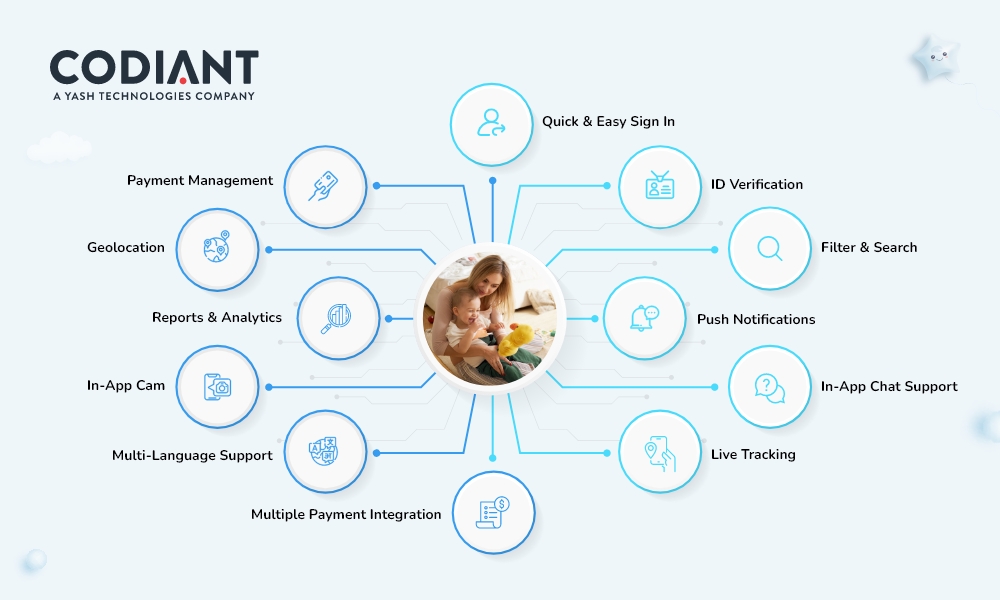
An on-demand app for babysitters comprises three stakeholders, namely the User/Parent App, Babysitter/Nanny App, and Admin Panel. All three stakeholders comprise many unique as well as similar features to maintain the app working smoothly.

1. Quick & Easy Sign In

Enable parents and babysitters to easily register on the platform with basic details and then let them fill in their details and requirements in detail.

Parents can find suitable nannies by filling their requirements accurately. Whereas, the babysitters can submit their details to get them verified and make the profile public for parents to find it easily.

2. ID Verification

ID verification is a crucial feature that you need to integrate into your babysitting app development. It builds trust between the platform and parents, such that they are leaving their child under the supervision of a safe and reliable nanny.

Being a reliable platform owner, you need to take the documents and ID of the babysitter and get all the details verified before allowing them to appear on the platform.

3. Filter & Search

Every parent looks for a desired babysitter that meets their particular needs like it can be age, timings, qualifications, experience, reviews, and ratings.

For such specific demands, the search & filter feature works accurately to reach the right resource. The parents can easily search the reliable and nearby babysitters and create a connection request to find the most suitable nanny for their child.

4. Push Notifications

Push Notifications is a great feature to integrate into your babysitting on-demand app development. It updates parents and nannies both on time for their duties and to explore new features or offers too.

Integrating this feature with your babysitting app development will keep parents as well as nannies engaged with the app and improve the app’s visibility.

5. In-App Chat Support

It is one of the most convenient and effective features of the on-demand babysitting mobile application. The in-app chat support provides a convenient platform for parents to communicate with their hired babysitter quickly.

Additionally, parents and babysitters both can look for professional support in case of any query or emergency. To make this possible, integrating an intelligent AI-enabled chatbot in the app can provide efficient support and a much-needed cordial experience to all users.

6. Live Tracking

The live tracking feature of a babysitter app generates a sense of relief and reliability in tracking the whereabouts of the hired nanny.

It will enable parents to remain calm and easy-going with their kids’ safety and the location at the same time.

7. Multiple Payment Integration

Every user seeks easy, secure, and convenient payment modes while availing of online services. The user can instantly book an appointment or avail of services online just by making the payments online while being in their comfort place.

Parents can avail of any of the available payment modes, which seems suitable for them to clear their babysitters’ dues in no time.

8. Multi-Language Support

We all live in a diverse society where different native language speakers can be found easily. And there are maximum chances that such people like to explore your app and services.

Thus, build an app that supports multiple languages and will bring more users without a doubt.

9. In-App Cam

In the babysitter finder app, an in-app cam is a very convenient feature for parents to connect with their babysitters directly through a video call in real-time, in case of any emergency or to enquire about ongoing situations.

10. Reports & Analytics

It is a great feature for the admin to collect and study all the data in an easily understandable form. The admin can analyze the trends on different metrics, such as new users, active/inactive users, user acquisition rate, babysitter with the highest rating, etc.

All these details and analytics help to understand the ongoing business trend and design strategies to improve business performance.

11. Geolocation

For safety concerns, it is a very helpful feature for parents through which they can locate their hired babysitter. Geolocation enables them to ensure that the nanny is at their home with the baby and hasn’t left the house.

Moreover, parents can even locate highly rated babysitters available near them without much struggle.

12. Payment Management

It is a very handy feature of the babysitting app development process for admin that enables them to track and monitor the service provider’s payments, revenue, and profit generated through the application.

All these handy payment details help admin to study their earnings and check out the success ratio of their services and implement suitable actions accordingly.

How Much Does An On-Demand Babysitting App Development Cost?

To develop any on-demand mobile application, there is no fixed cost for it. The price keeps on varying under multiple influential factors, which we’ll be discussing further.

However, the on-demand babysitting mobile app development cost will approximately range between USD $10,000 to $40,000 or more.

The following factors influence the development cost of the babysitter app:

  1. Features- The greater number of features included in the app will raise the development charges time and ultimately higher the charges.
  2. Complexity- The uncommon feature and functionality of the app define its complexity, which again adds more cost to the development process.
  3. Development Platform- Developing a single application suitable for multiple platforms demands platform-specialized developers and the team along with time, which again influences the development charges.
  4. App Size- The size of the app i.e. developing with basic features or an MVP or building an advanced or complex babysitting app, the size of such apps will vary and also increase. Similarly, the development time and development cost also increase without any doubt.
  5. Developer’s Location- Apart from the development process, the development team’s location plays an important role in defining the development charges. So, hiring the expert development team before analyzing the charges will be an intelligent call.

Let’s learn about the difference in the location-based charges, which will help you to pick the right market and hire the budget-friendly development team from the specific location.

Country iOS App Development Charges Per Hour Android App Development Charges Per Hour
Australia $80 to $120 $50 to $100
Western Europe $100 to $130 $50 to $110
North America $90 to $130 $30 to $90
Eastern Europe $110 to $150 $60 to $120
India $30 to $100 $20 to $80


These location-based per-hour development charges will help you to determine your selection for the babysitter app development within your budget. However, these charges may also be variable, so try to connect with a reputable company for a much more accurate budget definition.

Summing Up!

The market for such on-demand apps is growing each day. Likewise, with the inclining market trend, the demand for babysitting applications is becoming high. But to build such a mobile app, it is necessary to learn about the market demand, target audience, development process, cost, and other detailed research that could be helpful to take your app to the shop floor level.

To have a brief learning about the on-demand app development process and other details, you can also go through this on-demand marketplace app. Here you can get all the details about the development process, cost, and details of an on-demand application.

To build an on-demand babysitting application, Codiant is one of the top mobile app development companies to cater to all your custom requirements and help you stand out from the crowd.

With a vast portfolio in the on-demand industry, our apps have set the benchmark in the on-demand segment. So, why wait? Rely on our expert developer team to build custom solutions for any industry.

Angular JS Framework : Why and When Should You Use?

Angular JS is one of the most popular open-source JavaScript framework, developed by Google, and is used to build robust mobile and web applications. It can be freely used, modified and shared by everyone.

AngularJS provides an excellent framework for building interactive websites, single-phase applications and line of business applications.

Most standard groupings include:

Angular with Node.js, Angular with PHP, Angular with TypeScript, Angular with Django, Angular with firebase, Angular with Java, Angular with ASP.net MVC, Angular with .Net Core, Angular with Python.

The Angular mobile framework is simple and interactive, scalable, high-performance, and is used for developing applications across all platforms i.e. native mobile app, web, mobile web.

Benefits of Using AngularJS Over Other JavaScript Frameworks

Simplified MVC:

Unlike other JavaScript frameworks, in AngularJS development you do not have to write additional code to stitch your MVC i.e. model-view-controller components.

In AngularJS you just have to split your application code into MVC components and it automatically combines different MVC elements. Hence reducing your time to develop the code.

Two Way Data Binding:

Data binding in AngularJS is the synchronization between the model and the view. AngularJS uses two-way data binding for the synchronization of data automatically. In that way, changes in the application state will be automatically reflected in the view and vice-versa.

This saves time as Angular developers do not have to connect variables between the two layers.

Dependency Injection & Unit Testing:

Dependency Injection (DI) is a core concept of Angular 2+ and allows a class to receive dependencies from another class. The in-built dependency injection in AngularJS helps the developers to create, test, and understand the application easily. The framework divides the code into testing units so that the errors can be detected easily. Also, this simplifies the job of testers and saves their considerable time leading to reduced web development costs.

angular-unit-testing

Reusable Code:

AngularJS directives provide a good way to encapsulate and reuse functionality. The developers can reuse the same code developed before. This helps in saving extra time gone in developing the same code again, hence resulting in faster development time.

Filters:

The Filters in AngularJS framework simply filter out the data before it reaches the view or top layer of an application. They perform paginations, as well as filtering data arrays w.r.t existing parameters. The functions can be changed as per the ideal parameters in the system.

Turns Templates into Code:

AngularJS helps you build the perfect framework faster with ready-to-use, unique templates available with it.

The template is made of plain HTML, but you can extend to include instructions on how the model should look in the end view.

Businesses That Leverages Benefits of Angular Web Framework

  • Progressive Web Apps: Angular JS comes with inbuilt support for PWAs to make the process of building a progressive web app faster, with high performance, and less complicated.
  • Dynamic Applications: The platform can be used to build native dynamic mobile apps with strategies from Cordova, Ionic or NativeScript.
  • Enterprise Web Apps: The features like typescript, advanced refactoring, navigation auto-completion and more make AngularJS perfect for building large-scale applications.

Use Cases of Angular JS

  • On-Demand Video Streaming Apps like Youtube, Netflix, and Amazon Prime as they are high-performance web apps.
  • Travel and itinerary Apps since these apps include dynamic features. This helps in creating robust, easy to use travel apps.
  • Weather Apps AngularJS allows the developers to develop an interactive, real-time activity app with optimized quality.
  • User Review App or user feedback app requires faster review handling. With AngularJS app development it is easy to develop.
  • eCommerce Apps development for enhancing buying and selling experience.

The Definitive Guide To Understand Multi-Store E-commerce

Having a highly diversified e-commerce store comes with its own set of challenges for the owner. Handling and managing each customer, especially based on their personalized requirements is not at all a piece of cake.

However, such a hassle can be minimized to a great extent by introducing a dedicated shop for each of your audience. In simple words, you can develop a multi-store e-commerce platform.

Running a multi-store e-commerce platform allows you to sell specific products to a particular audience with personalize messages and marketing strategies, and serve relevant product suggestions to the chosen group.

It sounds to be a very effective solution but can give you a nightmare to manage each store individually and juggle multiple credentials to handle all the processes.

However, it’s not the case with multi-store e-commerce solutions where you can easily manage your multiple e-commerce stores from a single place.

Let’s delve deeper to understand the concept, benefits, features, cost, and platform that empower multi-store e-commerce solutions.

What is an E-commerce Multi-Store?

An E-commerce multi-store is a software solution that lets the owner control or views more than one store from a centralized place. The store owner can handle multiple business operations from a single account or software.

This method enables aiming at the specific target audience of the store, rather than reaching out to the interested and not-so-interested audience from one storefront.

For example, if your business is diverse and has different audiences/users for that, then you can create a different store view for each business suitable for the user’s experience. It will help you to promote products specifically to the right audience with a personalized message.

The categorization of businesses with individual stores allows for having their own niche, pricing, inventory, or offers. To streamline all the business operations, you can go with an e-commerce multi-store that can serve customers based on their preferences in different aspects.

With the multi-store e-commerce platform, you can easily customize everything to the store, without hampering any user’s experience or business operations.

Extraordinary Benefits of Multi-Store E-commerce Marketplace

The e-commerce marketplace in no time has become a vital tool for B2B and B2C marketing. This evolving trend has also evolved the purchasing or buying patterns of manufacturers, distributors, buyers’ committees, and customers. All these consumers prefer buying products from a trustable source, regardless of the original manufacturer.

The multi-store e-commerce platform offers various benefits to all of its multiple stakeholders.

Benefits for The Client

  1. For high-profile and important customers, the store can be client-branded.
  2. Authorized users can easily purchase available products over a specific dollar value.
  3. The automatically filtered catalogs allow the user to order only company-approved products.
  4. Ordering becomes quick and easy for all buyers through punch cards, reordering, bulk orders, and a quick ordering facility.

Benefits for Store Owners & Sellers

  1. The store owner can get a number of automated software solutions integrated into the platform to streamline operations, such as ERP, CRM, etc.
  2. Digital stores detailed SEO along with relevant keywords and meta descriptions can promote business in the competitive market.
  3. Supports multiple modes of digital payments and can even save and retrieve credit/debit card details securely while complying with government regulations.
  4. The store owner can have detailed access to the customer’s details, along with order history, wishlist, and order management.
  5. Store owners can access the customized RMA modules to carry out returns and exchanges with ease.

Benefits For The Administrative Staff

  1. ERP integration facilitates order and inventory from the client’s custom portal.
  2. An e-commerce platform can infuse a general or custom theme into each store.
  3. Cloud-based E-commerce marketplace offers unlimited platform scalability.
  4. The custom client portal offers easy-to-order and inventory management.
  5. Customer support can be centralized for all digital stores.

Benefits for The Distributor

  1. Distributors can identify and define which products they like to update, update prices and build branding strategies.
  2. The distributors can also control their set of operations within the website or marketplace platform.
  3. Bulk import and EDI integration support automated inventory management and product price handling.
  4. The operation managers can handle all the orders, inventory management, order and delivery monitoring, and customer assistance through the centralized distribution portal.

Benefits for Business Franchises

  1. The master franchise can keep a close tab on their franchisee’s order key products.
  2. The franchises can maintain their pricing, products, schedules, payment, and shipping methods.
  3. The robust marketplace platforms offer franchise-tiered management that can support both centralized and de-centralized management of franchises and franchise groups.
  4. Marketplaces can offer their clients some advanced services, such as updated catalog pictures, and compelling video and language translation facilities.

Significant Features of E-commerce Multi-Store

1. Stores Override Prices

With multi-stores, you can promote your profit earnings by availing of different pricing abilities for your advanced e-commerce store. The store owner can instantly override the product prices based on the store and list the same product at different amounts for different regions or the deal/offers provided at each store.

2. Store-Specific Discounts

By offering different and store-specific discounts on your multi-store e-commerce solution – you can easily attract more customers. The store-specific discount feature will allow you to offer unique and different discount rates for each store and track the accurate sales and discount details of each e-commerce store.

3. Store Specific Coupon Codes

Integrating coupon code generator features can influence visitor opinion and generate an ambiance of flash sales for an unsaid period of time. The user with coupon code can avail of varied offers which ultimately influence customer shopping behavior, double the sales, and builds a trustable relationship with the customer simultaneously.

4. Selection of Store

A multi-store presence of a business easily pushes it to reach a wider audience and this feature allows them to choose the store based on their preferences i.e. offers, location, language, needs, etc. The user can easily explore multiple stores and on their convenience and experience with the platform can easily place an order.

5. Store-Specific Categorization

Define product categorization based on the store type and the audience segmentation. Aim to provide an interactive environment that makes product search easier through the store-specific categorization feature. This feature allows you to assign different products to each e-commerce store simply by selecting and adding the product to the store inventory.

6. Performance and Analytics Tools

This feature offers a live dashboard to track the platforms and products’ performance and analytics. With this tool, you can analyze the detailed report of your sales, inventory, earnings, customer shopping behavior, and various other details. Apart from that, can get an auto-generated report on customers, sales, conversion rate, payment modes, and various other reports, and can perform report comparison as well against days/months/weeks/years.

7. Store-Specific Delivery Charges

To remain ahead of competitors, ensure the best delivery experience and the most convenient charges for the customer. The delivery charges can be optimized based on the area and the various offers implied in the order (if any) at different e-commerce stores. This feature allows to optimization of the e-commerce store specifically for the shipping charges.

Core Features of A Future-Ready Multi-Store E-commerce Solution

1. Products Management

With a custom-developed multi-store e-commerce marketplace, you can efficiently manage your products or inventory and can add ‘n’ a number of products with variants (size, color, style, etc.), categories, brands, and other details with a number of available stock and maximum order quantity filter with description and much more.

2. Logistics Management

Accurate logistics management with safe and timely logistics delivery boosts customer experience by multiple folds. It will ultimately elevate the customer reach and conversion rate. You can retain and engage the customer on your platform by letting them be informed with accurate information about their deliveries and frequent progress updates. This gives the admin and the customer assistants to have accurate information about the order and assists customers as needed.

3. Order Management

The multi-store e-commerce solution can offer your customers a highly convenient and customer-friendly experience with Single Page Checkout, Cart Abandonment Recovery, Order Product Update, Custom Checkout Options, Guest Checkout, and many more. Such streamlined processes promote user experience and support you build the best multi-store solution.

4. SEO Ready Solution

The E-commerce multi-store marketplaces are designed while considering the standard SEO guidelines and customized strategies. To build such projects, we ensure to integrate of automated features to simplify digital marketing and SEO-optimized themes for an appealing brand presence, and so on. An SEO-optimized platform promotes business presence, and ranking, and ultimately boosts the business revenue.

5. Marketing, Promotions & Discounts

Businesses adopt multi-store E-commerce solutions to simplify and empower their marketing strategy. To make this possible, we ascertain to integrate the best marketing tools, including Google Adwords, AI-enabled chat, email marketing tools, affiliate marketing, and others. All these tools drive easy and instant interaction with the customer in real-time and track their behavior on the platform to suggest the best solutions and formulate advanced marketing strategies.

Platforms That Empower Multi-Store E-commerce Marketplace

1. Adobe Commerce or Magento

Adobe Commerce is an enterprise-level e-commerce platform that caters to the needs and budgets of all company sizes through Starter ($1,999 a month) and Pro ($3,999 a month) plans. The platform offers in-built multi-store functionality to its users with a wide range of ready-made design templates.

Adobe Commerce makes it easier for its clients by offering a variety of hosting options, it includes AWS-hosted SaaS applications, on-premises deployment, or hosted on a public or private cloud. The platform had a wider presence in B2B and B2C markets.

2. Salesforce Commerce Cloud

Salesforce is a leader for Digital Commerce in the 2022 Gartner Magic Quadrant. The platform is specially designed to handle the demands and build the best possible solution for multi-stores by integrating apt capabilities. However, the platform doesn’t provide definite charges to its vendor, rather it provides exact prices on request based on the project size considering various other details.

Salesforce Commerce offers its clients an embedded AI-driven personalization with strong omnichannel features to provide the best personalized offline experience. The platform offers its services and solutions for both B2B and B2C markets.

3. BigCommerce

BigCommerce offers top-quality enterprise-level functionality and a well-designed app-based system. There are several apps available in the market that allow its clients to entirely customize their BigCommerce store. To make this possible, the client can even integrate the marketplace with other platforms too, such as WordPress, Drupal, Stripe, Amazon, Mailchimp, and more.

The platform is very cheap for businesses to avail – initially, it is available on a free one-month trial, whereas paid plans start at the nominal charge of $29.95 per month. The platform is designed to scale businesses and allow companies to grow at a pace they like. It can work effectively for both B2B and B2C sectors.

4. Shopify

Shopify is a widely used e-commerce software on the market today. Its variety of features and plug-ins help to build a highly customized and scalable marketplace. This platform encourages the integration of various systems with the e-commerce store, including ERP, CRM, CMS, and PIM. Apart from that, it also offers various apps for convenient services like Slack, Mailchimp, Google Sheets, Amazon, and more.

Shopify is initially available for a free trial with a regular subscription plan starting at $29 per month. The Shopify Plus SaaS enterprise-level service charges $2,000 per month. It is an effective platform for both back-end and front-end designing.

Summing It Up

There are different types and sizes of e-commerce owners that offer their services in the market. Likewise, their requirements and budget also vary to a great extent, and to cater to the wider customer market multi-store e-commerce solution is the suitable choice.

Taking the business to the multi-store listing software push businesses to grow at a rapid pace, improves profitability, and meets their needs. But it is not at all an easy task for a diverse business owner to switch their business from a single store to a multi-store concept. To make all this possible, only expert professionals are required, such that all the existing data doesn’t get compromised but rather gets organized in an advanced manner.

Well, in all this struggle, Codiant can be your right technology partner of choice. We are an expert web and app development company for decades and have exceptionally versed techies to build small to large-scale multi-store e-commerce platforms catering to all your business needs. Connect with us, for further consultation and assistance.

Top 10 Technology Blogs in 2022: Most Searched and Ranked by Popularity

What were the most searched and ranked blogs in 2022? What were the hot topics businesses and entrepreneurs looking for? And why are they so important?

2022 was all about rapid innovations fuelled by technology, needs, and marketing strategy.

From the smallest fish to big sharks, everyone eyed to ace the solution first in the void market that demands a cure.

As consumers and businesses became more inclined towards products and services that simplify their day-to-day activities, tech geeks started providing their readers with high-quality analysis and insights.

In this run to provide the best, Codiant, standing tall as the most trusted technology partner, kept delivering how-to guides, strategies, ideas, data-driven analytics, trends, and industry-rich insights to its readers to help them stay on edge.

Today, as the year draws to a close, we have peeped into our Google Analytics to check our most visited blogs. To our surprise, these blogs are also the ones that have become the most preferred by Google. Some are glued to featured snippets, while others have secured their seat on the first page.

Here we list some of the most searched, ranked, and best technology blogs (in no specific order) that demands your quick attention.

Top 10 Popular Technology Blogs Of 2022

1. 100 Mobile App Ideas You Should Invest in Today

Not all app ideas have to be unique but have to be perfect. There might be app solutions brimming in the market but are they really matching the users’ expectations perfectly?

No matter if you’re an existing business owner or a novice, the market needs to have an impeccable- innovative solution for untapped problems.

Thus, making it crucial for business seekers to conceive and invest in unique and innovative business app ideas that can deliver good value to the end users.

To be a helping hand to you, we have presented the blog post that curates 100 profitable mobile app ideas that are worth investing in.

2. Building A Chatbot With Natural Language Processing

Businesses always aim to streamline their business processes and provide smooth customer services, where Chatbot App Development comes as a major rescue.

Chatbots are the most interesting and most demanding tool to integrate into any digital solution.

Check out the blog post to learn all the details about Chatbot App Development with Natural Language Processing, its benefits for the customer and companies, and a short step-by-step guide to building one.

3. Low-fidelity vs. High-fidelity Design Prototypes

Many businesses witness not-so-friendly user experience (UX) feedback for their mobile or web app.

To avoid such problems, designs should be initiated with low-fidelity prototypes to high-fidelity prototypes. These prototypes allow users to check and test functionality rather than directly having the visual appearance of the product designed.

If you are unaware of both the terms and their other benefits for any business, then go ahead with the blog read. Here, you can find a comparative study of Lo-fi and Hi-fi design prototypes.

4. Recruitment App Development: Cost & Key Features

Finding the apt job as well as the right candidate has become a challenge for job seekers and companies.

While aspirants grapple to land the right job, companies struggle to reach the right candidates with more ease.

AI-powered recruitment software helps smoothen and streamline this exhausting process by simplifying the hiring and quick screening of candidates and desired companies for users.

If you think, with a recruitment app development, you can perfectly create a bridge between companies and job seekers then this blog is definitely for you!

Check out this recruitment app development blog and learn about its benefits, features, cost, and other essentials.

5. A Step-by-Step UX Design Process

Designing an outstanding user experience in an app or web platform is a highly creative and intellectual task.

It demands following a design rulebook to achieve the best end results. If you are a novice UX designer in any industry or a client monitoring the UX of the project then this blog has got you covered!

From a systematic UX design approach to designing a simple and exciting User Experience, you can expect a turtle guide explaining the raw details.

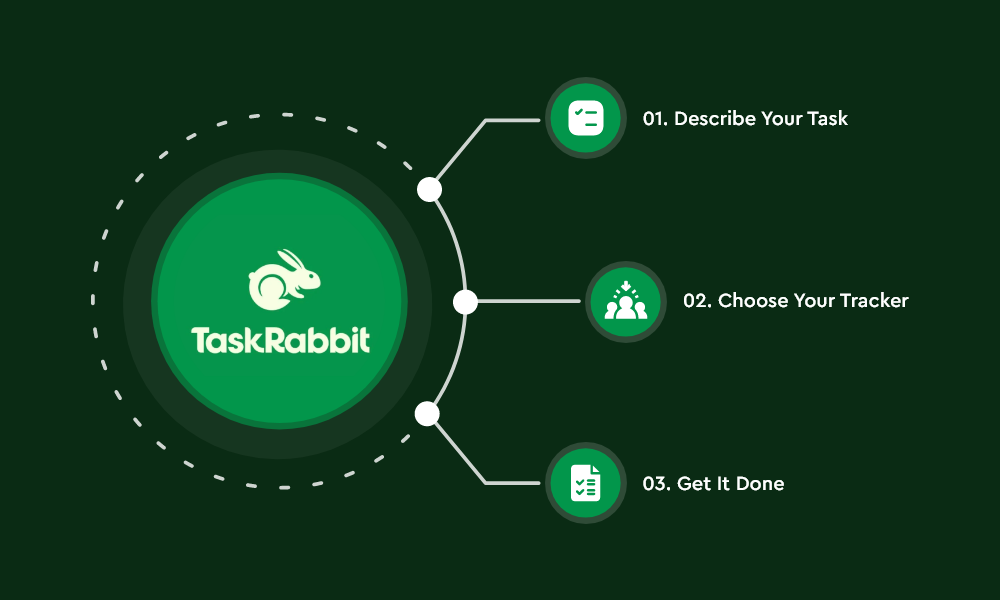
6. Cost to Develop an On-Demand Marketplace App Like TaskRabbit

On-demand marketplaces are the new trending business tool that is gaining customers’ attention by providing home services on-demand.

If you are planning to follow such a business concept for your targeted customer base, then following the business model of the TaskRabbit app could be an apt example.

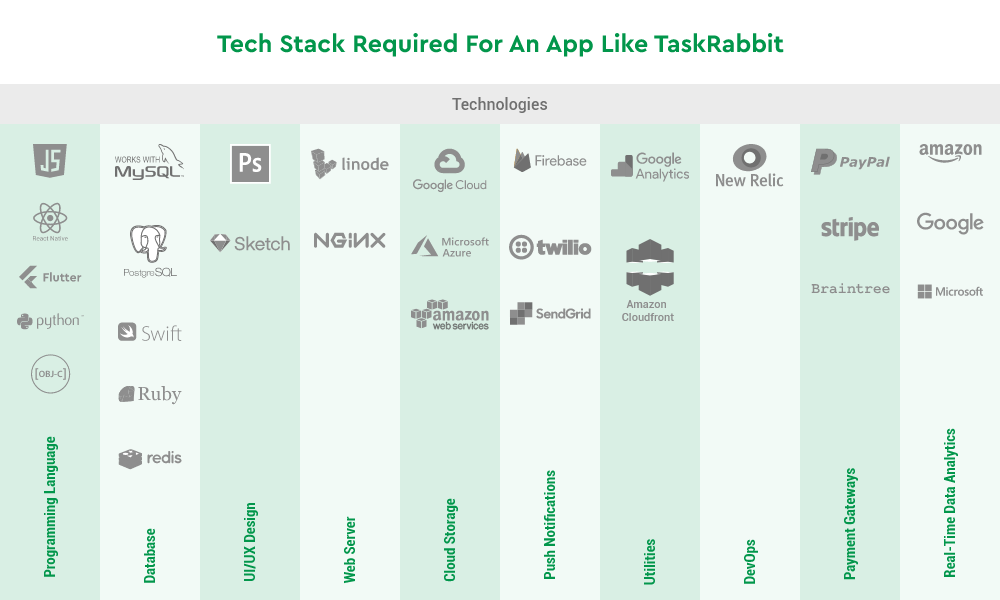
Read the blog to learn about the concept and working of the on-demand marketplace app like TaskRabbit with its features, tech stack, cost, and development team.

7. How Remote Patient Monitoring is Helping Care Providers to Improve Patient Outcomes?

Remote Patient Monitoring applications are becoming a very handy and valuable tool to monitor and manage patients from any location.

Hence, facilitating a great business opportunity for private players to deploy a mobile application to improve patient outcomes.

If you are also planning to try your hands at this business idea, then read the blog for further assistance. The blog includes working on RPM and its benefits for doctors and patients.

8. Be a Smart Investor: Top 10 Real Estate Apps to Get Business Inspired

Real estate apps are touted as one of the biggest profit-making businesses.

A report by the National Association of Realtors found that around 97% of homebuyers begin their searches online and 76% use a mobile or tablet device. This makes real estate apps a business worth investing in.

But in the sea of competitors, how do you make your app stand out?

Read this blog to get inspired by the top 10 real estate apps in 2022 that are following the latest tech trends to go beyond their call of duty.

9. How Industries Can Benefit From M-Wallet App Development

Considering the market demand and making the world a cashless market, mobile wallets are becoming a great business opportunity.

If you are looking for the most suitable and apt m-wallet app to integrate into your marketplace, then take an inside peek into the blog.

Here you can find top m-wallet apps and dig in to see how they are benefitting diverse industries.

10. AWS Vs. Azure: Which Cloud Platform Is Best?

It is becoming quite a common brainstorming session for companies to decide which could be the best cloud platform to deploy their upcoming web and mobile app solution – whether the right one would be AWS or Microsoft Azure!

Well, to cut short your research work and save you from this dilemma, our blog AWS Vs. Azure could be of great help. Learn about it in detail and make an informed decision.

The Bottom Line:

Codiant is a pioneering app and web development service provider serving its global clientele across industries.

Throughout the year 2022, we have penned a great variety of well-researched, educational and informational blog posts for our readers with an aim to provide the right and precise details that can help them to resolve or at least mitigate the rising problems.

Moving forward we will only raise our bar and help you stay updated with your specific industry. So, stay tuned!

10 Must Have Food Delivery App Features In 2023

The business of food ordering and delivery services has been escalating at a rapid pace for the past few years. A majority of customers have become accustomed to getting ready-made meals delivered to their doorsteps.

With the growing popularity and demand of online food ordering and delivery services, many companies have emerged in the market, such as DoorDash, UberEats, EatStreet, and other small-scale food delivery apps.

To stand out in this highly competitive market, new entrants need to follow and develop a state-of-the-art app to cater to food delivery services with an incredible user experience.

But the question arises, how to do it?

To begin with, initially, you have to study your target market and analyze their requirements along with implementing suitable functionalities to fulfill those demands.

Well, it is not easy to predict all customer’s demands and define relevant functionalities. Thus, we’ve prepared a list of 10 outstanding food-ordering app features that you should include.

10 Outstanding Features of Online Food Delivery System

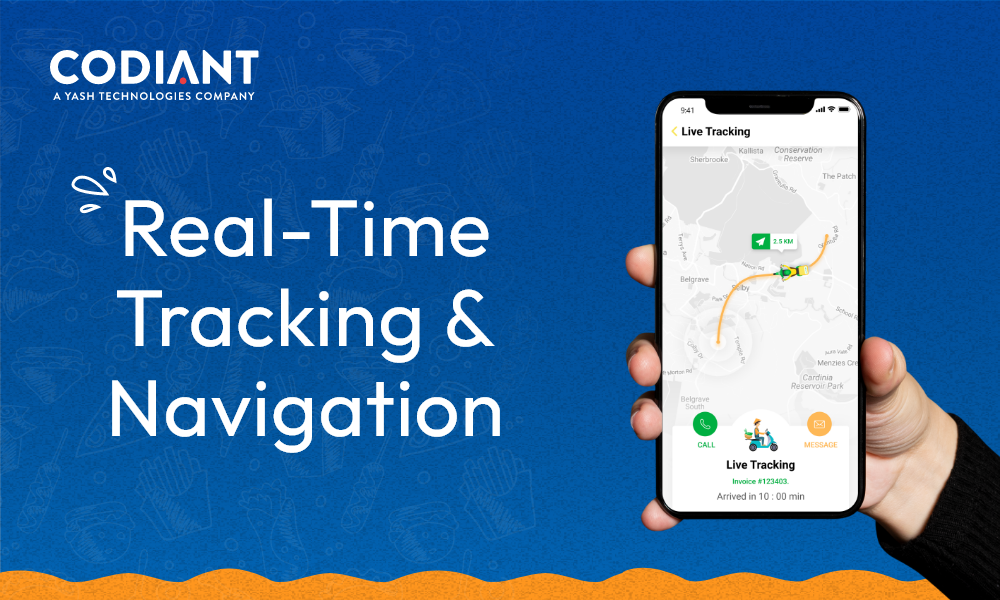
1. Real-Time Tracking and Navigation

With real-time tracking features in food delivery apps, the fleet managers and the customers at the same time can track the whereabouts of the deliveries.

Not only this, but the GPS-integrated feature of the online food ordering system also helps the delivery person to find the most optimized route to reach the customer’s locations, which ultimately minimizes time by 5 times and costs by 20% of the deliveries.

The fleet managers can also integrate APIs, like Google Maps, MapKit, and Waze’s Navigation to facilitate a convenient real-time tracking system. Automatic route planning becomes possible with these APIs while considering the traffic situation or following the heat map and order grouping.

2. Seamless Ordering System

For customers, having an easy-to-go ordering system is one of the major requirements with the food delivery app, which ultimately increases the chances of order placement. In addition to that, the customer can even schedule the order, so that the customer doesn’t have to wait much longer for the order delivery.

They can simply place the order in advance with the mentioned time of delivery and can get the food at the perfect time on their doorsteps or at the mentioned location.

By making the regular order placement and the order delivery process simple for the customer, you as a food delivery app owner increases the likelihood that the customers will place the order and will also become your repeat customer.

Evidently, no customer would prefer to call to place an order and wait for hours for their food – rather they are open to an easy to ordering in-app experience with simple and minimum steps and efforts. So, to win the customer, it is a must to build a seamless ordering system with your food delivery app system.

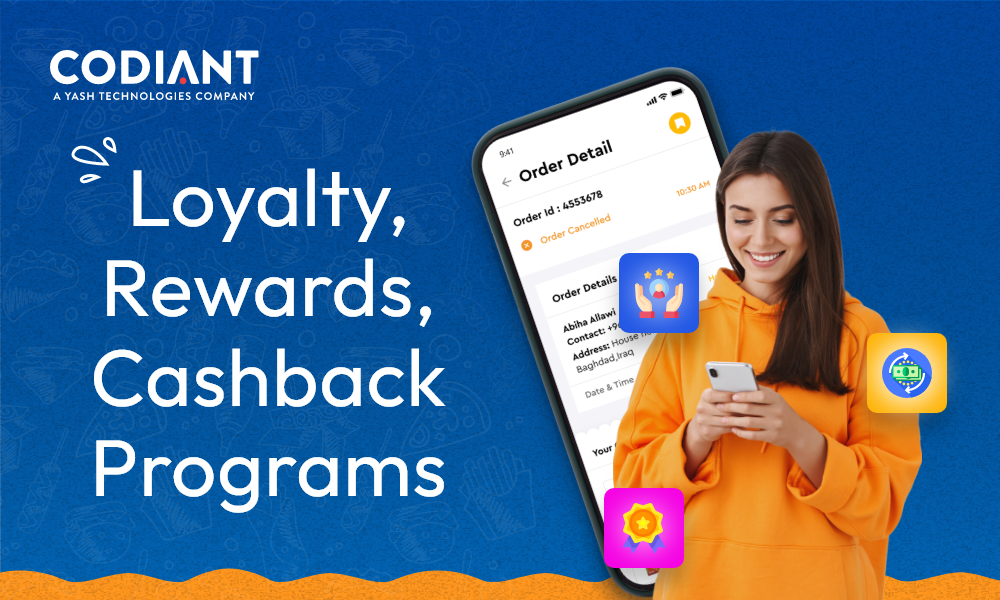
3. Loyalty, Rewards, and Cashback Programs

Introducing special offers, cashback, discounts, and loyalty programs is the most tried and tested method and a food ordering app feature not only attracts new customers but also retains and lures existing customers repeatedly.

It is a brilliant strategy to keep the client interested and engaged with your platform frequently, by giving generous discounts and offers at frequent intervals.

The cost of attracting a new customer is 5 times higher than retaining the existing customers, thus earning brand loyalty is relatively cheaper than generating brand awareness. As a result, most of the big names in the food delivery app business pay close attention to their loyalty programs.

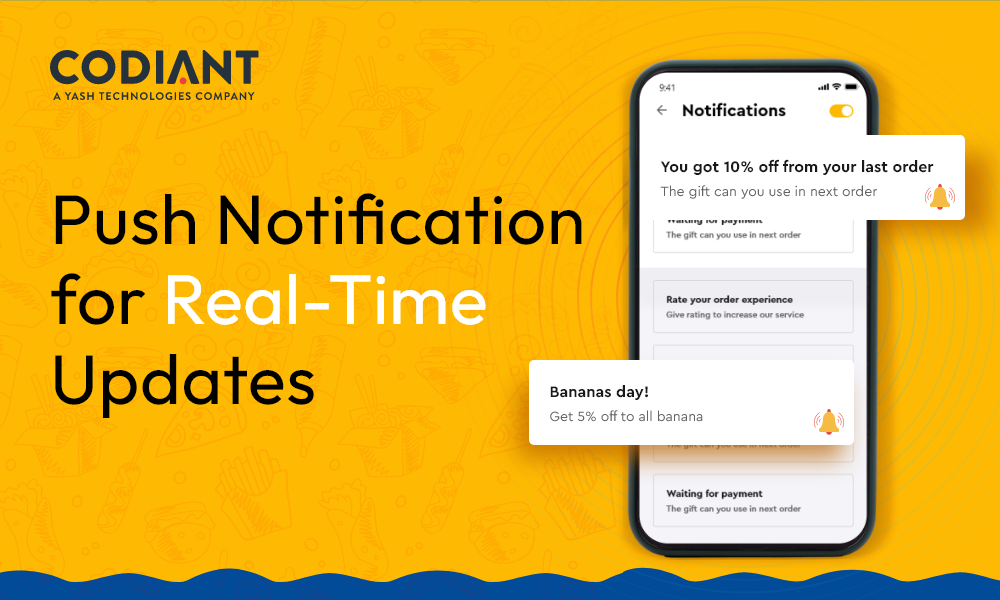
4. Push Notification for Real-Time Updates

With growing competition, it is quite obvious that a customer is having multiple food-ordering apps on their phones. Hence, sending push notifications is the most suitable approach to gain customers’ attention and visibility against your rivals.

The push notification food delivery app feature supports businesses to remain in contact with their customers. This feature can be used to update the customer with various information, such as order status, delivery partner, offers & discounts, location-based drop messages, and many more.

However, always be cautious with push notifications, and never overdo anything. It should be only informative and relevant to the customer rather than just being a sales pitch and annoying with frequent notifications. The relevant information immediately grabs customers’ attention and engages them this way.

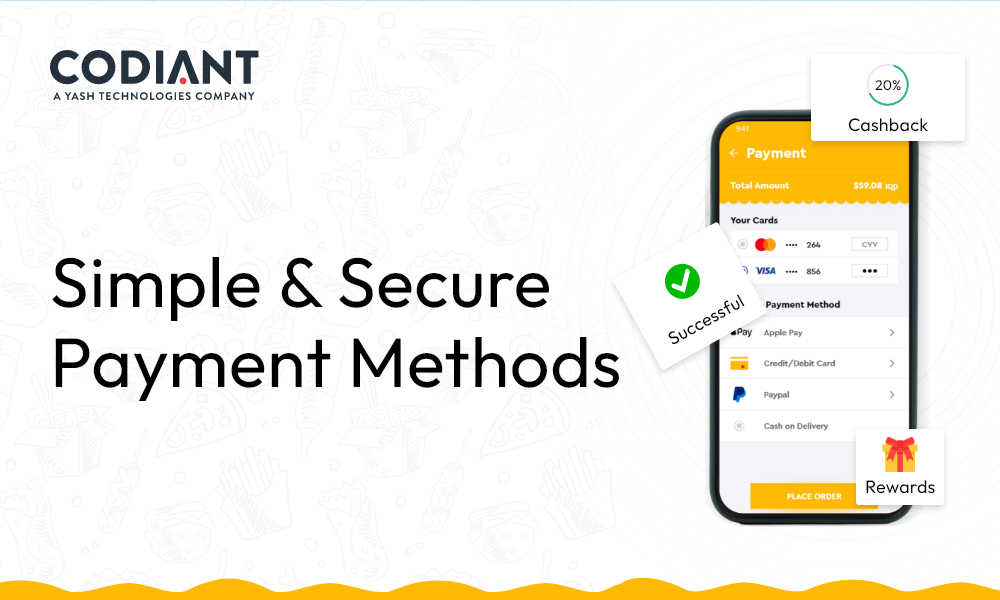
5. Simple & Secure Payment Methods

Payment is one of the vital features that can define the customer’s experience and time with the app, whether the customer is going to reuse the services or is it going to be his first and last visit.

Even though payment is the final step in the order placement process, the customer will not try again if the experience is not good or has faced any issues.

Thus, ensure to integration of glitch-free, safe and secure payment gateways or mobile wallet software services. It includes Apple pay, Google Pay, Paypal, Stripe, Mobile or Internet Banking, Debit/Credit Card Banking, or Cash on Delivery (COD) options.

All these services are reliable and secure, which doesn’t make customers hesitant if any issue arises (in the worst case). Additionally, these services are quite easier and nowadays, most of the customers are well-rehearsed with these digital payment modes which will keep them hooked and satisfied with this food ordering app feature.

6. Geo-Fencing or Location-based Marketing

Marketing is the essence of a business, without which no business can survive the brutal market. Hence, businesses apply varied marketing tactics – among which geofencing marketing is one of the most preferred food delivery app features to grab customers’ attention.

Under location-based marketing, proper planning and implementation of marketing tactics are used based on geolocation. This technology helps businesses to engage with their customers even before they become aware of the brand or business.

In simple words, it is much more like a digital flyer that is distributed to local passers-by to promote their business services and special deals. It is a modern way of marketing that a great number of businesses are adopting to take their food delivery business to a new peak.

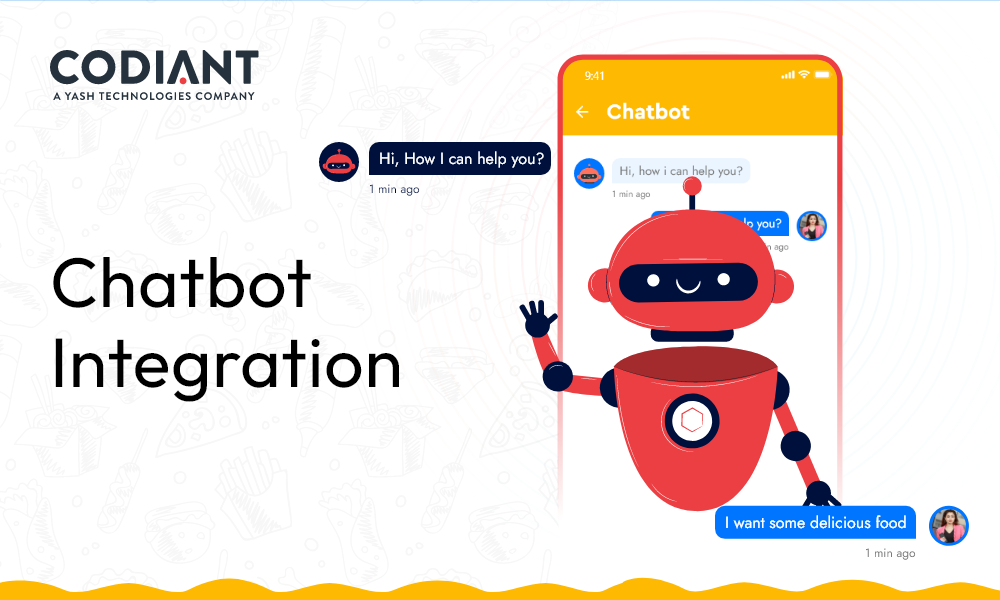
7. Chatbot Integration

Chatbots are intelligent AI-enabled tools that facilitate easy, quick, and convenient interactions for customers. It responds no less than a human but ensures instant response. Most businesses are using chatbot technology to ensure a personalized service experience for their customers.

Intelligent AI chatbots are not just a machine that addresses customers’ basic questions, rather it accurately helps the user in finding the right solution to what they are looking for. Chatbots are taking customer personalization to a new level and providing accurate assistance.

Recommended Read: Some Introductory Tips and Trends To Start An Online Food Delivery Business

8. Multiple Platform Presence

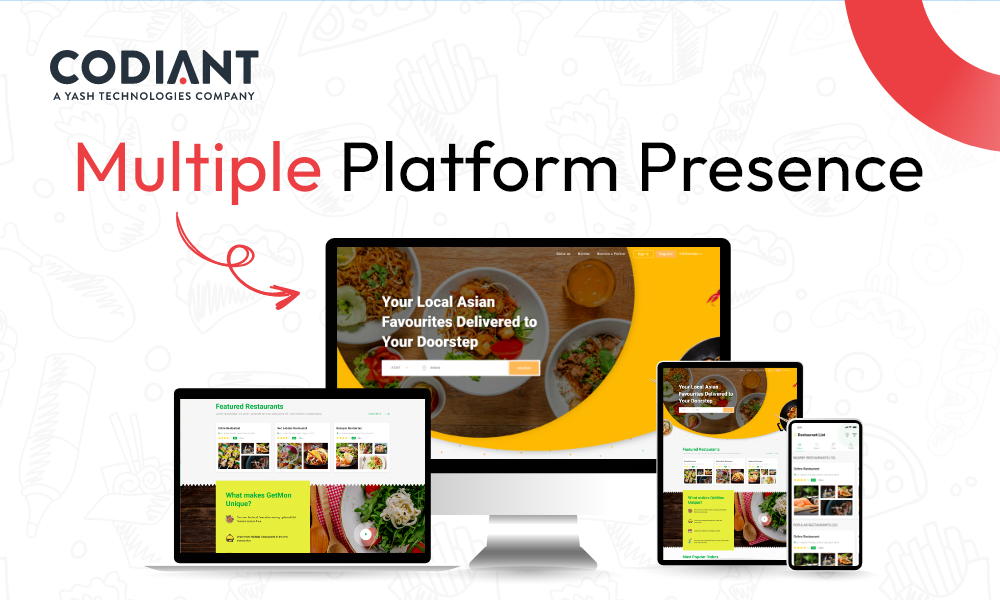
You develop an app with the expectation that it reaches a wider audience and everyone will notice it quickly. It can be possible only when your digital business presence exists on multiple platforms, such as Android and iOS versions of the food delivery app.

The presence of your app at multiple avenues can increase the app visibility to a great extent and results in an increase in app downloads and the number of users or customers at the same time.

Make sure the app works smoothly and has the same quality features and functionalities in each platform. To ensure this, you can hire a food delivery app development company to build the app quickly with the required precision.

9. Customer Feedback

Customer Feedback is a quite convenient and effective way that a great number of digital businesses harness to gain visibility and valuable insights into app improvement.

Feedbacks help to understand your customer’s requirements by reviewing feedback regularly and making necessary changes to remain ahead of your competitors.

Integrating the feedback feature in your food delivery app allows user to share their experience with the app, food, restaurant, and delivery person at the same time.

All this transparency and shared details help to build a cordial and loyal customer base and increase customer engagement rates.

10. Reports and Analytics

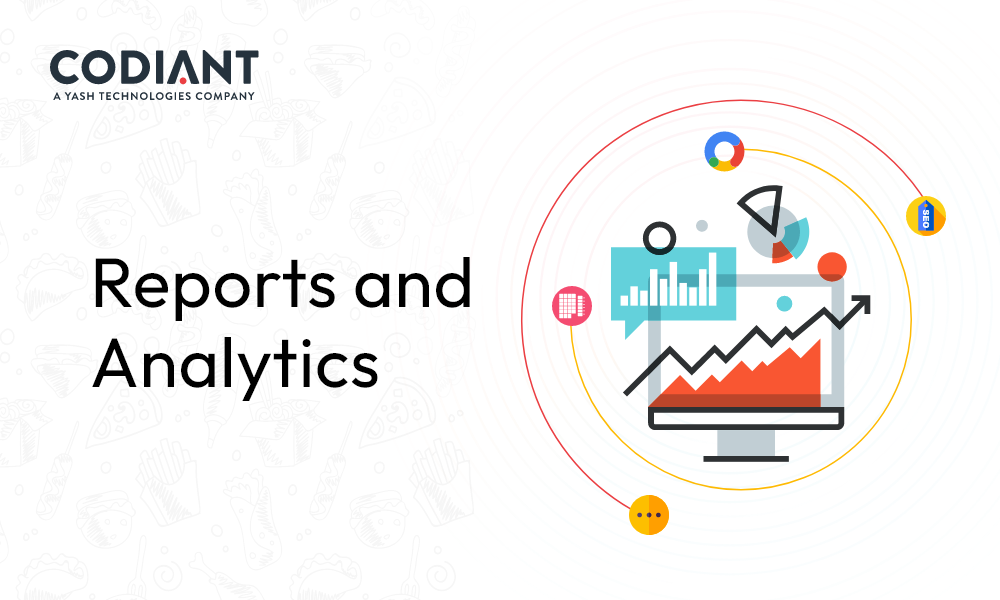
Reports and analytics are a very valuable food ordering app feature for an admin or business owner to track and study customer behavior by studying the user’s extensive database. All these statistical data will help your food ordering and delivery business to make better decisions.

Being an admin, you can study the data in an easily understandable form of graphs, which ensures to easily study the trend and instantly spot the positive and negative trends and formulate the much-needed strategies to combat them. And it also increases revenue at the same time.

In your food delivery app, you can also integrate multiple tools to make the reporting and analytics study quite convenient and well-organized. The tools are Google Analytics, Delivery Heatmap, SEO, and many more.

Conclusion

Innovation is what we all admire and in food delivery services our customer is not any exception. It will not only increase customer acceptance and revenue generation but also make your app a world-class food delivery mobile application.

So, if you are planning to get into the business and escalate it with food delivery app development, then you must figure out the most important yet outstanding features that can help you stand out against your competitors.

To make this possible, Codiant can be your smart technology solution provider. We have a plethora of services to answer your digital solution query, it includes web and app development, digital marketing, and a lot more.

You can reach out to us with project details and we will help you to take your idea to a live project by integrating advanced and trending functionalities.

How To Estimate The Mobile App Development Cost

Mobile applications are the fastest emerging trend that took upon our lives. Enhanced, how we live and almost turned our existence upside down.

Proved like a game-changer for enterprises, corporate brands, and business owners to connect to their customers, Mobile apps have directly impacted consumers purchasing behavior. Consequently, helped businesses achieve a real bottom line.

Thanks to this incredible evolution and adoption of smartphones and tablets. Mobile app usage has soared impressively. And interestingly, the potential of the mobile app to boost sales has examined a direct effect on mobile app development services.

Businesses from all corners of the world are vying to develop mobile apps to connect to their customers. Results are such, the determined reliance and fascinating outcomes have mounted the mobile app revenues to reach over US$430.90bn in 2022, which is expected to show an annual growth rate (CAGR 2022-2026) of 9.27%, resulting in a projected market volume of US$614.40bn by 2026.

This is encouraging news for anyone who is planning to build an app. But this doesn’t sound simple.

When you come down the market to get your app idea rolling, you scramble to hire an app development company that develops and delivers the best-in-class product at a standard price.

In a gust to get real pricing, you even perform market research and request quotes from multiple software companies. But find no standard answer.

In this guide, we’re going to uncover all the factors that influence mobile app development costs. From discovery and design to development and quality assurance, from team locations to cost calculation formula, get a deeper understanding of all such factors.

However, make a note that this blog is written based on our own personal experiences and perspectives. It may vary from company to company.

Factors Affecting the App Development Cost

It’s not only the hourly rates and team structure and location of the company that affects the total cost of mobile app development. There are other factors as well that influence the app budget. Let’s discuss them in detail.

1. App Discovery

Before the entire hefty process of mobile app development starts and before a final pitch is made to the client regarding a rough estimate of the cost. The app idea is verified and validated.

It’s like a pseudo-market environment created to see how well the app will do when it reaches upfront. There are a few ways in which an app development company evaluates and constructs a report card for the app idea. Let’s take a look:

  • Market Research

Primarily, an app development company has to do a Competitive analysis before validating the app idea. The main motive behind doing it is to identify the business model, assess the need for your product in the market, and evaluate the current potential of competitors. Their strengths, weaknesses, and features are relative to or in comparison to that of your entire app.

Why is doing market research important? It is to make sure that your app idea is valid or credible, it is unique, and is going to bring a new concept/ fresh idea to the table. Moreover, it also portrays reliability. A few Market research strategies could be:

  1. Defining the Target Audience: Based on demographics, lifestyle, and spending habits.
  2. Conducting Competitor Analysis: To know how much the idea has worked so far.
  3. SWOT analysis: To determine your app’s ideas strengths, weaknesses, opportunities and, challenges.
  4. Building a business plan: Building a roadmap that covers strategies to build revenue, sales, market, and profit.
  • User Personas

Buyers or users are the final consumers of any mobile app. As such to sustain this competitive pressure of the market, it is crucial to know what the users think about the app idea.

Thus, app development companies consider using user personas. They create a group of imaginary customers based on the responses of research and analysis on a target audience.

Created during the early stages of app development, the entire idea is to get honest feedback from your ideal customers, like what do they think and do when they face a problem, what motivates them to take an action, and what are the aspects that influence their decisions and so on. A few benefits of constructing a user persona are:

  1. Deep understanding of customer behavior and needs
  2. Discovering your target users
  3. Validates customer demands
  4. Helps in better decision-making – focused on user needs and goals
  • Market Capitalization

Similar to that market valuation, app ideas have to go through a market check. Like gathering data to know the worth of the app idea, the amount of revenue, and the funding it can generate. Market capitalization also helps in determining the market identity of the product based on functions that are different from competitors. A few advantages of market capitalization are:

  1. Most convenient and widely used method for evaluating a company.
  2. Helps in gaining stability
  3. Can also be used to build an expansive and market-leading portfolio

The estimated time taken in the entire process of App Discovery is somewhere between 40 to 80 hours.

2. Project Analysis and Scope Statement

This is where the structuring of a proper apparatus for app development takes place. In this step, the project manager defines and outlines all the resources, features, deliverables, and technology architecture covering your project which is called a project scope document.

This is where your app is characterized and the cost is estimated considering the following factors:

  • App Complexity

This is the budget-deciding factor of any app development process. The complexity of the app i.e. the features and functions determines the cost of developing the app idea. Generally, additional features demand higher investments.

However, there are 5 subcategories that draw the basic outline for app development and its cost.

  1. Deployment Architectural Model: The backend systems help businesses borrow user information and reform them into solutions. There are two types of backend development – Custom and BaaS.
    1. Custom backend: This helps you build a unique and scalable product.
    2. BaaS: Backend as a service (BaaS) is a readymade backend architecture that takes less time to market with minimum cost and development efforts and covers a wide range of functionalities.
  2. Third-Party Software Integration: With the motive of improving app experience and easing functionality so as to attract and retain customers, third-party integration plays a key role. It is a means to seamlessly integrate additional apps that are already in use with the purpose of streamlining users’ work or lives. For instance, integrating social media tools like Facebook for app login, or payment gateway integration like PayPal, and Stripe for easier payments.
  3. Admin Panel Development: It is the front end and the tool for managing and operating the content management system (CMS) of your website. It independently tracks activities and stats and self-sufficiently updates content, without any developer’s involvement.
  4. In-App Purchases: An integral part of today’s online industry, the in-app purchase feature is a must-have feature designed to increase sales and improve brand awareness.

As the app complexity increases the mobile app development costs also increase. Depending upon all the above factors App Complexity can be categorized under three app types:

APP TYPE DEVELOPMENT TIME DESCRIPTION
SIMPLE APP ~3 months ● MVP Features

● Basic UI Components

● Pre-Defined Template

● Basic Analytic Features

MID-LEVEL APP ~5 months ● Integration with API

● Custom UI components

● Real-time messaging

● Additional Features

COMPLEX APP ~7+months ● High Functionality App

● Custom App Design

● Real-time Sync

● Maintenance

* App cost depends on its complexity

So, if you have a defined budget, prioritizing features to fit within your bracket would be a good decision.

  • App Category

Google’s App store identifies 33 types of app categories whereas Apple’s app store identifies 24 types. The type of category determines how much the app is going to cost. There is a considerable amount of difference that takes place when moving from one category to another, such as features and functionalities, program and design, no. of integrations, etc. However, all the mainstream categories can be clubbed into somewhere around four categories. They are:

  1. Social Networking Apps: The influence of social networking apps is beyond comparison. These apps have specific features that are concentrated only on functionalities that support the social domain. A few common features of such apps are that they support integration with in-built apps such as camera, messaging, GPS, or location-based service, real-time sync, and in-app purchase features.
    • Popular E.g.: Facebook, Instagram, Twitter, Snapchat, WhatsApp Developed by Codiant: Autism Connect, Fantopias, Rezieo
    • Time: 12 weeks
    • Cost: $24,000+ per platform
    • Team: Project Manager, Business Analyst, UI/UX Designer, Backend developer, QA, DevOps personnel.
  2. On-Demand Apps: It is a multi-purpose app created for stakeholders like users, delivery boys, and business owners. These apps are customized according to the need of the industry, with features and functionalities which are either specific according to business owners or generic which are mandatory for the app to function. Majorly these apps connect customers with different service providers. These apps are present in every field such as taxi, healthcare (on-demand doctor), beauty, food delivery, education, and logistics. Everything is available at a tap.
    • Popular E.g.: Uber, Swiggy, Grofers, Postmates Developed by Codiant: SIXtaxiapp, Bolt, Brilliant Move
    • Time: 14-16 weeks per platform
    • Cost: from $30,000 and up per platform
    • Team: Project Manager, Business Analyst, UI/UX Designer, Backend developer, QA, DevOps personnel.
  3. eCommerce Apps: As eCommerce apps let you buy and sell commodities online at the shopper’s convenience even the simplest app requires features like user registration, product catalog, shopping cart, payment gateways, admin panel, etc. This marketplace platform cost breakdown is estimated by the approx. time is taken by the development team to build these features.
    • Popular E.g.: Amazon, eBay, Etsy Developed by Codiant: Whoisshewearing, Tracker, Fasla
    • Time: 12 weeks per platform
    • Cost: $25,000+ per platform
    • Team: Project Manager, Business Analyst, UI/UX Designer, Backend developer, QA, DevOps personnel.
  4. Enterprise Mobile Apps: It is application software that helps in rectifying enterprise problems, it has a huge database and a complex structure. With the increase in BYOD (bring your device) trend most enterprises have resorted to apps. It decreases the risk of losing sensitive company data.
    • Examples: Team Management Apps, CRM Apps, SCM Apps Developed by Codiant: Elcaro
    • Time: 6 months per platform
    • Cost: $50,000+ per platform
    • Team: Project Manager, Business Analyst, UI/UX Designer, Backend Developer, QA, DevOps Personnel, Technical Architect, Database Architect, Technical Writer

3. UI/UX Development

The UI/UX development or say app designing and animation improves the overall experience of the users and customer satisfaction when they interact with the app.

The UX (user experience) design is concerned with app interaction like how easily the user can interact with the app and complete the goal.

While the UI (user interface) is all about app aesthetics where the UI designers make the interface visually stimulating and attractive to match the app’s personality.

The app designing process is generally carried out in the following stages:

  • Information Architecture:

The IA focuses on organizing, structuring, and labeling content in a way such that users can understand where they are, what they’ve found, what action to take, and what to expect next.

  • Wireframing:

Also known as the skeleton of the user interface, it consists of all main features, contents, and functions. It is a plain app structure without an animated design. Used to test functionalities without carrying out the long developmental process.

  • App Prototyping and Strategy:

These are the detailed clickable prototype or say preliminary visualization of a working product that gives you a clear picture of how your app works. It also helps you in validating the strategic design direction of a product.

  • User Interface Design:

These are the high-fidelity prototypes or app’s visual design that includes all fancy animations, appearance, colors, icons, and fonts that defines the brand.

The cost to develop an app design varies on all the above factors. A standard UI takes around 100 hours while a customized standard UI takes somewhere around 280 hours.

Related Reading: Unlock the User Experience Design Process Guide

4. App Platform

The next factor that affects your mobile app development cost is the type of app platform you choose for your app. Mostly, business owners prefer to build apps for Android and iOS. But in some cases, hybrid apps and web apps also make sense. Let’s understand the types:

  • Native Apps: Developed for a single operating system or device, native apps are apps built for use on a specific application.
    • Pros:
      • High-performing app imparting substantial user experience exclusively to native device users.
      • They are fast and responsive
      • Extensive diversity of APIs
      • Wider reach to the target audience
      • Available on the App Store or Play Store
    • Cons:
      • Takes longer to build, needs maintenance, and is slightly expensive.
  • Hybrid Apps: Hybrid apps are a blend of both native and web solutions. Where the core of the application is written using web technologies. For e.g.: CSS, JavaScript, HTML, and HTML5.
    • Pros:
      • Multiplatform in nature.
      • Simplified, quick to build, and deploy
      • Single coding interface for seamless functioning on multiple platforms.
      • A hybrid app can be built just once and released on both Android and iOS.
      • Cheaper to create than a native app
    • Cons:
      • Lacks speed, performance, and optimization
  • Web Apps: These are internet-enabled apps that have specific functionalities for mobile devices. Such apps have similar behavioral tendencies to those of native apps. They are accessed through the web browser of a mobile device and they don’t need to be downloaded and installed on the device. When talking about web apps, one cannot miss talking about progressive web apps. Despite being similar to regular web apps, it has slightly more defined functionalities such as offline access, hardware access, and push notification. Access via the app icon redirected to the URL site, it is the modern-day tech directed at providing a flawless experience on the web and mobile devices.
    • Pros:
      • Saves device memory
      • Access to all types of devices from multiple databases and the web
    • Cons:
      • No access to numerous APIs
      • Performance influenced by external factors such as browser compatibility and network connectivity

5. Features & Functionalities

The number of features, functionalities, and complexities involved influences the mobile app development cost the most. As it is the direct testimony of the number of hours a developer took to develop a particular feature. This makes it obvious, the more the number of features, the more time it requires to design and build the app.

Furthermore, if your app needs complex features that employ advanced technologies like Augmented Reality, Machine Learning, AI, VR, Blockchain, IoT, etc. the budget will go even more.

6. Third-party Services

Depending on what kind of third-party services you are using, periodic costs for cloud hosting and other third-party and API integration services like payment gateways, social logins, and map integrations increase the cost of mobile app development.

An experienced app development company always keeps the significant factors like pricing models, technical support, and data privacy to keep the price balanced and justified.

7. App Deployment

There are two main components to deploying the mobile app. First, involves deploying your API into a scalable production environment. Second is deploying your app to the Google Play Store and Apple App Store.

The Play Store and Apple App Store have certain protocols and screeners. Call it an eligibility test for apps in the process of launch. Proper configuration and documentation in the form of marketing material, descriptions, and screenshots have to be sent. This entire app is accorded, adhering to community guidelines.

8. App Maintenance

Once an investment is made it requires maintenance, and for sure it costs time, effort, and money. However, app maintenance is also a component of the overall cost of app development. The following sub-headings will give you a brief idea of the typical charges that imply.

  • App Updates App updates can be classified into two types: major and minor. The major update involves an overhaul of the app UI, look and feel, adding new features, etc. Whereas, Minor updates deal with day-to-day bug fixes.
  • App Bug Fixes It is undoubtedly true that once the app is launched, complaints about bugs and glitches will be common. The best way to test any app is to unleash it in the market, the more it is tried and tested the more fixes can be done.
  • Design Changes One of the crucial elements is app design. The appeal of an app engages customers. However, this is the very element that needs a constant creative updates.
  • Third-Party Services: A lot of third-party apps are paid, hence requiring regular monitoring to keep the services running. Overall, it influences the app development cost and annual maintenance budget as well.

9. App Security

Applications need to be secured from external threats like malware, hackers, and other digital frauds. A breach in an app’s security can risk losing personal data, payments and banking information, real-time location, and more. The cost of protecting your app against such vulnerabilities increases the overall cost of the app.

Recommended Read: A Detailed Guide To Mobile App Development

Outsourcing, Outstaffing, or In-House Development?

As per the project’s requirement and available resources, any of the following three options can be exercised for mobile app development.

Project Outsourcing

Outsourcing is handing over the entire project to another company till deployment and monitoring the project periodically.

It is one of the fastest modes to get the project developed and simply by finding the app development company, you are sorted.

Sometimes, it may require a bit more time to track the project’s progress and establish cordial communication, due to differences in the city or even country timings.

Outstaffing

Outstaffing is hiring remote specialists and adding them to the existing team to build the app under the guidance of expert developers.

Outstaffing mode allows one to keep a close tab on the project progress and monitor all the remote specialists effortlessly. It allows the app owner to keep all the processes, such as project management and quality assurance under your authority.

In-House Team

The in-house team is having or building your developers team in your office and keeping a close tab on every tiny to large progress in mobile app development.

Recruiting an in-house team is not at all an easy task, it requires a lot of time and brainstorming to find and recruit the most applicable resource that a specific project demands. Additionally, owning an in-house team for mobile app development could be very expensive, as it not only demands resources but also requires office space, hardware, software, and additional staff to keep all these resources running.

Ultimately, What Services You’re Charged For?

An app development process comprises multiple phases and no matter what development team is being chosen, it is important to be aware of for what processes being an app owner you are paying for mobile app development.

Business Analysis

In the business analysis phase, the services include target market analysis, technical specification development, and wireframes.

Project Management

It includes teamwork, team management, progress reports, regular communication, and daily meetings to manage the project.

UI/UX Design

Designing the front-end and back-end of the project by infusing branding and wireframe design.

Development

Coding the apps modules, functionalities, and features, and preparing a development stage to establish the servers, libraries, frameworks, architectures, third-party apps and tools, and more.

Quality Assurance

Incorporates different types of testing, i.e. manual and automated testing. The QA specialists monitor the project’s performance, consistency, security, back-end connection, business logic, and others.

Deployment

Deploying the app on a suitable platform while maintaining each store’s guidelines and conditions, optimizing the app description to standard ASO trends which lets the app appear in app store search results.

Updates & Maintenance

It includes fixing bugs instantly, updating libraries, managing and monitoring third-party tools, extending timely support, and updating the operating system versions, and frameworks.

Third-Party Services

The third-party services and tools like maps, payment gateways, and cloud hosting services, all demand periodic maintenance and charges as well.

Steps To Estimate Mobile App Development Cost

According to the client’s requirement, a mobile app development estimation is usually carried out as:

Rough Estimation, is a general project estimation that doesn’t consider too many specifications or details in suggesting the approximate budget. Such, estimations are not at all very precise, they will be of about 70% accurate or less.

Detailed Estimation is done after considering all the possible factors and time that influence the app development cost. This helps to break down the cost of each phase the project demands. Usually, a detailed app development cost estimation planning takes about two or more days.

Here are the steps to estimate the mobile app development cost:

Step 1: Based on App Functionality

The app functionalities can be deduced based on the app design and most of the functionalities can be transformed in wireframe designing. Each app screen is equipped with different functionality. For example, a login screen requires functionalities like;

  • Login and Password Validation
  • Social Login
  • Password Recovery
  • Sign In

Step 2: Development Estimation

Based on the project’s complexity, functionalities, and tech stack the developers estimate the minimum and maximum hours to build each module and function.

Generally, the developers used to propose an additional number of hours, in case they get stuck somewhere and which demands more time than their expectation. Thus, the developers usually estimate 500 hours for a project that typically takes 300 hours.

Step 3: Project Management Estimation

A project manager is a responsible source to connect the app owner and the development team. The project manager makes sure to build the most cordial relationship between both the parties and within the development team as well, as to ensure accurate project development and deployment.

Apart from that, a PM ensures to the maintenance of a proper development pace, regular communication within the team and with the client, monitors project quality, and many more.

Step 4: Final Estimation

All these estimations are collectively presented in the required detailed form to the app owner. Additionally, with the number of team members at each development phase and other staff as well.

It will provide a detailed project cost estimation and resources, which gives a clear picture to the client to understand the project’s specifics along with the near to accurate budget estimation.

The Mobile App Development Cost by Region

Above all, app development cost significantly depend on the developer’s location.

Like the average app development cost in the US will differ from that of India, the UK, or Germany.

Here we take a closer look at country-wise rates.

How to Calculate the App Development Cost?

As we studied above, the cost of app development relies on a wide range of factors but, if you want a simple method to roughly estimate app cost, you can consider the product of two key variables: the number of hours and the app developer’s hourly rates.

(UI/UX design + Platform-wise App Development Hours + Back-end Server Hours + BA + QA + Number of resources required based on project’s complexity, this may include {Project Manager+ Technical Architect+ Database Architect/Analyst+ DevOps and more}) *Hourly Rate

Now just before your kickstart app development, the mobile app development company you’ve hired should provide you a rough estimation of project development cost. The quote will cover all the project features, technology requirements, third-party APIs, and timeline.

Furthermore, the mobile app development company will also offer different pricing models like- fixed price, time and material, and dedicated team model. Depending upon your project requirements and objectives you can select one.

If you’re not sure which model will best suit your requirements here is a quick glance to flesh out their gist.

Payment Models

Types of Payment Models Fixed Price Time and Material Dedicated Team
Budget Fixed Flexible Flexible
When to Choose? – Clear deadlines

– Short project duration

– Detailed specification

– Raw project

– concept

– Long-term project

– No detailed specification

– Complex and long-term project

– Long-term collaboration

– Direct communication with the team

– Business expansion plan

Benefits – No overpayments

– Low risk

– Client participation is not necessary

– Flexible budget

– Scalability and rapid adaption

– Budget flexibility

– Practical involvement

– Economically efficient

– A focused approach

– Faster workflow

– Open to optimization

Conclusion

Before you hire an app development company consider all the aforementioned factors. Gain a deeper understanding of your business model, target customers, key functionalities required in your app, competitors, and leading market players. As they turn out to be crucial gatherings in order to communicate your project details clearly to project managers.

Partnering with a professional and leading Mobile App Development Company having an expansive portfolio and similar work that matches your requirements could prove to be a good idea. Since that experience can provide you with detailed blueprints, project demonstrations, and a future roadmap to take your app to a progressive stage.

CODIANT is a leading Mobility and Custom Web Product Development Company with immense experience in delivering customized services in the field of Mobile App Development & Web DevelopmentUI/UX DevelopmentEnterprise Mobility Solutions, and Application Maintenance Services for fortune 500 organizations, mid-size enterprises, and startups.

Our extensive team of subject matter experts, project managers, designers, developers, and marketing strategists has great expertise in designing & optimizing the explicit needs of particular industries with utmost adequacy.

We work with you to develop flexible solutions that are designed to support your business through its entire lifecycle. We help you to turn your idea into apps, solve problems and make your app a potential goldmine.

Offline App Architecture: Why You Should Build Offline-First App

How many times has this happened to you when you are in the middle of something important and also have to place the order for something urgently, such as food or any eatable item, but due to network issues, you failed to do so, and now feeling hungry and agitated during the ongoing task?

We’re sure many of you have gone through this issue at some point in time and might have thought of having an offline yet convenient service to resolve the network issue concern so that you don’t get to face such issues in the future.

Well, such issues can be resolved to a great extent if your app developer can integrate the offline-first feature in the app.

Taking this into account, in this blog post further, we are going to address this issue and discuss the offline mobile app concept, different approaches, benefits, tools, and frameworks required to develop such apps, and a few other details to give you a better understanding of offline mobile app development.

What are Offline Mobile Apps?

An offline mobile app is just like other normal mobile applications but is equipped with additional functionality. This enables the app to work smoothly in both offline and online modes. Hence, the app runs smoothly even with or without an internet connection. Such offline apps don’t compromise the service quality; hence the user can access and store data without having a regular internet connection.

Offline mobile apps are quite efficient in delivering results. These apps download the data from the server and store it on the user’s mobile device. It enables the user to access that data even in offline mode.

In an offline mobile application, it is just a feature or access control that supports the app’s working and allows the app user to operate the application without any internet connectivity. The offline-first connectivity feature integration in mobile app development is carried out to pre-configure the app to work ahead of time and make the information available that the user requires.

Methods to Synchronize Data on The Mobile Devices

On mobile devices, the data synchronization event can be accurately performed in two different ways.

1. Asynchronous Data Sync

The role of asynchronous data sync comes to mitigate the data loading time when a user interacts with the application. Since a non-responsive or slow application can hamper the user experience and eventually frustrate the user to leave the application.

In this method, the data synchronization event is carried out in an asynchronous manner while ensuring it does not block the user interface or say it can occur independently of the user interface.

The applicability considerations for asynchronous data synchronization events can be considered from two perspectives i.e. uploading and downloading.

2. Synchronous Data Sync

In this synchronous method, the data synchronization is performed in the background, however, it blocks the user interface.

The synchronous data synchronization should be activated in conditions where mobile apps have to run in real time with full precision. Given, one action can only be performed after the occurrence of a specific event. Here, in this case, there is no scope to work with stale datasets. In such cases, developers have to ensure the data synchronization is complete and that a mobile app is not entering a non-functional state.

The applicability considerations for synchronous data synchronization happen in any of these events; firstly, it must have fresh data for sensible functionality. Secondly, the app can’t advance to the next state without knowing the outcome of the previous synchronization action.

Data Synchronization Architecture in Mobile Application

The data synchronization architecture in a mobile application is carried out with a well-defined procedure. To sync the data from a remote server to a mobile device, the Sync Service takes the charge and saves the data locally in the SQLite database.

Through the local database, all the UI components are rendered, and ensure the same and seamless user experience, if experiences any failure in syncing the data and the mobile device.

Sync Service and Sync Adapters are used to implement data synchronization in mobile applications.

Sync Adapter is a plug-in that manages and works behind the scenes to carry out Android app data syncing with the server. The plug-in works under the Sync Manager platform, which is responsible for running and triggering the sync event whenever required, requested, or scheduled.

Why Design Offline-first Apps?

There are a number of positive and influential reasons that persuade developers and entrepreneurs to develop the offline-first mobile app and are as follows.

1. Less Battery Drainage

A user’s mobile phone is loaded with several apps for varying services, and all these apps require a continuous internet connection to work in real-time. This ultimately drains a lot of battery to update frequently.

Hence, at challenging destinations, a majority of users often prefer to use offline apps to run their mobile for longer hours. Such offline apps work efficiently in offline mode or with a bad internet connection.

2. Quick Loading Time

An offline mobile app not only saves users’ expenses but also attracts a greater number of users with this effective and attractive feature. The offline saved data of the app supports quick loading of the app even with poor internet connection and endorses streamlined access to all the features of the app.

3. Better User Experience

The offline availability and accessibility of the app are great UX boosters. This feature ensures that your app is still responsive and engaging even in the absence of an internet connection or connection drops at any moment.

The caching ability of the offline-first app allows users to view previously loaded or viewed pages without an internet connection.

4. Gain A Competitive Edge

Generally, a user compares every new app s/he uses with another similar app, hence to stand out from the competition it is important to have something unique to offer to your customers.

In this reference, having the offline access mode of the app can gain customer traction and prove handy to the business growth against competitors.

5. Improve Customer Loyalty

Every user expects a great experience with the app and getting offline app accessibility along with a brilliant user interface can be an add-on benefit for the users.

It will definitely attract a huge number of users instantly, improve customer loyalty, and boost ROI simultaneously.

6. No Monthly Data Usage

Offline data storage mobile apps are best for saving users’ data, even in the absence of an internet connection. Likewise, it doesn’t use data for receiving or sending files, images, or web browsing.

Different Approaches To Develop an Offline App Architecture

Different approaches can be followed to develop an offline app architecture. The below-mentioned approaches can help you and developers easily handle your app’s data storage, syncing, and access.

1. Storing Data Offline

To store the data offline of any app or website, caching is the easiest and most convenient mode to do so. It can be easily done by storing data on a local server or browser of each user’s device.

This approach enables the app to work in an offline environment and enhance the user experience by quickly responding and providing accurate results from the stored data.

2. Edit Offline and Sync Online

Editing offline and syncing online is another great approach for offline mobile app development architecture. In this approach, the user can edit the data or file in the offline mode as per their requirement. Later, having the internet connectivity is restored, the app becomes active and stores or saves all the edits made.

There are three sync methods that can be used to obtain the balance between the offline data and syncing it when the internet connection is back.

  1. Manual Sync- The user can initiate the trigger process to sync the data with the app.
  2. Scheduled Sync- Based on the traffic on the app and the network availability the sync process can be scheduled.
  3. Push Notification Sync- The client device can initiate the trigger to sync with the app through a push notification to the server.

3. Edit Other User’s Data Offline

In this approach, the data sync is carried out automatically, which doesn’t require any human interference. All the updates are synced from the device to the server in a minor binary format. It only syncs some operations when the app is online.

On the other hand, if any issue arises with the update, the system will try to resolve it automatically. To design this architecture, the database transaction is initiated to allow communication between the backend server and the offline-first app.

Recommended Tools and Frameworks for Developing Offline-First Apps

1. Progressive Web Apps

  • Supports native-app-like capabilities
  • Easy to install
  • Short loading time
  • Support browsing even with no internet access
  • Can work from everywhere
  • Boost performance
  • Eliminates the requirement for third-party app distribution
  • Supports top security

2. Polymer App Toolbox

  • Can develop a variety of mobile applications
  • Features a collection of templates and tools to develop the mobile apps
  • Uses service workers to provide offline caching
  • Includes routing, storage, layout, and localization

3. Couchbase Mobile

  • Allows developers to integrate maps and navigation to the app for offline working
  • Saves bandwidth and data charges
  • Serves Enterprise-level security
  • Robust NoSQL technology
  • Offers flexible data model
  • Easy to manage
  • Offers great support for APIs
  • Requires low maintenance
  • Apt for critical applications
  • Offers better data resiliency
  • Promotes performance

4. Ionic

  • Allows to build hybrid mobile applications
  • Promotes the overall performance of the app
  • Developed standard web technologies
  • Offers good documentation
  • Provides complete access to native plugins
  • Easy to learn and requires lower data usage
  • Allows to build high-quality apps using web technologies, like JavaScript, HTML and CSS
  • Less app development cost
  • Support cross-platform mobile app development
  • Quick downloading

5. Hoodie

  • Transforms app development and user experience
  • Builds backend for your mobile or web apps
  • Supports sending emails, post comments, and editing accounts
  • Eliminates the user’s dependency on the internet connectivity

6. Mapbox Mobile

  • Supports building quality custom apps
  • Free to use
  • Requires extensive documentation
  • Quick loading time due to map tiles customization
  • Enhances performance
  • Offline mode in the API
  • Standardized data flow for complex projects
  • Presents an in-built map editor i.e. TileMill

7. Realm Mobile Platform

  • Offers extensive offline native experience
  • Easily integrates with existing infrastructure
  • Resolves major issues in the mobile app development process
  • Supports seamless real-time synchronization
  • Provides standard data protection
  • Efficient solution for mobile platforms
  • Manages offline content availability, authentication, and conflict resolution

Some Examples of Offline-First App

The offline-first apps are now available for both Android and iOS users in the current market. Hence, there is a hugely competitive market getting developed to gain customer traction and understand the ongoing trend.

Some of the top examples of the offline-first app available on Android or iOS are as follows;

  1. Google Drive- Extends offline support to Google Docs, PowerPoint, and Spreadsheet. It also provides the shareable link for the uploaded file.
  2. Google Maps- Users can conveniently download the map and use it offline or use the save offline feature for further usage. It also supports voice instructions, live traffic alerts, and more.
  3. Spotify- It provides an ad-free playlist in offline mode, and users can create and organize their playlists. Android, iOS, and Windows users can access the app in offline mode after downloading the songs.
  4. Google Translate- Helps users to translate voice & text messages into words and can access camera-enabled translation features in offline mode too.
  5. Netflix- The user can download the videos or movies to access them later on or can even watch the video on the go.
  6. Amazon Kindle- The app allows users to save and download books to get them accessible in the offline mode and even select the Dark and Light theme as per their preference.
  7. Trip Advisor- The travel app supports various offline accessible features like detailed reviews, maps, images, etc.

Conclusion

To take your business app one step ahead of your competitor, developing an offline-first app with an outstanding user experience could be a great strategy.

If you are up for an offline app development for Android or iOS or both platforms to enhance your user experiences and build a loyal customer base; then, we are here to create one with your custom requirements.

Codiant is a top web and app development company with vast experience in crafting remarkable digital solutions for diverse companies. Let’s connect for more details and discussion.

Plant Identifier App Development, Cost, Features, & Technologies Covered

Nature has the power to attract! Its beauty entices the eyes and satisfies the soul by reflecting energies that heal lives on earth.

Do you ever wonder why not only nature lovers/biologists but everyone passing by the nature has a curiosity to know more about it? Be it a youngster, a child, or an aged individual, they question when they come across a ravishing plant. And they are left with nothing but confusion or an urge to seek information from others which makes them disappointed.

Thanks to the technology that can drive them to their destination. How?

If you are angling to find general information about plants and nature, the development of a plant identifier app can be the perfect hook you need to get information about all the unknown plants, wild plants, flowering plants/trees/grasses, conifer ferns, seeds, trees, and flowers.

But before you turn to account into the development stage, try to shape your perception with the detailed knowledge and additional information to build a successful online app platform like the plant finder app.

What Is A Plant Identifier App?

The plant identifier app is an online platform developed with the purpose of helping users to identify the correct name and other related information of the plant. The user needs to click and upload the picture in the photo gallery to get the correct details of any plant, flower, leaves, flowers fruits, seeds, etc. The app then recognizes the picture and responds back in an accurate manner.

Such plant identifier apps are infused with a list of other features like allowing users to set reminders for plant nurturing, helping them in taking care of the plants, and organizing plants systematically in the in-app garden for better understanding, and getting shared observations and results.

People like Travellers, Gardeners, Botanists, Farmers, Plant lovers, and Nature lovers will be the most concerned ones to leverage its services.

Key Market Players of Plant Identifier App

Some of the best plant identification apps to get inspired from are:

  • PlantNet The PlantNet plant identification app offers free plant identification and empowers accuracy to help people in finding detailed information about the plant. The attractive pictures and active plant identification along with suggestions in the flora world make it well-meaningful.
  • PictureThis People love using this app because of its robust features like fast, accurate, and rich in content. Along with detailed information and plant description, it also offers plant care tips and beautiful pictures to make it more effective.
  • PlantSnap The app has offered a revolutionized way of identifying plants with artificial intelligence and deep learning tactics. The ability to allow users to add plant information along with location and other details makes it unique. Both iOS and Android users can use it to find plant details.
  • LeafSnap The app not only allows users to plant identification but also helps in distinguishing different species of trees. A single snap of a tree or leaf responds back with accurate information and details.
  • iNaturalist The app is equipped with a global database of information that is used for both science and plant conservation. There is a community connected with the app that helps in refining the data equipped by the users. Also, the users can initiate discussion on it and take help from others in case of any doubt.
     
    Now you must have understood how to plant identification can simplify life and add more fun in finding more information about plants.

List of Key Features to Create an Online Plant Finder App

Developing a plant identifier app is one of the best concepts that help users in finding the correct information without any failure. Here is the list of important features that you must include while developing a plant identification app.

  • Sign Up This is the first step where the user interacts with your app for the first time and it should be easy and intuitive enough to onboard. To ensure a prompt response from the users, you can integrate either the social signup method or the two-factor authentication method. Using these approaches, the user only needs to enter their phone number and OTP for profile verification.
  • Login Users need to enter general details like email id, phone no. or either social login details along with a password to login into the app. In case the user forgets the password, a password reset link must be available to the user.
  • Clicking and uploading the picture of the plant The plant identifier app makes it super easy to identify the plant. The user only needs to click the snapshot of the respective plant or leaf by using the camera of their smartphone and upload it on the app.
  • Plant identification and data fetching After the user is done uploading the picture, the app platform begins to search for relevant results. The information about the plant is fetched from the record database with the use of an image recognition feature which is smartly integrated into the app. Users get the exact match of their search query which helps in exploring further related details about the plant.
  • Search & filters Using the search and filters feature, the user can look out for the specific type of plant that they are searching for from the available list of plants. Furthermore, multiple filters can be used to get in-depth details such as information about the leaves, fruits, flowers, soil, plant family, popular scientific names, growth habits, common names, and other required descriptions of the app.
  • Geo-tagging The Geo-tagging feature allows the users to add the location of the plant then and there. Later on, the tagged plant location is used by other users while searching for a similar plant. The user can fill up even the longitudinal and latitudinal coordinates in the search engine for a suitable plant image.
  • Instructions for plant care This is one of the useful and engaging features of the plant identification app. It helps users to understand the basic nature and environment required for plant growth. Also, the user gets access to the information like requirement of soil, heat, air, water, and sunlight that keeps the plant healthy and in a growing stage.
     
    The feature list is not restricted to the above-mentioned points. To enhance user engagement and app visibility, you can also add a list of more innovative and useful features.

Technologies Required to Develop A Plant Identifier App

The selection of technologies in any type of app plays a major role. It helps in improving the app’s scalability, its security and provides the best environment for its smooth functioning. Therefore, one must pay attention to the technology stack to develop a robust app for the users.

The below-mentioned team and technology stack must be included in the plant finder app development.

  • 1 Project manager
  • 1 Front-end developers
  • 1-2 Backend developers
  • 1-2 UI/UX designers
  • 1-2 Quality analysis testers

The technologies required for the plant identifier app will be:

  • Swift
  • Kotlin
  • CoreML
  • MLKit
  • Figma
  • Cloud environment
  • Location tracking

How Much Does It Cost to Develop A Plant Identifier App?

Identifying the cost of developing a plant identifier is quite irrational because it is dependent on several factors. Let’s discuss some of the essential factors that affect development costs.

  • Discovery/Research analysis
  • Scope statement and project analysis
  • UI/UX development
  • Features of app
  • Number of application platforms
  • Location of the developer
  • Design of the app
  • Deployment of the app
  • Maintenance of the app
  • Security of the app

However, there is another list of factors that creates a dependency on the cost of app development i.e. a huge variety of features and functionalities, app complexities involved, 3rd party integration, and the price charged per hour.

After considering all the above-mentioned features, a ballpark figure can be estimated. A basic-level plant identifier app with all the features and functionalities will fall between USD 25,000- USD 30,000, and if you are planning to have an app integrated with more advanced features then the cost may fall between USD 50,000- USD 60,000.

Summing Up!

The idea of identifying plants using technology is not just useful for biologists, farmers, or travel enthusiasts but it also helps common people with detailed information and knowledge.

So, isn’t it a profitable idea for businesses to invest in?

If you want to aid farmers in enhancing their gardening and farming skills and looking to launch a competitive platform then make wise use of the above-detailed explanation about the plant finder app development.

Also, connect with the robust team of experts at Codiant to create a customer-focused plant finder app solution.

Get started to achieve offbeat service excellence in the industry.

10 Tips To Building An Effective Business Website in 2023

A website is the front door to your business. It is more than just a portal that racks up products or services. It makes the visitors strong-willed whether they want to get in or return back.

Studies have shown a visitor typically makes up his mind within 3-5 seconds of landing on a website. So, passing this five-second test is extremely vital for your website.

To capture their attention in 5 seconds or less, you have to focus on designing a business website that leads to user experience, adds value to every interaction, makes the audience aware and engaged, and ultimately delivers a unified experience.

Not limited to this, a website should also align with the goals and vision of the business.

To help businesses understand what website elements can be integrated to design a customer-centric website, here we share the expert opinions of our UI/UX team, along with a few crucial tips that any business should keep in mind.

Here Are The Top 10 Tips To Build An Effective Business Website

1. Make It Look, Professional

There are many ordinary-looking websites that are very successful, it is because they played strategically. They designed a well-organized, neat, and professional-looking site.

In a website, font style, colors, text size, heading size, color combinations – everything should be standardized throughout the site. The website should be highly responsive, such that its texts are easily readable in different screen sizes.

On contrary, having multi-colored text, multiple designs or shapes, overdone animations, and redundant effects of elements can confuse the visitor and may even negatively influence their experience.

2. Create Web Pages as Landing Pages

Consider each web page as your landing page, such that each page can attract visitors and have the ability to stand out alone. This will work very aptly for your business website to initiate advertising, campaigning, email marketing, and implementing numerous other strategies.

Some of the key components that you can easily integrate into your business website design and let each web page stand out are;

Putting a header image; H1 Title; meaningful, provide organized and required content and images in the page; a CTA button wherever required in the page, typically at the top and bottom of the page; make the content interesting and easily readable in the form of bullets and integrate images, wherever applicable.

3. Reduce Friction & Remove Distractive Elements

While building and designing a website, it is quite obvious that you and your visitors find some elements on the site bit distracting or unessential in that place and context. It includes complicated animations, lengthy content, common images, etc.

Make an audit and if that is the case with your website too, then make sure it is properly organized, without any overstuffed elements that make it difficult for them in finding the right product or information.

It is also important to avoid showing multiple distracting messages to gain the user’s attention, it might confuse the visitor and bounce them back.

4. Use Right Stock Images

A picture speaks a thousand words. Using original images on your website with the best orientation, right alignment, and high-definition quality can change the game. But if it isn’t feasible for you, then stock images are the right solution.

While it also requires techniques to pick the right stock image for your website but you’ve likely got great ways to search for the best free stock photos.

These images can prove to be a great time and resource savior if done correctly. So, pick the right image for the specific place.

Also, while choosing the stock images, look for some realistic images with a well-lit environment. Such images can be easily recognized and remembered by visitors. As well as, you can check the status of the image i.e. how many people are using that image on their platforms through TinEye.

5. Provide Easy Site Navigation

With intensifying competition, no business can afford to lose any customers. You waste their time and you are ditched.

To cut right to the chase, enable easy site navigation that helps users find exactly what they want instantly.

For instance, for mobile visitors, you can use a “hamburger” menu (symbol with three horizontal lines) or a “Menu” tab to maintain all the important links and streamline navigation. Also, including a search function on your websites, all versions can introduce easy navigation.

6. Integrate A Feedback Form

A feedback form is quite an effective tool to interact with customers and take their reviews and suggestions. But it can only come to fruition when integrated at the right place.

As overdoing anything could reflect negative results, thus placing it intelligently and at the right frequency on your business website can save you from one.

So, ensure the feedback form is easy to reach and visible to the customer without putting in a lot of effort.

Typically, the feedback form can be placed after the user placed the first order from your website, or you can place it on a navigation menu, or as a text link on the customer’s registered contact number.

7. Encourage Browsing and Impulsive Purchases

Retail stores implement this strategy very intelligently by placing the products at the checkout counter to turn the customer into an impulsive buyer and promote their sales. Likewise, in online business, you can introduce a product suggestion feature on the checkout screen.

You can also integrate a recommendation engine to suggest the visitor the right options and lure them to browse more and eventually land on the right product.

Additionally, share the products and promotional content on social media with relevant web page links or the related product that you aim to promote for selling. Run specific advertising banners on your site, so that visitors can get a glimpse of that and remain informed about such products or offers that you are providing.

8. Make It Easy For Customer To Contact You

Only integrating the contact form will not work. Allow your user to easily find out your contact details and reach out to you.

Direct communication initiates a sense of confidence in the customer and ensures to build off a trustable relationship. Connecting to customers through emails is also a very convenient and effective tactic in building a relationship.

Especially for small-scale businesses connecting with email becomes quite cost-effective to respond to customer queries with minimum resources that too at their convenience.

9. Implement the Right Branding Practices

It is very important for any business to figure out, how it would like to be perceived by its target market audience. Well, branding is the essence of doing so and carving the right impression against the audience.

Branding includes your company’s message and image building in the marketplace, along with icons, logos, symbols, and other details to depict your business’s image to the world.

To perform branding action at the right place, the first thing to do is to conduct in-depth market research to figure out the company’s goal, market culture, customer requirements, and whereas the business you are going to operate.

10. Prefer Copywriting for SEO Optimized Platform

Creating a website for your business doesn’t only rely on offering premium and custom-based services or products. Customers nowadays are highly educated and won’t get easily influenced by lucrative offers or attractive content.

One tactic you can use is putting some classy and informative content on the primary pages so you don’t overwhelm the visitor with typical fluff.

Also, you can implement relevant keyword integration practices to optimize your website content and gain customer traction easily at a good rate.

Wrapping Up

Technology has empowered the business initiation stage, yet accelerating it at a treadmill demands adequate hard work and commitment.

Studying the varied business aspects and narrowing your focus on target customers before you initiate a business idea can be fruitful to build an effective business website. This approach can help you to attract and reach out to the right audience.

At Codiant, our strategic approach has helped various clients across different industries build a customer-centric website. If you are also planning to upgrade or build a new business website for increasing your digital customer reach, then Codiant can be your best website designing and development, partner.

Connect with our experts to get detailed estimates and details on web & app development.

How Fantasy Sports Businesses Are Stepping Up With NFTs?

Almost half of the youth population today is involved in fantasy sports games. The concept of gaming entertainment came a year ago but digitalization gave it a more spurt and NFTs are a part of it.

Tokenization in the gaming industry is another level of innovation that is enticing the population and helping players to experience another level of success. With this speedy growth, a large number of people are ready to make investments in non-fungible tokens.

Keep reading the blog to explore detailed information about NFTs, their benefits, features, and how they are transforming the fantasy sports world.

What Are NFT Games?

NFT games are unique digital collectibles on the blockchain. These are used to represent the ownership of any asset in the gaming world. NFTs allow players to own gaming tools and assets and earn money out of them.

Any user can earn profits by either playing or trading their NFTs for real currencies. It is essential to note that while transferring one NFT to other, the NFT must be in a viable wallet.

Majorly Ethereum is used by NFTs but many other network platforms help in the further process i.e. NEO (Blocklords), TRON (Blockchain Cuties), and EOSIO (EOS Knights). This allows to follow the decentralized method and offers exceptional benefits to the players.

Players Have the Ownership, Control, and Ownership Transfer Rights

Unlike traditional games, the players have ownership of the game collectibles and other gaming tools while playing. These gaming NFTs help players in earning desirable profits. Players have full control over it and they cannot use or lose them as the game is over because it is kept securely in the wallet. Also, the ownership of the collectibles can be transferred easily to the buyer and the same is updated in the blockchain.

Provable NFTs

The detailed information of the NFT games are recorded in the form of codes that are kept safely in the blockchain. This information is further used to learn about the NFT creator and all other previous owners. Thus, no other player can undergo any fraudulent activity and this proves the precision of the NFT.

NFT’s In Fantasy Sports

The world of NFTs in fantasy sports is growing remarkably. This penchant comes from the tech-savvy youngsters who want a twin package of entertainment and profits altogether.

Traditional fantasy sports failed to attain the desired success. But the discovery of NFT and blockchain in sports has given it new dimensions.

NFT allows a user to get the tokens of their favorite players/teams and they can enjoy the real-life game. The performance of the real star players fluctuates with the value of their NFTs.

This field explains that users need not be part of the game to earn through it. Rather they can just enjoy other players’ performance. Having knowledge in this field helps in selecting the correct player or team as an NFT token.

NFT’s As Gaming Tokens

These are the assets used to showcase the value of the gaming tools, armor, or weapons on a blockchain. The gaming token is an attractive way of trading items as NFTs. Any asset that people want to buy, can be purchased as attractive images instead of those gloomy numbers. Users can also get access to more tournaments, locations, and customization options by earning more tokens via gaming performance.

What Are Sports NFTs and How Do They Work?

Sports NFTs are digital collectibles and trading cards of users’ favorite players in any sport. It allows users to own and engage with their favorite teams and players which was not possible physically before. NFTs in sports are known to keep records of assets and digital collectibles. These can be owned by players or teams. This helps them to monetize their own brand and directly serve their own fan base while eliminating the role of middlemen.

How Do Sports NFTs Work?

Below are some examples of how NFT’s work in sports:

Sports Fan Tokens

The fan tokens are used by users to participate in the fan game processes. The fans have the right to vote for the internal things of their favorite teams like deciding game playlist, choosing their emblem, preparation of the new training kit, etc. Moreover, the user also gets the right to easy access to the tickets and other club discounts.

Sports Video Clips

This allows users to buy the bundle of rare video clips of the players of their highlighted performances. These are usually the best moments of the play.

Metaverse Games in Sports NFT

The fans can own the tokens and interact in a much better way with the players. In this type, the users can buy racing cars as NFTs, and each player plays against the other player from all over the world.

Features In A Fantasy Sports App

inner-blog

User App Features

  • User Registration: The user will register themselves using phone no., email id, or social media credentials.
  • Home Screen: Users will get the basic information to browse their favorite players, matches, sports, etc.
  • Filter: Multiple choices will be available to get customized information/details as per the user.
  • View Player Statistics: Users can see the scoreboards, the number of games played, team members, and more.
  • My Winnings/My Offers: User can check their achievements in past matches and offers for the upcoming ones.
  • Create New/Join Leagues and Tournaments: Users can create new or join existing tournaments and leagues.
  • Payment Mode for Subscription: Multiple payment options must be added for easy exit of the user.
  • Check Reward Points: It allows users to check their earnings in the rewards section.
  • Invite and Earn: Users can get benefits by referring the app to others.

Web Administrator Panel

  • Login/Registration: Admin can register or log in using their mobile number, email, or social media credentials.
  • Dashboard: Admin can check all the previous transactions done and the number of matches played. The dashboard provides all the essential information in one place.
  • Manage Matches: Admin has full access to handle the ongoing events over the app.
  • Manage Payment: The payment collected at the end of the period will be managed at all of their respective places.
  • CRM: Integrating CRM will help in managing & getting answers to the customers. This helps in improving customer relationships.
  • Manage Payment/Transactions: Admin manages and checks the error in the payment transactions.
  • Manage Notifications and Requests: Admin handles all the requests and notifications and responds to them.
  • Players, Players Assignments, and Leagues Management: Admin manage the number of players, assignments, and leagues performed in a particular duration.
  • Manage lists of users, and transactions along with the history: Admin manages the list of users, and the transactions performed along with historical details

Way to Monetize Your NFT Fantasy Sports App

Non-fungible tokens can help users to earn a huge amount of money. Here we list down the most widespread ways:

  • Rent out your NFT: Renting your NFT works better when it is already attracting others. In this way, you can earn more money.
  • Charge Royalty Fees: A minimum of 8% royalty is given to the owner after the NFT is sold in the secondary market.
  • Go for NFT staking: When you lock or deposit your NFT then it is known as staking it. Its income is usually distributed in the form of tokens.
  • Advertisements: Market your NFTs in a user-centralized platform which will help in gaining more income.

Legal Implications in NFTs and Fantasy Sports

As NFTs deal in huge monetary terms, therefore, the transactions need to be managed very clearly. There are a few legal issues related to NFTs that are mentioned below.

Ownership rights

It is possible that the buyer rights may not be mentioned in the contract. And this may create many legal issues like what a buyer can do or what not? Usually, the owner owns the copyrights, but it can be confusing if it is not mentioned clearly in the agreement.

Securities Law

Ensuring NFT security is necessary. Many times a single-owner NFT i.e. an NFT which is only purchased by a single owner may not have any security. A Howey analysis case by case must be done to check the NFT security.

Copyright Law

The law is used to safeguard the NFT owner copyrights. When an NFT of any artwork is sold to another person then in that case only the ownership is passed and the copyrights still stay with the owner. In case, the buyer creates a copy without taking copyrights from the owner then, legal action must be taken against it.

Name, Image, and Likeness (NIL)

This allows the athlete players to promote their names, image, and likeness and capitalize on it to earn profits. This was possible after the NIL rights were issued by the state governments.

Summing Up!

The world of NFT in fantasy sports is growing at a very rapid pace. The field of NFT sports app development requires a mindful investment as well as in-depth information to gain the expected insights. As an entrepreneur or an enthusiast business person, investing in NFT fantasy sports can give flourishing results. You must also look at the top market player’s performance and grab information to bridge your gap in the NFT fantasy sports industry.

How Much Does It Cost To Build An Online Marketplace Website in 2023?

Online marketplaces are on the rise and are supporting a slew of businesses to generate revenue swiftly.

Some of the well-known marketplaces, like Amazon, eBay and others are making the business industry more lucrative for new entrants.

But for these new entrants, there is always a question lingering– how much does it cost to build an online marketplace in 2023?

Evidently, development demands a number of services and resources that demands a sizeable expense.

So, if you’re a new business entrant looking to foray into this diverse marketplace and vying to learn about the development cost of an online marketplace website along with other details, then this guide is for you!

The Concept of an Online Marketplace Site

An online marketplace is a platform termed as an E-commerce website that connects multiple buyers and sellers on a single site.

These marketplaces take care of all the transactional management, including digital and cash payment modes.

Small companies or retailers can easily avail of digital marketplace services to reach a wider customer instantly and boost their business returns. Some renowned examples of digital marketplace sites are Amazon, eBay, Flipkart, Craigslist, and more.

The online marketplaces are majorly categorized into two sections;

  1. E-commerce Marketplace: The process of buying and selling in the digital mode, is usually referred to as E-commerce marketplaces. These digital spaces usually deal in physical products only, ranging from clothes to food.
  2. Service-based Marketplace: The marketplaces that explicitly deals in offering services to the customers, such as painter, plumbers, electrician, professional photographers, and many more.

Classification of Online Web Marketplaces: By Business Model

classification-of-online-web-marketplaces

Before heading to the detailing of the marketplace development cost, firstly, you need to identify how your platform will work. Based on your business model you can identify and integrate the right monetization model and strategies respectively. The marketplaces are classified into 3 sections under business model i.e.,

1. Vertical Marketplace

The vertical marketplaces used to sell multiple products from various sellers, but all these products align under the same category/type. Interestingly, these marketplaces not only deal with physical products but rather services as well.

For example, the Car buying and selling platform i.e., CARS24 deals in tangible products, are of a single type and thus is categorized as a Vertical marketplace. Similarly, Airbnb deals in a single type of service delivery i.e., hospitality.

2. Horizontal Marketplaces

The horizontal marketplaces sell products from multiple different categories, despite that these products are linked over a common factor. On these types of platforms, the customer can explore products and services both, but these could be from different categories.

For example, on Etsy, where customers can find a variety of products but all are handmade products.

3. Global Marketplaces

The global marketplaces deal with almost an unlimited section of products and services. These platforms are not limited to any specific category or product type. Their business presence can also be widespread globally and can cater to a wider section of shoppers/users.

For example, on eBay, where customers can explore a diverse range of products and services regardless of any specific category.

Tech Stack To Create A Marketplace Website

create-a-marketplace-website

Prior to defining the overall development cost of an online marketplace website, it is important to identify suitable tech stacks based on the required features and functionalities.

Tech stack constitutes a significant part of development costs, thus intelligent and right selection of technologies and tools is crucial. For that, you require an expert development team or a web development company to do so with much-needed precision.

Additionally, it is recommended to build an MVP initially, to be on the safe side by integrating essential and basic features. After the product’s acceptance in the market, you can scale it up to a full-fledged online marketplace web solution.

Front-end Development

The front-end is the client side of any website or app i.e., whatever you see on a site, like buttons, animations, links, etc. are built by the front-end developers. The front-end developers are the responsible source to understand the client’s vision and design concept and implement it through their art of coding.

The tools and technologies that are used for the front-end designing of the custom market development are;

  • Angular
  • JavaScript
  • CSS3
  • HTML5
  • React
  • JS
  • WebStorm, etc.

Back-end Development

The back-end is the server side of any website or app i.e., whatever actions are performed to get the desired results require some operations or processes to be performed. These operations are the back-end that is taken care of behind the scenes of the website or an app, which a user can’t see.

The tools and technologies used for the back-end of the custom marketplace development are;

  • JS
  • MySQL
  • Express 4
  • EC2
  • Ruby
  • PHP
  • Python
  • SQL Server
  • PostgreSQL, etc.

API Integration Tools

To integrate a variety of solutions into the product we usually use third-party tools/services to fasten the development process. The API integration method allows developers to link multiple applications with the marketplace and streamline the platform working. Some of the common tools integrated into several platforms or apps are;

  • Paypal
  • Stripe
  • Amazon SES
  • Twilio
  • AWS S3
  • GitLab
  • DigitalOcean
  • Slack
  • GitHub, etc.

Core Features of A Marketplace Web Development

Apart from technology, the number of features and functionality integrated into an application or website defines its development cost. The Custom marketplace development is a combination of three stakeholders i.e., Buyer (End-user), Seller/Vendor, and Admin Panel.

Must-have Features of the Buyer (end-users) Includes:

  • Registration/Authorization
  • Personal profile management
  • Client support for connecting with sellers
  • Product/Services Listing
  • Easy search and filter options
  • Shopping Cart
  • Reviews and Testimonials
  • Payment integration functionality
  • Track Order
  • Real-Time Push Notification
  • Detailed order history
  • Automated follow-up emails
  • Recently viewed products

Required Features for the Seller/Vendor Panel Includes:

  • Registration and Log-In and Social Connect
  • Seller/Vendor Dashboard and shop URLs
  • Stock management
  • In-app chat
  • Order management
  • Transaction management
  • Ads management
  • Offers, Promotions & Discounts
  • Reports & Analytics
  • Real-time Notification

Must-have Features for Admin Panel Includes:

  • Sign up and log in
  • Dashboard
  • User management
  • Seller management
  • Track orders & deliveries
  • Analytics & Reports
  • Stock visibility & management
  • Real-time updates
  • Payment & Refund management
  • Commission management
  • Category & sub-category management
  • Filtering management
  • Invoicing management
  • Tax management

Advanced Features of a Marketplace Website and App

The advanced features demand additional and comparatively high expense to build, however, it also helps to generate revenue as well.

  • Wishlist
  • Reviews & Rating Products
  • In-app chat with the vendor
  • Customer Support
  • Notifications
  • Personalized Recommendation
  • Email Support Integration
  • Product Comparison
  • Product link sharing
  • Voice Search
  • AR-enabled virtual try-on

Cost To Build An Online Marketplace Website

It is quite complicated to calculate the exact cost to build a custom marketplace website or application because it relies on various influential factors.

However, based on these functions we can define the average or a range of development factors to determine the overall development cost.

Basically, we are going to calculate the development charges on three main factors i.e., Wireframing, Designing, and Development.

Wireframing Cost of a Custom Marketplace Development

Wireframing is the designing process of a website or an app that depicts the rough diagrammatic representation of the platform’s flow. It provides the basic idea of the functioning of all the involved stakeholders the developers and the clients.

The wireframing cost of an online marketplace development cost around $500 to $12,000 or more.

Designing Cost of A Custom Marketplace Development

UI/UX designing is the essence of a website and mobile app, which defines its success or failure in the market. Hence, the design should be attractive and meaningful and grab customer’s/visitor’s attention. GUI design and flexibility are the major factors that ensure the platform’s acceptance among visitors and in the market.

To design an appealing and user-friendly design for an app and web marketplace would cost around $5,000 to $10,000 or more.

Development Cost of An App & Web Marketplace

The development of a platform demonstrates the physical shape and appearance of a marketplace which requires front-end and back-end developers and various other resources together to deliver the right solution.

The overall development charges of a web marketplace rely on the number of integrated functionalities and features and the size of resources that are required to deliver the results in the form of a website, a mobile app, or both.

Considering features, functionalities, and the development team size the cost to develop a custom marketplace ranges somewhere around $45,000 to $100,000 or more.

Note: The development cost of a marketplace also gets influenced by the country/location from where the developers or the development company belongs to.

Development Charges of Different Countries on an Hourly Basis

  • S based companies- $80 to $200 per hour
  • Eastern-Europe based companies- $30 to $150 per hour
  • Central-Europe based companies- $20 to $80 per hour
  • Australia based companies- $70 to $150 per hour
  • India based companies- $20 to $80 per hour

What Factors Influence Custom Marketplace Development Cost?

  1. Development Approach i.e. building product from scratch or working on existing solution.
  2. Complexity and number of functionalities integrated
  3. Hourly development charges
  4. Location of the development service provider
  5. Size and complexity of the online marketplace development
  6. Number of 3rd party tools and APIs integrated
  7. Integration of advanced technologies
  8. Design and Development team experience and size
  9. Tech-stack and databases used
  10. Cloud database integration
  11. Quality of security and authorization
  12. Assigned timeline or deadline for the product development, and many more.

Final Words

The rising dependence on the internet and home-based services are defining the future of the marketplace globally and setting an eclectic platform for E-commerce and on-demand services.

Considering the ongoing scenario, it could be a feasible time to present an intelligently designed and well-conceived on-demand marketplace to serve customers’ needs and increase your brand ROI.

However, developing a feature-rich online marketplace website or app cost may vary due to various reasons, as mentioned above.

So, to develop a well-equipped and fully-functional platform you require experts with profound knowledge in the area of marketplace site development.

In this respect, Codiant can be your expert hand in building the resolution for your business idea or rejuvenating the existing market platform to a great extent.

For more details and project discussion, you can connect with our experts, and here you can have a brief about our previous projects.

A Detailed Guide To Understand & Develop DeFi App

The rising acceptance of cryptocurrencies and blockchain technology among customers have shown great potential in transitioning the finance industry.

In a very short span, the cryptocurrency community has witnessed the circulation of trillions of dollars in the DeFi space.

Thus, in no time the companies get into the competitive environment to enter into the field of Decentralized Finance (DeFi) sector and build the DeFi app to join this booming crypto world.

Further, in this blog, we’ll be discussing multiple intricacies of how to build a DeFi app that can help developers and business owners to make your app a winner.

What is Decentralized Finance – DeFi Apps?

DeFi stands for “Decentralized Finance” or self-custody finance. The system was introduced in 2018 by a group of entrepreneurs and Ethereum developers who aimed to build a finance app from a traditional system.

In the traditional banking system, the respected organization used to be responsible for your money, whereas in the DeFi system only you have access. With this, the concept of the DeFi system is expanding and providing more services and opportunities to take care of your money.

In simple words, the DeFi system eliminates the fees or service charges imposed by banks or any other financial institution to take care of your money and avail of their services. Through the DeFi app, any individual can put their money in a secure digital wallet and transfer funds digitally within minutes by using the DeFi app or system.

Types of DeFi Apps

types-of-defi-apps

1. DeFi Banking

DeFi banking apps allow users to manage money in a decentralized manner.

Here, the user can easily save, invest, and make payments without going through the banks’ central system or any other authorized institution. It helps to minimize the transactional fees and other expenses associated with the traditional banking system.

2. NFT (Non-Fungible Tokens)

The NFTs are the unique and scarce digital assets, that are used for trading on DEXs. NFTs can also be used for the collateralizing load on assigned platforms, such as Compound.

3. Borrowing and Lending

This cryptocurrency-supported application allows the user to borrow or lend money and earn interest from the borrower. The borrowers can even give loans to other users on the app.

Compound Finance is a popular example of carryout borrowing and lending operations, which allows users to earn interest on their crypto by lending it to other users on the platform.

4. Decentralized Crypto Exchanges (DEX)

The decentralized exchanges are quite similar to the traditional exchanges but operate through smart contracts instead of following the central servers. This enhances the security system of carrying out all the operations against the traditional banking system.

Popular DEXs are ForkDelta, AirSwap and IDEX.

5. Wallets

In the blockchain, there are a variety of wallets that exist for handling different assets.

For example, Trust Wallet stores all ERC20 tokens and other 20,000 plus Ethereum-based tokens; whereas the Coinbase wallets allow users to store ERC20 tokens along with bitcoin, Ethereum and other assets.

6. DeFi Crowdfunding Platforms

The DeFi crowdfunding platforms are usually managed by a team or community that owns all tokens and handles all the key decisions about their usage. These platforms have their own tokens, which can be used to pay for various services on different platforms or can even serve as an investment opportunity for other users.

What are the Main Elements of DeFi Apps?

main-elements-of-defi-apps

There are six main elements of the DeFi app, which are lending and borrowing, stable coins, decentralized exchanges, derivatives, margin trading and insurance.

1. Lending and Borrowing

The DeFi app allows the investor to deposit fiat money (inconvertible paper money made legal tender by a government decree) through a decentralized app and allows to earn interest.

Through this decentralized bank, any individual or business can borrow money and return it with the interest amount before a predetermined timeline. These transactions are carried out under a contractual system where no middleman is involved and also eliminates the scope of any loan sanction commission.

Stablecoins are a form of cryptocurrency or any additional charges.

In this lending and borrowing process, the long paperwork trail is not required, whereas it promotes a peer-to-peer loan system where the user can get loans at lower rates as compared to bank rates.

Some of the familiar DeFi apps that allow users to lend and borrow money are AAVE, Compound and MakerDAO.

2. Stablecoin

Stablecoins are a form of cryptocurrency that has a value equivalent to another asset, such as an exchange-traded commodity, fiat money, or any other cryptocurrency. However, cryptocurrencies are highly volatile and for that, stablecoins are the suitable options to deal with this price fluctuation. 

Stablecoins can also be used in trading goods and services, promoting cheaper and quick international transactions, derivatives contracts, lending and borrowing loans, and many more.
Even many economically failing countries adopted stable coins, exchanging their fiat money for coins equivalent to another country’s currency and saving their economy and security. 
Some examples of Stablecoins are USDT, DAI, and USDC.

3. Decentralized Exchanges (DEX)

With Decentralized Exchanges, the user can trade digital assets by reaching out to buyers and sellers through the peer-to-peer network. DEXs are built on blockchain and serve as a secure and transparent platform without any medium.

It comprises all the major features of a Centralized Exchange (CEX) and enables one to trade multiple coins virtually. DEX provides faster and cheaper transactions as compared to CEX.
There are two types of DEXs;

  1. Order Book-based DEXs present all the buy and sell orders of assets in one place by using an order book and enable quicker trades. Some examples of Order book-based DEXs are Idex, PolaDEX, and Loopring.
  2. Liquidity Pool-based DEXs serve as a pool of crypto funds that are presented in the form of smart contracts and allows users to trade assets in a decentralized and efficient manner to earn interest on their holdings. Some of its examples are Uniswap, Balancer, Bancor, and Kyber.

4. Derivatives

Derivative DEXs are contracts whose values are extracted from the performance of the existing financial assets. These assets could be in the form of stocks, interest rates, bonds, commodities, currencies, market indexes, and many more.

The DeFi derivative market supports anyone to define a contract for an asset and doesn’t demand any proof of identity or eligibility of the user.

One of the primary DeFi applications in this space is ‘Synthetix’ – which offers on-chain exposure to varied assets.

5. Margin Trading

DeFi crypto margin trading supports the usage of borrowed funds to raise the position of a specific asset. Trading of financial assets becomes the security for the loan.
Margin Trading has two aspects i.e., leveraging and shorting.

In Leveraging the traders used to borrow assets to raise the trading assets amount. Whereas, with Shorting the trader borrows assets to sell and tries to decrease their value.
Major examples of crypto margin trading platforms are Fulcrum and dy/dx.

6. Insurance

The insurance in the crypto ensures the security or compensation against the payment of a premium. Centralized finance insurance can be replicated in the decentralized ecosystem.
However, in the DeFi world, insurance is exercised to protect deposits and offers protection against any smart-contract failure.

Popular examples of insurance in the crypto industry are Opyn and Nexus Mutual.

How Do DeFi Apps Work?

DeFi apps are usually accessed through dApps software application that runs on the Ethereum blockchain. DeFi is quite safe and maintains transparency in its working, which is quite similar to the current banking system. In contrast to that, the user doesn’t have to fill out the application form to open an account or perform any activity, like in the traditional banking system.
With the DeFi app, the borrower can select the time period in which they can repay the amount with interest. To do so, all the legalities are followed in the form of smart contracts. The borrowed amount gets deposited in the liquidity pool that loans out to the borrowers via. crypto-backed loans.

As a result, the lender earns interest and the funds support the network running. It works on a peer-to-peer model, where any person can easily get a loan amount for a stipulated period at definite interest rates.

Usually, all the DeFi apps follow the same set of procedures, rules, and protocols. The only difference that can be witnessed is in the form of fee collection for every issued loan on the protocol.

How to Build A DeFi App?

steps-to-build-a-defi-app

The cryptocurrency-based app development requires additional expertise in terms of tools and technologies. Likewise, the DeFi apps use three significant tools, namely Ethereum Blockchain, Smart Contracts, and Cryptography.

The following steps will help to understand how to build a DeFi app where a user can deposit a token (ERC20) into the smart contract. Let’s learn about the steps and processes required to build a DeFi app effortlessly.

Step 1- Install Truffle and Ganache

Truffle framework is integrated into the developer’s device to facilitate testing and development and enables to build of smart contracts for Ethereum. It provides quite a convenient way to develop and deploy smart contracts to the blockchain.

On the other hand, the Ganache tool allows the local Ethereum blockchain to test smart contracts. It builds basic network features and generates funding for the top ten accounts with 100 test Ether. Ultimately, making smart contracts deployment easy and free.

Step 2- Create ERC20 Token

Once you build the environment, let’s move toward creating the ERC20 token. Basically, ERC20 tokens are the pre-configured smart contracts that are used to issue tokens for investors in exchange for Ethereum.

To build this token, the OpenZeppelin library should be installed. This library stores all the implementation standards that are required for ERC20 and ERC721 creation.

Step 3- Deploy ERC20 Token

Before the deployment of a token, it is necessary to verify the smart contract compilation that is carried out under the correct solidity compiler version. If so, then it is time to deploy your ERC20 token to the Ethereum network.

After the successful deployment process of the token, your app will get access to Ethereum, Bitcoin, and other cryptocurrencies for the token.

Step 4- Test the Developed DeFi App

Testing is the crucial phase before the final deployment of any application. Hence, ensure all your smart contract methods i.e. transfer, balance, and supply are accurate and working properly.

All these contracts and methods can easily be found on the right-hand side of the remix window. To follow good practices, it is suggested to test and try to transfer some tokens to the Ethereum wallet address. Thus, make sure to check and call the balance method to find the Ethereum address balance.

Cost to Build a Decentralized Finance Application (DeFi App)

The requirements, features, functionality, and many other factors, are not the same for every app. Likewise, the development time and cost will also vary. Considering the varied aspects, we have classified the DeFi app development cost estimation based on the project’s requirements.

  • A basic app with generalized and most common functionalities demands about 3-6 months with 450 to 750 development hours.
  • A medium complex app with basic and some advanced features requires 5-9 months with approx. 800-1300 development hours.
  • A highly complex app with most of the advanced functionalities will demand more than 9 months with 1200+ development hours.

Based on the defined minimum to the maximum timeline, the development will vary in a wide range, and it will take $45,000 to $300,000.

Develop Your DeFi App with Experts at Codiant

The Decentralized Finance concept is making transactions effortless and efficient while maintaining high security and accuracy. With the DeFi app, the user can easily save time, money, and resources that can be spent on different methods.

Thus, after learning all these details, including cost and process, if you are planning to invest in the DeFi space, then it is the right time to do so. However, being a DeFi app development company, we suggest you not take any decision without taking the proper time and have detailed research to develop the DeFi app that can generate huge revenue.

After finalizing the concept of your DeFi app, another major concern arises to find the right and expert decentralized app development company. In this reference, Codiant – A Yash Technologies Company is one of the most recommended destinations as the DeFi app development company. We have a team of developers having expertise in DeFi, NFT and various other blockchain development services.

The 10 Key UX Design Principles That Every Designer Must Know

The world of app/web designing is concerning to create a lasting impact on users by integrating creative ideas and design elements. Even though, designers hold a good command over the design practices but deep down there is a need to put down some extra effort that corners their business in the market. The major concern in the design aspect will include factors required to create a new experience, and robust strategies that separate good products from terrible ones.

Therefore, to showcase how design principles help designers to play a heroic role, we are listing down the top principles here.
Read on!

The 10 Most Important UX Design Principles That Every Designer Must Follow:

1. Create User Centric Design

It is one of the crucial principles in UX design to create a design flow that satisfies user needs and offer them the elements they are looking for. User needs are focused closely because the user experience is what actually matters in the success of any web design.

Designers have their own understanding and standards of delivering the best design, however, when their decisions are based on user information and other specific requirements, they are always the smart ones.

For instance, a creative design with a complex user journey can cost you a lot as you may immediately lose your user. Therefore, it is advisable to include intuitive elements that help your user to complete their purchase journey. Try out multivariate web designs to collect feedback and create one that matches your user preferences.

2. Maintain Consistency

Consistency in the UX design stands for creating a product design that is easy to use i.e. where the user can follow a low learning curve. Try to include intuitive fundamentals similar to other products in the market as it will accelerate user adaptability and enhance user experience.

The major aim of using this principle is to observe user behavior and offer them the convenience of using the product in a limited timeframe.

In other words, consistency can be maintained by focusing on the basic components like the right selection of the icon’s color, size, location, and arrangement that eliminates the user’s struggle of understanding and operating the product.

For example, while creating a design for a food ordering app, follow the design process similar to other apps in the market. However, ensure that you need not copy your competitor and conversely, you can save yourself by reinventing the whole wheel.

3. Keep A Clear Hierarchy

The design hierarchy explains how the designer has shaped the product in terms of easy user navigation. There are basically two types of hierarchy focused on the design part i.e. content hierarchy and visual hierarchy.

Managing content hierarchy means a consistent alignment of the different web pages and their content. Whereas, the visual hierarchy represents the presentation and arrangements of the design elements on the web page.

A website hierarchy principle is also used for these reasons like:

  • It ensures easy navigation for the site visitors
  • It allows search engine bots to easily crawl the webpage for indexing
  • It simplifies the designer’s task of precisely understanding the website’s functioning

Thus, keeping a clear hierarchy is important as it helps in drawing user attention to the most important sections or pages of the website and provides useful insights to the users as per their requirements.

4. Use Accessibility Testing

The user accessibility principle has gained greater popularity in recent years. The principle is used to ensure designers that their design must be accessible to all people including the ones who are physically challenged.

And to match the accessibility level of the UX design, it is crucial to remove the design obstacles and create a trouble-free layout where users can easily understand and get clear outcomes.

The design components that need to be focused on by users are text readability, color visibility, and a sufficient level of color contrast.

For example, a designer can make use of different contrasting colors in the fonts and background as well. This will increase the readability of multiple users including those who are having dim light or the ones who are visually Impaired.

5. The Selection of Typography Matters

Typography holds the power to change the way how any user interprets the message. It is essential to pay attention to the typography choices by designers as it helps them to either enhance or deteriorate the meaning of the content displayed on the webpage.

On contrary, the right selection of typography fonts can help designers in improving text readability, accessibility, usability, and user-friendliness.

6. Be Heedful of Usability

Usability is the structure of the website that explains how easily the user can interact with the design. The major areas that need to be focused on while ensuring the high usability of a UX design include efficiency, learnability, user satisfaction, error prevention, and memorability of the design. It is very important to make your design safe and easy to use.

For example, if you are designing a website then you need to ensure that the design should not be challenging or cluttered in order to retain your users. This can be easily managed by ensuring the purposeful placement and design of the text, buttons, snippets, and other elements.

On the contrary, there is no specific design guide as it may vary with different products and brands. Therefore, it is recommended to take the usability test with multiple design elements like font, text, style, clarity, etc.

7. Simplicity Wins Always

Every designer aims at creating a unique design by integrating multiple unique features that help them stand out in the market which is obviously good from the design aspect. But it is important to note that user satisfaction matter more than the design decoration and attractions. This goal is easily achievable by making clear bifurcation of the design elements.

For example, if you are designing a PDF website then the primary elements like upload, convert, edit, etc. should be highlighted first. Then the other features like adding comments and page numbers, crop options, etc. must be placed as secondary options.

Thus, clear bifurcation makes the design looks simple and clean and ensures better site conversions.

8. Get a Clear Understanding of The Design Context

Context is directly related to the situation or circumstances where the design will be used and the number of factors that will affect the user experience. To manage the design context, the designer can focus on the devices used to use the product, the user’s location, their expected emotional state, their tasks and goals, technological limitations and capabilities, and many other environmental factors.

Once the context is clear, the designer can easily envision user behaviour and create an intuitive design strategy that boosts user experience to the next level.

9. Add Animations to Make More Appealing UX Design

The moving effects are eye-catchy and create a deep visual understanding of any design. Designers can not only grab the user’s attention but they can clearly communicate the purpose and idea behind the website functionality in a quick and sharp manner.

Furthermore, by using animations, designers can successfully help the target audience to remember even the minute details of the design, help eliminate unnecessary visuals and act as a more engaging and cost-saving strategy. So, this design principle suits better to the business that is looking to express its ideas, thoughts, and concepts in a more enhanced way.

10. Use the Art of Storytelling

Isn’t it amazing and easy to remember a conversation rather than reading the whole uninteresting text?

The storytelling principle plays a similar role to the UX design principle. It helps designers to effectively communicate product essentials by using appealing videos, texts, images, and animations.

So, try to create a narrative design and leave a lasting impact on the user’s mind. You can also enjoy other appealing benefits of the storytelling principle like broadcasting a new campaign, and creating better brand recognition and even users can enhance their learnability level along with better user onboarding.

Summing Up!

UX designing is already a huge term that includes swift, strategic, and exciting actions to uplift the desired outcomes. The ultimate goal of a designer center around enhancing user experience which can be easily achieved using UX design principles.

So, if you are looking to develop the web or app design of your business, make sure to instill required updates in your design strategies. You can consider above-mentioned cluster of the top UX design principles to make your product a great hit in the market.

If you have other specific choices regarding your product then, don’t forget to consider other essential principles too.

Hire Our UI/UX Designers to Create A Compelling User Experience That Aligns with Latest Design Principles.

Get in Touch

How Much Does It Cost To Hire NodeJS Developer?

The fierce technological advancement has taken a toll on everyone’s life and initiated a splendid competition among entrepreneurs and developers to choose the right development technology. However, Node a back-end development framework of JavaScript language has gained momentum against other technologies.

Ultimately, making it difficult for business seekers to find and hire the right Node.JS developer for their proposed or existing project. However, with a guided procedure and an intelligent filtering process, this can be done easily.

There are various factors that one can consider before hiring Node.JS developers. In this blog, further, we are discussing the various aspects which you can adopt to hire a Node.JS app developer and how much it costs to hire a Node.JS developer.

Roles & Responsibilities Required to Hire a Node.JS Developer

Defining your requirements and what the project demands will help you kick-start the search for Node.JS developers. Following are the general roles and responsibilities that a Node.JS developer must possess to work effectively with a development team.

  • Write clean, efficient and reusable code
  • Design and deploy high-performance applications
  • Develop and manage server-side components accurately
  • Incorporate data protection and cybersecurity measures
  • Integrate server-side logic to the user components built by front-end developers
  • Identify and implement data storage solutions
  • Ensure optimal performance between the primary database and front-end requests
  • Document Software development processes and maintain project reports
  • Perform quality testing, bug fixing and provide technical support to users
  • Provide improvement feedback and apply them to daily tasks and processes
  • Work as a team member in application development and services using Agile development methodology
  • Contribute to team and organizational improvements in infrastructure and process

Skills Set a Good Node.JS Developer Must Possess

Having a highly-skilled team of developers can enhance your business productivity to a great extent and boosts revenue as well. On the other hand, it allows getting rid of any unskilled resource that might drag the team down.

To hire a Node.JS developer, verify their skills which may vary and relies on the organization and project requirements. The skills are categorized as hard skills and soft skills that an employer must look for in a Node.JS developer before onboarding.

Required Hard Skills for A Node.JS Developer

  • In-depth knowledge of JavaScript, frameworks, libraries and tech-stacks
  • Expertise in back-end languages like PHP, Python, Ruby, etc.
  • Familiarity with front-end technologies, such as React, Vue, HTML5, CSS3, etc.
  • Expertise in using Cloud platforms i.e., AWS, Azure, Google Cloud
  • Expert in identifying and fixing bugs
  • To enhance productivity can use Asynchronous Programming
  • A hands-on understanding of Agile development methodologies
  • Proven working knowledge in handling databases and Object-Relational Mapping (ORM) tool

The Important Soft Skills a Node.JS Developer Must Possess

  • Excellent time management and organizational skills
  • Adopt a positive working attitude and has the ability to meet goals
  • Should have strong analytical skills in problem-solving and brainstorming solutions
  • Effective communication skills to share clear ideas, feedback and instructions with team members
  • A highly-skilled developer, yet always have a hunger for learning something new and upgrading skills
  • Work closely with the entire team i.e. front-end developers, designers, analysts, project managers, and others
  • Verify background and cultural fit

Hiring Model for Node.JS Developers

Before hiring Node.JS developers, you need to define your hiring model, as per your project’s requirement and its size. There are usually 3 types of hiring models for you to pick the suitable one, which is as follows;

1. Fixed Price Model

It is quite a riskier model from the developer’s perspective, whereas, the fixed price model is the most convenient and beneficial for clients.

It is the most suitable model for small to medium-sized projects that are developed under multiple iterations with a fixed price. Additionally, this model is quite apt for MVP development that having clear project requirements and timelines.

2. Dedicated Developer Recruitment

It is the most suitable hiring model for complex and long-term projects with unclear and variable requirements.

Under the dedicated developer model, the team is paid on monthly basis as per the team size, where the development charges are fixed prior. With a dedicated team the client can interact frequently or on their requirements to control the project development process or suggest any changes in the project.

3. Time and Material

This model is about making payment for the work delivered or the sizable progress shown in the web app development. It is usually preferred in Outsourcing resources and is quite convenient, flexible, and adaptable to changes.

As far as the overall budget is concerned, the actual cost may vary from the estimated cost, as it is the most ideal model for long-term projects with frequent requirement changes. The clients can also introduce updates in multiple phases which ultimately influences the overall budget. Despite that, this model serves more flexibility against the fixed price model.

Process To Hire A Node.JS Developer

A well-formed process is required to follow by your recruitment team to hire expert Node.JS developers. You can follow a multi-step process to select and hire the right resource. The following process step will work as a guide for you to find the best Node.JS developer or the Node.JS development company for the project development process.

Step1- Define a clear vacancy description

Step 2- Search candidates from various sources

Step 3- Conduct a detailed interview session

Step 4- Take machine test, share feedback & recruit a suitable candidate

Step 1- Define a clear vacancy description

Define a clear job description that will help potential prospects to learn about the company’s requirements, future responsibilities, tech expertise, and perks you offer. A vacancy description can include the following details;

  • Describe your company and its working.
  • List down your technical requirement with qualifications, experience, and other details.
  • Mention the soft skills you expect from the candidate.
  • Define the type of task you demand from the hired candidate.
  • List the perks of associating with your company.
  • Contact details to share CV or for any assistance.

Step 2- Search Node.JS candidates from various sources

There are various sources and platforms from where you or your organization can find or connect with the most suitable resources. The platforms could be;

  • Social Media Platforms (Facebook, LinkedIn and others)
  • Freelance Service Providing Platforms (Freelancer, Fiverr, Upwork, Toptal, etc.)
  • Job Search Websites (Indeed, Monster, Shine, Getwork, FreshersWorld, and more)
  • Software Development Companies and other platforms like Clutch and GoodFirms

Step 3- Conduct detailed interview sessions

To hire a Node.JS candidate, you need to conduct a detailed interview session which should be done in two different phases i.e. HR round and a Technical round.

As your project and the organization demand, HR can check the communication level of the candidate. Moreover, learn about their long-term goals, expectations with the organization, overall experience, previous companies, working style, willingness to learn, openness to handle pressure and deliver results and many more general questions.

The candidate will only make up to the Technical round if s/he qualify the HR round and give satisfactory answers.

Therefore, in the technical round, the questions will definitely be related to Node.JS technology and can ask the following technical questions to understand the expertise. The following questions will help the interviewer to understand the candidate and analyze whether what they are claiming through their CV is correct.

  • What is Node.JS and how it works?
  • How do you manage packages in your Node.JS project?
  • What is a fork in Node.JS?
  • Why is Node.JS single-threaded?
  • How many types of API functions are there in Node.JS?
  • What is the purpose of module.exports?
  • What is an event loop in Node.JS?
  • Differentiate between process.nextTick() and setImmediate()?
  • How can we use async await in Node.JS?
  • What are Node.JS buffers?
  • Explain the concept of stub in Node.JS.
  • What is an Event Emitter in Node.JS?
  • What is npm? What is the main functionality of npm?
  • What is a thread pool and which library handles it in Node.JS?
  • How to measure the duration & performance of async operations?

Step 4- Take machine test, share feedback & recruit a suitable candidate

Hiring an in-house Node.JS developer requires technical skill testing or say machine testing. Whereas, if you are associating with a mobile app development company, you don’t have to bother about all such things.

The development company takes complete responsibility for testing the skills and abilities of the developer. Then only onboard the candidate if s/he is suitable and qualified for the types of projects the development company work.

Based on the machine test, it is necessary to share your feedback with the candidate, which will help them to improve and excel in upcoming interviews and enhance their skills parallelly.

How Much Does It Cost To Hire Node.JS Developer?

The cost of hiring a Node.JS developer relies on many variable factors. For instance;

1. Cost to Hire Node.JS Developer based on Experience

The cost of hiring a Beginner Node.JS Developer ranges from $10 to $30 per hour.

An Intermediate Node.JS Developer hiring will cost about $20 to $60 per hour.

An Expert Node.JS Developer will charge about $50 to $90 per hour.

2. Cost to Hire Node.JS Developer based on Location

To hire remote Node.JS developers their average annual salary varies from one location to another, such as in the USA- $100,000; UK- $70,000; Germany- $60,000; Singapore- $40,000; Australia- $60,000, India- $15,000, etc. These charges are also variable in each country.

In contrast to this, if you are looking to hire a Node.JS developer on an hourly basis, then it may range from $15 to $50 per hour.

Hire the Best Team of Node.JS Developers from Codiant

If you are having a sharp business approach and planning to get into the market by hiring top Node.JS developers via. a flexible outsourcing model or staff augmentation process, then Codiant can be the best helping hand on the market.

Our expert Node.JS developers will take full responsibility to build the app’s architecture and deliver the desired functionality through your app.

So, to cut short the chase of searching and hiring dedicated Node.JS developers for your project, outsourcing your project to us will be much more cost-efficient. We assure you to maintain product quality and deliver the required solution within the assigned deadline and budget.

Delight Users With Mobile App Designing Best Practices

A successful mobile application is a collection of brilliantly presented connected experiences. To make all this possible, the designers have to put their best foot forward and deliver a cohesive and frictionless user experience.

Well, it’s not at all an easier task to maintain consistency in UI designing patterns and components across all screens.

Despite that users don’t find every app fascinating. Hence, for any mobile app designing company, making a compelling UX design becomes the pressing priority.

A well-designed UI with minimal cognitive load supports designers to create a unique UX.

Let’s discuss more in this blog, about what best practices could be followed to improve the app performance and user experience.

10 Best Practices to Improve Mobile App User Experience

1. Create Simple App Navigation

The mobile app navigation must be easy for the user to understand and move from one screen to another. Hence, easy app navigation should be a high priority otherwise, your unique content and feature will become worthless. Both factors will only be valuable and deliver results only when the user experiences will be engaging with easy navigation.

Mobile application design can be enhanced by implementing easy-to-find elements that can support easy navigation to-and-fro.

sample-app-naviagtion

2. Cut out the Clutter

For a flawless UX design, avoid infusing too many input fields on a screen. The apps which demand too many inputs from users during the signup or checkout process often result in users bouncing off the app.

Hence, to improve the user experience with your mobile user interface, always stick to relevant and minimum information from the user. You can also integrate third-party features like autocomplete, social login, etc. to improve the user’s experience with the mobile application.

cut-out-clutter

3. Make it Responsive for All Screen Sizes

Users often interact with an application through varied screen sizes, hence the design should be device friendly that adjusts to all screen sizes.

To improve your app performance, it would be an intelligent call to design the layout of the UI element that can be visible and accessible while interacting with a small screen device. So, you must avoid placing buttons or any other feature at the top, bottom, or corners of the screen, which becomes difficult for the user to reach instantly.

4. Select Right Font Size & Style

To design a mobile app, the right selection of the font is another important factor to build the required mobile user interface that grabs user attention instantly. The selection of the wrong font can spoil your design and user experience at the same time. Hence, go for the font that works perfectly in different sizes and weights.

The font selection should be made, which meets three key criteria i.e. easily readable, legible, and versatile fonts. Evidently, as a designer, you will require different sized and weight fonts while web page designing, sooner or later.

select-right-font-size-and-style

5. Minimize Page Load Time

Design a mobile app with a minimum page load time – hardly 5 seconds or less. Otherwise, a long waiting time for web page loading, may hamper user experience and lead to a rise in customer bounce rate.

So, plan an intelligent mobile user interface that is lightweight and simple, yet stylish, which requires minimum page loading time. Prepare an organized and concise interface to improve app performance and ensure a user-friendly experience.

Recommended Reading: Best Practices For Presenting Design Concepts To Stakeholders

6. Integrate Gestures

There are different types of actions that a user performs while using or interacting with the app, such as scrolling, swiping, pinching, tapping, double-tapping and dragging. However, to integrate such interactive functions in your app, designers must be aware of users’ behavior. It will help to figure out the actions their users are familiar with and can integrate into the app.

To integrate best practices for enhancing user experience with gesturization – provide enough tapping space on the screen to keep swipe gestures out of hard-reach areas. These gestures promote users’ interactions with the app and enhance UX as well for smartphone users.

integrate-gestures

7. Don’t Ask for Reviews and Ratings Too Early

User will definitely submit their reviews if they like or dislike the platform. But being a business owner, it would be an intelligent mobile app design practice not to ask for reviews too early.

Allow the user some time with the application to experience and explore all the features, and avail of your services, then only it would be a good time to ask for feedback and rating from the user.

Once the user starts having a good time with the app and a detailed working experience then there are greater chances to attract more honest reviews and suggestions to improve the app if there are any.

dont-ask-for-reviews-and-ratings-too-early

8. Infuse UX Personalization

In this busy lifestyle, almost every customer prefers personalization to find the products easily they are looking for. So, infuse personalization in your app services wherever it is possible. The personalization will enhance user experience with the platform and align their preferences, which will motivate them to spend more time with the app.

Integrate this feature with caution, make sure to display only relevant content as irrelevant suggestions or too many push notifications can do the negative for your business as well.

9. Be Mindful of Notifications

App Notification is a great medium to update users about any latest update, news, or feature. However, on contrary to this, too many notifications can easily overwhelm the user and pushes the user to remove the app from the device or go with the mute notification feature.

Therefore, the best practice to implement for mobile app designing would be to send only genuine and relevant notifications to the user. Such as, a notification can inform the user about a new feature or suggest more products they were earlier looking for, remind them of upcoming events, and many more.

be-mindful-of-notifications

10. Optimize App Design for Poor Connectivity

In this budding and evolving tech world, people often experience disturbance or poor internet connectivity issues. Considering this, you can develop and design an application that can deal with such issues, so that it won’t hamper the user’s experience to a great extent.

For example, while making a payment on any mobile application, suddenly the user experiences some disturbance in the internet connection; your design should be such that their actions are saved and then performed as soon as the connection is restored. It will promote a sense of confidence in the user that the payment is not failed or doesn’t have to be afraid of being double charged.

On contrary, if you miss to integrate this design, you can lose your customers’ trust and it will leave the platform’s usage forever.

Wrapping Up!

The customer’s expectations are never-ending likewise, the app designing trends also evolve parallelly. So, practically it is quite a difficult task to get the perfect UX design for your app.

The best and most feasible solution to deal with such an issue would be to continuously update your app’s user experience as per the ongoing market trends.

You can’t satisfy every individual expectation, so don’t make your mobile app for every user. Research your target audience and figure out your Unique Value Proposition (UVP), as it will help you build a loyal customer base.

At Codiant, we understand all these aspects and always try to study customer psychology before proposing any solution. Therefore, to build a delightful user experience for your mobile app, we have our creative team of UI/UX designers to do so for you. Connect with us, for further details and project discussion.

An In-Depth Guide To Website Redesign Cost

Did you know, a website design can boost or hurt business conversions and sales?

Generally, for a visitor/user, it takes less than a second to decide whether they like this platform or not.

About 88% of website visitors, won’t prefer to revisit the website after having a bad or poor experience with the platform.

If your website visitors are also bouncing out due to poor first impression, then it is time to redesign your website without a second thought.

However, a website redesign is quite a time taking process to implement, yield results and witness customer conversions. Still, it is a vital step to be implemented to gain visitors’ attention.

So, to retain the shine of your business with the website, you must consider website redesigning. To assist you, we have prepared an informative blog post where we are going to discuss, what is website redesigning, its types, reasons, process and cost of website redesigning.

Let’s dive right in.

What is Website Redesign?

A website redesign is a process of revamping the entire site or making significant changes to your website to enhance user experience, increase traffic on the website and raise conversion rates. The revamping process includes creating compelling content, improving navigation and refreshing the web layout.

There are different types of website redesign projects, however, they all aim to achieve those common goals. Usually, businesses prefer website redesigning to rebrand their business and gain ranking improvement on the search engine result page.

Generally, a website redesign includes a new front-end and back-end designing, which enhances the experience of both visitors and the team who manages the web platform. The decision on the website redesigning can be accurately suggested by the web designer and helps to shape the revamping process and cost at the same time.

Types of Website Redesigning:

types-of-website-redesigning

1. Redecoration

Website redecoration is about introducing minor to major improvements to the design, including images, videos, color, text styles, etc. they can be changed to enhance the visual appeal of the platform.

Every industry or domain follows some trends and infuses customers’ psychology before designing the platform. So, if you haven’t earlier considered this concept, then adopt it now to get the best-redesigned solution for your business.

The Cost of Redecorating a Website could cost nearly about $2,000 to $5,000 or more.

2. Rewire

The website rewiring method is considered when you are experiencing performance or reliability issues with the platform. It is related to updating the back-end services of the platform.

Here, web designers can use suitable tools and frameworks to streamline the websites’ operations or let’s say to rewire the website and ensure the smooth running of the functions. Rewiring of the website redesigning includes cloud migration to upgrade the data security and accessibility and introducing a new or advanced version of the CMS (Content Management System).

This type of website redesign costs about $4,000 to $10,000 or more.

3. Remodel

This type of website redesign is a combination of redecoration and rewiring. It will not only make your website looks appealing but also improves its performance. To make it possible, it will require more time and resources.

The remodelling of the website involves technical expertise and creativity at the same time to achieve the desired goal. The remodelling team involves an expert web designer, technical lead and back-end developer. Detailed website redesigning can help your business to achieve your set objectives and streamline the gaps where your previous web version is lacking.

The Remodelling cost of a website could be around $8,000 to $15,000 or more.

4. Rebuild

As the name suggests, rebuilding a website is designing every part of the website from scratch, or can exclude a few exceptionally designed sections from any changes. It is a very effective strategy in rebranding your business, where everything is changed from visual aspects, however, the essence of the website and the business remains intact in the new design.

To take care of all these points while website redesigning, you require expert developers and designers who ensure to keep your business spirit alive with an appealing presentation and a slight twist. It requires the assistance and adoption of some latest technologies to achieve your business goal.

The cost of rebuilding a website ranges between $12,000 to $70,000 or more.

Reasons to Redesign a Website:

top-five-reasons-for-your-websites

1. Website is Not Responsive

With the evolving search engine algorithm, the website will lose ranking due to a bad responsive platform. It ultimately affects the visitor count, as the visitor will also leave the platform instantly if the website is non-responsive in terms of design and content.

There is ‘n’ number of platforms where a person can extract information or find what they are looking for, as it has become quite handy to fetch information just on a few key presses on their internet-connected devices.

If the user is struggling with your website, then website redesigning should be on your priority list.

2. High Bounce Rate

The high bounce rate can be witnessed due to multiple reasons, such as cluttered design, slow page loading speed, bad web design, and more. The slow page loading speed can be a major concern and lead to losing a potential customer.

Usually, 40% of the users will leave the website, if it takes more than 3 seconds to load the page. It could have a drastically negative effect on E-commerce businesses especially. Hence, to minimize the bounce rate, it demands balance in the website from different segments, such as attractive designs, optimal performance, and the latest technologies.

If your business is experiencing a high bounce rate then, it is important to perform detailed website scrutiny, analyze the issues and then plan for website redesigning whenever it is required.

3. Rebrand Your Website

The market and customer demand evolve regularly, hence businesses frequently become outdated if they don’t upgrade or rebrand their presence in the market. It will, ultimately affect the visitor conversion rate and ROI. However, rebranding your business with a different look or some required and planned changes can retain and gain visitors easily.

With rebranding, you can give a new look to your website, and can even change your company culture, marketing strategy, brand logo, and many other things. Many renowned brands like YouTube and Instagram even preferred to rebrand and redesign their website and applications to provide a refreshing user experience and boost business.

4. Low Conversion Rate and Revenue Generation

Due to fierce market competition, many corelative businesses have to deal with a fewer number of lead generation. This ultimately hampers the business’s credibility and revenue at the same time.

So, if your website is not getting an ample number of leads then, you must understand the problem. With the Google Analytics tool, you can easily deduce the issue by analyzing website traffic and conversion metrics.

For traffic issues, it requires fixing the issues that your website is having, whereas, for conversion issues, you require website redesigning to drive leads and revenue.

5. Slow Performance

The website loading speed and the back-end support structure could cause issues and despite implementing the best design principles, your website can fail to attain results. The back-end support structure that experiences issues are databases, CMS, Hosting Services and Servers.

All these support structures work behind the scene and keep the website running. But, using outdated and incorrect technologies and introducing rapid updates can hamper the website processing speed. It could cause trouble to the users, influence the website loading speed and influences their experience with the website.

These issues will definitely call for action and website redesigning to deal with such problems and upgrade the back-end support as well.

Steps Involved in Website Redesigning Process:

A successful website redesign process comprises 6 steps. And it is important that the website designing service provider must be aware of it and guides you through these steps.

six-steps-to-redesign-your-website

1. Strategy & Planning

Before heading towards any concrete step in website designing, it is crucial to plan and strategize how you can make your existing website successful and support your business growth. Thus, here are the few important steps that must be considered and followed to develop a guided approach and planned strategies to boost your business with the website redesigning process.

  • Learn and understand your buyer personas or user stories
  • Study and streamline your content flow; edit, if required
  • Identify conversion opportunities
  • Implement a growth-driven design approach
  • Perform Keyword Research
  • Follow Link Building Strategy i.e. inbound links, outbound links and backlinks

2. Content Management

Content is the most valuable and costly aspect of the website designing process. The content should be informative, educative, and relevant but in a concise manner. As, the major purpose of any website is to help people find you, get the required information, resolve their queries, and streamline their experience with the platform.

These preventive measures with a guided approach will help to convert leads and close sales.

For any business’s success, ‘Content is the Key’. So, don’t ever ignore its importance, as the content will only educate the visitor about your product and services. On the other hand, the design will hold them to the platform and explore more.

Together, both aspects can lead to a rise in conversions, an increase in SERP website ranking, and many more.

3. Define Redesigning Goals

Determine the goals that you and your client seek to achieve by redesigning the website. Divide your clients’ goals into different sub-goals that will help you to achieve your client’s high-level goals.

Just believe, now you are the owner of the platform and need to rejuvenate the platform with all the required changes and by fulfilling the client’s requirements. If you are planning some additional changes then update your client, take their affirmation and always keep them in the loop with every small progress.

To achieve the much-needed quality and advanced goals, consider using the relevant and right technology, tools, appealing visual theme and structure while keeping the website’s performance into consideration. 

4. Determine Budget & Timeline

Based on the client’s reviews, desired changes and budget, you need to define your budget and timeline to update the client accordingly. Discuss, it in detail with the client and let them be aware of what they are expecting is realistic or not, what could be your charges for these changes, along with the approximate timeline required to complete the website redesigning process.

It will help the client to exactly visualize what could be the total cost of website redesigning and the timeline. The proper and detailed definition of the timeline and budget will also avoid clients’ frustration and let them wait patiently to expect the desired result.

5. Redesigning & Testing

While considering all the points that are finalized in the earlier phase, it’s time to redesign the existing website and make changes accordingly. The designers can avail the creative freedom and implement the best practices to design the SEO-optimized website. Additionally, they’ll take care of the content management and manage UI/UX of the website at the same time.

After redesigning the final version of the website, it is time to test the site by using a reasonable amount of data. Check Google Search Console to track SEO performance, and other important metrics like time spent on pages, bounce rate, website traffic and many more.

Last but not the least, share the design with the client for their feedback before the final deployment. Be ready for making changes to the website, if the client demands.

6. Site Deployment

After finalizing the design, it’s time to re-launch the new version of the design. Before deploying the site, the following things should be considered to ensure a successful experience;

  • Setup 301 redirects, if your webpage URL is changed and moved to the new website.
  • Integrate Google Analytics, Search Console Setup, and Google Tag manager.
  • Submit a new sitemap to Google, to index the site quickly.

How Much Does It Cost to Redesign A Website?

To maintain their position in the competitive market, businesses demand a faster, well-organized, useful and mobile-friendly website. As a result, most of them aim to redesign their website and often they look for top web designing companies to accomplish their business objectives and goals.

However, businesses can have more than one partnering option with whom they can redesign their website:

  1. Do It Yourself (DIY)- It will cost around $1,000 to $5,000.
  2. Hire Freelancers- It will cost somewhere around $2,000 to $10,000.
  3. Hiring an Agency- Website designing will cost about $5,000 to $100,000.

The website redesigning cost also relies on the varying size of the website,

  1. Small Size Website (1-50 pages): The redesigning cost for a small website will range between $3,000 to $24,000 or more.
  2. Medium Size Website (50-150 pages): It will cost between $20,000 to $40,000 or more.
  3. Large Size Website (150-250+ pages): Large-size website redesigning costs about $30,000 to $70,000 or more.

Factors Influencing the Website Redesigning Cost

  • Basic to advanced or feature-rich web designing
  • Website size i.e., small website (1 to 50 pages) to the medium website (50 to 150 pages) to large website (150 to 250 pages)
  • Integrating basic to advanced functionality features
  • Integrating third-party systems, such as CMS, E-commerce solutions, etc.
  • Website Responsiveness to all screen sizes
  • Website content and copywriting for the number of pages
  • Digital marketing by designing a competitive strategy
  • Web Designer’s experience and domain expertise
  • Web designing deadline influences the design cost

Conclusion

The unique identity of every business or company usually gets reflected through its website. However, with challenging times businesses have to evolve and redefine their strategies to get a hold of their existing customers and attract new ones as well.

Codiant can be your best solution provider with website redesigning and rebranding, no matter what you are aiming for. We are a professional web designing and development service provider, who have successfully developed and delivered more than 1500 websites across diverse domains.

We have a very professional and friendly in-house team who can easily understand and deliver the solution that suits your requirements and get into your budget with ease. At Codiant, we exercise our expert resources to design a beautiful and user-friendly website that will support your business to grow and be a market leader. For further assistance and partnering with us, get in touch.

What are the Benefits of eLearning Mobile App Development?

With the growing dependence on technology, modern-age learners of almost all age groups seek flexible, self-paced, more relevant and personalized content to advance their learning. To achieve such a personalized approach the education industry is getting heavily inclined towards technology, which is resulting in eLearning app development.

These eLearning platforms and mobile apps are effectively fulfilling the demands and requirements of all learners at their comfort and for any course choice. Unlike, traditional teaching methods eLearning mobile apps are making learning handy, easily reachable to all, simpler, easier and more effective.

If you are looking to streamline the learning system of the students in your nearby locality or to reach out globally, then having a digital learning platform developed could be a good idea. These eLearning mobile apps and web solutions are loaded with a number of features and benefits.

Let’s check out the top benefits eLearning apps have to offer to all learners and entrepreneurs at the same time.

Top Benefits of eLearning Mobile App Development

1. Budget-friendly

The eLearning method is very economical for learners, where they can explore a variety of educational content and most importantly, can explore and join the courses at their convenience. Likewise, corporate companies don’t have to compromise their quality of learning and doesn’t require to bear repetitive financial expenses for joining the same course.

2. 24/7 Available Learning

Because of the availability of textbook content in the digital form, eLearning apps and platforms are making learning more easily reachable for learners just with a smartphone and internet access. The convenient availability of learning items with eLearning mobile app development allows learners to join courses and learn at any time.

Apart from that, the 24/7 availability of learning content and the easy reach to the teachers or mentors helps learners to clear their doubts easily at anytime and anywhere.

3. Promotes Engagement

Visually attractive and appealing texts and images always attract people’s attention to read them at least once. Similarly, the best eLearning platforms serve a variety of learning materials in a very presentable, appealing and an organized manner to streamline learning. This, attractive learning presentation promotes user engagement and retains them longer with the platform as well.

On the other hand, the traditional mode of learning sometimes becomes quite difficult for learners to attend classes timely and daily because of various reasons or issues and after a while it also becomes bit mundane, which doesn’t interest or fascinates the learner much. In contrast to that, digital learning platforms offer interesting and attractive learning and teaching methodology at the learner’s convenience.

4. Achieve Measurable Results

A learner could be any individual the one aiming to enhance their learning at their will or learning for an organization’s training and other processes. All seek a measurable output to witness success and have a tangible and presentable result to track progress. Especially for an organization having measurable results of their learnings is considered the key to their ROI.

An organization having measurable results for each employee allows them to guide and work with their employees accordingly. It also helps to analyze their performances and retain the right resource till the company requires them. These eLearning apps also help companies to explicitly design or modify their working processes to boost productivity.

5. Multi-Lingual and Personalized Learning

One of the greatest benefits of developing an eLearning platform is that it can become easily reachable for global learners and can be available in multiple languages as well. In this digitally connected world, your eLearning app can be accessed from any part of the earth and can attract a wider user base, if promoted and marketed in a right manner.

The app also offers a personalized approach by integrating AI technology to provide a one-on-one learning experience. So, while looking for an eLearning mobile app development service provider, ensure their tech expertise to facilitate your learners in the best possible manner.

6. Smart Collaboration between Learner & Educator

The eLearning apps are very easy to use and their hassle-free accessibility not only eases students learning but also empower teachers to a great extent at the same time. The students can learn the courses conveniently and teachers can track each student’s progress with ease.

The eLearning applications integrates the right tools to assist teachers to maintain and keep track of their student’s performance, grades, and even attendance of the student. The apps also allow teachers and students to collaborate easily by sharing notes instantly irrespective of their size.

7. Instant Career Advancement

The eLearning mobile apps are very intelligently designed to provide a personalized learning environment. These best eLearning platforms are equipped with advanced technologies that accurately suggest the right learning courses to the users to enhance their learning and get instant career advancement.

The learner can instantly access the updated study material and latest courses with user reviews. It helps the learner in decision-making and selecting the right course for their career advancement and enhance their learnings.

8. Provides a Personal Space for Every Learner

The eLearning mobile apps are no less than a one-stop solution for learners. Here, the learner can easily find the top learning classes, study materials, live tutorials, discussion sessions, exams, question papers and can easily download a lot of learning and study materials.

The learners prefer this dedicated learning space and enjoy their freedom to access the variety of learning courses as per their needs and understandings.

9. Push Notifications

This is a very beneficial feature of an eLearning mobile application and a great benefit for all learners as well. The mobile apps update their users with new add-ons to their database. Such informative and relevant updates help learners to explore the latest course relevant to their learning.

The relevant information updates help to increase app downloads and marketing as well. Hence, these push notifications increase the popularity of your eLearning mobile app development among the target groups.

10. Strengthen your Brand Image through CSR Initiatives

Whether you are a digital learning business platform or any other business, you always aim to strengthen your brand image through CSR initiatives. With the help of eLearning apps, you can easily attract and retain exceptional talent by demonstrating your commitment to social responsibility.

Being a business owner, you can also gain a decent market share by presenting your business as one that cares about its community and customers. Educating people at an affordable expense can’t be less than a public welfare initiative that promotes building your brand image.

Summing Up

Educational mobile apps have undergone a significant transformation and witnessed a demand rise by multiple folds among learners, in the last few years. The eLearning mobile app development can be done for native or cross-platform and for both Android and iOS users.

If you are an entrepreneur and seeking to invest money in eLearning mobile app development apps, then Codiant can be your best and most effective eLearning mobile app development company that can help you in app development and your learners to overcome the boundaries and limitations of classroom-based learning.

Cost to Develop an On-Demand Marketplace App Like TaskRabbit

In this hectic lifestyle, we all have to hustle a lot to deal with daily activities, despite that, a great number of tasks are often left unattended and sometimes give us a nightmare too.

But, what if I tell you, you can have a substitute that can do your pending tasks in your absence!

Yes, you read it right, in this tech world on-demand mobile apps like TaskRabbit can help you manage your daily unattended tasks with ease and under very economical charges. On the other hand, people with spare time can do some or all of your unattended tasks, whatever they prefer and earn some additional amount without moving out for long.

The success of on-demand marketplaces like TaskRabbit has raised the query from entrepreneurs on how to develop such on-demand apps and how much it costs to develop apps similar to TaskRabbit.

Well, to help our enthusiastic entrepreneurs, we are going to discuss on the development of on-demand app TaskRabbit and the cost required to build an app like TaskRabbit.

What is TaskRabbit?

TaskRabbit is an on-demand marketplace renowned for providing home services to adjacent areas.

The TaskRabbit mobile app was launched in 2008, by Leah Busque. This app allows users to outsource their unattended daily household chores to the doers who can do a specific task within the assigned timeline.

It is no less than a two-sided marketplace that connects two different types of users namely, Task Posters – one who posts for the specific task with details and timeline; and Task Doers – one who performs the task and has the much-needed skills to do the task with perfection.

The task poster can share the job posts like cleaning, gardening, animal care, handyman, plumbing, shopping & delivery, carpet cleaning, help for party or event organization, and many more. The TaskRabbit app is recognized as the mediatory stage between the customers and the laborer.

Basically, the main purpose of the app is to help people take back their lives, help others, be their own managers, and make some additional money as well.

For entrepreneurs who are looking for an on-demand home services app development, TaskRabbit is the most suitable example to look for and take inspiration from.

How On-Demand Marketplace Apps like TaskRabbit work?

The TaskRabbit apps’ working majorly relies on the activity of two types of users i.e., the client-side or the Task Posters and the customer-side or the Task Doers.


1. Task Posters

Task Posters are the users who need to get their work done. They are considered as the client, who have to fill out the employment form and mention all the specifications concerning the tasks and services.

Apart from that, while job posting, you have to mention the task completion expected date and time. All these details share, help the task poster easily find the right professional for the specific task. The task poster can view the details of the task doers, such as qualifications, experience, location, and other details.

2. Task Doers

Task Doers is the second user of the app. As the name suggests, these are the group of people who perform the tasks published by the Task Posters.

These users are assigned jobs by the task posters based on their profile and the skills required to perform the specific task. The client can directly communicate with the prospect doers, to learn about their availability and the charges for the specific task completion on the designated date and time.

3. Get It Done: Working of the TaskRabbit App

Once Task Poster publish the job details and specifications, TaskRabbit’s recommendation engine suggests three suitable Task Doers based on their experience and hourly charges. Instantly, these candidates are notified about the task with all the relevant details.

Additionally, to maintain the platform’s quality and efficiency, the app initiates a detailed background check of all three Task Doers. However, the Task Doer can accept or reject the job suggestion based on their convenience and availability.

Once, the Task Doer is finalized and the job is done, the payment process is initiated. Afterward, the Task Poster can submit their reviews and ratings based on their experience with Task Doers.

This is not it, to make their platform attractive and interactive, TaskRabbit offers promo codes, coupons, support chats, and other features as well.

Top Features you Should Consider While Developing an App like TaskRabbit

The features and functionalities in the app are integrated to streamline the operations of all the involved stakeholders i.e., Task Posters, Task Doers, and the Admin.

Basic Features Included in the Apps Similar to TaskRabbit

    • Sign Up & Sign In
    • Task Posters Profile Details
    • Task Doers Profile Details
    • Browse Task Categories
    • Appropriate Search & Match Algorithm
    • See Task Details
    • Task History of Task Posters and Task Doers
    • Scheduling Tasks
  • Track Payments
  • Review & Ratings of Task Doers
  • GPS Integration to Locate Job Destination
  • Payment Integration
  • Help & Support

Advanced Features That Can Be Integrated into TaskRabbit Clone App

  • In-app Messaging
  • Invoice Generation
  • Order/Job Tracking
  • Multiple Payment Modes
  • Push Notifications
  • Analytics & Reporting
  • Panic or Emergency Button
  • Multi-lingual
  • Multi-Currency Support

Tech Stack Required to Develop an App Like TaskRabbit

To develop an app like TaskRabbit clone, you must use the right combination of technologies and tools. Evidently, it will help you to build a successful and profitable on-demand home service mobile application. However, the tech stack used in the TaskRabbit App Development is;

  • Programming Languages: JavaScript, Objective-C, Python, Node.JS, React Native, Swift and Flutter
  • Database: MySQL, PostgreSQL, Redis, Ruby and Ruby on Rails
  • UI/UX Design: Photoshop and Google Sketch
  • Web Server: NGINX, Linode, Unicorn
  • Cloud Storage: Google Cloud, Azure, AWS
  • Push Notifications: Twilio, SendGrid, Firebase, Apple Push Notification
  • Utilities: Google Analytics, Amazon CloudFront
  • DevOps: New Relic, Solano CI
  • Payment Gateways: Stripe, Braintree, Paypal
  • Real-Time Data Analytics: Microsoft, Google, Amazon

Team Arrangement to Develop a Marketplace Service App like TaskRabbit

For the development of an app like TaskRabbit clone, you require a well-qualified and organized team having expertise in their field. The team must consist of the following team members with a single point of communication i.e. a Project Manager, or the assigned specialist for the same to track the status of the development progress of the mobile app development company.

  • Business Analyst: 1
  • Android/iOS Developers: 1
  • Back-end Developer: 1
  • Front-end Developer: 1
  • UI/UX Designers: 2-3
  • QA Analysts: 1-2
  • Project Manager: 1

How Much Does It Cost to Develop an App Like TaskRabbit Clone?

The development cost of a mobile app like TaskRabbit clone relies on various factors. But, before that, you need to decide with whom you like to go ahead to develop the app i.e. a full-fledged tech-savvy mobile app development company or a freelancer mobile app developer.

However, if we talk about the development cost of an app like TaskRabbit, then it will be around $10,000 to 50,000. It varies on the size and complexity of the app, such as small, medium, or large size application. With a basic set of features, the on-demand service marketplace app development may require about 3 to 5 months of time duration.

Factors that Influence the Estimated Cost of the App Development

  • App Platform (Android /iOS/Cross-Platform)
  • UI/UX Designing of the app
  • Feature List i.e. basic to advanced feature integration
  • Team Size and Expertise
  • Team Location
  • App Development Deadline

Wrapping Up

Developing an app like TaskRabbit is not at all a cakewalk. It requires well-equipped professionals to make the project alive while infusing the custom requirements of the clients. Likewise, to draw out quality from your app development services, it will demand time as well. Thus, for the development of such a vast and challenging app like TaskRabbit you require patience with a dedicated team of developers.

Well, to take your dream project to the shop floor level, Codiant can be your most reliable and qualified tech partner in the entire journey. We are an expert team of developers and have strategic plans to develop and enhance an app like TaskRabbit that suits your budget, whether you are an enterprise or a Start-up.

We understand that budget is one of the major concerns for Start-ups and enterprises are usually concerned about their ROI. So, feel free to connect with us for developing an in-budget and quality app like TaskRabbit clone.